A baby does not need a toy basket full of stimulation to explore. Often, one calm, well-chosen wooden toy is enough for a lovely moment together: feeling a smooth surface, passing a block from one hand to the other, or listening to a gentle sound. The best wooden baby toy ideas match what your baby can do right now, without asking too much. That way, play becomes a small moment of calm in the day, for your child and for you.
Wood feels warm and natural, can last for a long time, and often creates a calm look in the home. Even so, not every wooden toy is automatically suitable for a baby. Age, size, finish, and the way you play together all make a difference. Below, you will find ideas that suit the first stages of development, along with practical guidance to help you choose with confidence.
Why wooden toys are such a good fit for babies
During the first year of life, a baby learns mainly through the senses. Looking, grasping, feeling, shaking, and listening are not small actions: they are exercises that help your child understand the world step by step. Wooden toys often encourage this in a simple way. The shape is clear, the material has texture, and there are fewer lights, sounds, and movements constantly demanding attention.
That does not mean wood is always better than every other material. A soft fabric toy, for example, can be wonderful for comfort, while a bath toy has its own purpose. The strength of wood lies in its calm and versatile play possibilities. A simple ring may be interesting to hold today and become part of a stacking game a few months later.
This is also helpful for families who want to shop more consciously. If you choose sturdy toys with a timeless design, they often last a long time and can be passed on to a younger sibling or another child. Choosing sustainably does not begin with buying as much as possible, but with choosing toys that are genuinely used.
12 wooden baby toy ideas for each stage of development
1. A wooden teething ring with a smooth shape
When your baby enjoys putting things in their mouth, a wooden teething ring is a simple and pleasant place to start. Choose a model without loose parts, splinters, sharp edges, or small openings where little fingers could get trapped. A lightweight ring or a shape that is easy to hold works well for small hands.
A teething ring is mainly intended for grasping and exploring. Always stay nearby while your baby is playing with it and regularly check the wood for damage.
2. Grasping toys with beads or rings
A wooden grasping toy with securely attached beads or rings encourages your baby to use both hands. The soft tapping of wood against wood sparks curiosity without making play immediately noisy. This type of toy helps your child discover that a movement can have an effect.
Look for a solid construction. Beads and rings should not be able to come loose. For young babies, a compact model is usually more comfortable than a large or heavy toy.
3. A lightweight wooden rattle
A rattle is a classic for good reason. Your baby practises grasping, learns to listen, and gradually notices the connection between movement and sound. A wooden rattle with a gentle sound can be ideal for a calm play moment on a mat or in the playpen.
Choose a lightweight model deliberately. A baby who is just learning to grasp cannot yet hold a heavy rattle properly. Less sound is often more here: your child does not need constant stimulation to enjoy playing.
4. A wooden play gym for the play mat
For a baby who spends a lot of time lying on their back, a play gym with a few simple wooden hanging toys can encourage looking, reaching, and moving. Hang the shapes high enough so they do not touch your baby’s face, but low enough for your baby to occasionally tap them.
Limit the number of hanging toys. Two or three calm shapes are often more interesting than a crowded gym full of colours and sounds. Swap them occasionally so the same play area feels new again without needing more toys.
5. A wooden roller or rolling toy
Once your baby spends time on their tummy and begins moving more, toys that gently roll away become appealing. A wooden roller with safe, rounded ends can encourage your baby to lift their head, reach for it, or later move towards it.
This idea works best during short, supervised tummy-time sessions. Place the toy close enough to feel achievable. The goal is not for your baby to perform, but for movement to feel playful and enjoyable.
6. Large wooden sensory blocks
Large blocks with different safe textures, raised details, or simple shapes give your baby plenty to explore. At first, they are held and tapped together. Later, stacking, knocking down, and sorting naturally come into play.
Blocks are only suitable for babies if they are large enough not to be swallowed. Also check that any paint or varnish is wear-resistant and suitable for children’s toys.
7. A simple wooden shape sorter for later
A shape sorter usually becomes interesting once your baby can sit more steadily and deliberately hold objects. It is a lovely example of a toy that grows with your child: at first, you take out the shapes for your child to examine, and later your child tries to place them in the correct opening.
Start without expectations. Let your baby experience that a block can disappear into something and come back again. That small element of surprise is educational enough on its own.
8. Wooden stacking rings
Stacking rings are calm toys with many possibilities. Your child can grasp the rings, feel them, drop them, and tap them together. As motor skills develop, the stand becomes a fun challenge for sliding the rings onto the centre post.
A stable base and rounded shapes are important. Models with a flexible or otherwise safe centre post are often more suitable for young explorers than a hard, protruding rod.
9. A wooden musical instrument
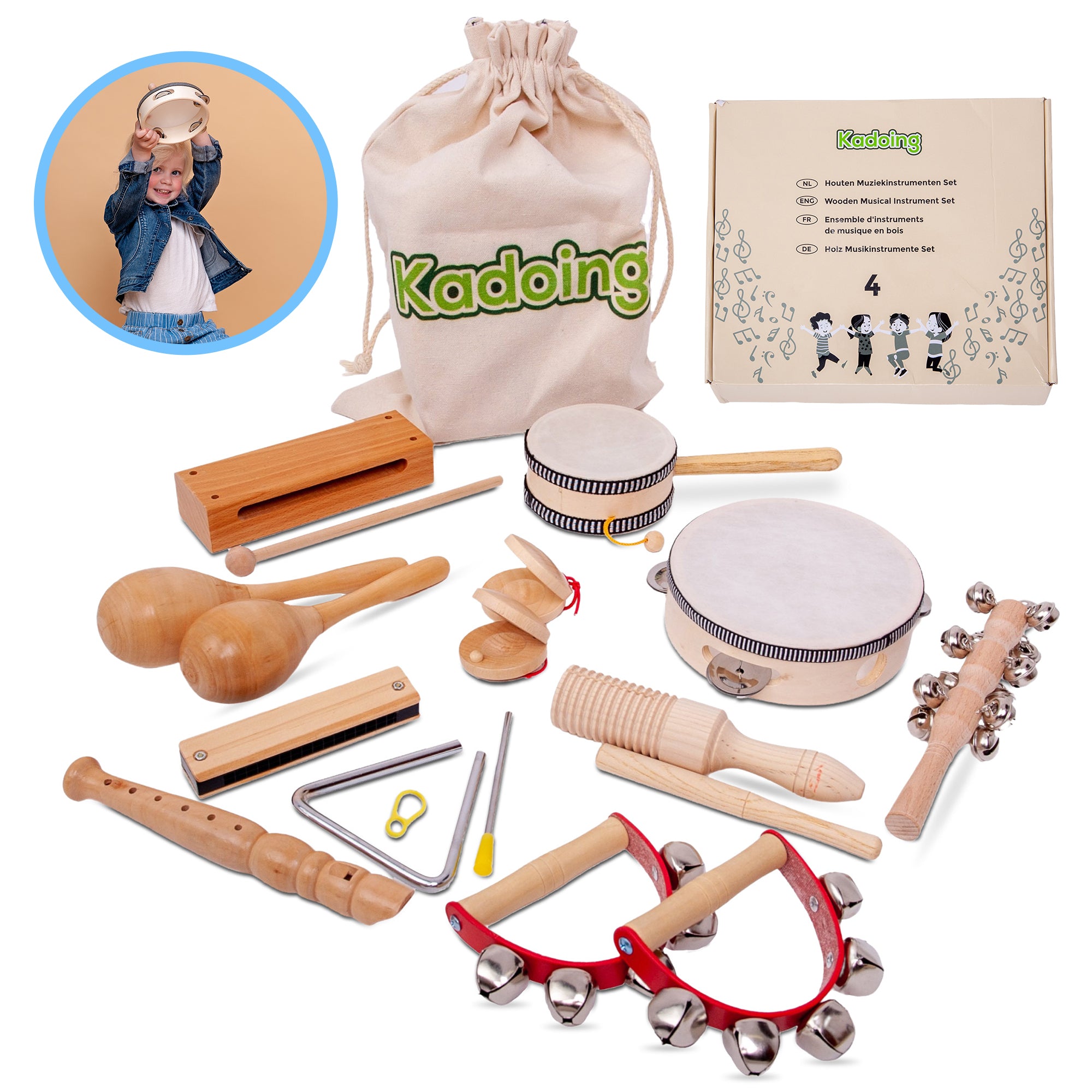
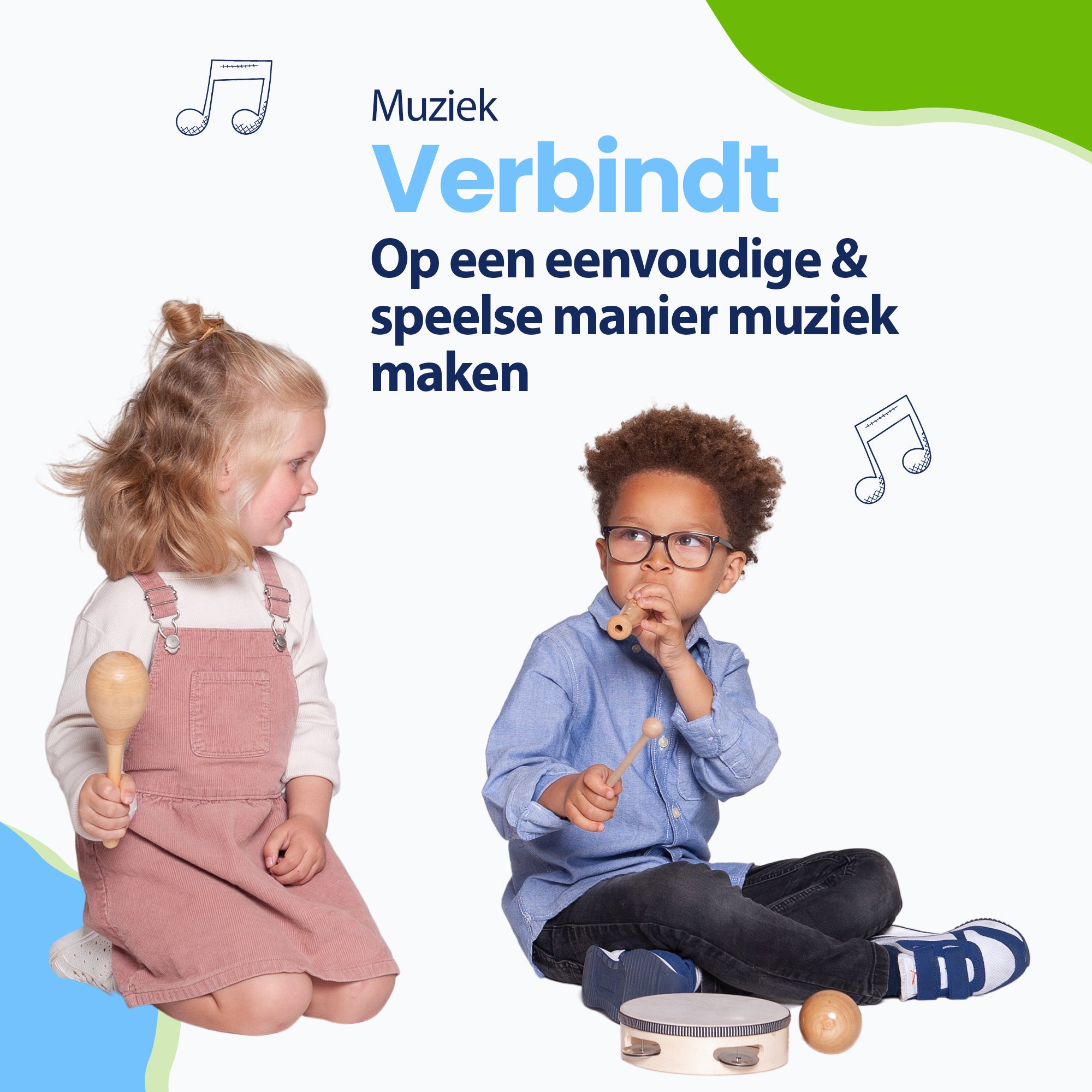
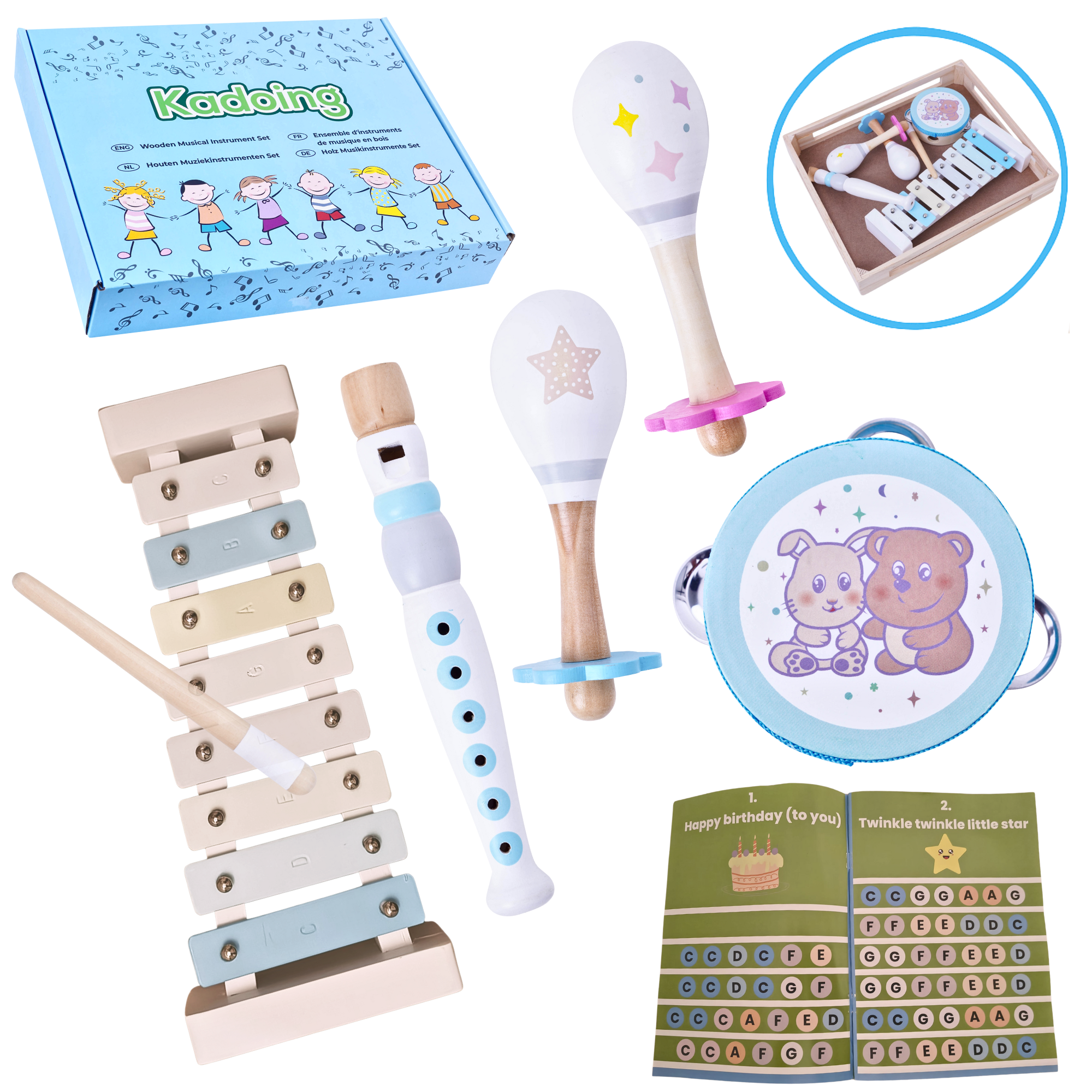
Music can be a warm part of playing together. For a baby, one wooden musical instrument, such as a small bell rattle or a simple xylophone for later, is more than enough. Sing a familiar song, take turns making a sound, and watch how your child responds.
A full orchestra is not necessary. By making music together in a calm way, you give attention to listening, rhythm, and connection. Kadoing therefore sees musical toys not only as something fun, but also as an opportunity for valuable moments together.
10. A wooden discovery mirror
Babies are often fascinated by faces, including their own reflection. A shatterproof mirror in a sturdy wooden frame can be a lovely addition during tummy time. Your baby can watch movement, facial expressions, and changing light.
Place the mirror securely and always use it under supervision. Choose a model specifically designed as a baby toy, not an ordinary home accessory.
11. An activity board for curious hands
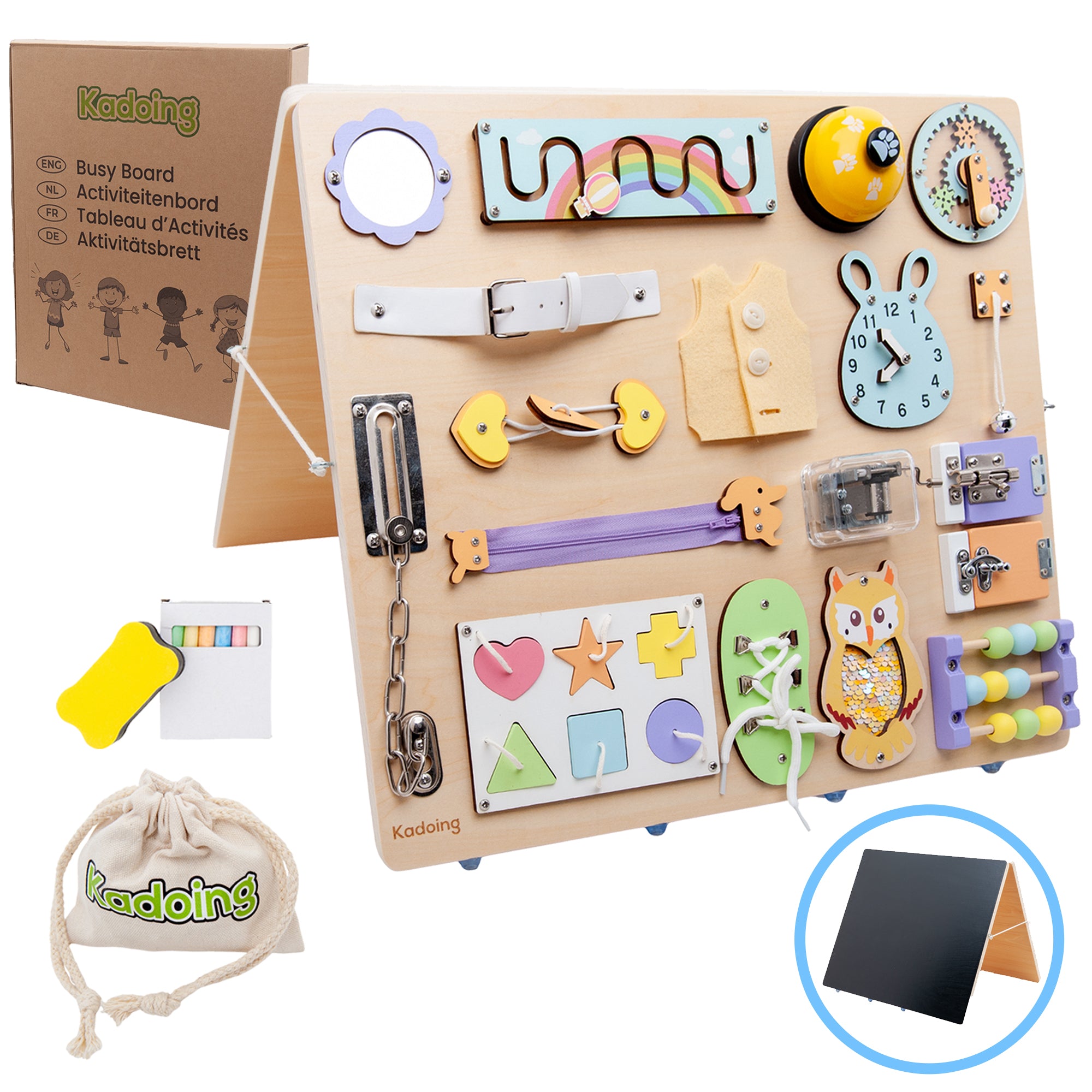
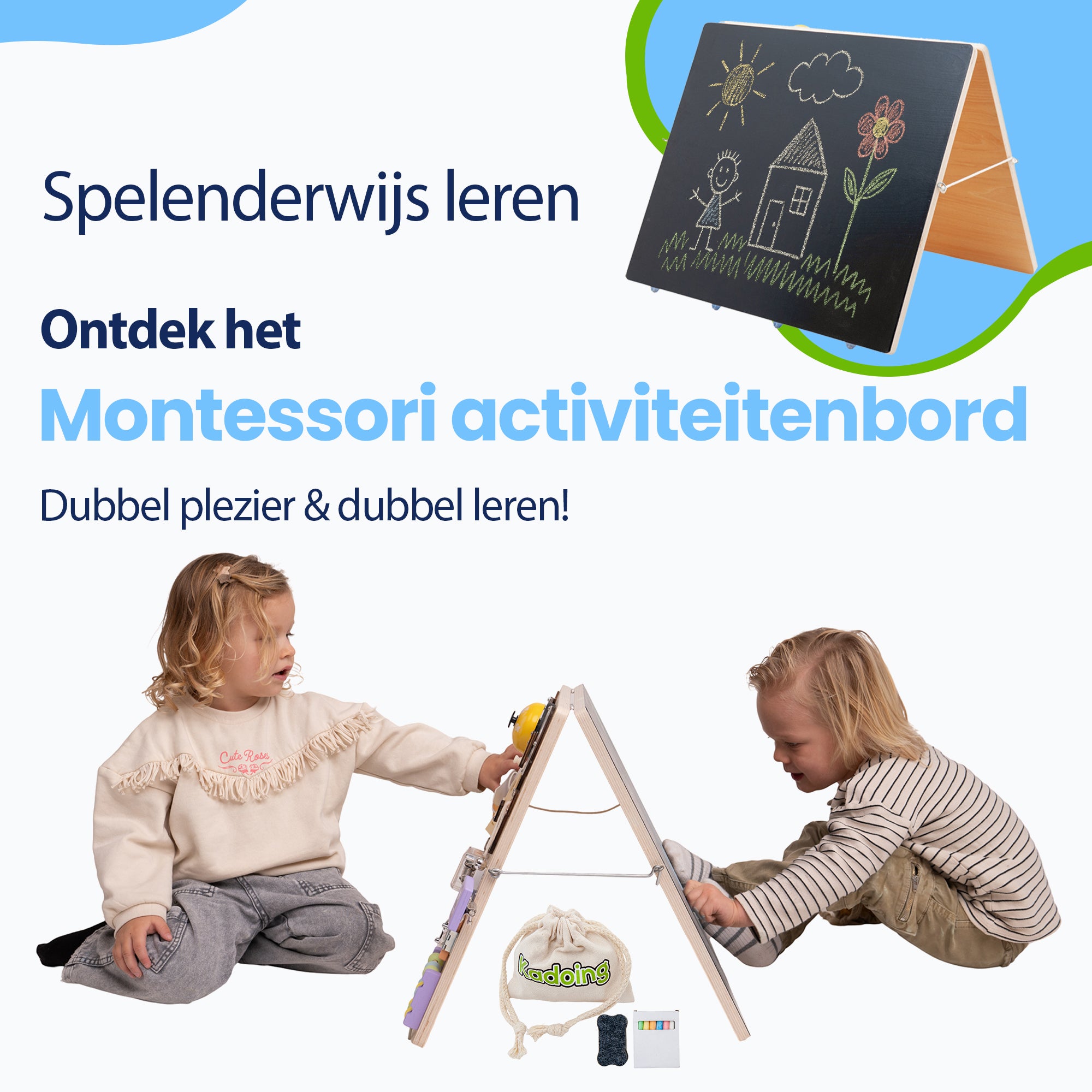
As your baby gets older and becomes better at sitting, a simple wooden activity board can become interesting. Think of large sliding elements, safe rotating parts, or a sturdy little door. It encourages focused observation and experimentation.
For this age, simplicity keeps things manageable. A board with too many features can feel overwhelming. It is better to choose a few clear actions that your child can repeat independently.
12. A wooden pull-along animal for the next step
A pull-along animal is most suitable once your child can stand or walk steadily. It does not belong in the first few months, but it can be a durable gift that is ready for later. A calmly designed animal on wheels often becomes a familiar play companion during the first journeys around the living room.
Check that the cord is designed safely for the recommended age and store the toy out of reach until your child is ready for it.
How to choose safe wooden baby toys
When choosing wooden toys, do not look only at the design. Check whether the toy matches the age recommendation and whether it has no small parts, peeling paint, splinters, or sharp edges. Babies explore with their mouths, so a strong and safe finish is essential.
Also pay attention to the weight. Something that seems small and light to an adult may still be difficult for a young baby to lift. Toys should be comfortable to grasp, but never so small that they could be swallowed. When it comes to paint, stain, or varnish, choose products that are clearly marked as safe for children’s toys.
Wood requires a little maintenance. Wipe it regularly with a slightly damp cloth and allow it to dry thoroughly. Avoid submerging wooden toys in water unless the manufacturer clearly states that this is safe. If you notice a crack, loose parts, or rough areas, set the toy aside.
Less toy clutter, more room to play
A calm selection of toys also makes it easier to decide what to offer on a particular day. For example, place two or three suitable items on a play mat: a rattle, a teething ring, and a block. Watch what your baby reaches for. By following your child’s interest instead of constantly offering something new, you give them time to explore independently.
Rotate the toys after a few days. This makes familiar objects interesting again and prevents the playpen from becoming overcrowded. More importantly, you are not merely a spectator during play. Your voice, smile, and closeness turn a wooden rattle or block into a valuable moment of connection.
The best baby toys do not have to be complicated. Choose something that feels safe, suits your child’s stage of development, and invites calm exploration. Then a small play idea naturally grows into a lovely daily ritual together.