A toddler who spends ten minutes completely focused on a simple stacking tower feels like a win for many parents. Not because the toy is spectacular, but because you can see your child playing independently – calm, curious, and without becoming overstimulated. It is often at that moment that the question arises: should you choose Montessori toys or open-ended toys?
The two are often mentioned together, and for good reason. Both support developmental play, both are usually designed in a calm and simple way, and both encourage independent discovery. However, they are not the same. Once you understand the difference, it becomes much easier to choose toys that truly suit your child, your home, and your daily routine.
Montessori toys or open-ended toys: what is the difference?
Montessori toys are usually designed with a clear learning goal in mind. This might involve sorting shapes, practising grasping skills, recognising colours, or developing fine motor skills. The materials naturally guide the child towards a specific activity. Children learn through doing, while the toy supports that process through simplicity, repetition, and structure.
Open-ended toys work differently. They do not have a fixed outcome and often do not have a "right" way to play. Wooden blocks can be a tower today, a zoo tomorrow, and a shop next week. The child decides what they represent and how the play develops.
The biggest difference therefore lies not in the materials, but in the direction of the play. Montessori toys gently guide children towards a particular skill. Open-ended toys leave far more possibilities open and grow alongside a child's imagination, creativity, and initiative.
When Montessori toys are a great fit
For young children, clarity is often reassuring. Babies, toddlers, and younger preschoolers especially benefit from toys that are easy to understand and do not demand too much at once. An activity with a single purpose can create a sense of calm. Shape sorters, peg puzzles, and counting frames make play more concrete. This helps children understand relationships and experience success.
Parents often appreciate this as well. It becomes easier to see what a child is practising and to choose toys that match a particular stage of development. If your child enjoys opening and closing, turning, sliding, or sorting, Montessori-inspired toys are often an excellent match.
This does not mean Montessori toys are boring or strict. In fact, their simplicity is what makes them so appealing. Fewer buttons, less noise, and fewer distractions often result in greater concentration. For children who become overwhelmed easily, this can bring a lot of calm to playtime.
There is one consideration, however. Because Montessori toys usually have a clear purpose, children may spend less time with them once they have mastered the skill involved. The toy remains valuable, but it may feel less surprising than toys that allow something new to emerge every time.
When open-ended toys are especially powerful
Open-ended toys often come to life when children begin creating their own stories. From the toddler years onward, and especially during the preschool years, you can see just how much freedom this type of toy provides. Loose wooden blocks, stacking stones, play silks, and magnetic shapes constantly adapt to a child's ideas.
This freedom is valuable because there is no pressure to perform. Nothing needs to be completed, nothing is right or wrong. Children can experiment, start over, and make their own decisions. This is not only beneficial for creativity but also for self-confidence. Children learn that their own ideas matter.
There is also a practical advantage for families. Open-ended toys often remain relevant for many years. What begins as stacking for a toddler may later become imaginative play, construction projects, or collaborative games. As a result, there is often less need to constantly introduce new toys.
At the same time, open-ended toys sometimes require a little more from the child. Not every child immediately knows what to do with them. Some children need a small prompt, an example, or some shared play before their imagination gets going. That is completely normal. Free play may sound natural, but it also develops over time.
What suits your child best?
The best choice depends less on trends and more on temperament. If your child enjoys repetition, predictability, and clear structure, Montessori toys will often feel like a natural fit. If your child has a vivid imagination, loves inventing stories, and uses everyday objects in creative ways, open-ended toys will usually remain engaging for longer.
Age naturally plays a role, but it is not everything. A calm preschooler may still enjoy Montessori materials, while a younger toddler may already be creating imaginative worlds with simple blocks. Instead of focusing solely on age recommendations, pay attention to how your child plays when given the freedom to choose.
Your family situation matters too. In a busy household, toys with a clear focus can be very helpful. They provide a defined beginning and end to playtime. Open-ended toys sometimes require more time, space, and patience, but they can be wonderful on relaxed mornings or quiet afternoons.
Combining Montessori toys and open-ended toys at home
For most families, it is not a question of choosing one or the other. In fact, the combination often works best. Montessori toys can help children develop specific skills, while open-ended toys provide opportunities to use those skills freely and creatively.
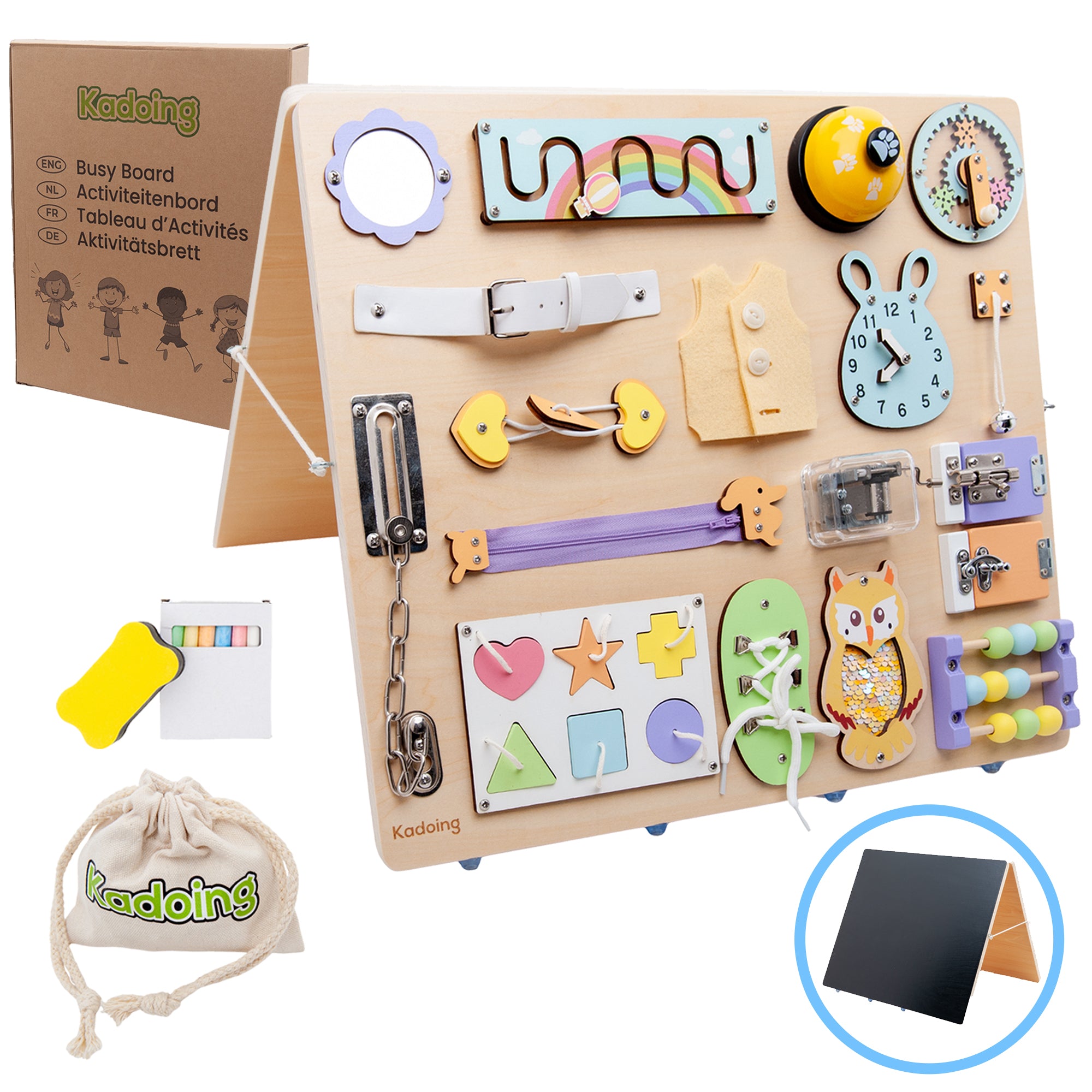
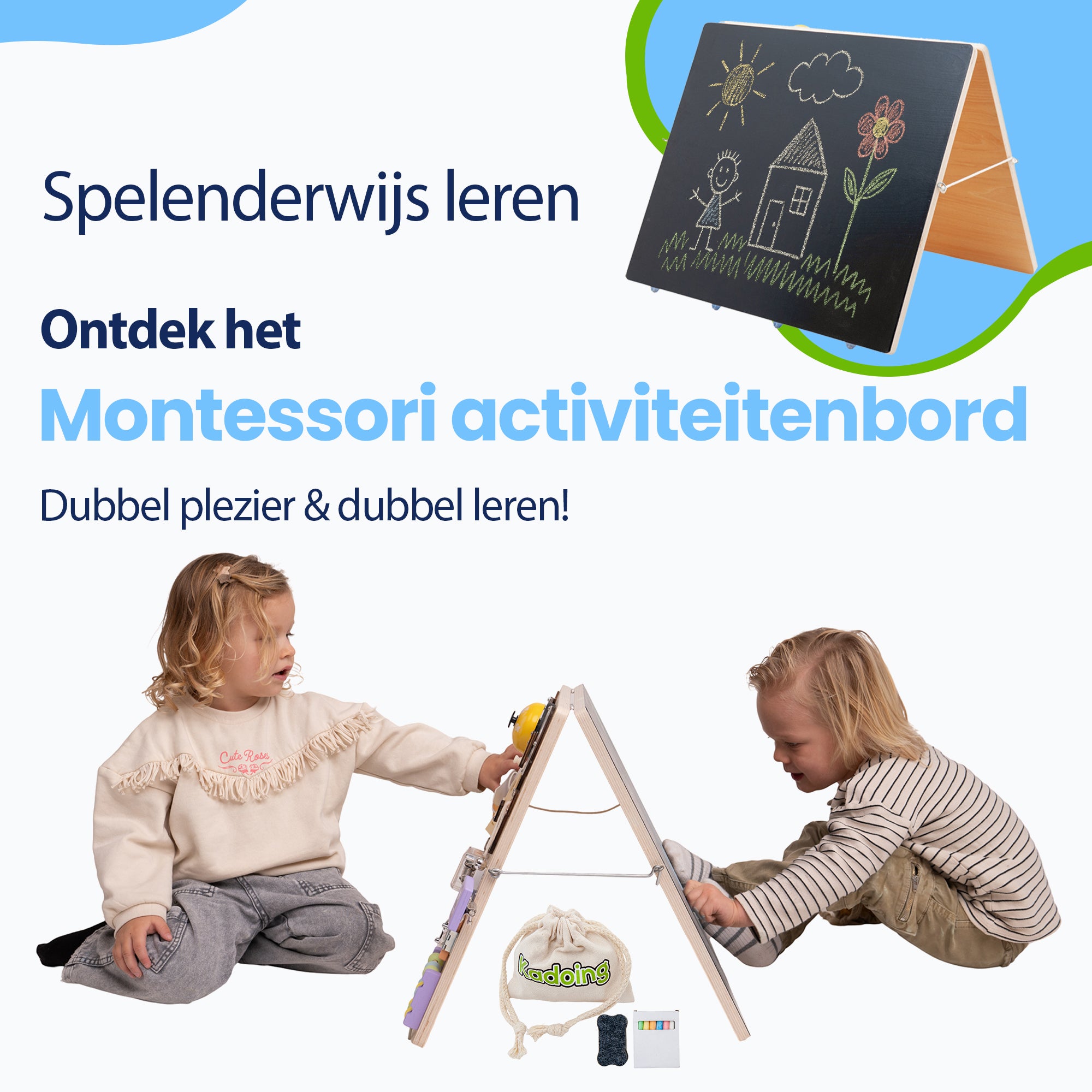
A child who learns to recognise shapes with a simple peg puzzle can later use loose wooden shapes to build something entirely new. A busy board with locks, sliders, and rotating elements supports fine motor development and independent exploration, while wooden blocks can later become a house, garage, or castle during imaginative play.
By alternating between both types of toys, you create balance in playtime. Sometimes a child needs calm and structure. At other times, they need freedom and self-expression. As a parent, there is no need to overcomplicate things. A small, thoughtfully chosen toy collection often works better than an overflowing toy cupboard.
What to look for when making a good choice
Regardless of play style, there are a few things that are almost always important. Safety comes first. Choose toys that are age-appropriate, well-made, and comfortable for small hands to hold. Materials such as wood appeal to many parents not only because of their appearance, but also because they feel durable and calming.
It also helps to be mindful of quantity. Too many toys at once can make choosing difficult and create unnecessary distraction. A few high-quality toys that are regularly used often provide more value than a large collection of different stimuli.
Consider how the toy fits into your everyday life as well. Does it need to be easy to tidy away? Would you like something that can move easily into the living room? Are you looking for a toy that encourages independent play while you complete household tasks, or something you can explore together at the table? These practical questions are just as important as the educational ideas behind the toy.
Common misconceptions
One common misconception is that Montessori toys must always be expensive or highly specialised. That is not true. Montessori principles are mainly about simplicity, purpose, and independent use. A simple stacking toy or sorting activity can already be a great fit.
Another misconception is that open-ended toys are automatically more educational because they encourage creativity. Creativity is valuable, but not every child benefits from it in the same way at every moment. Sometimes a child learns more from a concrete activity that perfectly matches the skill they are currently developing.
Free choice in toys is also sometimes confused with offering everything at once. In reality, clear limits often help. A calm play corner with a few carefully selected materials usually invites more meaningful play than an overflowing toy box where children lose track of what is available.
A calm starting point for more intentional play
If you would like to make more conscious choices, there is no need to replace your entire toy collection overnight. Start small. Look at the types of play your child already gravitates towards and add one toy that supports those interests. If your child loves sorting, opening, and exploring, Montessori toys are a logical next step. If you mostly see building, storytelling, and pretend play, open-ended toys may be the better choice.
At Kadoing, we believe toys should not only be beautiful or entertaining, but should also bring calm to everyday family life. Toys that suit your child naturally encourage moments of focus, independence, and meaningful play together.
You do not need to choose the "best" category. The best choice is usually the one that invites your child to play with attention and enjoyment, in a way that feels safe and fits your family's rhythm. Because it is often during those small, peaceful play moments that the greatest growth takes place – for your child and for your family together.