A toddler enthusiastically banging on a drum, a preschooler wanting to hear the same bell sound over and over again, a baby calming down to the gentle sound of a rattle – music often starts small, but quickly becomes something meaningful at home. That is why good musical instruments for children are more than just toys. They encourage curiosity, help children discover sounds and rhythms, and turn everyday moments into experiences that truly capture a child's attention.
For parents, choosing the right instrument is not always easy. The range of options is huge, age groups often overlap, and not every instrument suits every stage of development. What may feel calming for one child can be overstimulating for another. That is why it helps to look beyond whether something is fun or educational and also consider safety, materials, volume levels, and how the instrument fits into your family's daily life.
Why musical instruments for children are so valuable
Children learn with their entire bodies. They shake, tap, listen, repeat, and immediately respond to what they hear. That is exactly why musical instruments fit so well with early childhood development. A child discovers cause and effect – if I hit this, it makes a sound. If I tap more softly, it sounds different. It may seem simple, but there is a lot of learning hidden within those discoveries.
Music also encourages social interaction and cooperative play. Clapping together, taking turns making sounds, or moving along to a rhythm requires children to pay attention to one another. For young children, this is a fun and playful way to practice waiting, responding, and connecting. Music also offers another advantage for parents: it adds structure to small daily routines, from a calming bedtime song to a cheerful music moment after breakfast.
That does not mean every child immediately wants to become a little musician. Some children seek volume and movement, while others prefer to listen first. It helps to see an instrument as an invitation rather than a performance.
Which instrument suits which age?
For young children, age is a useful starting point, but it should never be the only factor. Every child develops differently. It is important to also consider motor skills, sensitivity to sound, and how your child prefers to play.
For babies and young toddlers
At this stage, the focus is mainly on feeling, observing, and recognising simple sounds. Think of soft rattles, bells with pleasant tones, or small wooden instruments that are easy to hold. The instrument should be safe to grasp and durable enough to handle everyday use. Too many buttons, loose parts, or harsh metallic sounds usually add little value at this age.
Calm and repetitive sounds often work best. Babies do not need to create melodies yet. The goal is simply to explore and listen at a pace that feels safe and manageable.
For toddlers
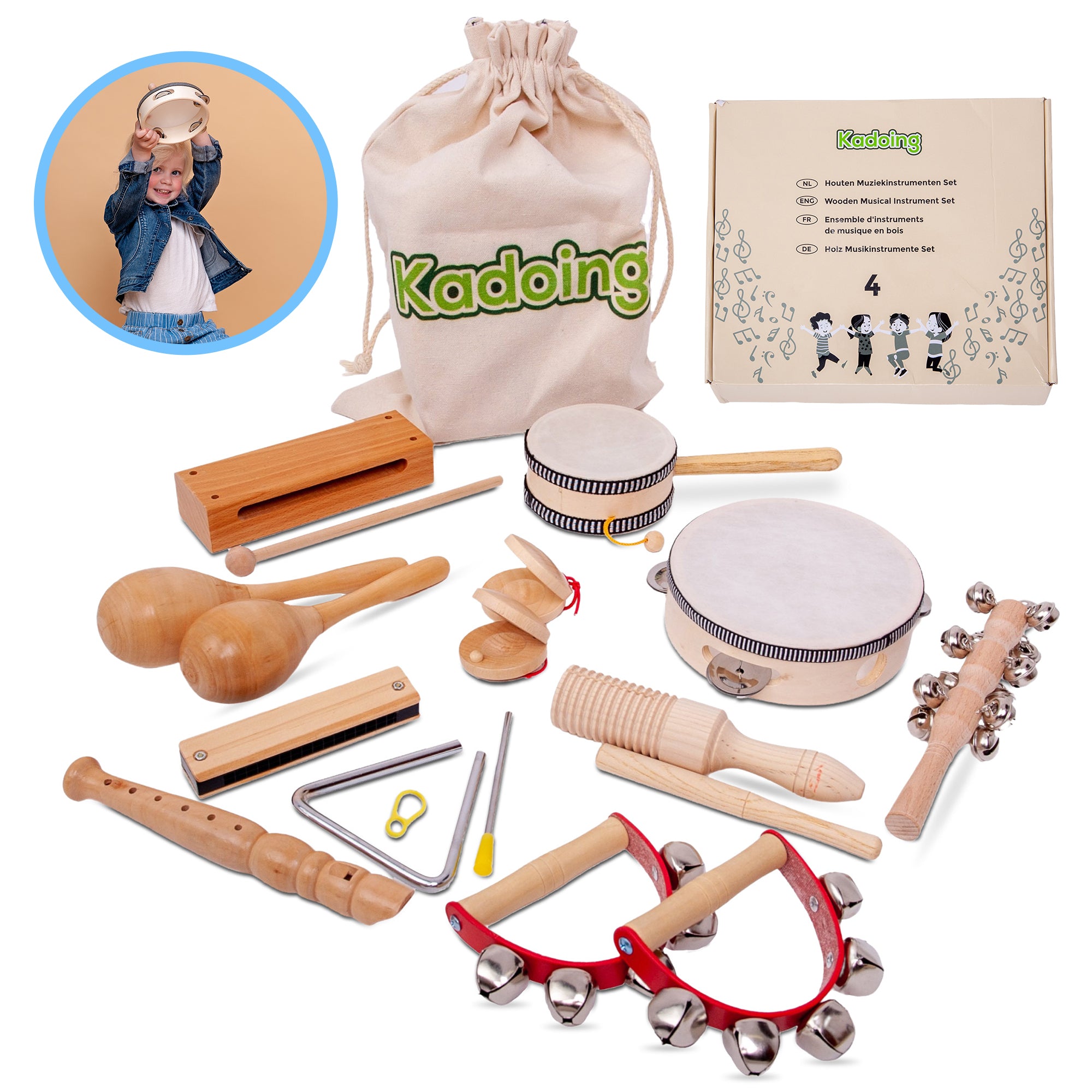
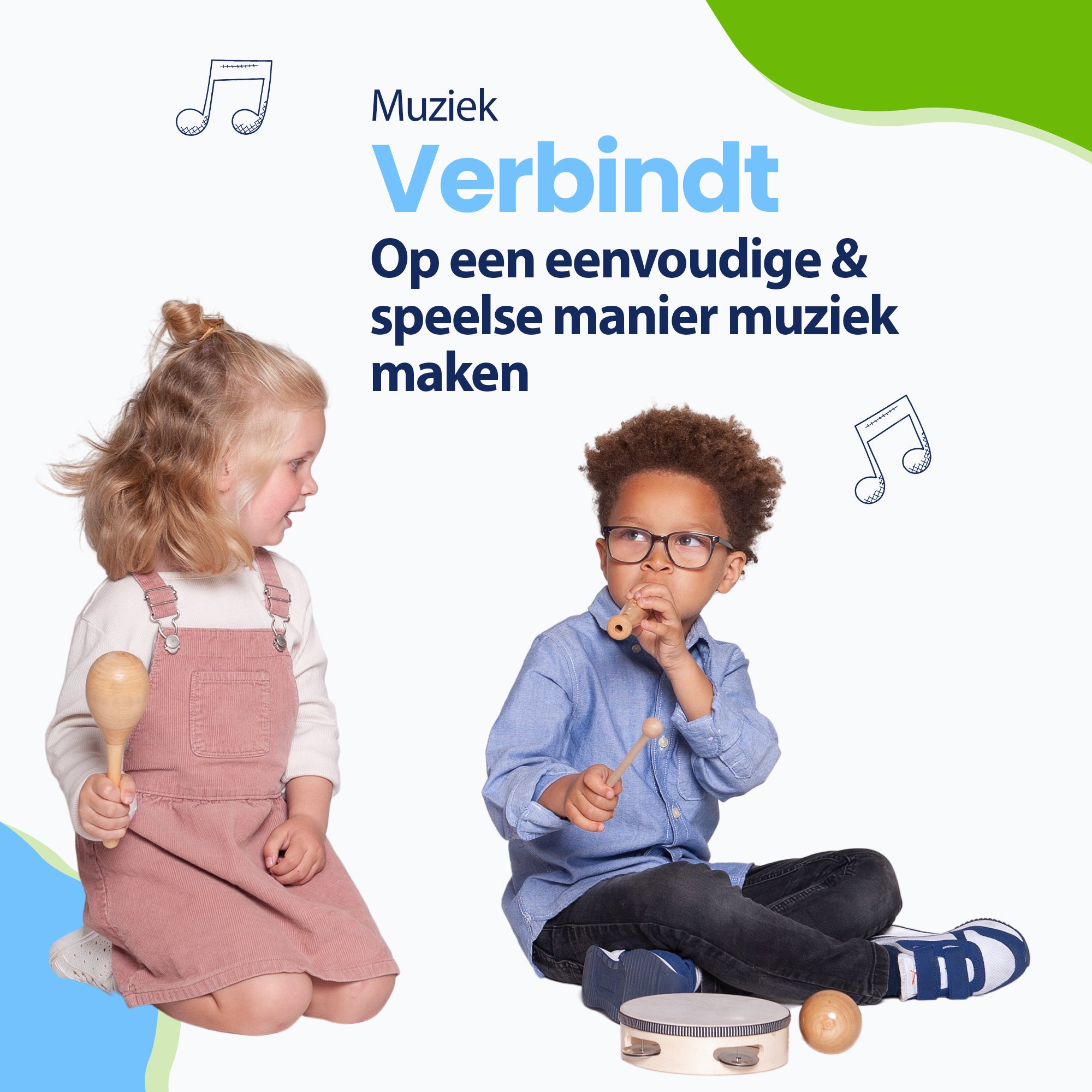
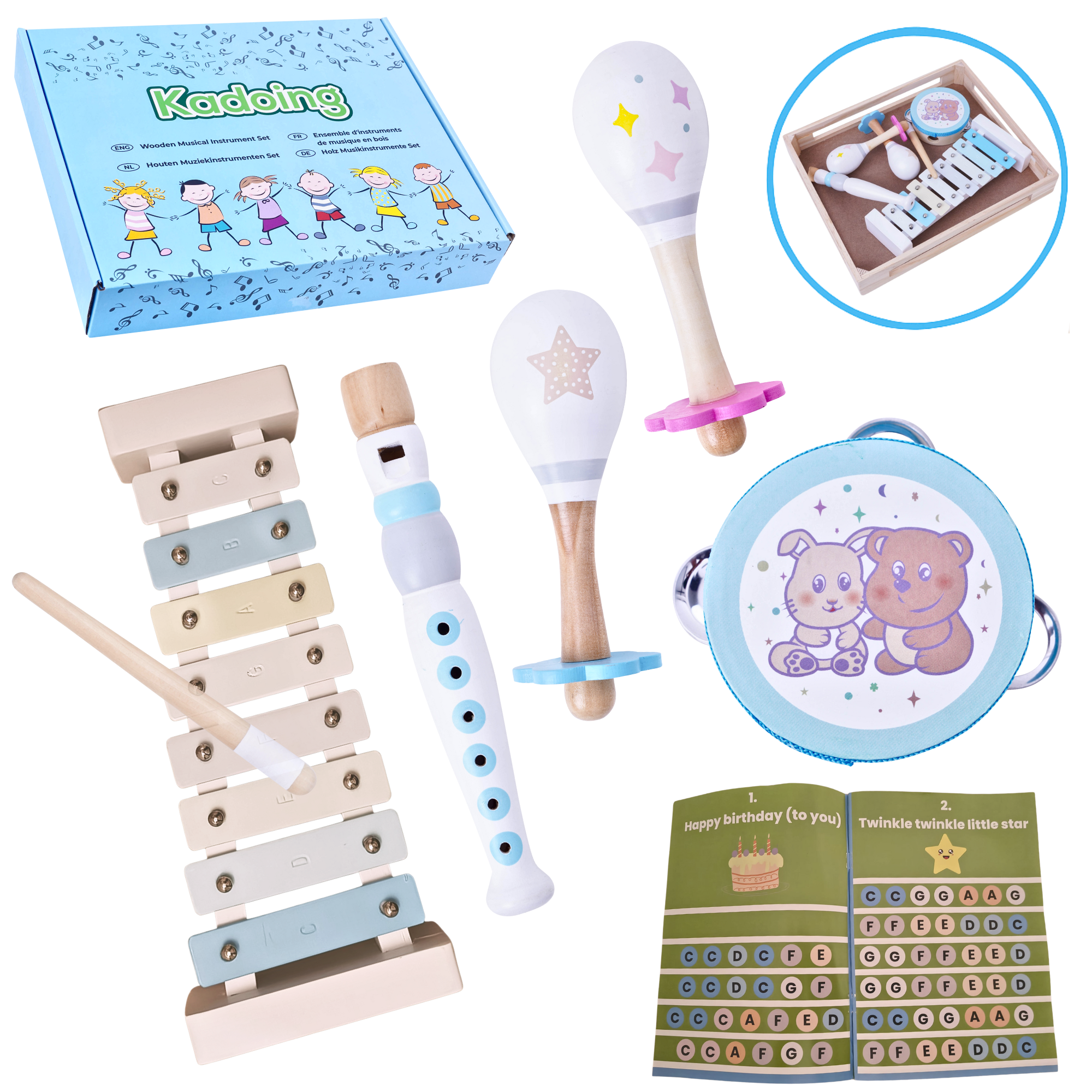
Toddlers love action. Drums, xylophones, tambourines, and maracas are often excellent choices because they provide immediate results. Children do not need any special skills to enjoy them. That direct feedback is exactly what makes these instruments so appealing.
Pay extra attention to volume levels. A drum can be great fun, but in a smaller living room or for a sound-sensitive child, a softer alternative is often more enjoyable. Wooden musical toys typically produce a warmer sound than plastic alternatives. Not only does this sound more pleasant, but many parents also find it creates a calmer atmosphere at home.
For preschoolers
Preschoolers are more interested in copying others and creating sounds that are recognisable. A simple xylophone, children's piano, harmonica, or rhythm sticks can be a great fit. At this stage, children also start enjoying singing together and accompanying songs. You may notice that they begin associating specific sounds or rhythms with particular songs.
Even so, simplicity remains important. An instrument that is too complicated can quickly end up forgotten in a cupboard. A well-chosen instrument encourages children to pick it up again and again without needing constant guidance from an adult.
How do you choose the right musical instruments for children?
A beautiful instrument is nice, but ease of use and safety are at least as important. Especially for young children, these factors often determine whether something becomes a favourite toy or simply stays on display.
The material is a logical first consideration. Wood feels warm, is often durable, and fits well with open-ended play. Look for smooth finishes and child-friendly paints or coatings. If you choose plastic instruments, make sure they are sturdy and free from sharp edges. Small parts that can come loose are not suitable for the youngest age groups.
Size also matters. Instruments should fit comfortably in small hands. A tambourine that is too large or a drumstick that is too heavy can quickly become frustrating. Children want to be able to pick up, hold, and experiment with instruments independently. This builds confidence and keeps playtime enjoyable.
Then there is the sound itself. Many parents focus primarily on educational value, but comfort matters too. An instrument can be cheerful without being shrill or overwhelming. If you have multiple children or want music to be part of calm transitions throughout the day, soft and warm tones are often the best choice.
Choosing sustainably is also choosing practically
When it comes to children's products, sustainability is not only about materials or appearance. It is also about how long something lasts, how safe it remains after frequent use, and whether it continues to suit your child as they grow. A well-made instrument often lasts much longer than expected because children find new ways to use it as they develop.
That is one reason why wooden musical instruments are so popular among parents who make conscious choices. They are often timeless in design, sturdy, and easy to save for younger siblings or visiting children. They also tend to fit more naturally into a home than brightly coloured, highly stimulating alternatives. That may seem like a small detail, but it matters when toys are a visible part of everyday family life.
A sustainable choice also feels more meaningful as a gift. You are giving something that is not only enjoyable but also genuinely useful during everyday moments together. This appeals to parents who prefer fewer, higher-quality products.
Musical instruments are also a popular gift for a first birthday, second birthday, Christmas, or other special occasions. Many parents intentionally choose an instrument that supports development as well as providing entertainment.
Making music part of everyday life
An instrument does not need to sit in a special play corner waiting for the perfect moment. In fact, it often works best as part of small daily rituals. A short song with bells while getting dressed, a gentle rhythm after a busy afternoon, or singing together before bedtime can be enough. Music tends to work best at home when it naturally flows with the day.
It also helps not to offer too much at once. Leaving one or two instruments visible often works better than presenting a whole basket full of options. Children can focus more easily and are less likely to become overstimulated. Instruments can always be rotated later, but keeping things simple creates clarity.
Playing together also makes a difference. You do not need to be musical. Copying a simple rhythm, repeating a song, or letting your child choose which sound they want to hear is already valuable. For many children, the real magic is not in playing perfectly but in the attention they receive during those moments together.
Common mistakes when buying an instrument
A common misconception is that an instrument should primarily be educational. Development is important, of course, but if an instrument feels uncomfortable or too difficult, the fun quickly disappears. Children learn a great deal through free exploration without needing a specific goal.
Another mistake is buying too much at once. A large instrument set may seem attractive, especially as a gift, but young children often benefit more from one clear and accessible instrument than from many different options at the same time. Fewer choices often lead to more meaningful play.
The idea that louder is always better is also incorrect. Some children thrive on energetic sounds, while others withdraw when an instrument is too loud or intense. It really depends on your child, your home environment, and the time of day.
A good first choice for home
If you are unsure where to start, choose something simple and versatile. A small wooden xylophone, a set of maracas, or a soft drum are often excellent first steps. They are easy for young children to understand, encourage repetition, and work well for both independent play and singing together.
For families who value natural materials, safe finishes, and play with developmental benefits, wooden musical instruments are often an excellent foundation. That is also why they fit so well within Kadoing's collection: they support not only play but also those small, meaningful moments when parents and children truly connect.
Ultimately, the best instrument is not the one with the most features. It is the instrument your child chooses again and again, the one that fits naturally into your family routine, and the one that turns an ordinary day into something just a little warmer and more special.
Frequently asked questions about musical instruments for children
At what age can children start using musical instruments?
Children can be introduced to simple musical instruments such as rattles and bells from a very young age. Drums, maracas, and xylophones often become popular once children reach toddler age.
Are wooden musical instruments better than plastic ones?
Wooden musical instruments are often sturdier, more durable, and produce a warmer sound. The best choice depends on the child's age and personal preferences.
Which musical instruments are suitable for toddlers?
Toddlers often enjoy simple instruments such as maracas, tambourines, drums, and xylophones. These instruments produce sound immediately and are easy to use without any musical experience.