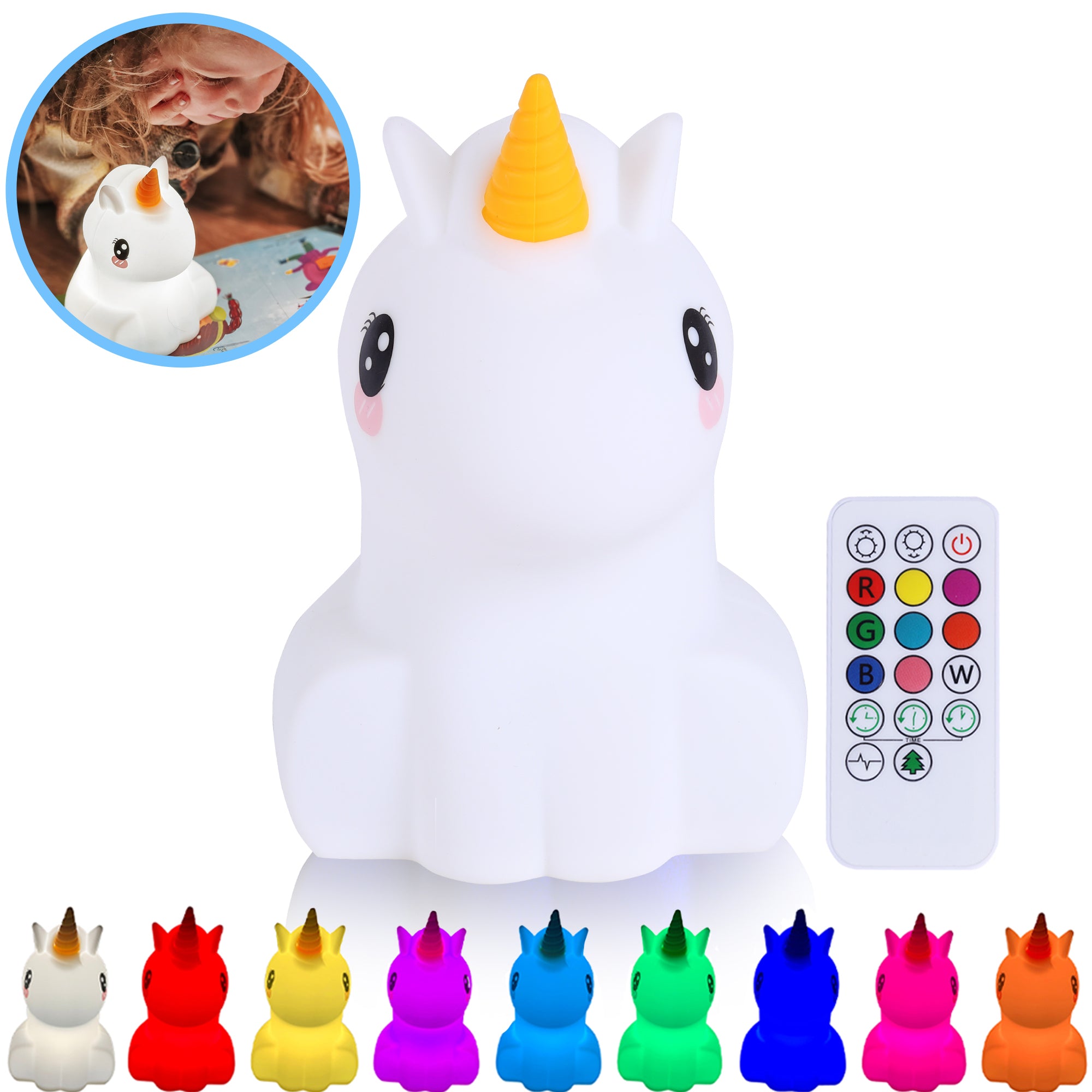
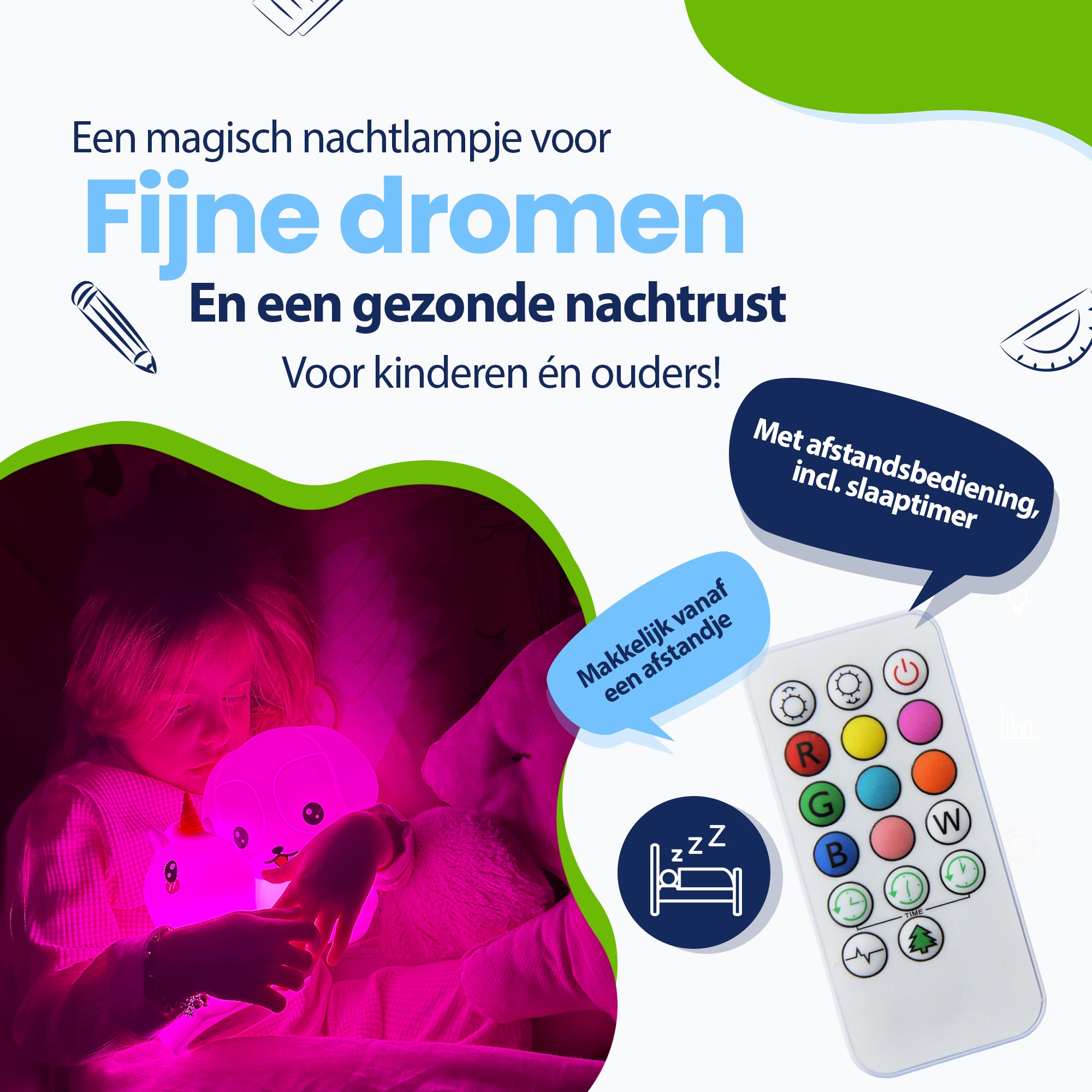
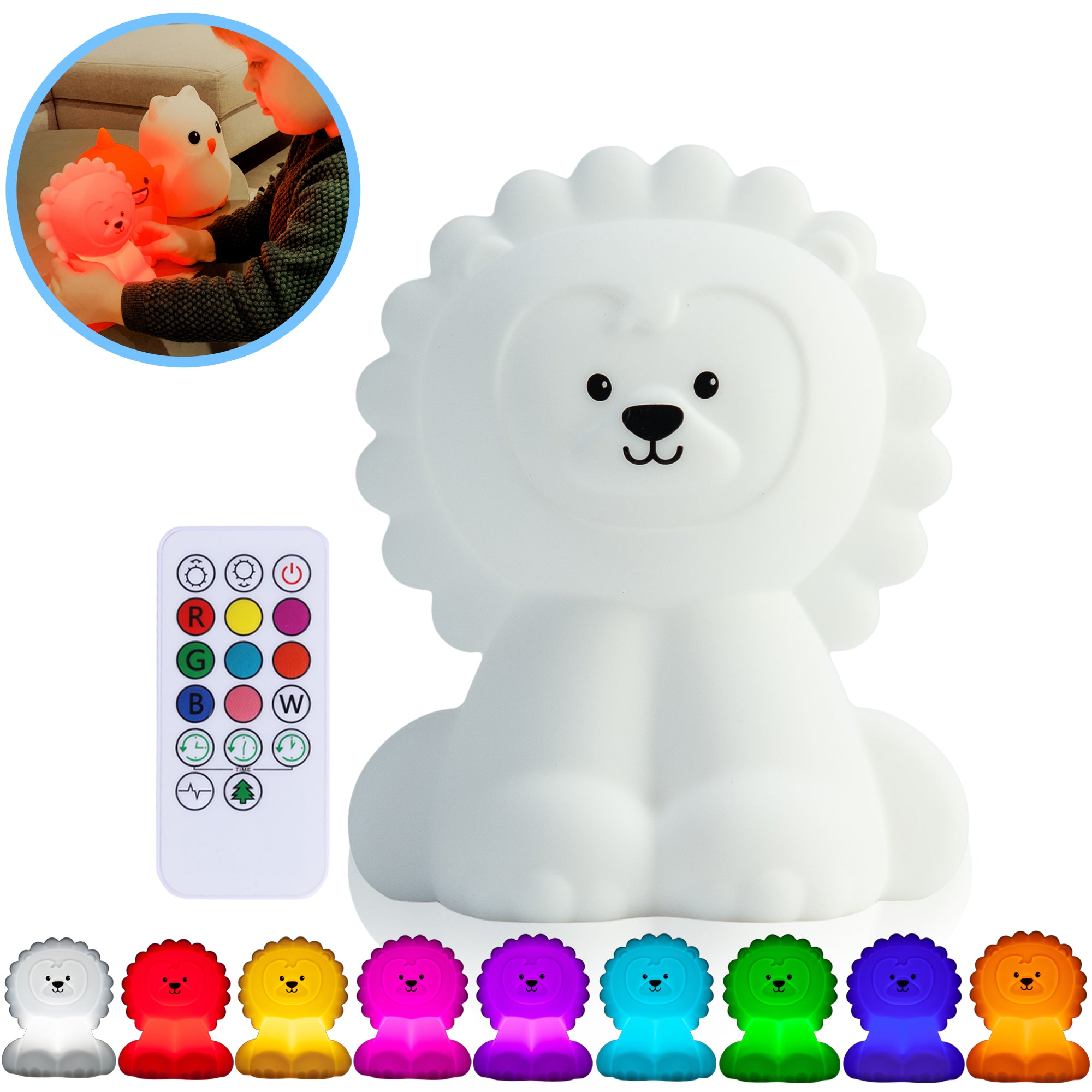
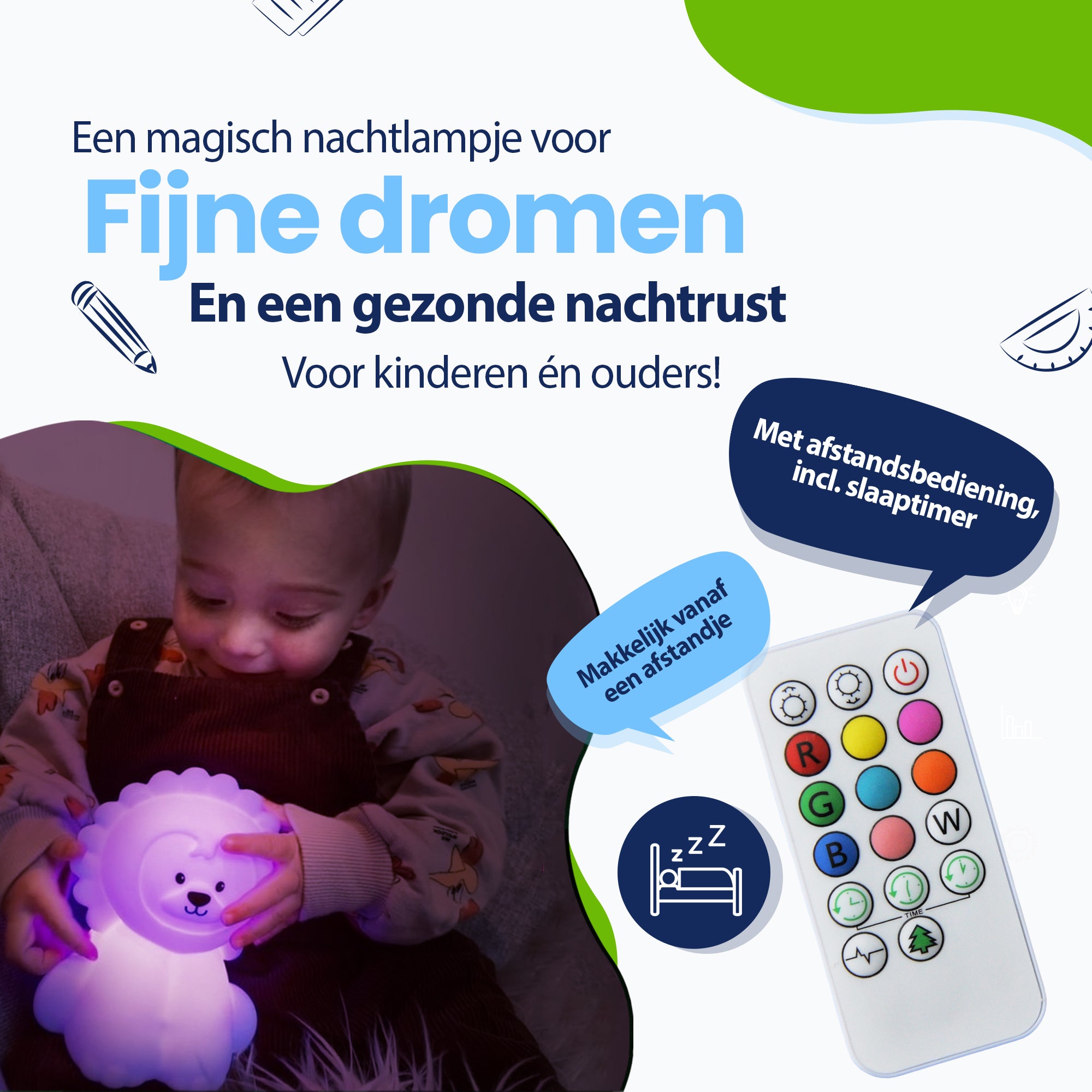
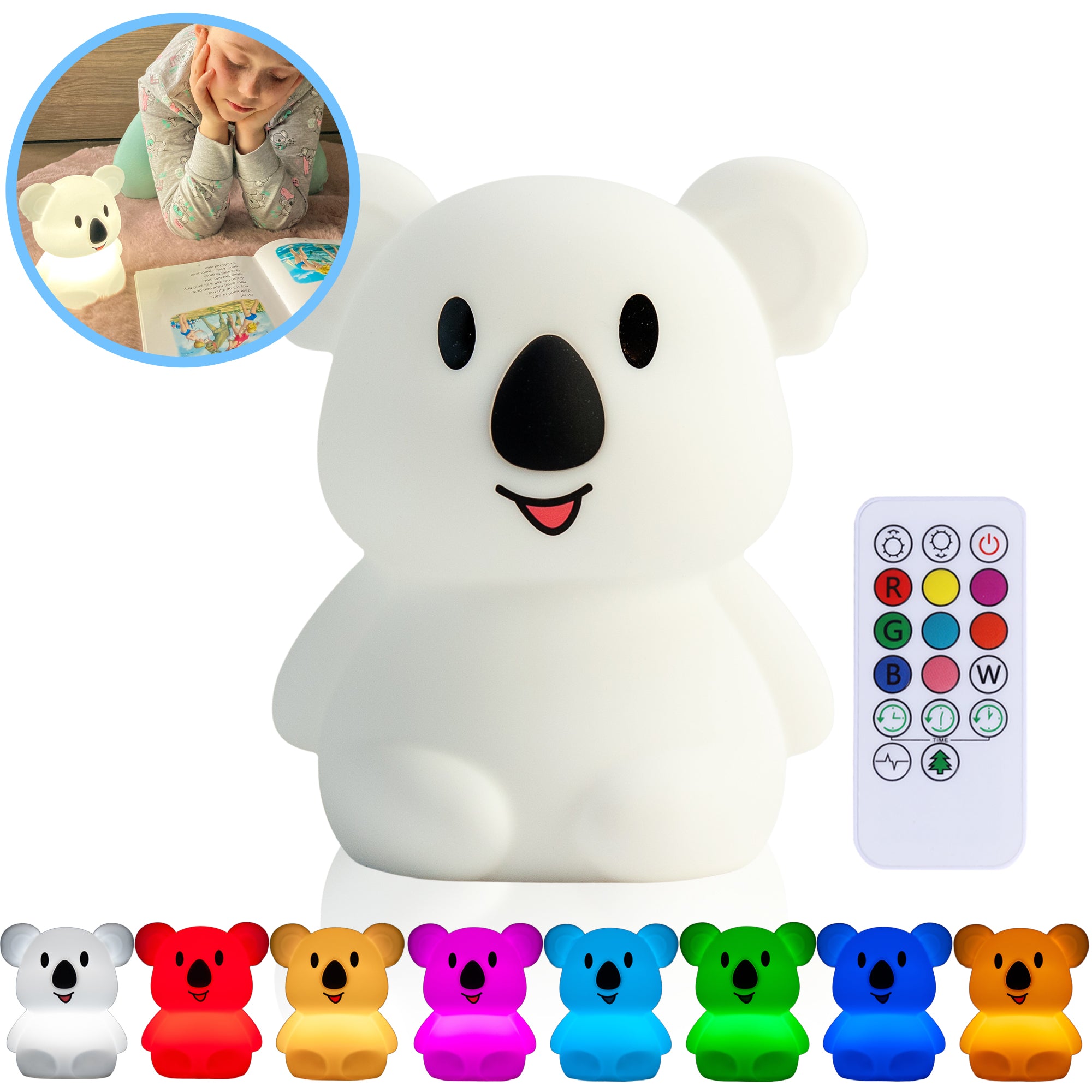
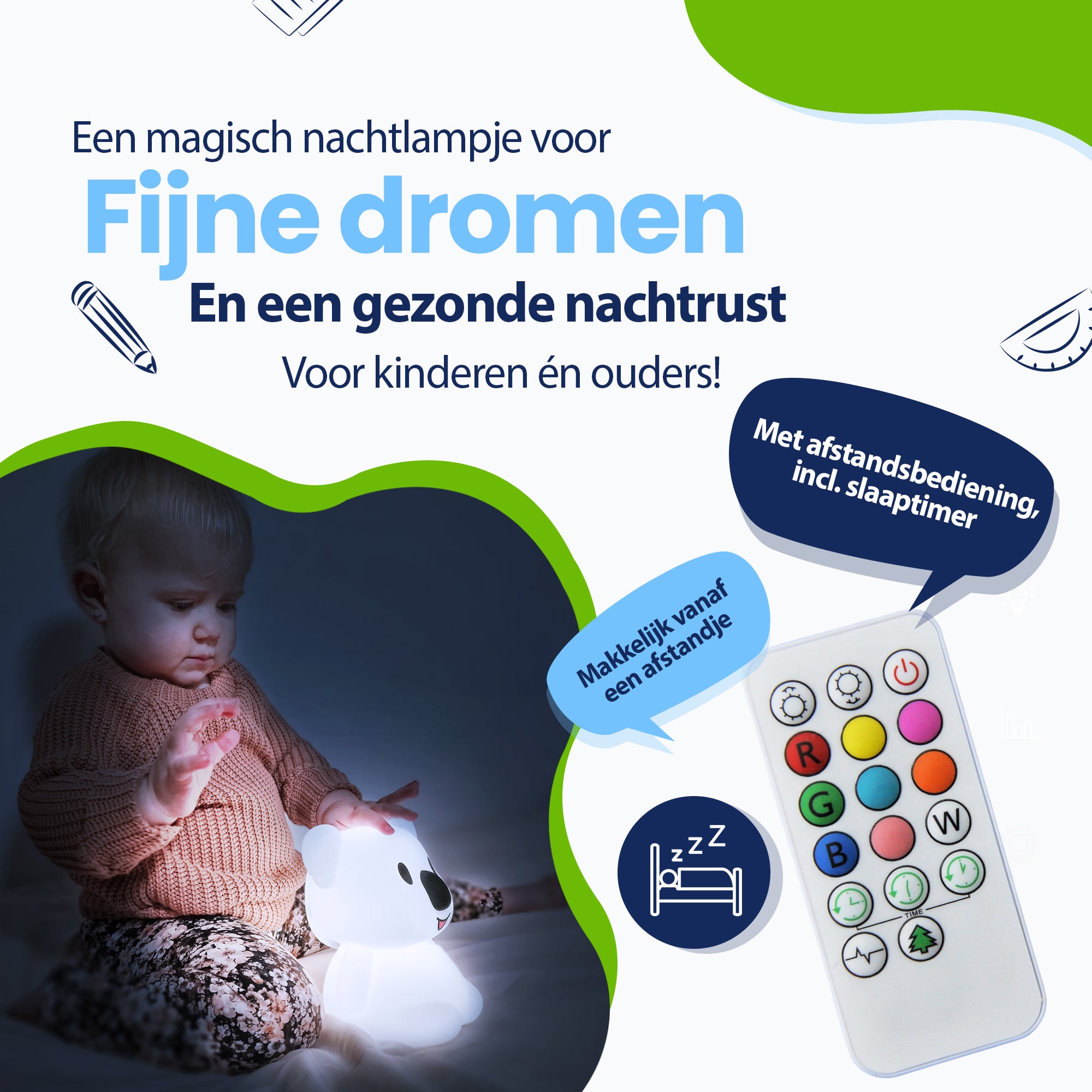
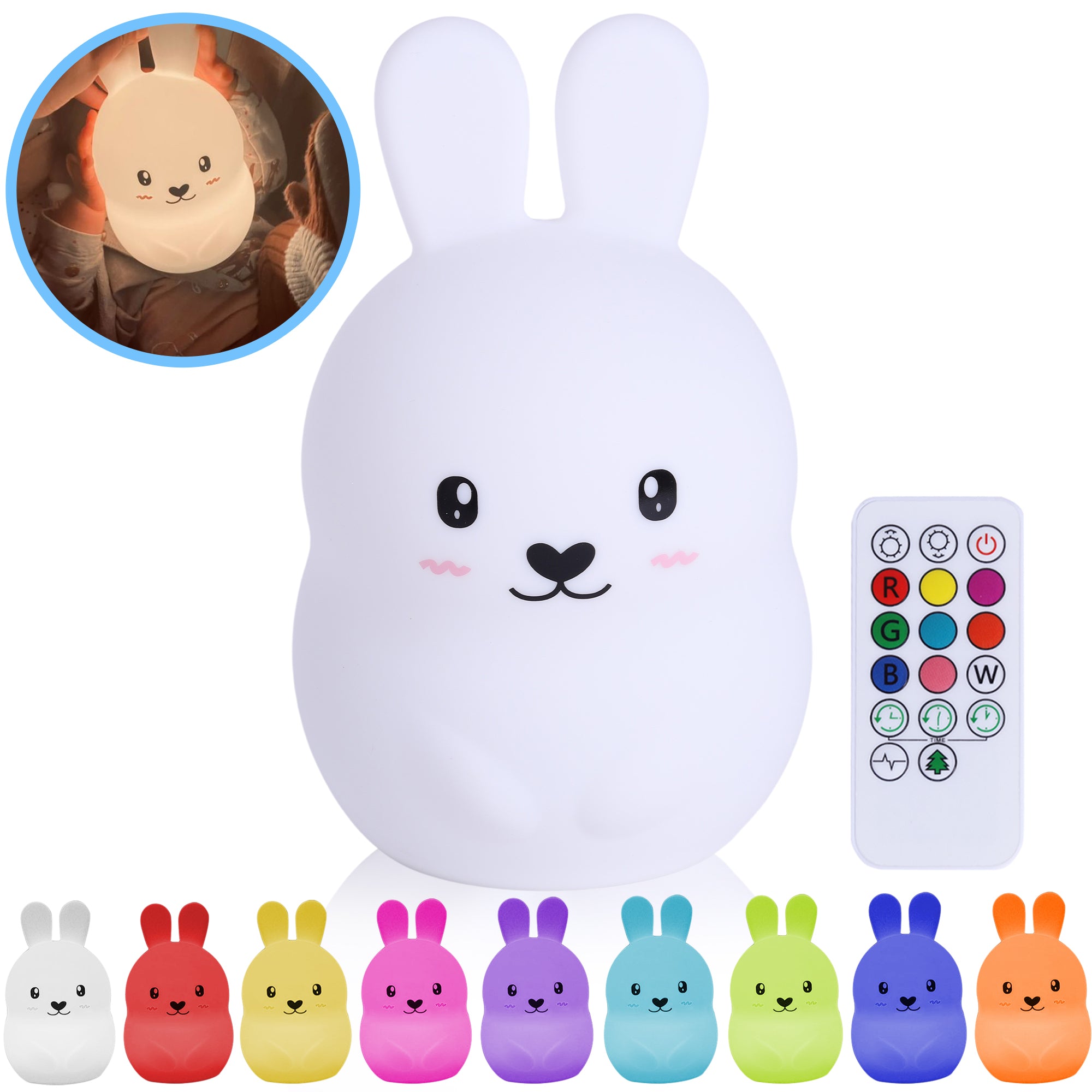
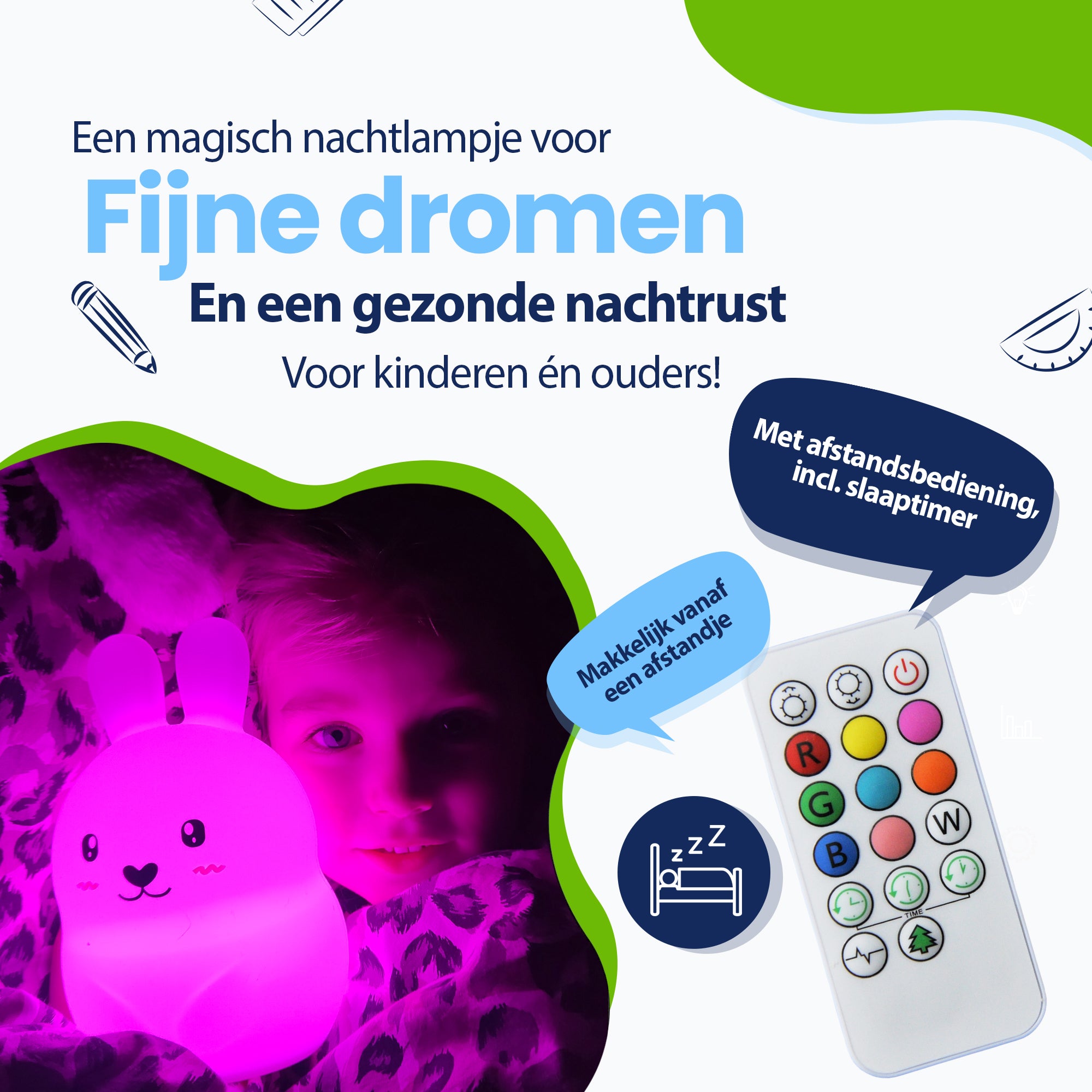
The question of which night light gives a calming glow often arises only when bedtime suddenly takes longer than expected. Your child wants to check where their cuddly toy is, wakes with a start in a dark room or asks for the door to be left ajar. A soft point of light can then offer reassurance: not as a distraction, but as a familiar part of a peaceful evening routine.
The best night light is rarely the one with the most features. For young children, what matters most is a warm, low light level, a familiar place in the room and a shape that feels safe and friendly. This helps the bedroom remain a place for calm, comfort and dreams.
Which night light gives a calming glow for a toddler?
Ideally, choose warm, dimmed light rather than bright white light. An amber, soft yellow or gentle orange glow feels less harsh than cool white or blue light. These warm tones allow your child to see enough to find their bearings without suddenly making the entire room feel bright and active.
The direction of the light also makes a difference. A lamp that shines directly into the eyes can feel unsettling, even if it is not particularly bright. Indirect light is more restful: a soft glow through a frosted shade, a lamp directed towards the wall or floor, or a character-shaped light with an even spread. The aim is not to light the bedroom as though morning has arrived. The aim is to help your child feel safe if they wake briefly.
A night light with a dimming function is therefore a practical choice. You can start with slightly more light while reading or putting on pyjamas and then turn it down when it is time to say goodnight. Some children only need a tiny point of light, while others prefer a slightly clearer glow. There is no fixed rule. Above all, look at what helps your child relax.
Pay attention to the light colour, not just the design
A cute animal, a moon or a cloud makes a night light appealing, but the light itself deserves at least as much attention. Bright colours that constantly change, flash or rotate can be fun during play, but they do not always suit the final peaceful half-hour of the day. Children who quickly become excited by light and movement often benefit more from a steady, warm colour.
Red or amber light is often chosen at night because these shades appear less cool and stimulating. However, a night light does not have to be red. Dimmed warm white light can be just as pleasant, provided that it is not too bright. Ultimately, the best colour is the one that helps your child go calmly to bed and does not dazzle you when you pop into the room during the night.
Also look out for hidden light sources. A bright blue indicator on a charger or a digital display may stand out more than you expect in an otherwise dark room. If possible, choose a light without distracting indicator lights or switch off the display at night.
How bright should a child’s night light be?
With a night light, less is usually more. If you can clearly see every toy box, book and item of clothing from the doorway, the light is probably stronger than necessary. A gentle glow that allows your child to find the door and see their familiar cuddly toy is often enough.
Try the light at the time when your child actually goes to sleep, rather than only during the day. Almost every lamp seems soft in daylight, whereas it can appear very bright in a dark room. Sit beside the bed at your child’s eye level. Does the light shine on their face? Is your gaze constantly drawn towards the lamp? If so, dim it further or move it.
A timer can help with this. For some families, a light that stays on at its lowest setting throughout the night works best. Other children prefer the light to fade out slowly after they fall asleep. Both choices can work well. If your child wakes regularly and is quickly reassured by a little light, a constant, very gentle setting may offer more calm than a lamp that suddenly switches off.
Where is the best place to put a night light?
Do not automatically place a night light beside the pillow. Having it close may feel safe, but the light can then be too direct. A position some distance from the bed, such as on a low chest of drawers or on the other side of the room, often creates a softer effect. Do make sure that the lamp cannot fall easily and that your child can reach it safely.
For toddlers who get out of bed by themselves, a light close to the floor or near the door can help make the room feel recognisable. For babies, it is helpful if the light is mainly useful to you during a night feed or a quick check, without shining directly onto the cot. Always use a night light according to the manufacturer’s instructions and keep cables, loose parts and plug sockets out of reach of young children.
A rechargeable LED night light is often practical: it does not usually become hot, provides a soft light and avoids the need to keep a cable beside the bed. However, check that it stands securely, is suitable for your child’s age and is easy to use without switching on a bright light.
A night light as a regular part of bedtime
Calm comes not only from the lamp, but also from the repetition around it. If the night light comes on at the same time every evening, it can become a small, clear signal: we tidy up, put on pyjamas, read a book and make the room peaceful. For children, this predictability is often just as valuable as the light itself.
Feel free to involve your child in a simple choice. Should the light be on its lowest or middle setting? Does the cuddly toy sit beside the lamp or stay by the pillow? Small, safe choices like these make bedtime feel less like an abrupt end to the day and more like a familiar moment together.
It is better to combine the light with calm habits than with a constant stream of new stimuli. A short song, the same goodnight phrase or a few minutes of reading can make the transition to sleep gentler. A night light supports this ritual, but it does not need to remove every uncertainty. Sometimes a child mainly needs an extra cuddle, a sip of water or the reassuring voice of a parent.
Night light or sleep trainer?
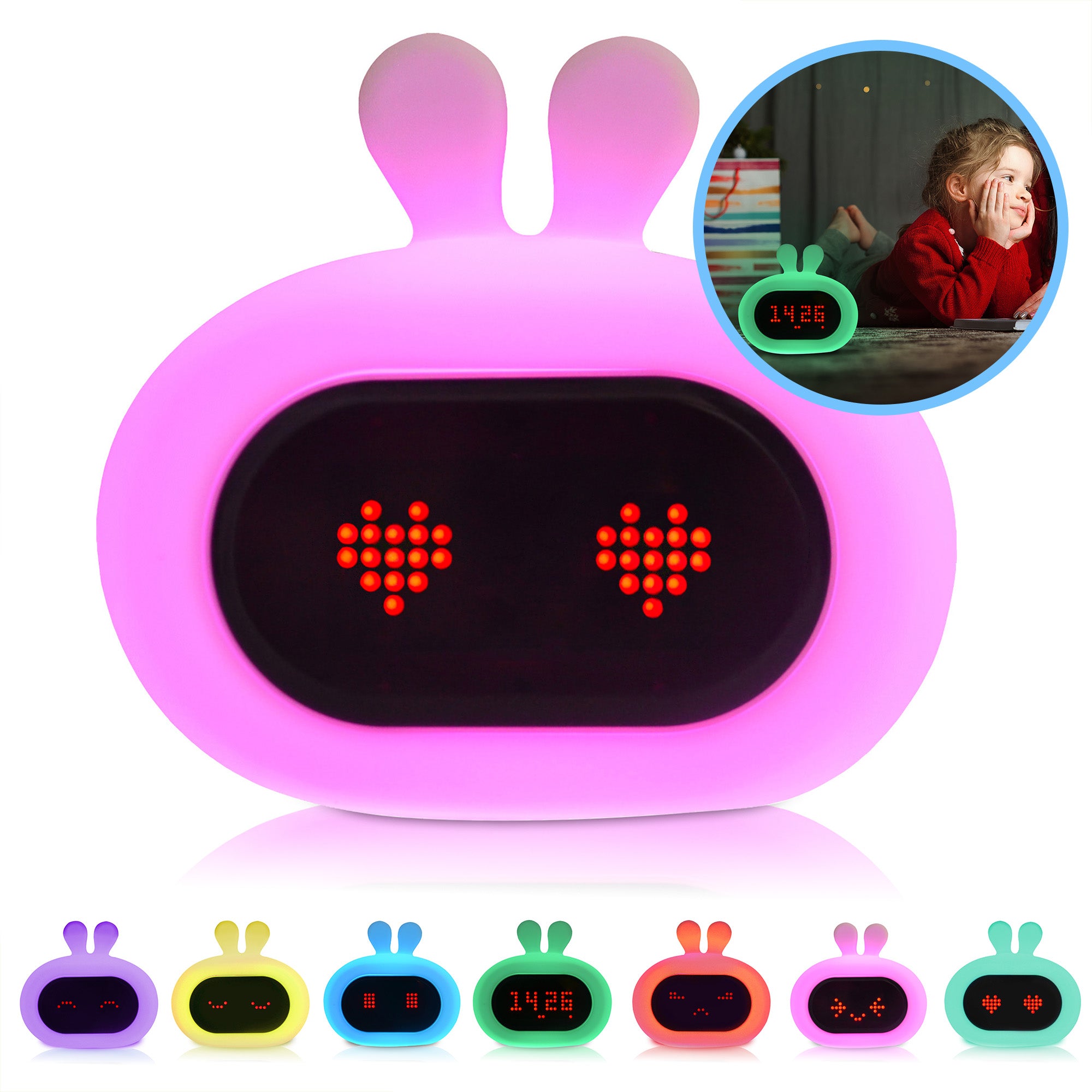
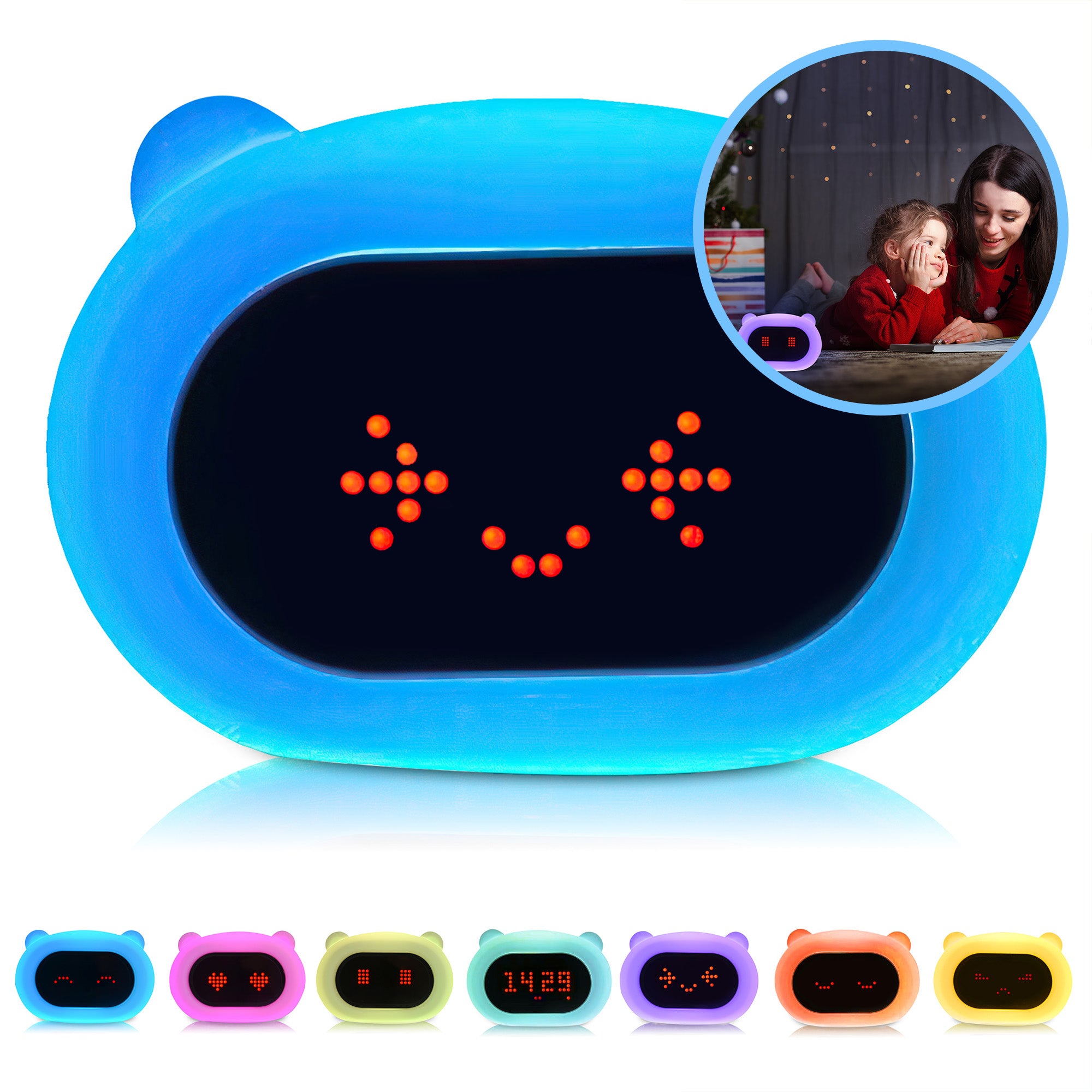
A standard night light is intended to provide soft illumination and reassurance. A sleep trainer adds a recognisable time signal, for example by using a colour or symbol to show when it is time to sleep or when the day can begin. This can be helpful for toddlers and preschool children who wake early and are still learning what morning time means.
The two can work well together, but they have different purposes. Does your child mainly need a reassuring point of light in the dark? A simple, dimmable night light is often enough. Do they also need more clarity about getting up and going to sleep? A calm sleep trainer can then be a valuable addition. Choose a low brightness for night mode here too, so that the device does not become an additional focus of attention.
Choose what suits your child and your evenings
There is no perfect night light that works for every family. A child who likes to look around for a while may benefit from a slightly warmer and more visible light. A child who is sensitive to every light source may sleep more comfortably with only a very small, indirect point of light. Give a new option a few evenings before deciding whether it works.
Ultimately, the loveliest night light is the one that does not take over the room, but adds something gentle: a familiar glow, a recognisable shape and a small sign that the night can be peaceful. This gives bedtime room to become what it can be for families: a safe moment of closeness before the day gives way to sleep.
Are you looking for a calming, dimmable night light for your child? Explore our collection of night lights for babies, toddlers and preschool children.