The moment just before bedtime can suddenly change. During the day everything was still fine, but as soon as the lights go out, the room suddenly feels big, quiet, and a little scary. For many parents, the search query “night light child fear of the dark” is therefore very familiar. You want to comfort your child without creating new habits that later become difficult to break.
A child who is afraid of the dark is not being difficult. They are reacting to a feeling that is very real at that age. Imagination comes to life, shadows seem to move, and every little sound suddenly has meaning. That is exactly why a night light can help — but not just any light, and not every situation works the same way.
When a night light truly helps with a child’s fear of the dark
A night light works best when it has one purpose: reducing tension. Not as a toy, not as extra stimulation, but as a calm anchor in the room. A soft point of light makes the space feel familiar again. It gives children the feeling that they can see where they are, where their stuffed animal is, and that nothing unexpected is happening.
Toddlers and preschoolers especially benefit from this. In this phase, imagination develops quickly, while the ability to put fears into perspective is still limited. A small amount of light can therefore be just enough to make the transition from being awake to falling asleep feel softer. The goal is not to brightly light up the room, but to remove restlessness.
Still, it is important to stay realistic: a night light is not a miracle solution. If a child wakes frequently, struggles to fall asleep, or becomes very dependent on a parent’s presence, there is usually more going on. Think of overtiredness, a busy day, changes at home, or an unsettled sleep routine. The light supports the process, but it does not replace a predictable evening structure.
Why darkness can feel so scary for young children
Fear of the dark is a normal part of development. Children begin to understand more and more about the world around them, but they cannot always place those impressions properly yet. What they cannot see, they fill in with imagination. It is the same imagination that creates creative play during the day, but in the evening can also invent monsters under the bed.
On top of that, young children still rely heavily on signals of safety. During the day, parents, sounds, and light are naturally present. At night, many of those signals disappear. The silence then does not feel neutral, but empty. A soft light can reduce that feeling of emptiness.
Not every child experiences this equally strongly. One child happily sleeps in a dark room from an early age, while another may need a little light for months or even years. That difference is normal. So focus less on what “should” happen and more on what your child currently needs in order to go to sleep with confidence.
How to choose a good night light for children afraid of the dark
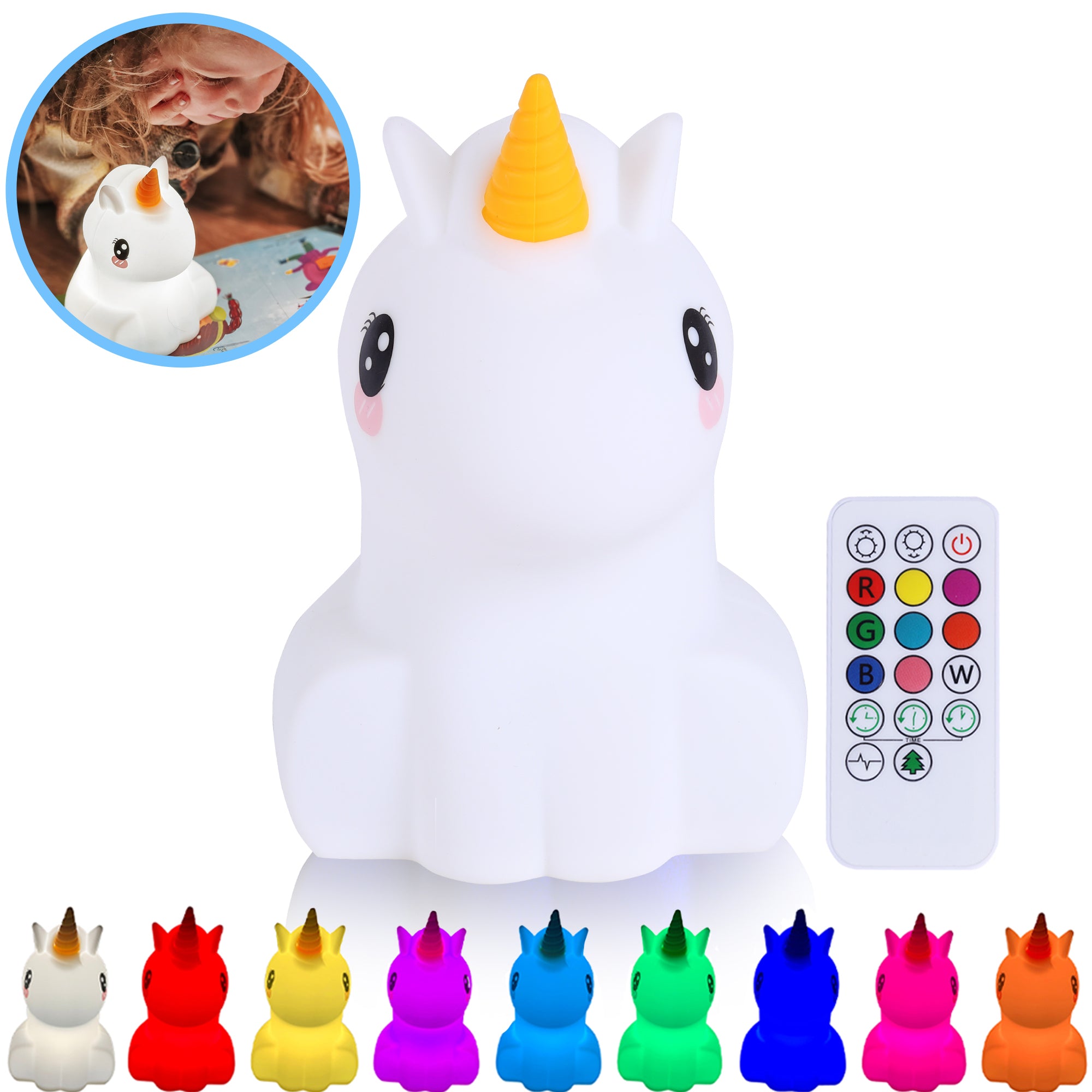
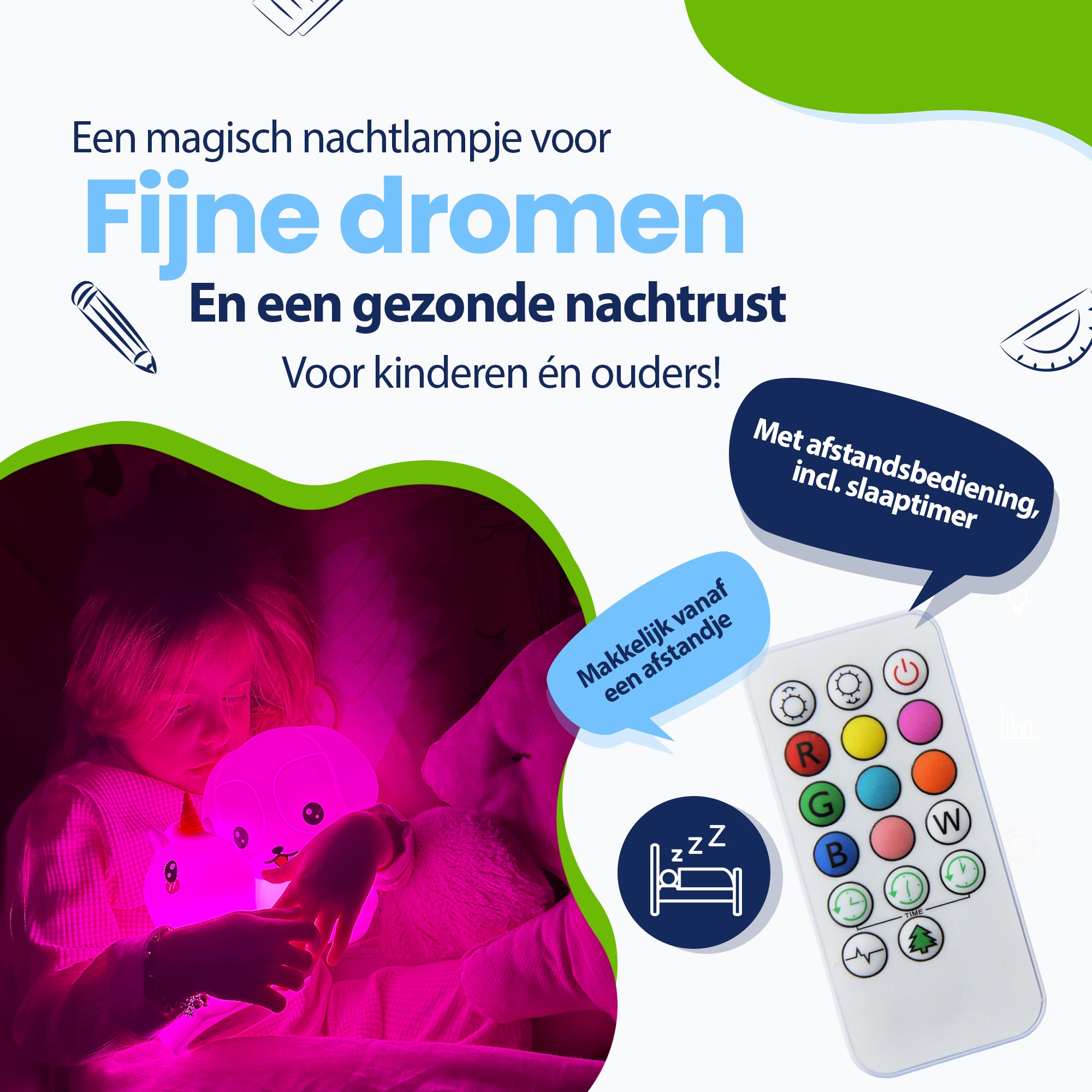
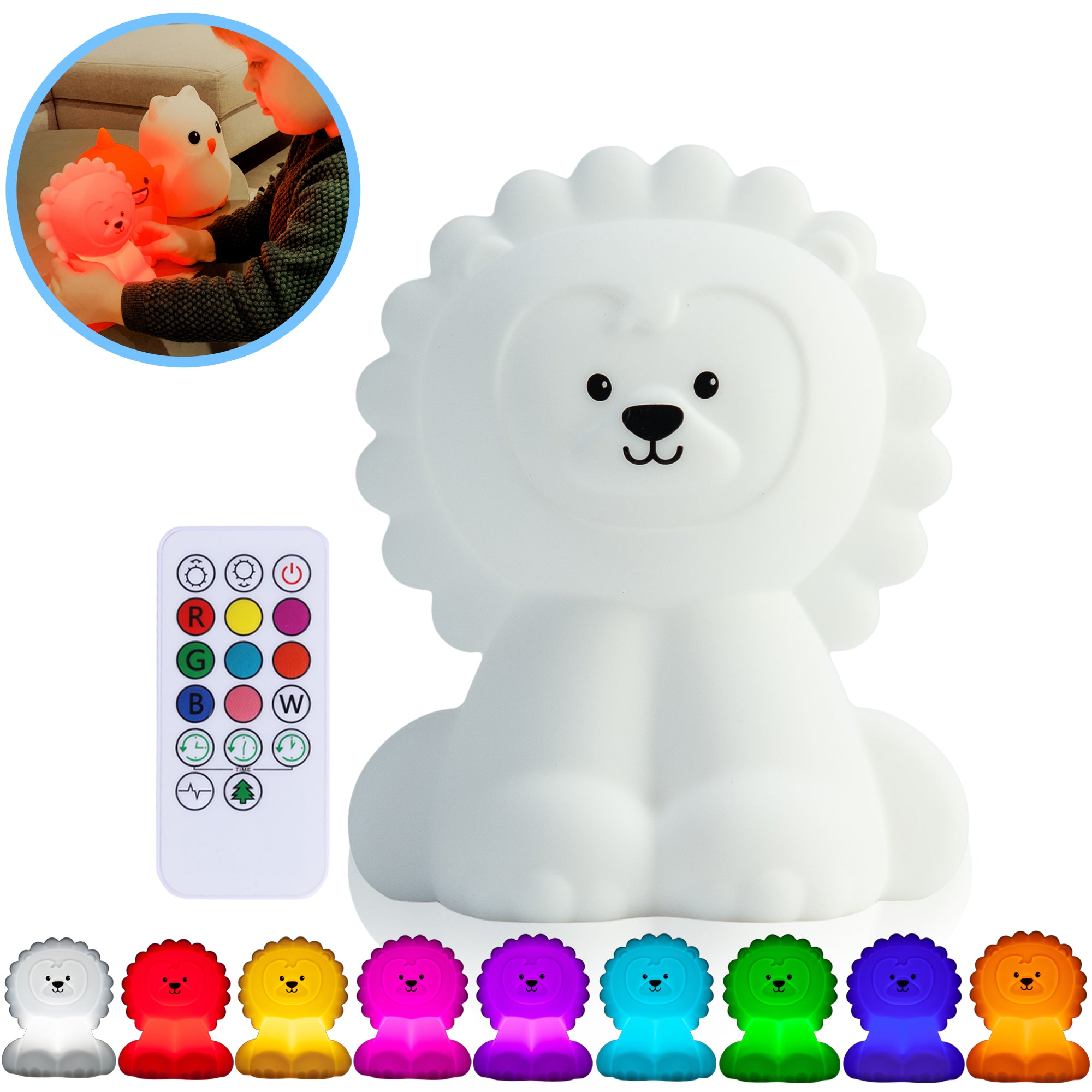
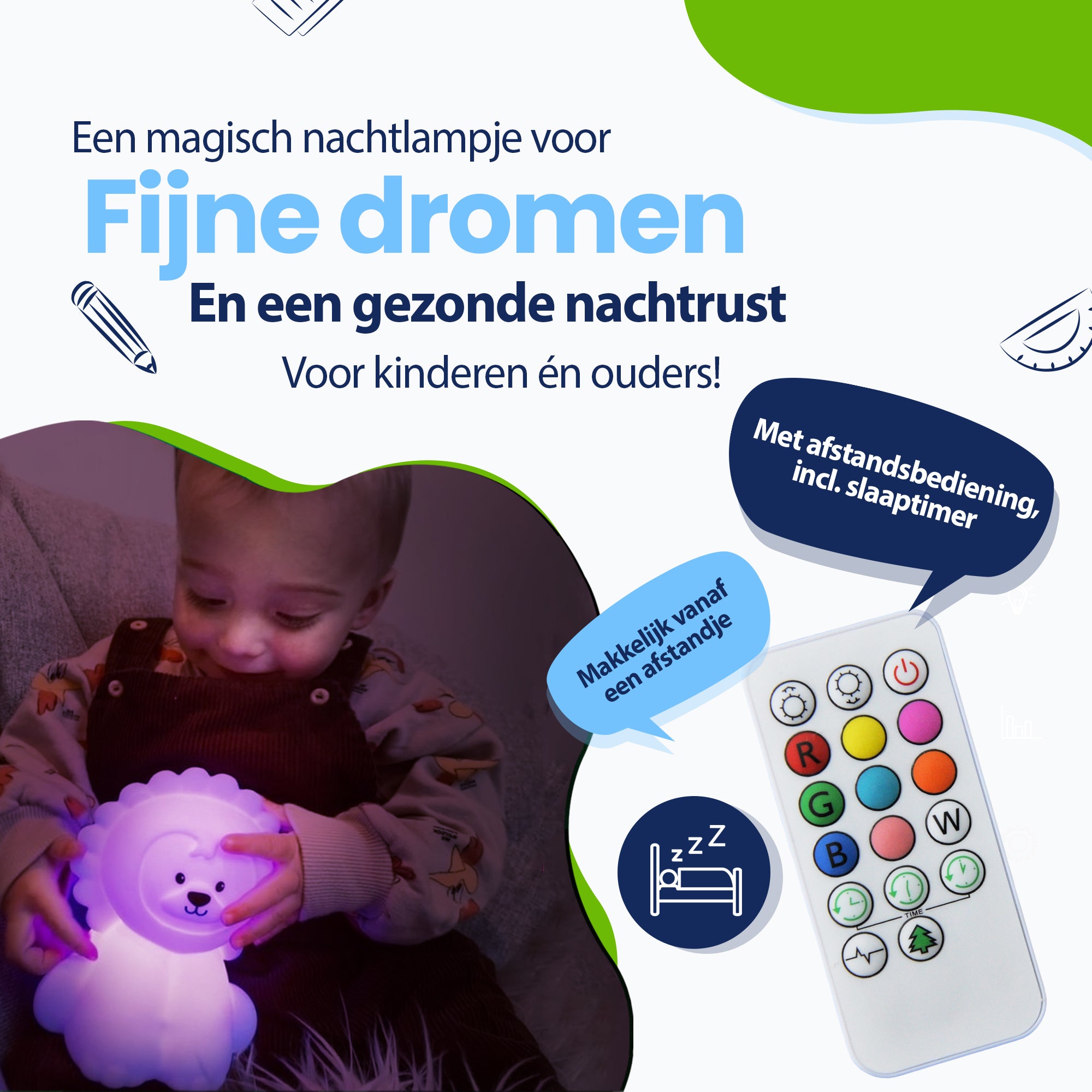
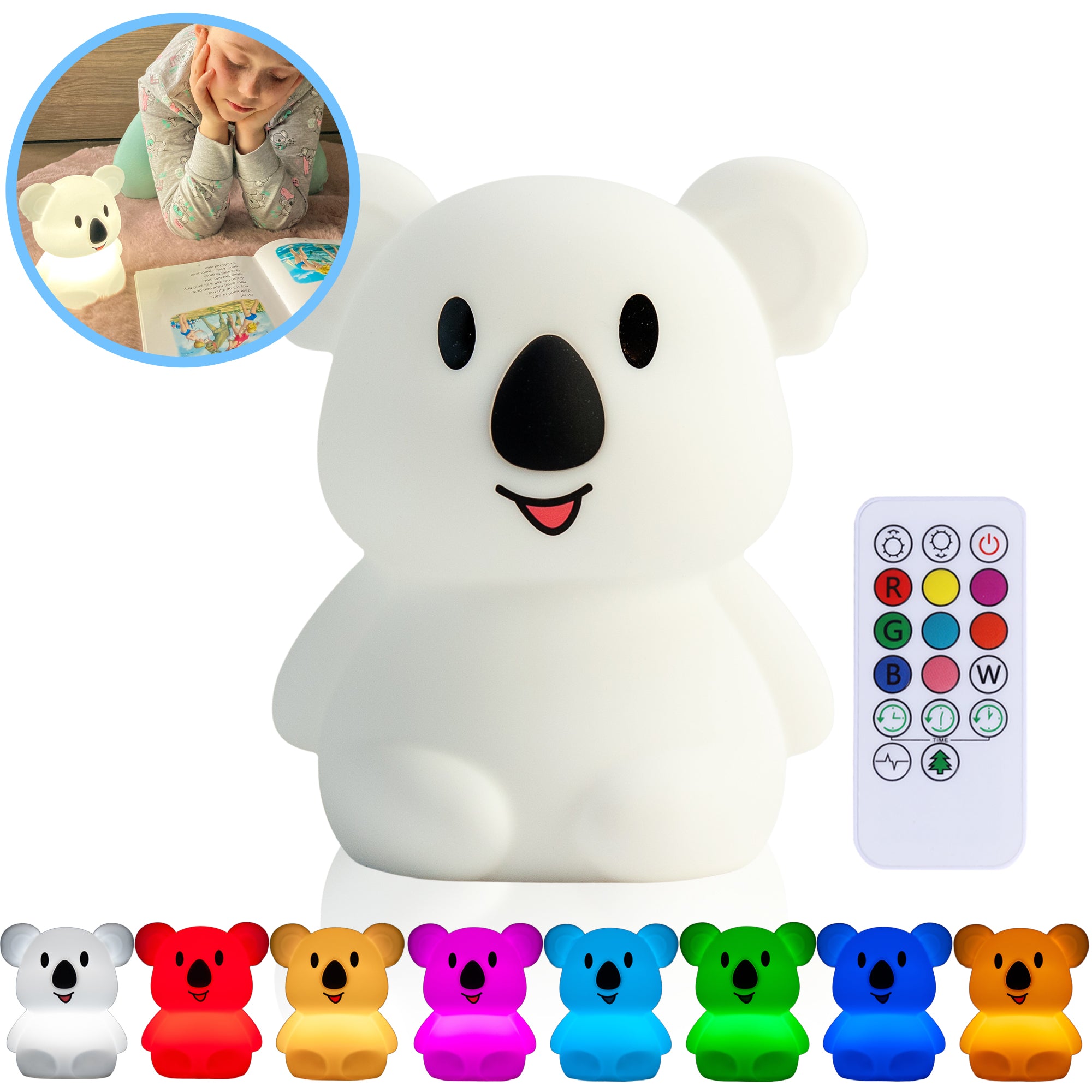
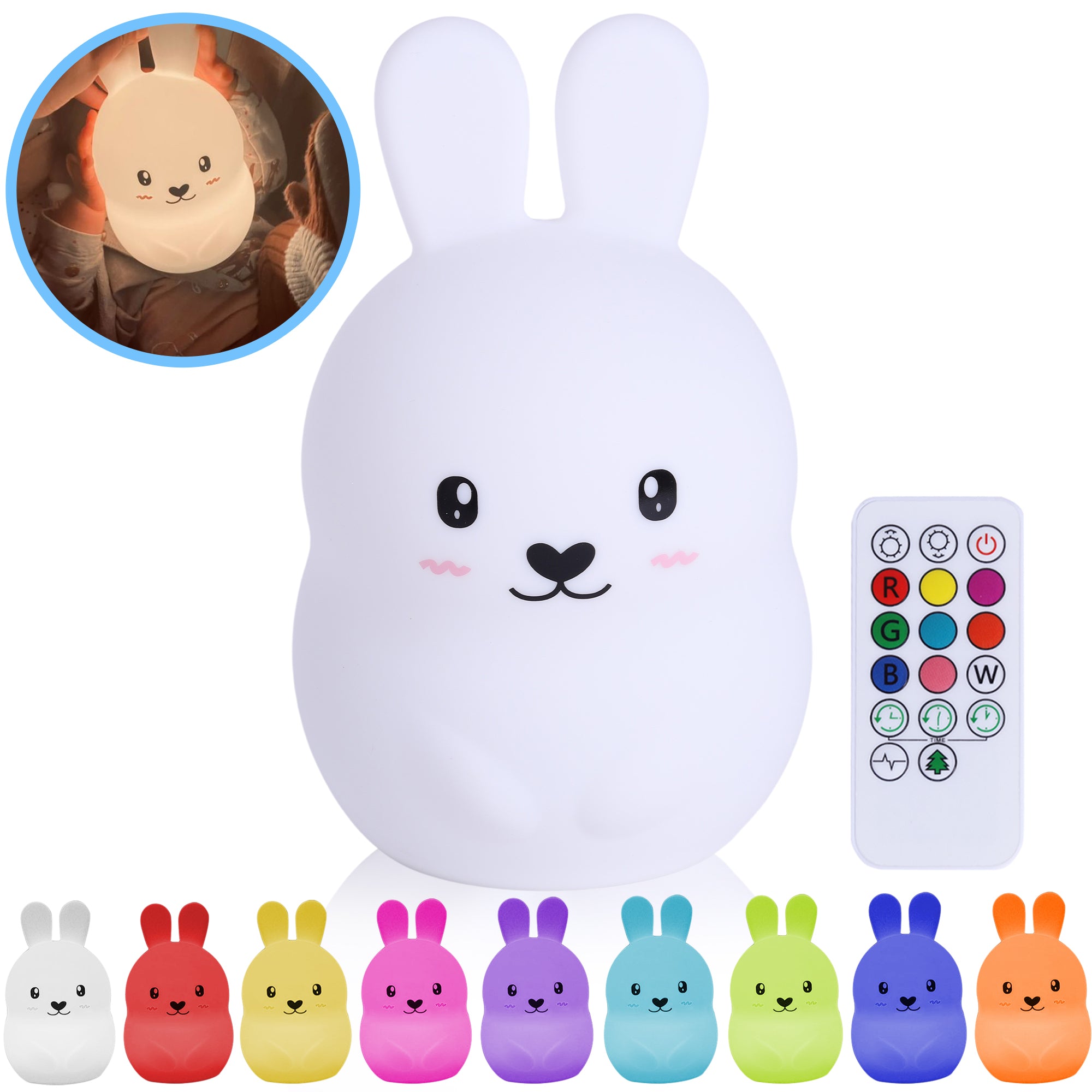
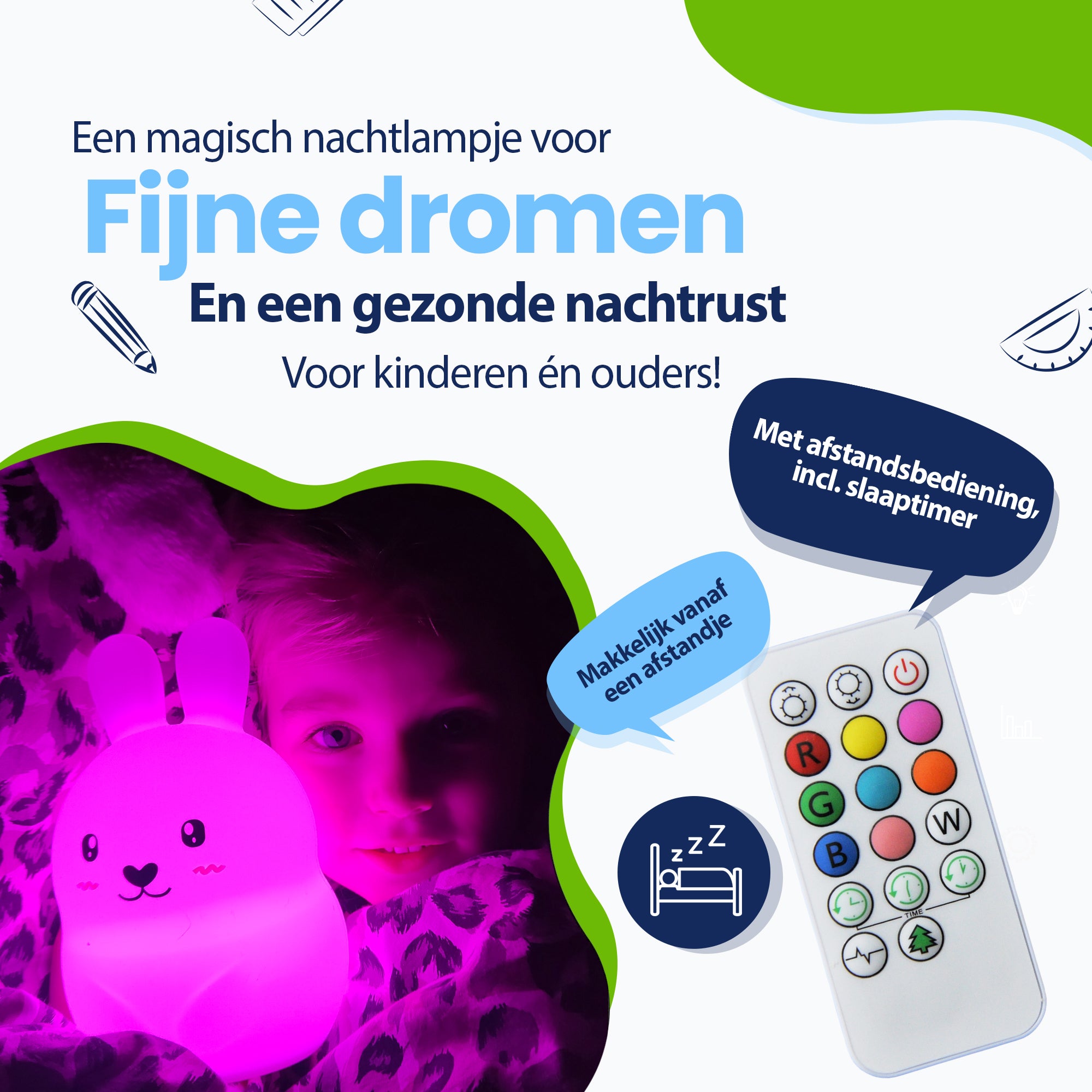
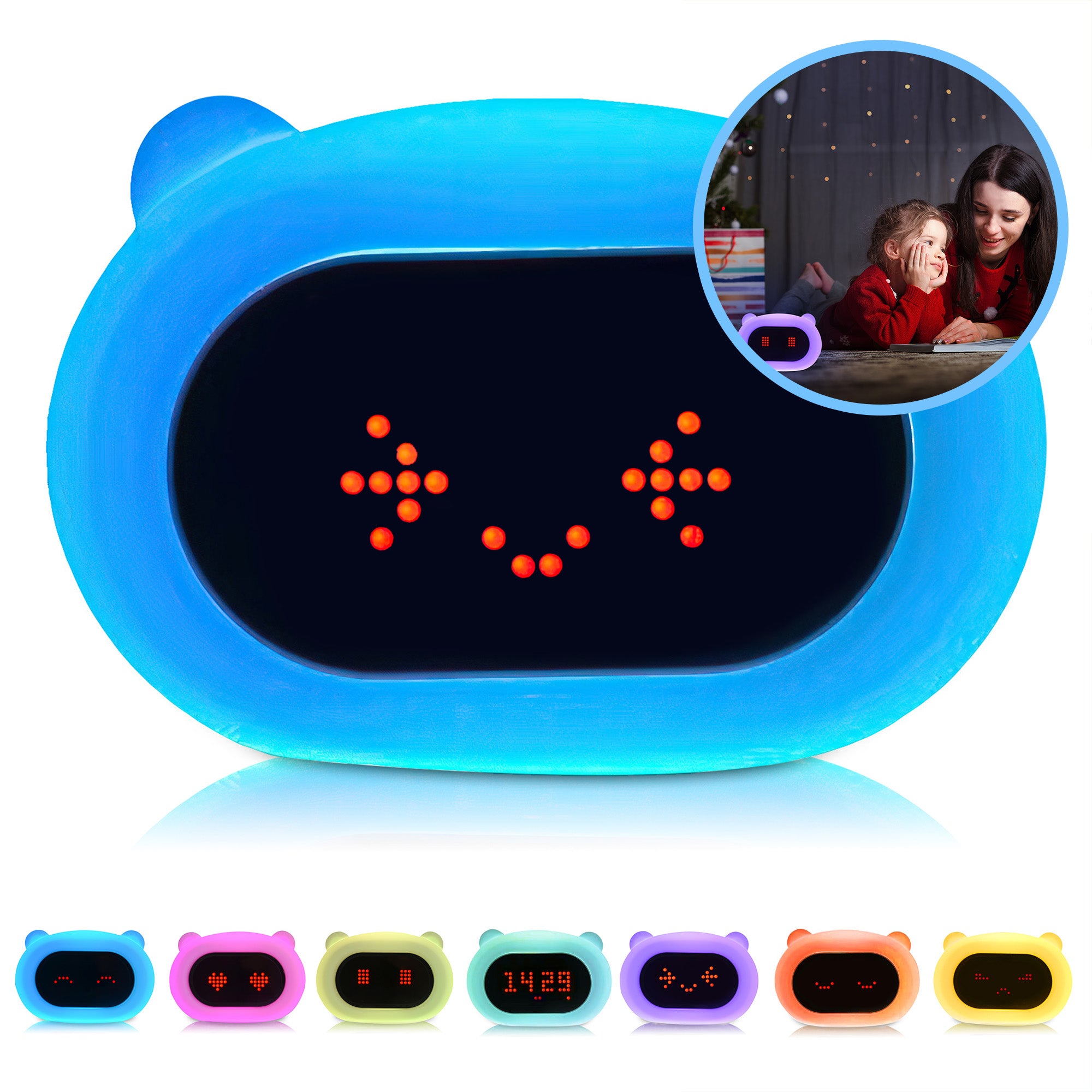
Some night lights combine several functions in one calm design. Think of a soft warm glow, a timer function, and a child-friendly shape that feels familiar and safe. This creates a solution that not only helps with falling asleep, but also supports a secure and recognisable sleep environment.
With a night light, appearance matters less than the effect on calmness. A good light gives off warm, soft light and is not harsh on the eyes. Cool white or blue light is usually less suitable in the evening because it can feel stimulating. Warm light feels calmer and fits better with a relaxed bedtime routine.
The brightness level also matters. Too much light can keep a child alert or make them focus even more on shadows in the room. Too little light offers little reassurance. The best balance is usually somewhere in the middle: enough to make the room feel friendly, but not enough to turn it into a play area.
Ease of use is just as important for parents. A light with a timer is practical because a child can fall asleep with light and later continue sleeping in a darker environment. A portable light can also be comforting for children who briefly wake during the night and want to look around independently. Safe materials, child-friendly designs, and simple controls all add extra peace of mind in daily life.
In homes with young children, sustainability also matters. A product that lasts a long time, can handle everyday use, and does not need replacing quickly often fits better with calm and conscious parenting choices. That is not only practical, but also reassuring for parents who prefer one good solution over constantly searching for new ones.
A night light works better with a consistent routine
A light on its own does less than a light within a familiar bedtime routine. Children sleep better when the path to bedtime is predictable. Think of tidying up, washing, putting on pyjamas, reading a story, cuddling, and then turning on the light at the same time each evening. This way, the night light becomes a familiar part of bedtime rather than an emergency solution during panic.
That difference matters. If you only switch on the light after your child becomes upset, the light takes on the role of a rescue tool. But if you consistently use it as part of bedtime, it starts to represent calmness and safety instead. That predictability often helps children more than parents expect.
Language also helps here. Instead of saying, “Now you don’t have to be scared,” try saying, “This light helps your room feel calm and safe.” In the second sentence, you acknowledge the feeling without making it bigger. That creates trust. Your child learns that fear is allowed to exist, but it does not have to take control.
What is better to avoid with fear of the dark
The urge to explain everything is understandable, but it does not always help. A toddler who is scared of shadows usually gains little from a long rational explanation. At this age, safety is experienced mainly physically and emotionally. A calm voice, predictable habits, and a comfortable sleep environment help more than discussions about what is real and what is not.
A night light that is too bright can also become a problem. It may seem logical to add more light when a child is scared, but bright light can disrupt sleep. The same goes for lights with bright colours, projections, or constantly changing settings. Those may be fun during the day, but around bedtime they are often too stimulating.
Also try to avoid staying in the room longer and longer in order to absorb the fear. Comforting your child is of course important, but if a child can only fall asleep with a parent beside the bed, the challenge simply shifts. Then not only the dark becomes scary, but also falling asleep alone. A night light can actually help make that step feel smaller and gentler.
When more than just a light is needed
Sometimes you notice that the fear goes beyond bedtime. Your child may no longer dare to go upstairs alone, wakes up panicking several times during the night, or seems anxious during the day as well. In those situations, it is wise to look beyond the bedroom. Have there been recent changes such as a new school, moving house, tension at home, or a particularly busy period? Night-time fears are often a signal that your child’s emotional bucket is already full during the day.
In those cases, a broader approach helps. Less stimulation in the evening, less screen time before bed, more moments of connection during the day, and clear bedtime boundaries can together make a big difference. The night light remains valuable, but as part of a bigger picture.
If the fear remains very intense for a long time or continues to increase, extra advice can sometimes be reassuring. Not because something is immediately wrong, but because parents deserve reassurance too. A fresh perspective can help identify patterns and make the right small adjustments.
For better nights, calm often starts small
When it comes to fear of the dark in children, it is ultimately not only about light. It is about what that light represents: familiarity, safety, and a softer transition into the night. For one child, a small warm light is enough. For another, it only truly works when combined with a predictable routine, a cuddly toy, and a calm end to the day.
There is something reassuring in that for parents too. You do not have to do it perfectly. Often it is the small, repeatable things that make the difference — a predictable ritual, a safe bedroom, and a light that is gently present without taking over sleep itself. Those are the moments when bedtime starts to feel lighter again, for both your child and for you.
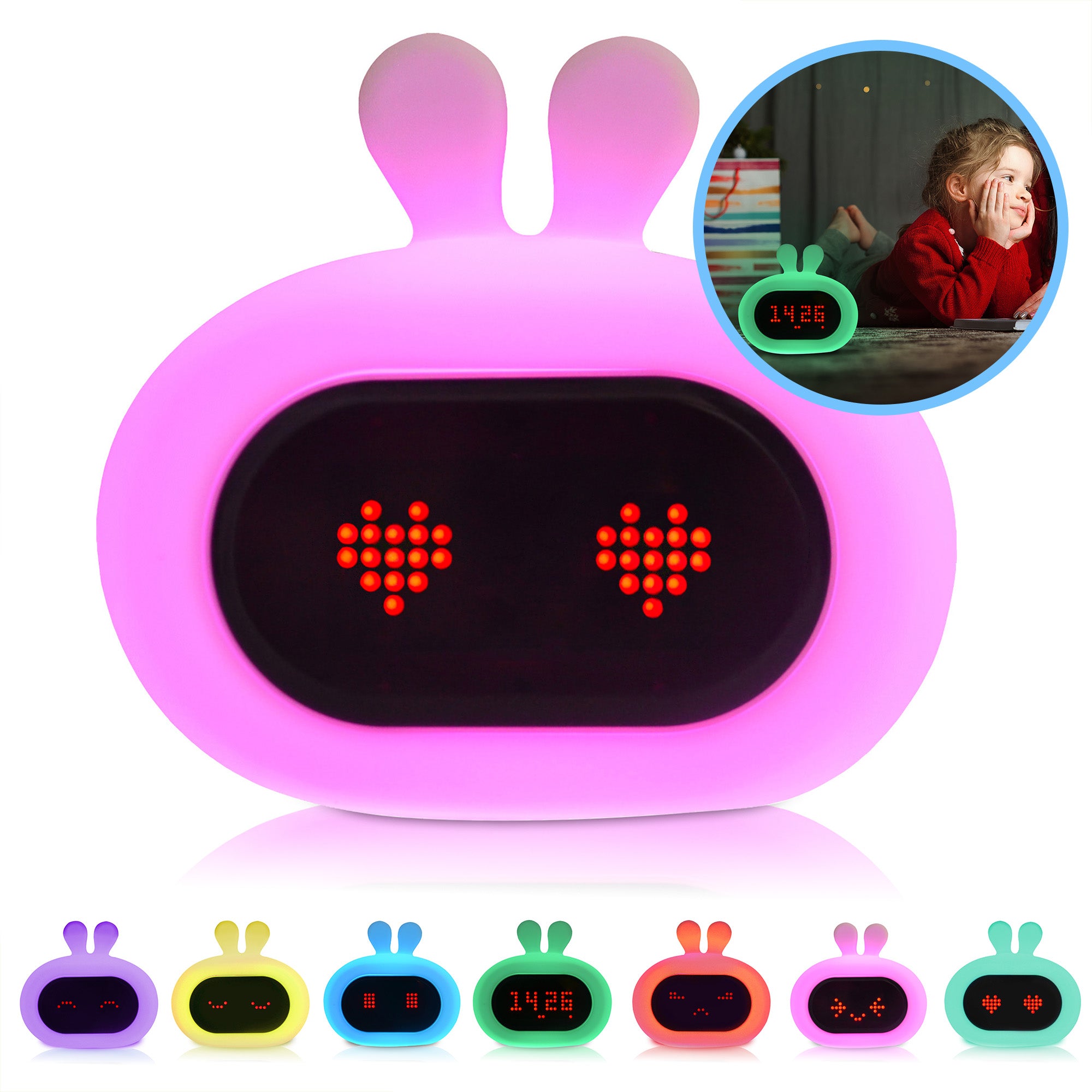
For some children, it also helps to have clear wake-up signals alongside a night light. Read also: Sleep trainer for kids – when to start?
Looking for a night light that truly brings calm?
Discover the Kadoing night lights for children with soft warm light and child-friendly designs for a safe and relaxing sleep environment.