A shape sorter, a wooden musical instrument or an activity board: they can all be educational. Even so, choosing can sometimes feel more difficult than it seems. When comparing Montessori toys and educational toys, it is not about right or wrong, but about the way a child is invited to play. One type of play material offers plenty of freedom for independent discovery, while another provides a clear learning objective. Both can be valuable during a calm and enjoyable playtime.
Montessori toys versus educational toys: the difference
Montessori-inspired toys are often clearly and simply designed, focusing on one particular action or skill. Natural materials such as wood are frequently used. Examples include a board with fastenings, wooden stacking shapes, a simple puzzle or sorting materials.
In Montessori play, the process is often more important than the end result. A child might patiently practise using a zip, try to place a shape in the correct opening or discover how many blocks can remain stacked on top of one another. There is no voice announcing that something has been done correctly and usually no abundance of colours, sounds or buttons either. This simplicity creates space for concentration.
Educational toys are a broader category. They include toys that encourage a skill such as language, counting, fine motor development, music, problem-solving or knowledge of the world. A counting game, letter puzzle, music set or animal game can therefore be educational. Some products are clearly structured around a learning objective, while others primarily support development through play.
The main difference is therefore not always the material, but the play experience. Montessori-inspired materials are often designed to allow a child to practise independently and, with some materials, discover for themselves whether something fits or not. Educational toys may instead include more explanation, activities or a visible learning objective.
Why fewer stimuli can sometimes mean more enjoyment
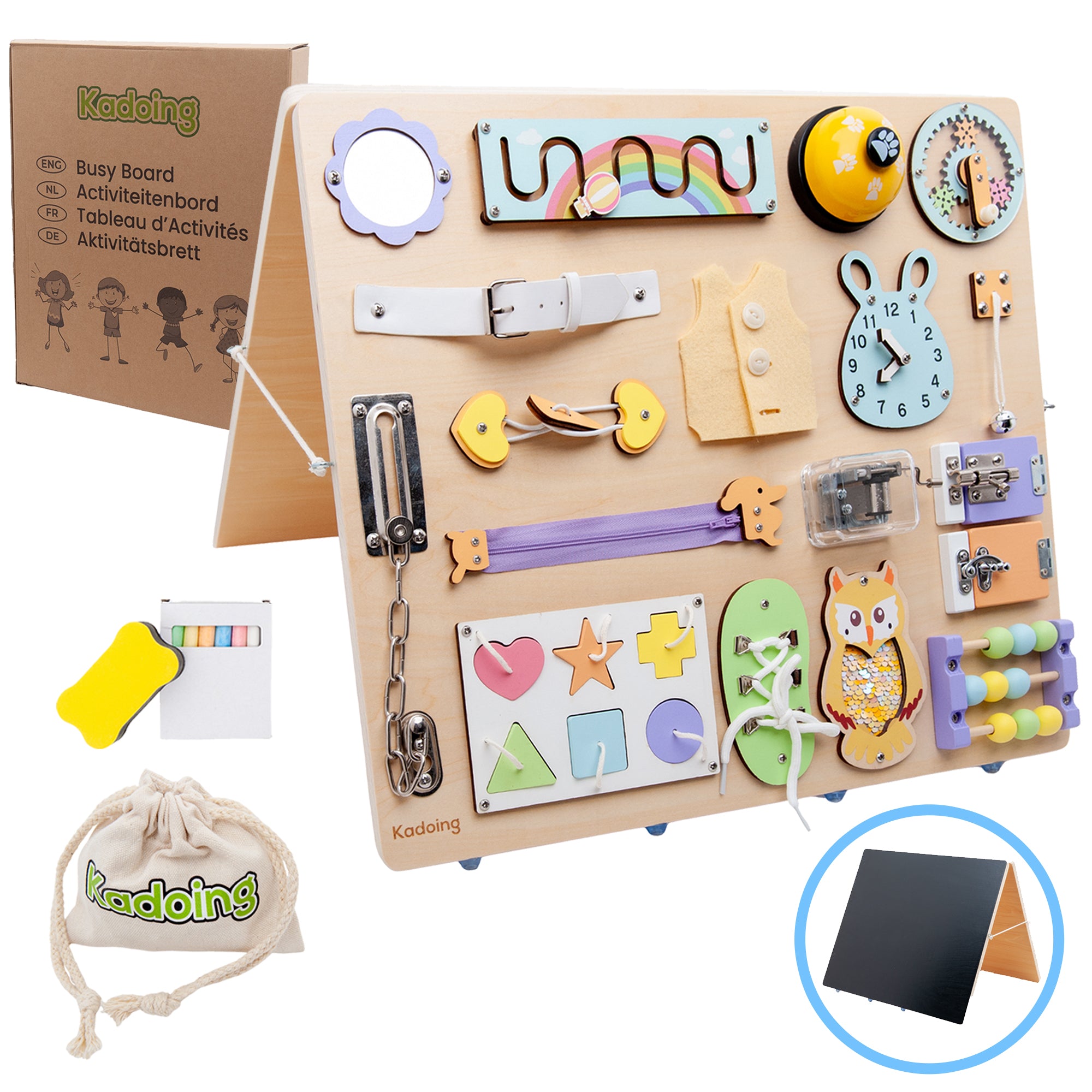
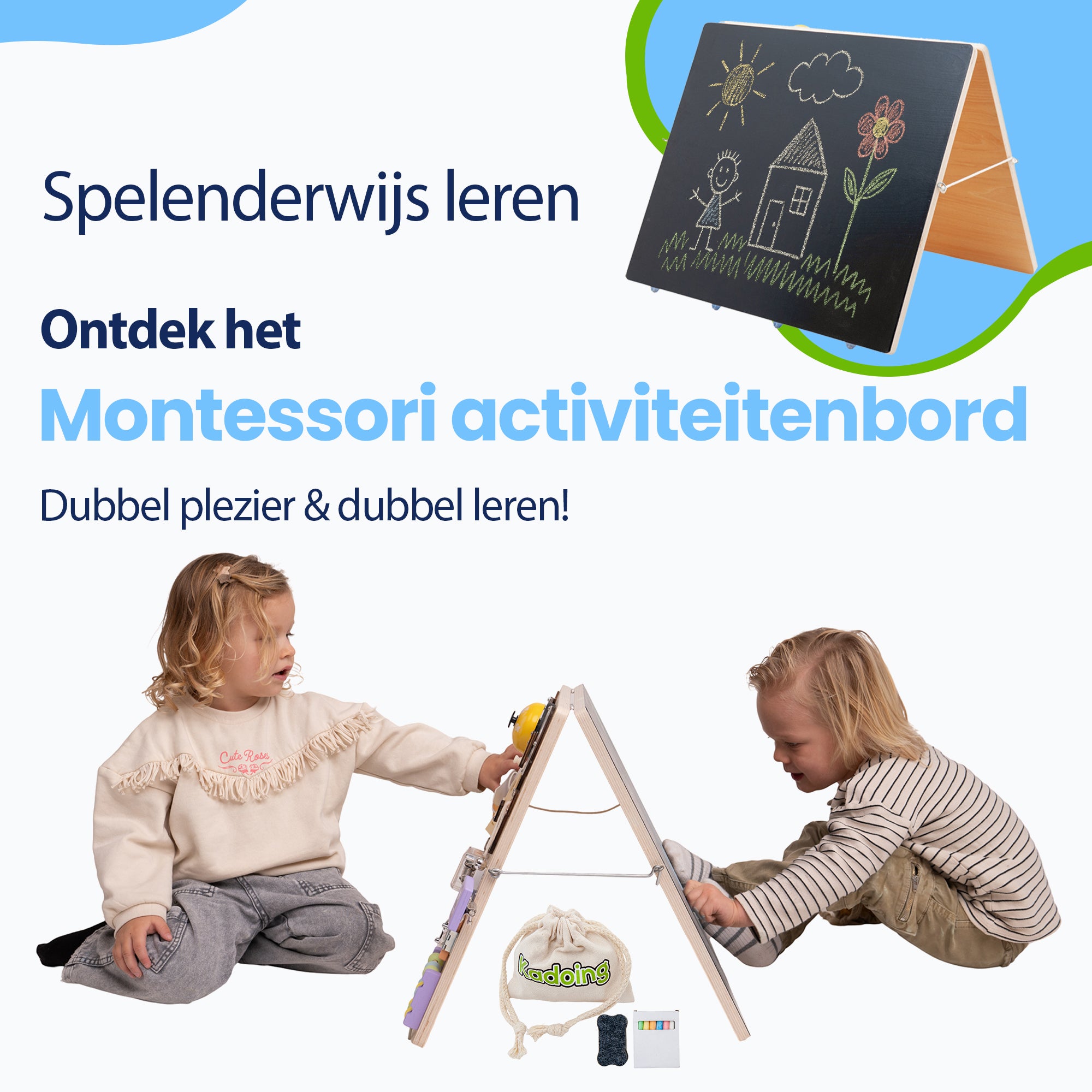
Young children do not need to be entertained constantly in order to learn. Quite the opposite: when a child can stay with one activity for a while, there is room to try, start again and feel proud of a small step forwards. A wooden activity board with buckles, turning knobs and laces can, for example, hold their attention for a surprisingly long time, precisely because the child discovers how everything works independently.
Montessori-inspired materials often have a calm design. That does not mean they have to be boring. A warm colour, a familiar shape or the gentle sound of wood can be inviting without taking over the child's attention. This can be a particularly good match for children who need a quiet playtime at the end of a busy day.
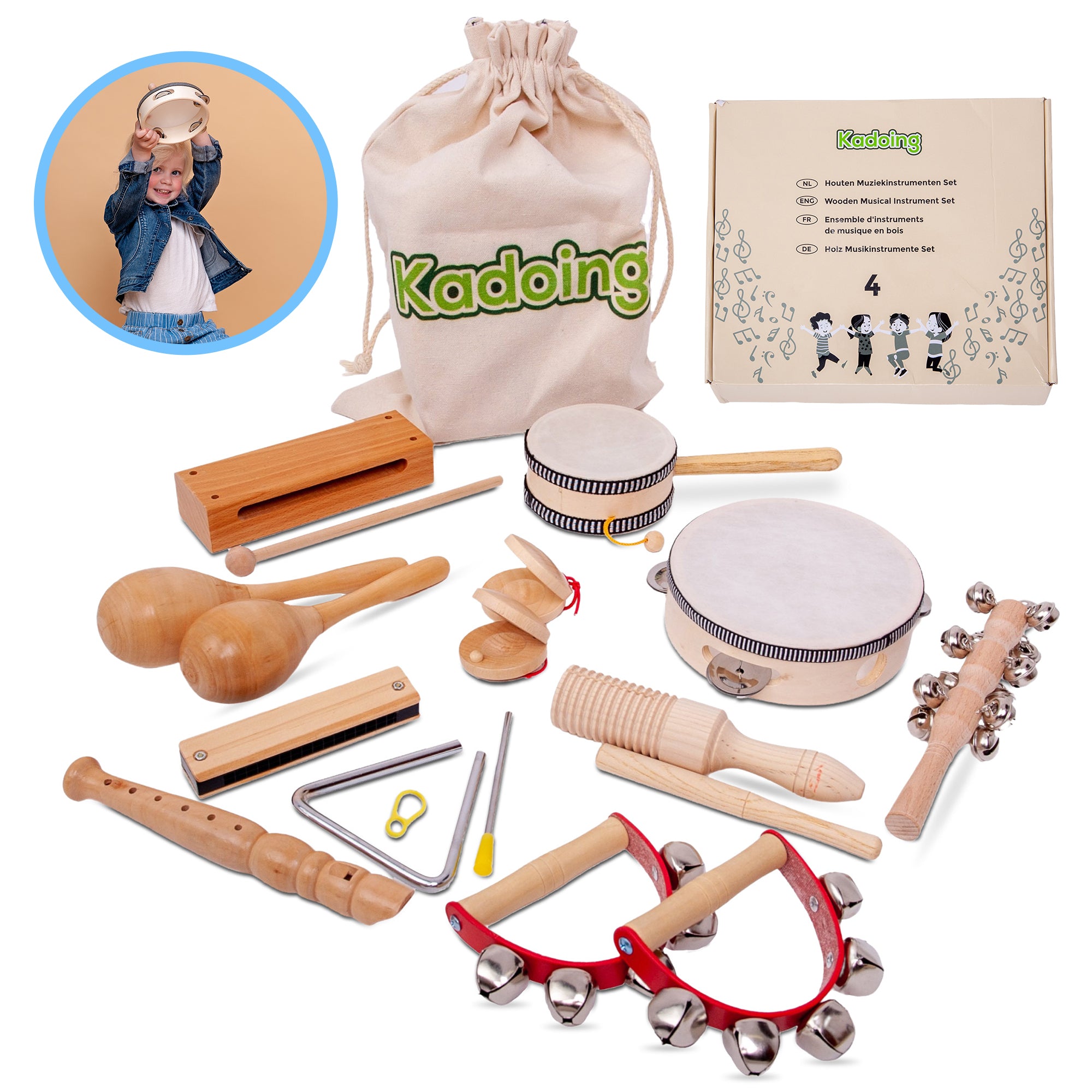
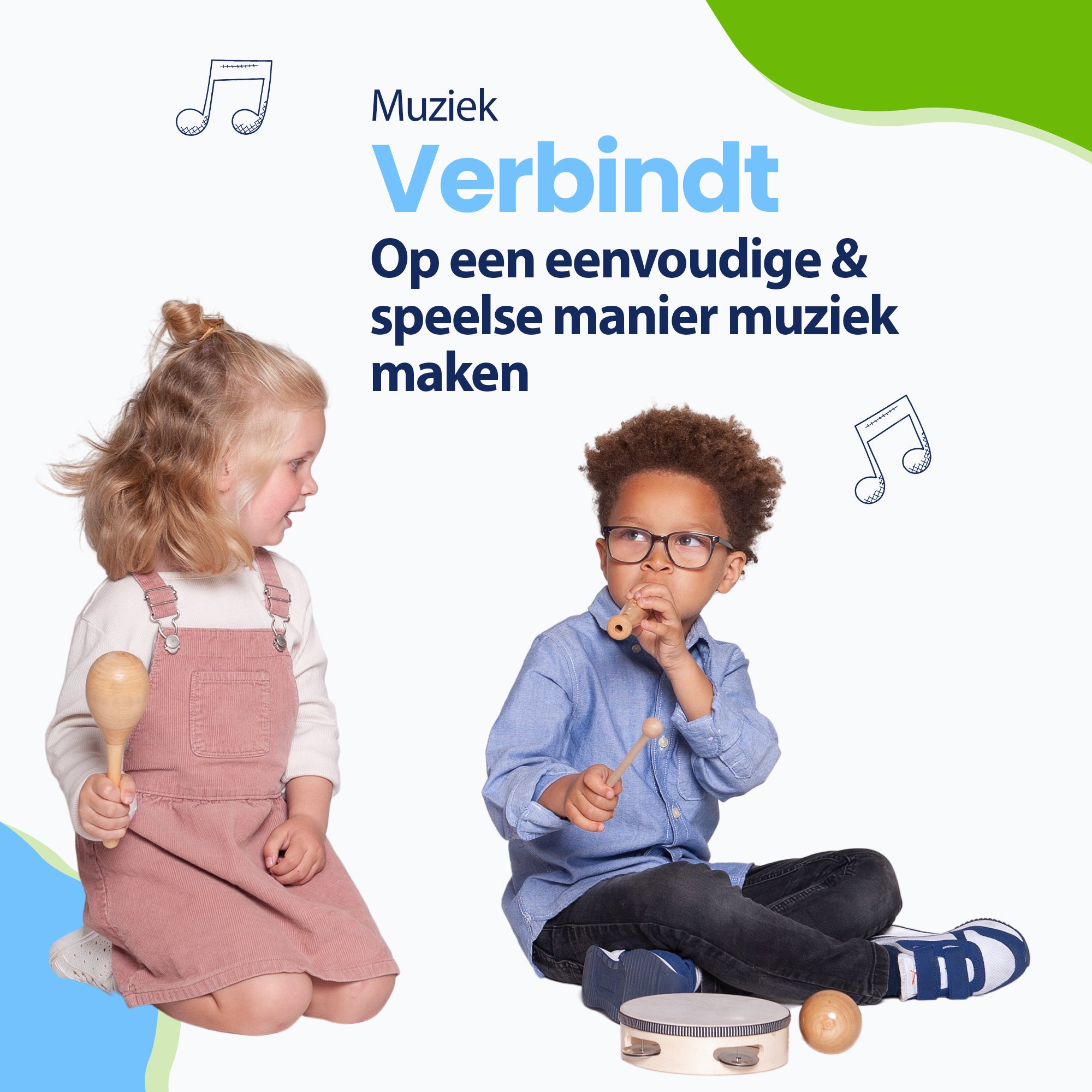
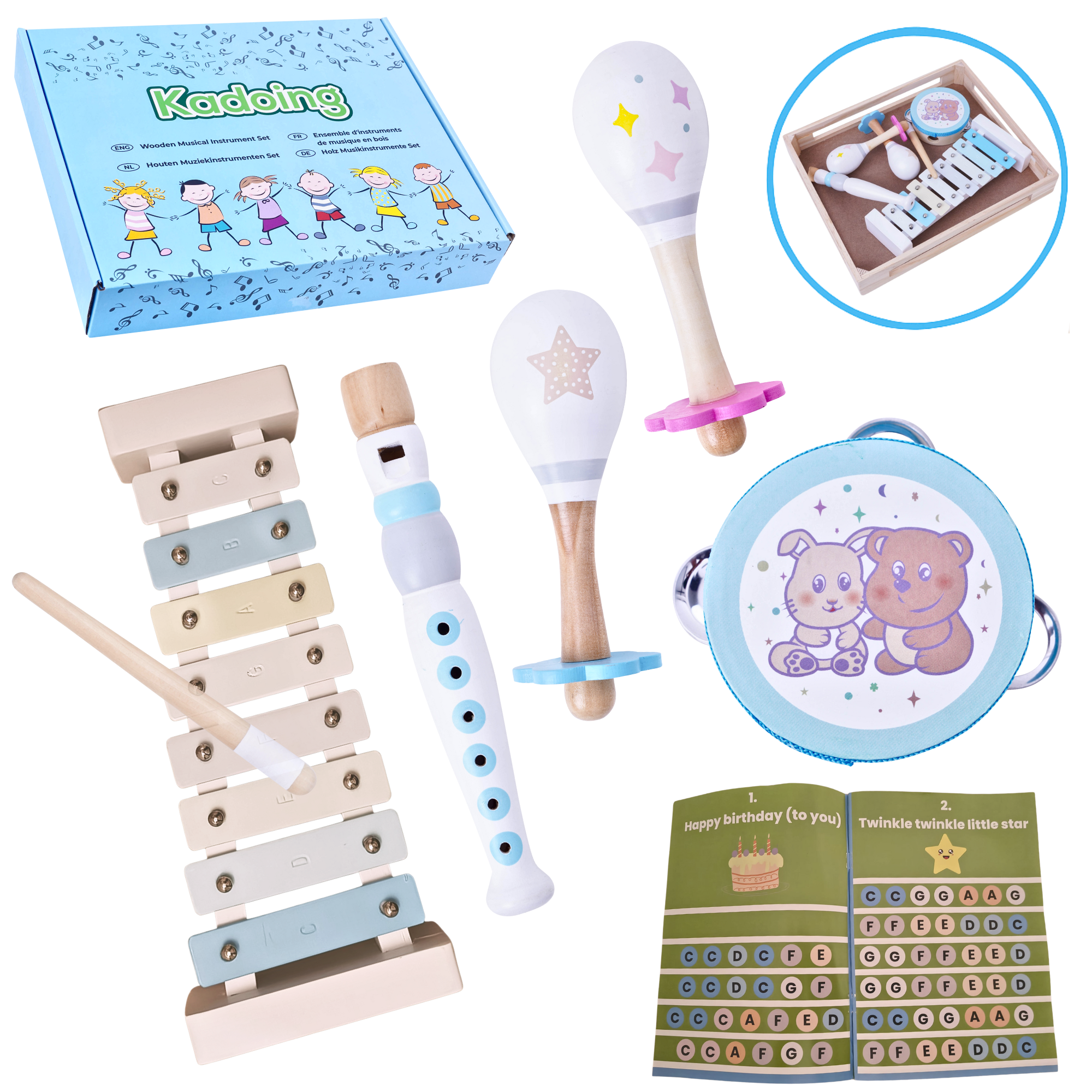
Educational toys with lights, sounds or different play options can also be a good fit, for example if music excites a child or singing together is part of the game. The main question is: does this feature help the play to develop, or does it distract from what the child is doing? A simple drum or xylophone invites a child to explore rhythm. A toy that repeatedly interrupts the activity with loud effects may offer less calm for some children.
What does a child learn from Montessori-inspired toys?
Montessori-inspired toys often focus on skills that appear in everyday life. These include turning, opening, fastening, sorting, stacking and looking carefully. This makes them not only educational, but also familiar. A child who practises with buttons or click fastenings on an activity board may later use that experience when, for example, trying to fasten their own coat.
Fine motor skills also receive plenty of attention. Small hands practise grasping, sliding, threading and placing. The child learns not through an explanation, but through repetition. A block that falls over, a shape that does not fit or a fastening that will not open yet: these are all small invitations to try again.
This kind of play can also support independence. Not because a child has to be able to do everything alone, but because it is good for them to have the opportunity to try something themselves. As a parent or carer, you do not need to demonstrate everything. Simply being calmly present is often enough. A comment such as ‘You found another way’ can build more confidence than immediately telling them what the next step is.
Self-correcting play without pressure
Many Montessori materials are designed so that a child can discover for themselves whether something is correct. A puzzle piece either fits or it does not, for example, or a shape belongs in a particular place. This means the child receives information from the material itself, without an adult constantly needing to assess them.
This does not mean that every toy needs one correct solution. Open-ended play remains just as valuable. With wooden blocks, a child can make a tower, build a house or simply discover how different shapes feel. It is precisely this variety between focused practice and free imagination that keeps play natural.
When are educational toys a good choice?
Educational toys are a good choice when they connect with a specific interest. A toddler who counts everything may enjoy a simple counting game. A child who loves to sing can discover sounds and rhythm through songs, rhythms and instruments. Music encourages listening and turn-taking, but above all it often brings enjoyment and connection.
Playing together can also be a reason to choose educational toys. A matching game, a book with search activities or a musical activity gives parents and children a clear starting point. This can be useful on a rainy afternoon, during a quiet moment after a meal or when a grandparent or childminder wants to do something enjoyable without a screen.
Do pay attention to the age recommendation and the way a child uses toys. Material that is too difficult can be frustrating, while a toy whose possibilities are quickly exhausted offers little challenge. Look at what your child is already trying to do, rather than focusing only on the recommended age. Are they trying to open things? An activity board could be suitable. Do they love joining in with songs? A simple wooden musical instrument makes a lovely invitation.
How to choose without an overflowing toy basket
A good toy choice does not begin with the label attached to it, but with your everyday life. Does your child mainly need a calm playtime after nursery or school? Choose something clear, tangible and predictable. Do you have a long weekend ahead in which you would like to play together? An educational game involving language, music or numbers can then be especially enjoyable.
It helps not to offer all the toys at once. A small, clearly arranged selection makes choosing easier and brings fresh attention to toys you already have. You could, for example, set out an activity board, a set of blocks and a musical item. Change the materials after a while, without needing to buy something new each time.
With both kinds of toy, pay attention to practical quality too. Durable materials that can withstand daily use, a safe finish and a size suitable for the child's age provide reassurance. Wood feels warm, often lasts a long time and can become a beautiful part of a calm play corner. Always check that the parts are firmly attached and follow the safety guidance supplied with the product.
Three questions to help you choose
Ask yourself what your child is curious about at the moment, how much guidance the toy requires and whether it suits their current energy level. A product does not need to stimulate every area of development at the same time. One clear invitation — to build, feel, make music or practise with fastenings — is often more than enough.
Your own preferences matter too. You may appreciate toys that look attractive in your home, are easy to tidy away or can be used at different times. Toys that fit well into your family rhythm are usually used more often than toys that only sound impressive on paper.
The best choice is often a combination
Montessori toys and educational toys do not have to belong to two opposing camps. A wooden puzzle can be both Montessori-inspired and educational. A musical instrument can encourage free discovery and help a child recognise rhythm. Look beyond the label, therefore, and pay attention to what actually happens when your child plays with the toy.
For calm practice moments, simple materials that a child can explore independently often provide a good foundation. Educational toys can be a lovely addition for laughing and singing together or exploring new topics. This creates a play corner that is not about learning as much as possible, but about attention, confidence and enjoyment.
A child who opens a fastening with concentration, proudly builds a tower or taps out a song with you on an instrument is already learning fully. Give them time for that. It is in these small, unforced moments that not only a skill grows, but also the reassuring feeling: I am allowed to try, and you are close by.