A toddler who builds a tower, knocks it over with complete concentration and immediately starts again is not simply playing. They are experimenting with balance, cause and effect, patience and pride. The 10 best educational toy ideas for toddlers connect perfectly with these small everyday discoveries. They give children space to try things for themselves while remaining clear, safe and pleasant for parents to have at home.
Toddlers do not need a playroom full of stimulation. A few thoughtfully chosen items that can be used in different ways often provide more enjoyment and more opportunities for development. Above all, choose toys that suit your child’s age, interests and abilities. What is an enjoyable challenge for one toddler may still be too difficult or already too simple for another.
What good toddler toys should offer
Educational toys do not need to feel like a lesson. In fact, toddlers learn most when they are free to repeat, imagine and find their own solutions. Do not only look at the skills a toy promises to develop, but also ask whether your child will be able to use it differently tomorrow.
For parents, safe materials, sturdy construction and a calm design are just as valuable. Wood, fabric and other sustainable materials often feel pleasant and can last a long time, even when toys are passed from brother to sister or from cousin to cousin. Always check the age recommendation, avoid small loose parts for young children and stay nearby when an activity requires supervision.
10 top educational toy ideas for toddlers
1. Stacking blocks for big plans
Blocks are simple but never boring. A toddler learns to stack, sort, compare and build with them. At first, there may be a low row across the floor; later, a bridge for a soft toy or a tall tower that is meant to fall over.
Wooden blocks in different shapes invite even more investigation: which shape rolls, which one stays upright and which one fits into the opening? During play, use words such as high, low, heavy, light, above and below. This helps vocabulary grow without taking over the play.
2. A shape sorter that invites experimentation
A shape sorter helps toddlers recognise shapes and practise hand-eye coordination. The circle does not fit through the square opening. That can be frustrating, but it is also a valuable opportunity to look again and try once more.
Choose a version with a manageable number of shapes rather than a very busy toy with lights and lots of sounds. A calm shape sorter allows your child to hold their own attention. Has your toddler quickly understood the idea? Turn the shapes around or ask your child to tell you which shape you should look for.
3. An activity board for curious hands
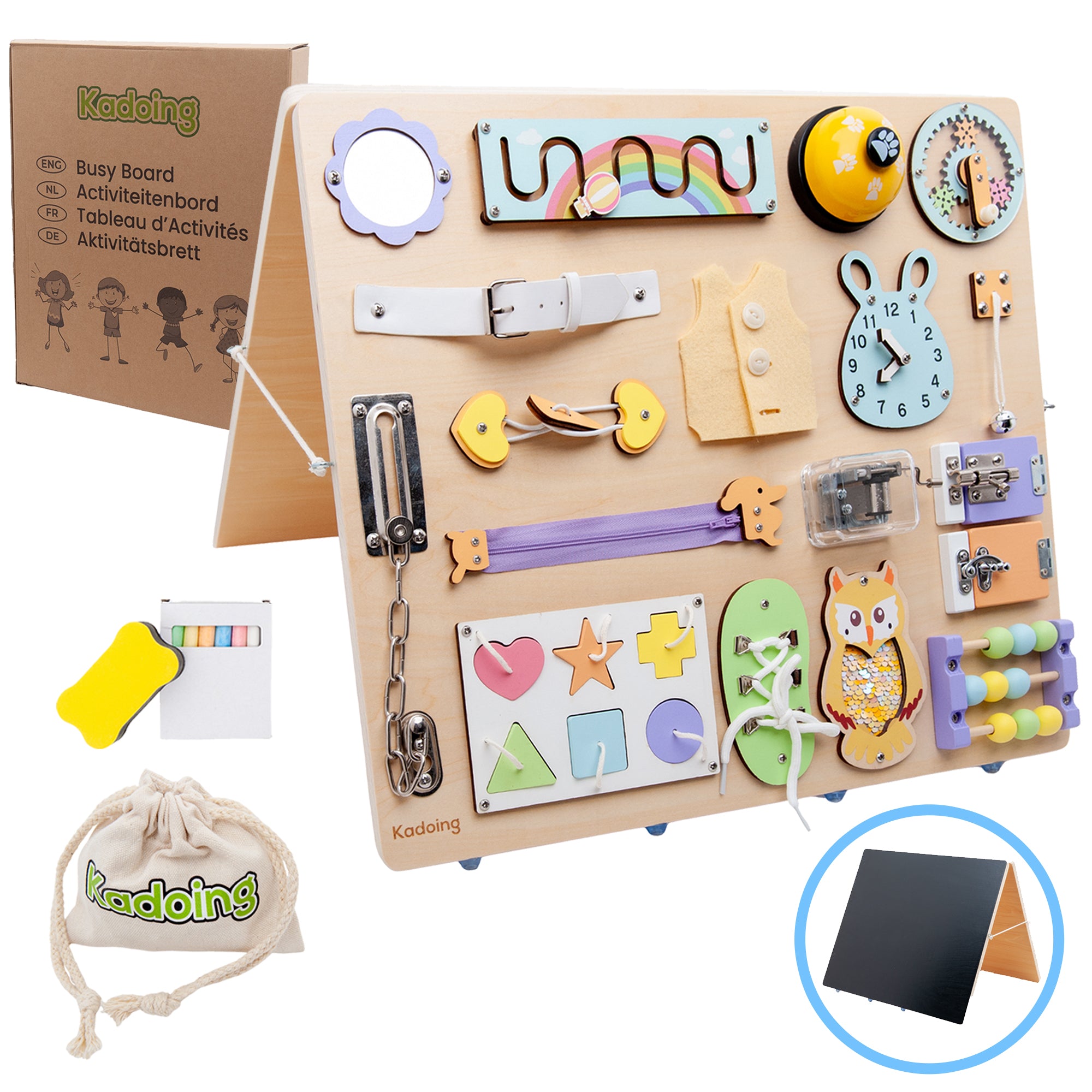
Rotating locks, sliders, laces, gears and little doors make an activity board especially appealing to toddlers. These actions practise the fine motor skills that later return when getting dressed, drawing and eating independently.
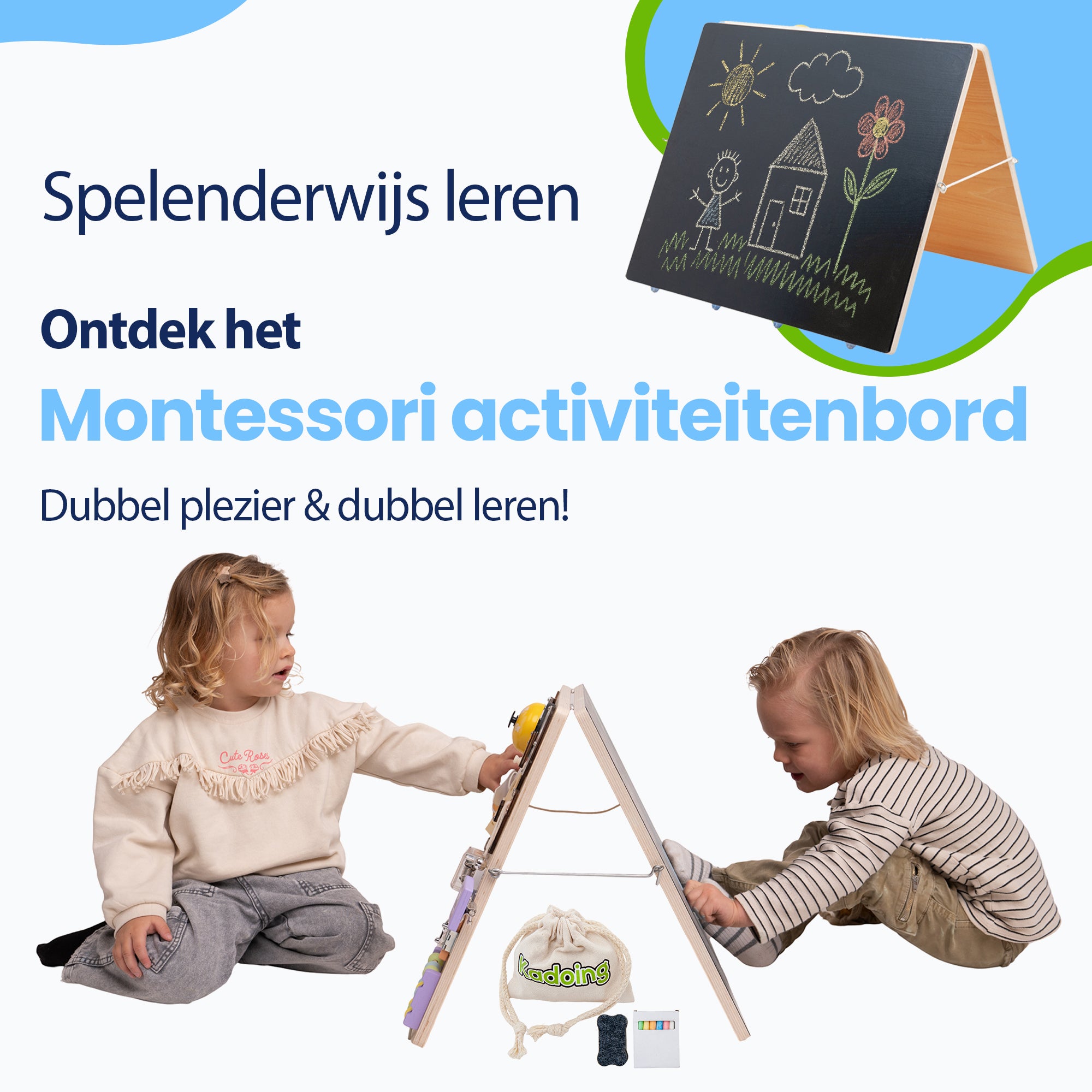
A Montessori-inspired activity board also offers a comfortable pace. Your child chooses which part is interesting and can remain focused on one movement for a long time. This suits toddlers who want to do everything themselves but sometimes still need help with complicated fastenings. Do not explain too quickly: waiting for a moment often creates space for their own solution.
4. Musical instruments for rhythm and language
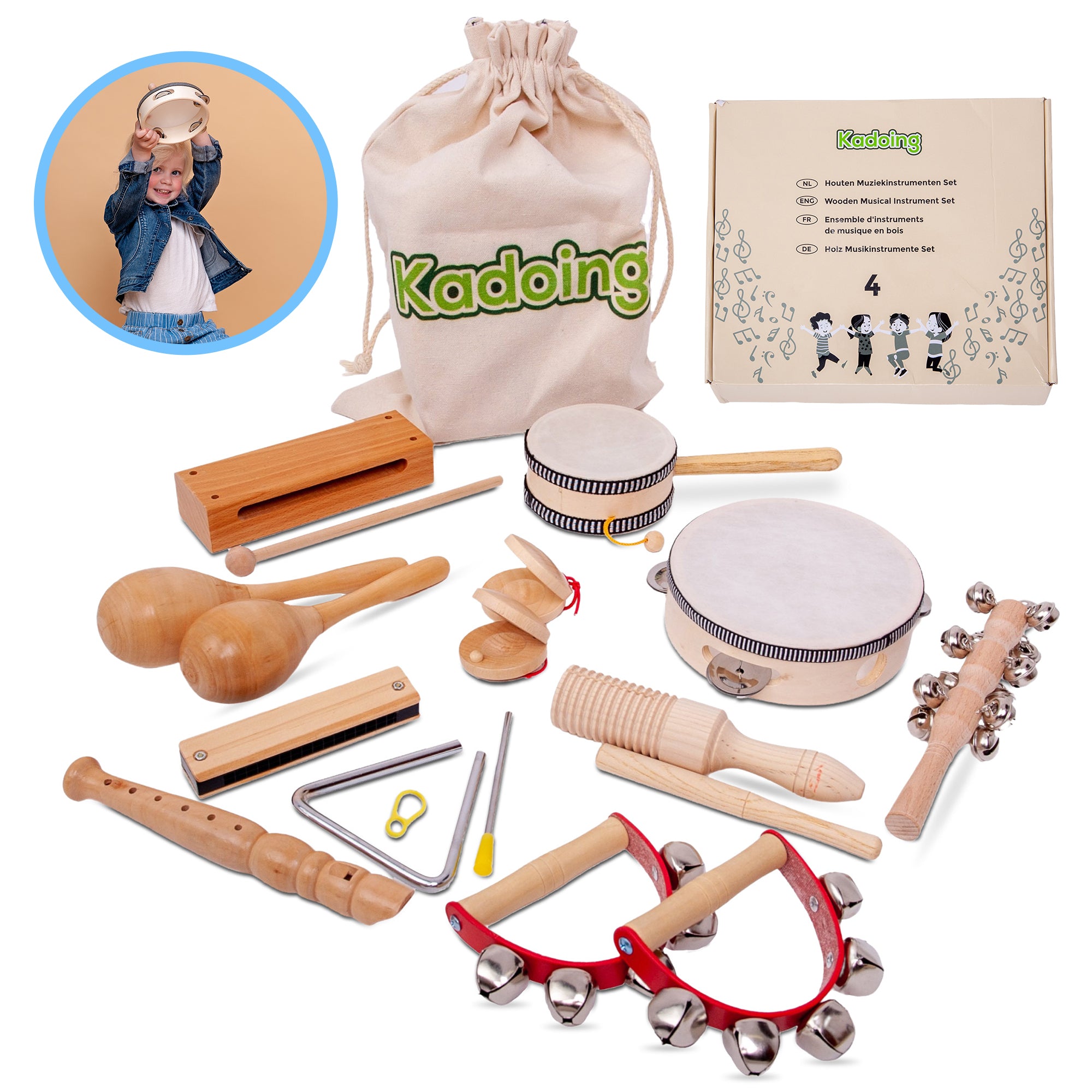
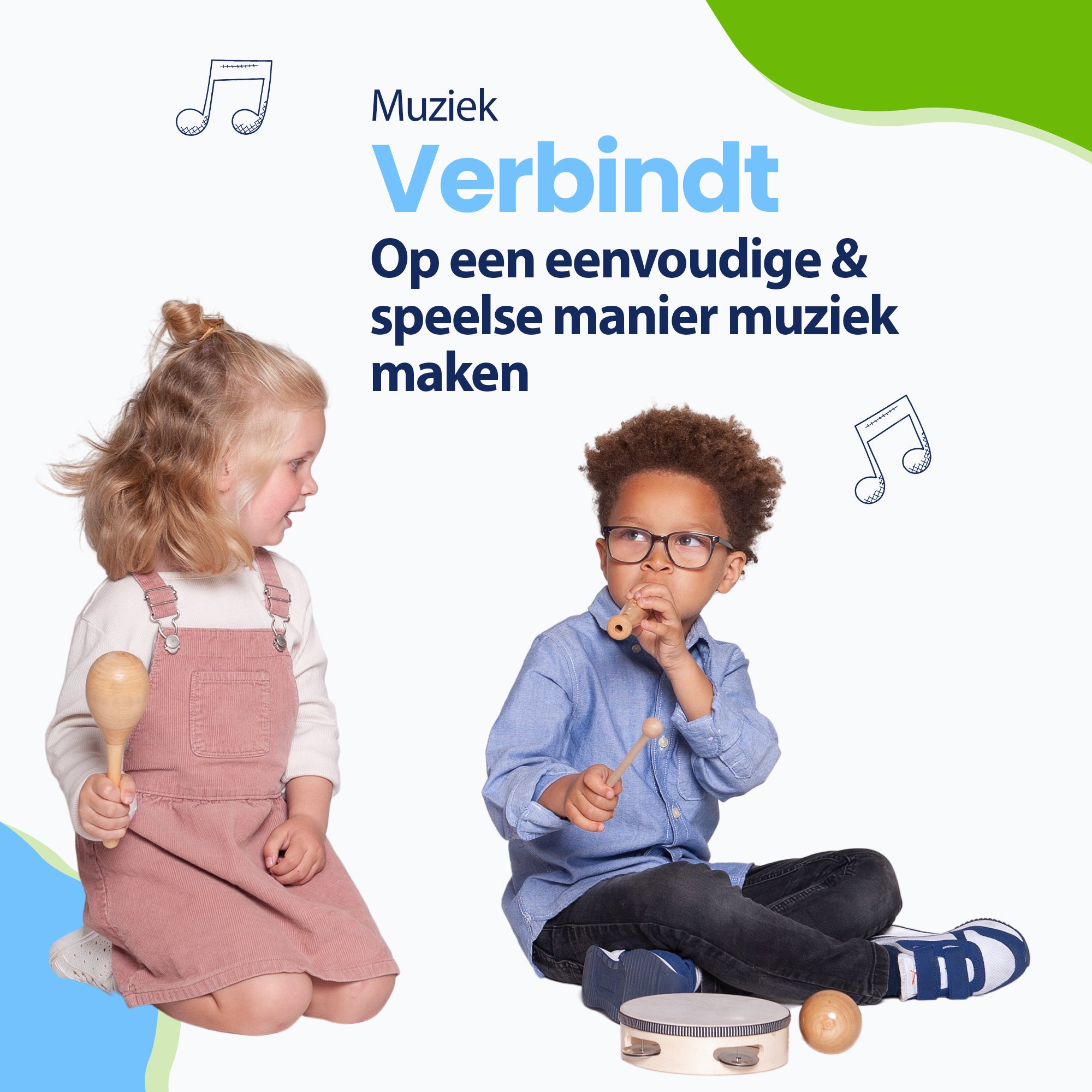
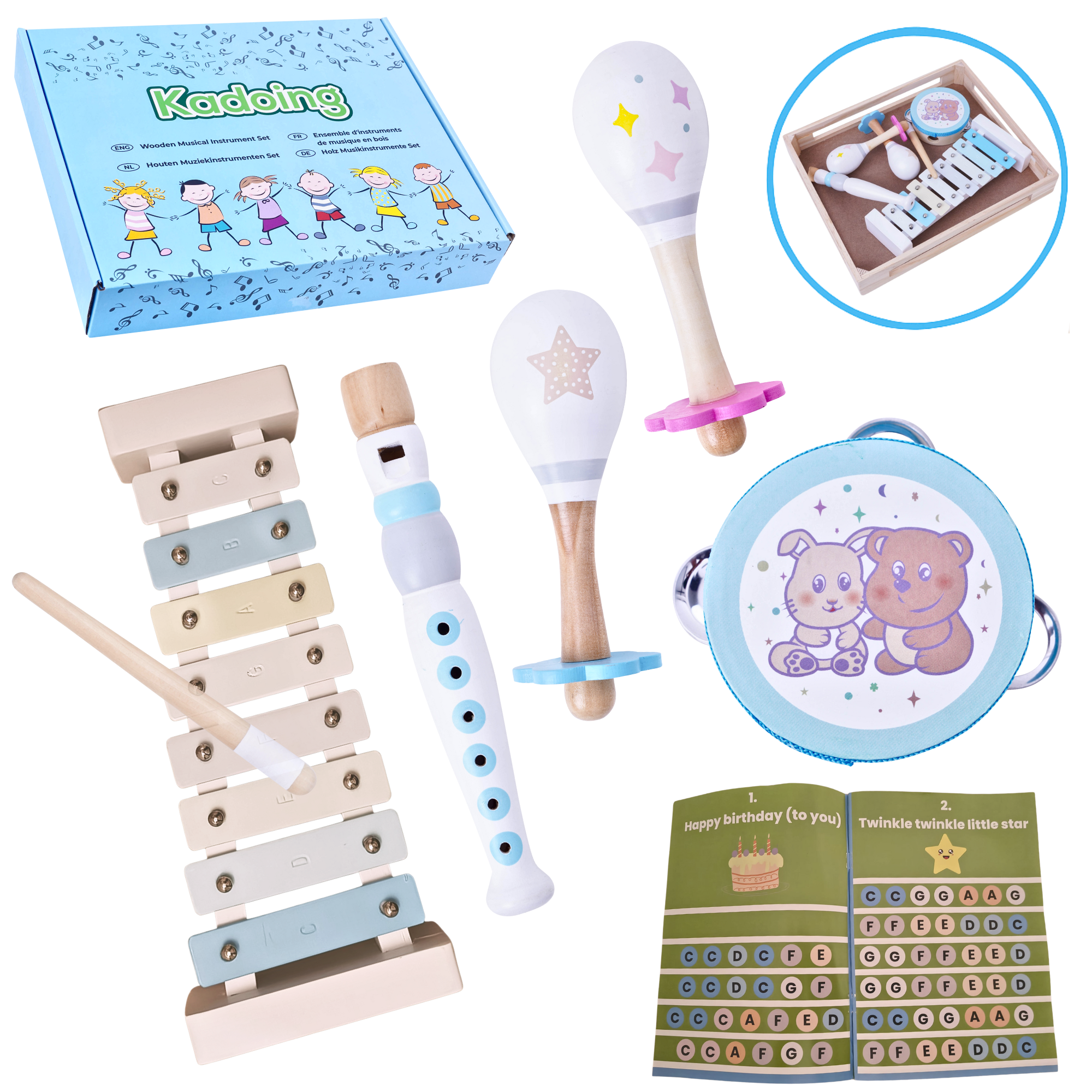
A small drum, xylophone, jingle stick or wooden rattle makes music tangible. Toddlers discover the difference between loud and soft, fast and slow. They practise listening, taking turns and copying, especially when you clap a simple rhythm together.
Music also supports enjoyment of language. Sing a familiar children’s song and let your child join in on one word or one beat. It does not need to sound tuneful or rhythmically perfect. The repetition, laughter and shared anticipation of the next part are what make it a valuable moment. For calmer play, a softly sounding instrument may be more pleasant than a toy that makes a loud noise every time it is touched.
5. Large puzzles with familiar pictures
Puzzles with a few large pieces train looking, turning and fitting. Begin with pictures that are close to your toddler’s world: animals, vehicles, fruit or faces. Recognition builds confidence, after which the main challenge lies in the shape.
Do not immediately place a puzzle in front of your child with the expectation that it must be completed. Offer one or two pieces instead and see what happens. If it does not work, you can ask: “Where else can you see the red apple?” This helps without giving away the answer. Success is not only a completed puzzle, but also continuing with an attempt.
6. Sorting toys with colours and sizes
Cups that fit inside one another, rings to stack or wooden figures to sort help toddlers understand concepts such as big, small, the same and different. These toys often grow with the child for some time. At first, they are thrown and stacked; later, they are sorted by colour or order.
Keep the activity small and cosy. For example, place three containers down and ask whether the yellow pieces can live together. Resist the urge to correct everything. A toddler who places a blue ring with the yellow pieces may be following a rule of their own. That is thinking too.
7. Dolls and soft toys for caring pretend play
When a toddler tucks in a soft toy, feeds it or comforts it, everyday experiences are processed through play. Dolls and soft animals encourage language, imagination and social skills. Sometimes you can hear surprisingly clearly how people speak at home.
A soft toy can also be a familiar companion during a new experience, such as a first sleepover or practising a bedtime routine. Act it out together beforehand: the soft toy brushes its teeth, hears a lullaby and goes under a blanket. Not to force a particular outcome, but to make the moment more familiar and gentle.
8. A play kitchen and simple pretend food
A play kitchen creates space for imitation. Cutting vegetables with safe toy food, stirring a small pan and serving a meal help toddlers practise words, sequence and cooperation. Children who show little interest in puzzles or building may also remain deeply focused here for a long time.
Use the kitchen as a reason to talk. Do not only ask what is being cooked, but also who it is for and what is still needed. Perhaps the soft toy is having soup, or your toddler is making a birthday cake from five imaginary ingredients. Imagination does not need to be logical to be educational.
9. Threading beads suited to the child’s age
Large beads and sturdy lacing cards require concentration and precise movement from both hands. This makes them a lovely calm activity for a rainy afternoon or a moment when your toddler needs to settle after a busy day. Always follow the age recommendation and stay nearby when the threading activity requires supervision.
The choice of size is essential. Extra-large pieces and a thick cord are most comfortable for young toddlers, allowing them to practise independently without unnecessary frustration. Feel free to say aloud which colour or shape you see, but let the final result belong to your child. A necklace with every colour mixed together is just as successful as a neat pattern.
10. A play set for rolling, driving and storytelling
Wooden vehicles, animal figures or simple play figures bring movement and stories together. A car drives to the garage, an animal looks for its home and a figure goes to visit someone. This helps your toddler practise concepts such as first, next, fast, slow, in and out.
Open-ended toys are the key here. A vehicle without fixed buttons or a predetermined story asks for more personal input than a toy that tells everything itself. This does not mean that every child immediately plays imaginatively. Some toddlers drive a car backwards and forwards for weeks. That is also a good foundation: repetition creates security and skills grow step by step.
How to avoid offering too many toys at once
Too much choice can actually make play more difficult. It is therefore better to display a limited number of toy types and temporarily store the rest out of sight. Swap a few items after several weeks. An old shape sorter then feels new again to your toddler, while you do not need to keep buying more toys.
Combine active and calm toys as well. Blocks and vehicles are good for movement and building, while a puzzle, activity board or threading game offers a calmer moment at the table or on the floor. A designated basket for each type of toy also helps your child take part in tidying up. It will not be a perfect routine from day one, but it can become a small and manageable ritual.
Playing together without taking over
The developmental value lies not only in the toy, but also in your attention. Try following your toddler’s initiative for five minutes. Describe what you see: “You put the tall block on top of the low block.” Ask an open question and then allow a moment of silence. That silence gives a child time to think.
Kadoing believes that toys should mainly create space for these ordinary, valuable moments: a song with the xylophone, a soft toy that helps tidy up or a tower that is built again. Do not choose the toy with the most functions, but the one that invites you to look, try and enjoy yourselves together.