At 7:00 PM, everything seems ready for bedtime, but suddenly your toddler wants another drink, another story, one more stuffed animal, and most of all, does not want to sleep. If you're trying to improve your toddler's sleep routine, you know how quickly a calm evening can turn into negotiations, tears, or endless delaying tactics. That's exactly why it helps to become not stricter, but clearer and calmer.
Why a consistent sleep routine makes such a big difference
Toddlers thrive on both feelings and repetition. During the day, they explore new things, process impressions, and test their independence. By evening, their little minds are often full of experiences. A consistent routine provides security. Not because every child must do exactly the same thing at the same time every day, but because predictability creates calm.
You often notice the difference immediately at bedtime. A toddler who knows what comes next has fewer transitions to process and often falls asleep more easily. First pajamas, then brushing teeth, then a story, dimmed lights, and sleep. Bedtime becomes less of a surprise and more of a familiar moment. For parents, this also brings back something important: a calmer home and fewer bedtime struggles at the end of the day.
Improving your toddler's sleep routine starts before bedtime
Many parents look for solutions in the final fifteen minutes of the evening. That's understandable because that's often when things become difficult. However, a good bedtime usually starts earlier. How the afternoon goes, how many stimuli your child experiences, and when dinner is served all affect bedtime.
A toddler who is still playing wildly, hearing lots of noise, or eating late right before bed simply needs more time to wind down. That doesn't mean your evenings need to be tightly scheduled. It does help when the transition to rest happens gradually. Think softer lighting, quieter activities, and a predictable sequence of events. This gives both the body and mind a signal that the day is coming to an end.
What does a toddler need for a good sleep routine?
Toddlers usually don't need more bedtime rituals, they need clearer ones. When a routine changes constantly, opportunities arise for delaying bedtime. Toddlers don't do this to be difficult. They are testing boundaries, seeking connection, or finding it hard to let go of the day.
That's why a routine works best when it is both warm and simple. A short series of fixed steps is often enough. For example: wash up, pajamas, sleep sack, story, stuffed animal, lights out. When this happens roughly the same way every evening, the routine becomes familiar. The power lies precisely in that repetition.
It's also important to consider your child's personality. One toddler relaxes with a song, while another becomes more alert from extra attention. Some children want to talk about their day, while others settle more easily when things stay short and quiet. It doesn't have to follow a perfect schedule. It simply needs to fit your family and your child.
Common reasons why bedtime remains difficult
Sometimes the routine looks great on paper, yet evenings remain challenging. In that case, it helps to identify exactly where things go wrong. Not every sleep issue has the same cause.
For some toddlers, bedtime is simply too early or too late. A child who isn't tired enough will continue playing and calling out. An overtired toddler, on the other hand, may cry more easily, become clingy, or act out. Timing matters. Don't just watch the clock; pay attention to signals such as yawning, rubbing eyes, becoming more active, or acting unusually clingy.
Transitions can also be difficult. If your toddler has to stop an enjoyable activity and suddenly go upstairs, it can feel abrupt. A warning often works better than a strict stop. Try letting your child know five or ten minutes in advance that bedtime is approaching. This gives them time to adjust mentally.
And sometimes it's simply been a busy day. An outing, daycare, visitors, or changes at home can make bedtime harder. On evenings like these, there's no need to completely change your approach. In fact, sticking kindly to familiar routines often helps most.
How to create a predictable evening without becoming strict
A calm evening routine shouldn't feel like a strict regime. It's more of a gentle structure that returns every day. Start with a clear signal. This could be tidying up toys, dimming the lights, or using a consistent phrase such as, "Let's finish the day quietly."
After that, it helps to keep choices small. Instead of asking whether your child wants to go to bed, offer two simple options. Do you want the red pajamas or the blue ones? Would you like to read your story on my lap or in bed? This keeps your toddler involved while maintaining a clear direction.
Pay attention to your own pace as well. Toddlers are remarkably sensitive to stress. If a parent becomes rushed or tense, their child's restlessness often increases too. Speaking more slowly, moving calmly, and using fewer words can make a surprising difference. Bedtime doesn't need endless explanations. Short, warm repetition usually works better.
Helpful tools that can create more calm
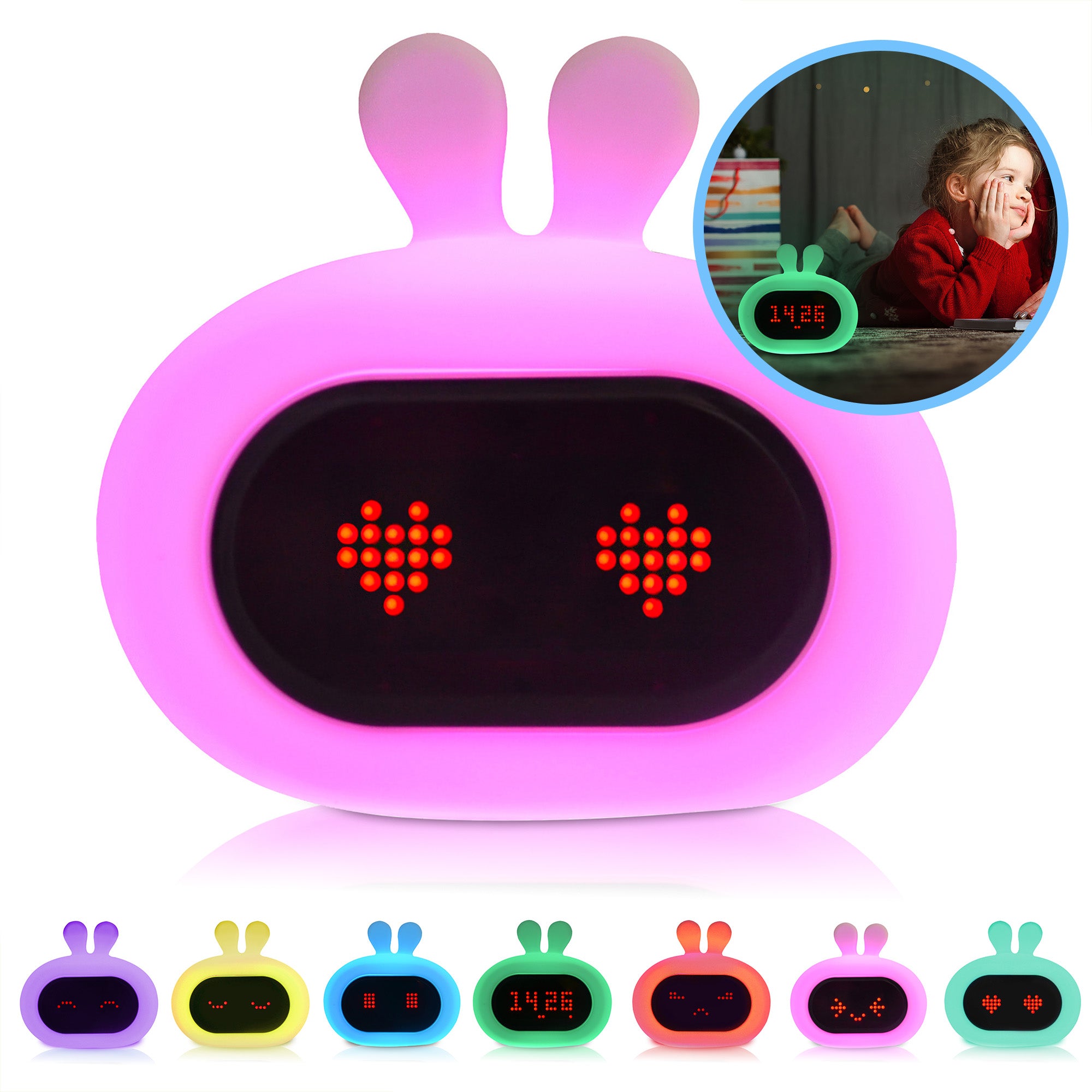
Some children benefit from a visible sleep schedule. A sleep trainer or children's alarm clock can help make certain moments easier to understand. Especially for toddlers who wake up very early or struggle with the transition from playtime to bedtime, a visual cue makes the evening more concrete. Not as a miracle solution, but as support for a consistent routine.
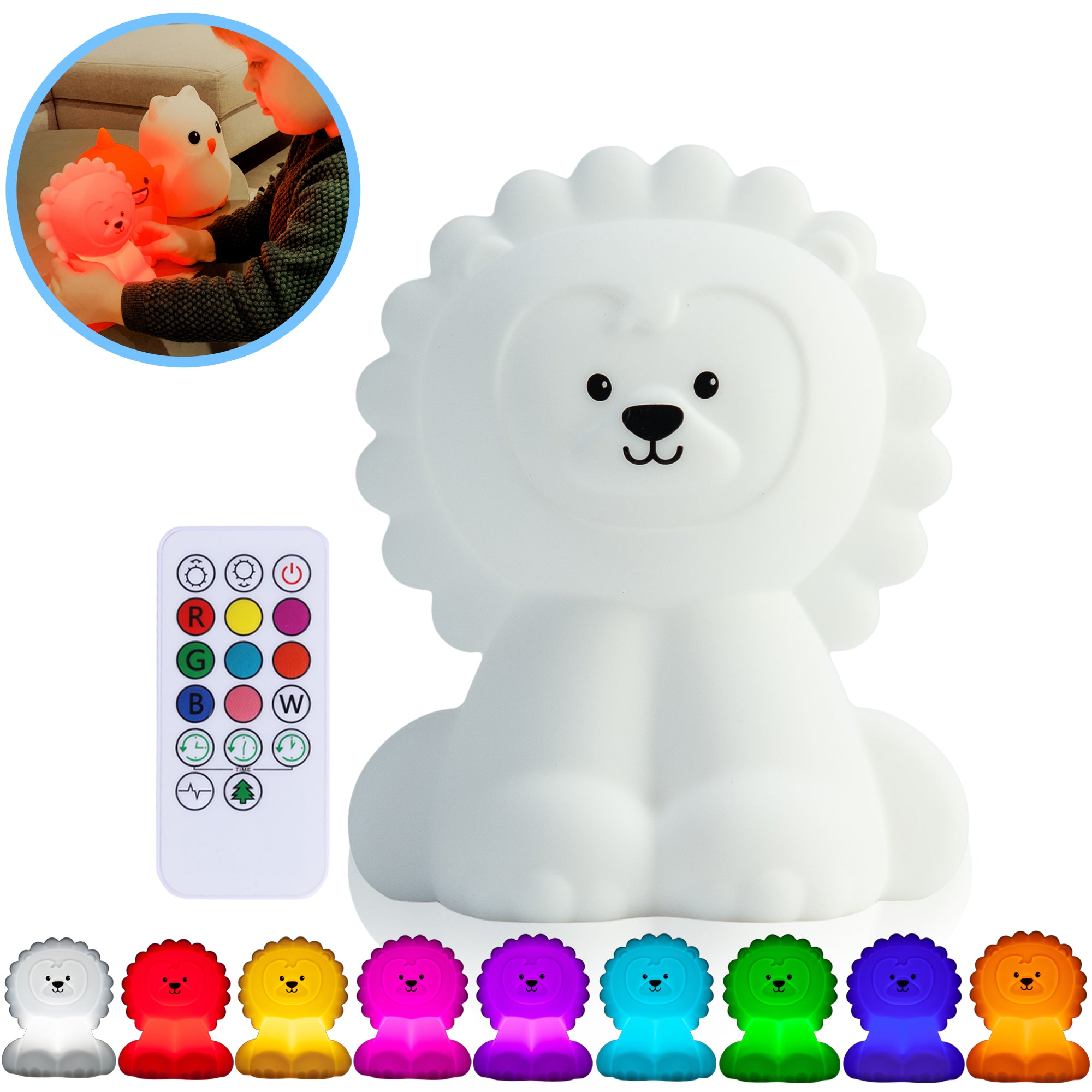
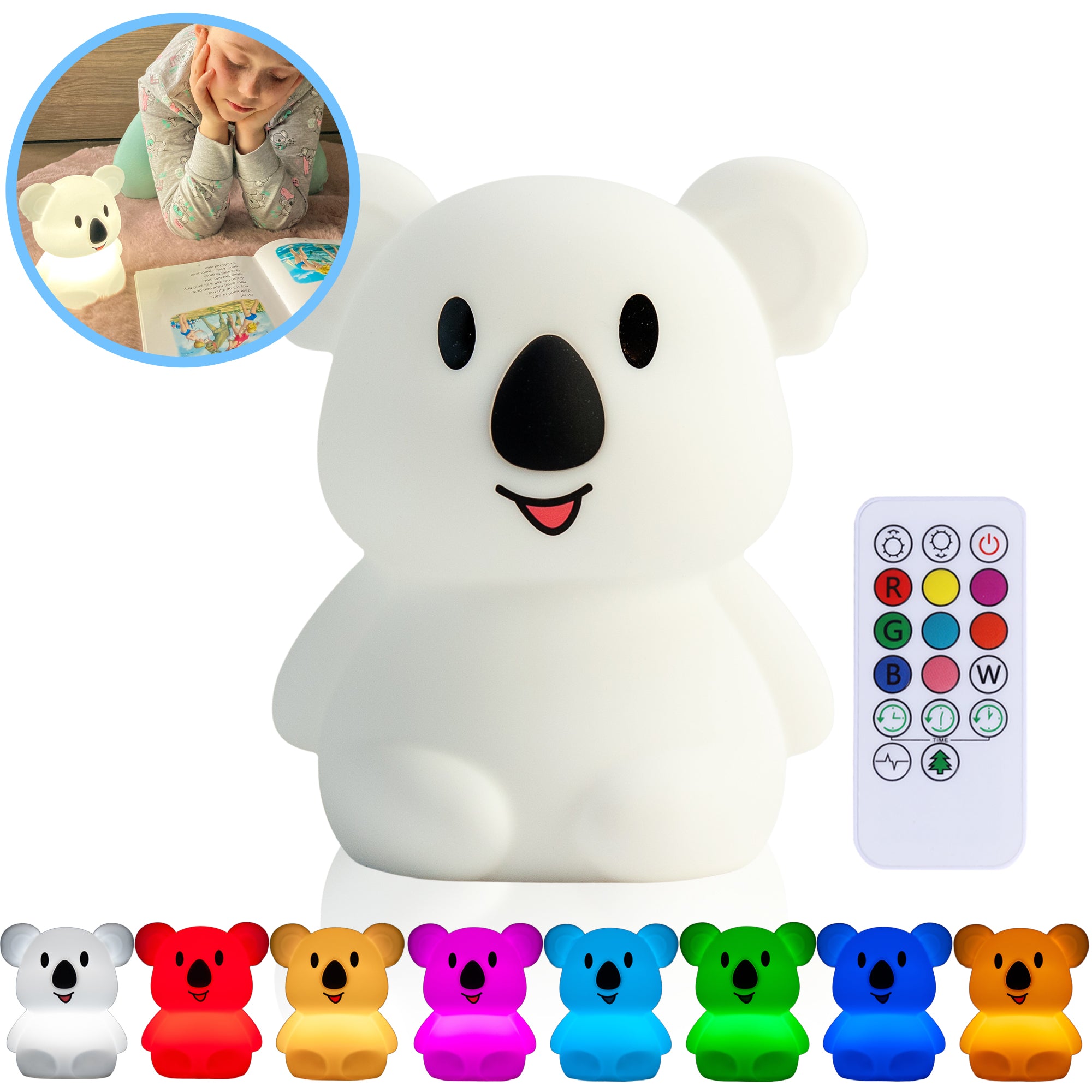
A soft night light can also greatly improve a child's sense of security. Toddlers who feel anxious in a dark room often relax more quickly when there's a small, warm light nearby. It's not about brightness, but about creating a calm atmosphere where falling asleep feels easier.
What works varies from child to child. One toddler finds comfort in a favorite stuffed animal, while another prefers a lullaby or familiar melody. It's usually better to choose one or two supportive elements rather than many. Too many stimuli often make the routine less calming rather than more.
When your toddler keeps getting out of bed
For many parents, this is the point when evenings become difficult. You calmly put your child to bed, and a minute later they're standing beside you again. In these situations, consistency matters more than lengthy explanations.
Gently return your toddler to bed each time. Be kind, brief, and avoid starting new negotiations. No extra story, no long conversation, and no new agreements. Simply repeat that it's time to sleep. The first few evenings may be exhausting, but that predictable response helps create clarity.
If getting out of bed has become a pattern, it may also be worth checking whether the bedtime routine is too long. Some toddlers actually become more active when bedtime involves too many steps. In those cases, a shorter and calmer routine often works better.
How long does it take for a new routine to work?
That varies. Some children respond to increased predictability within a few days. For others, it may take two weeks or longer before a new rhythm truly settles in. That's completely normal. A routine isn't a switch you flip; it's something that develops through repetition.
Try not to assume that one difficult evening means the routine isn't working. Instead, look at the overall trend. Is falling asleep becoming slightly easier? Are there fewer discussions? Is your child becoming more familiar with the sequence? Small improvements count too.
It also helps to stay realistic. No evening is perfect. There will still be days when your toddler is tired, upset, or overstimulated. A good routine doesn't eliminate every challenge, but it does provide a safe foundation to return to.
When less perfection is actually better
Many parents set the bar high when it comes to sleep. That's understandable because a peaceful evening can make a huge difference for the whole family. However, focusing too much on getting everything exactly right can create additional stress. You don't need a perfect routine that works flawlessly every night.
A good routine is above all realistic. It fits your family's pace, works on ordinary weekdays, and feels sustainable over time. If something only works when everything else revolves around it, it's probably too complicated. Simplicity almost always wins over perfection.
For many families, modern sleep trainers and children's alarm clocks are practical tools for creating more predictability around bedtime and wake-up time.
If you want to improve your toddler's sleep routine, the goal isn't to try harder but to build more calm into everyday life. It's in those simple, repeated moments that confidence grows—for your child and for yourself.