Playing is much more than entertainment. Discover why play is essential for children's development, self-confidence, and overall well-being.
Why play is so important for children
For children, play is one of the most important ways to discover the world around them. While adults often learn through explanations, experience, or study, children mainly learn by doing. During play, they practice new skills, process experiences, and develop socially, emotionally, and cognitively.
Alongside school, sports, and other activities, play offers something equally important: relaxation. During play, children can be themselves, experiment, and make mistakes without pressure or expectations. This is often when they learn more than we realize.
The educational value of play
Play and learning are closely connected. Children naturally acquire new skills through play without feeling as though they are in a lesson. During play, they are curious, motivated, and actively engaged. This makes play a powerful way to learn.
When children build, draw, make music, or engage in imaginative play, they continuously practice thinking, planning, communicating, and cooperating. They discover what works, make mistakes, and try again. This process forms the foundation for lifelong learning.
What do children learn while playing?
The skills children develop during play vary depending on their age and the activity. However, there are several key areas of development that are almost always supported.
Motor skills
Running, climbing, jumping, cycling, and ball games help develop gross motor skills. Activities such as building, solving puzzles, drawing, and crafting stimulate fine motor skills.
Language development
When children play together, they talk to one another, explain rules, and tell stories. As a result, they constantly practice their vocabulary and communication skills.
Problem-solving skills
During play, children regularly encounter challenges. How do you build a taller tower? How do you solve a disagreement? How can everyone join in? By finding their own solutions, children develop important thinking skills.
Self-confidence
Every time a child learns something new or solves a problem, their confidence grows. Positive experiences during play contribute significantly to a healthy self-image.
Play helps children process emotions
Play is not only educational but also helps children process emotions. During a busy school day, children experience many different situations. Through play, they have the opportunity to make sense of their experiences, feelings, and memories.
This is especially visible in imaginative play. Children often reenact situations they have experienced or that made a strong impression on them. In this way, they learn to recognize, understand, and process emotions.
That is why play is not only enjoyable but also important for children's emotional well-being.
Independent play supports imagination
Some parents find it difficult to let their child play alone. However, independent play offers many benefits. When children decide for themselves what they want to do, they use their imagination, creativity, and problem-solving abilities.
Independent play also teaches children that they do not need to rely on others constantly for entertainment. This contributes to greater independence and self-confidence.
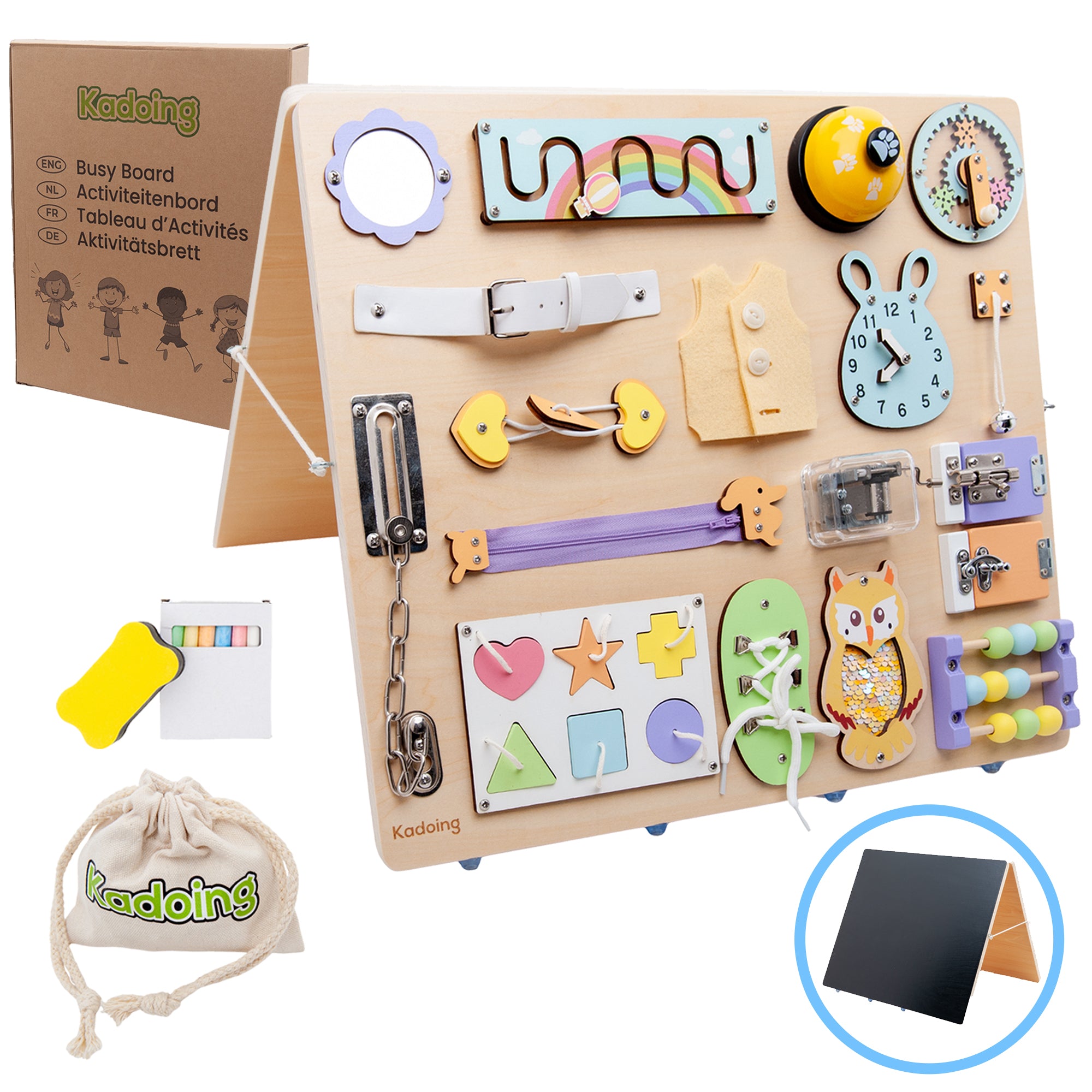
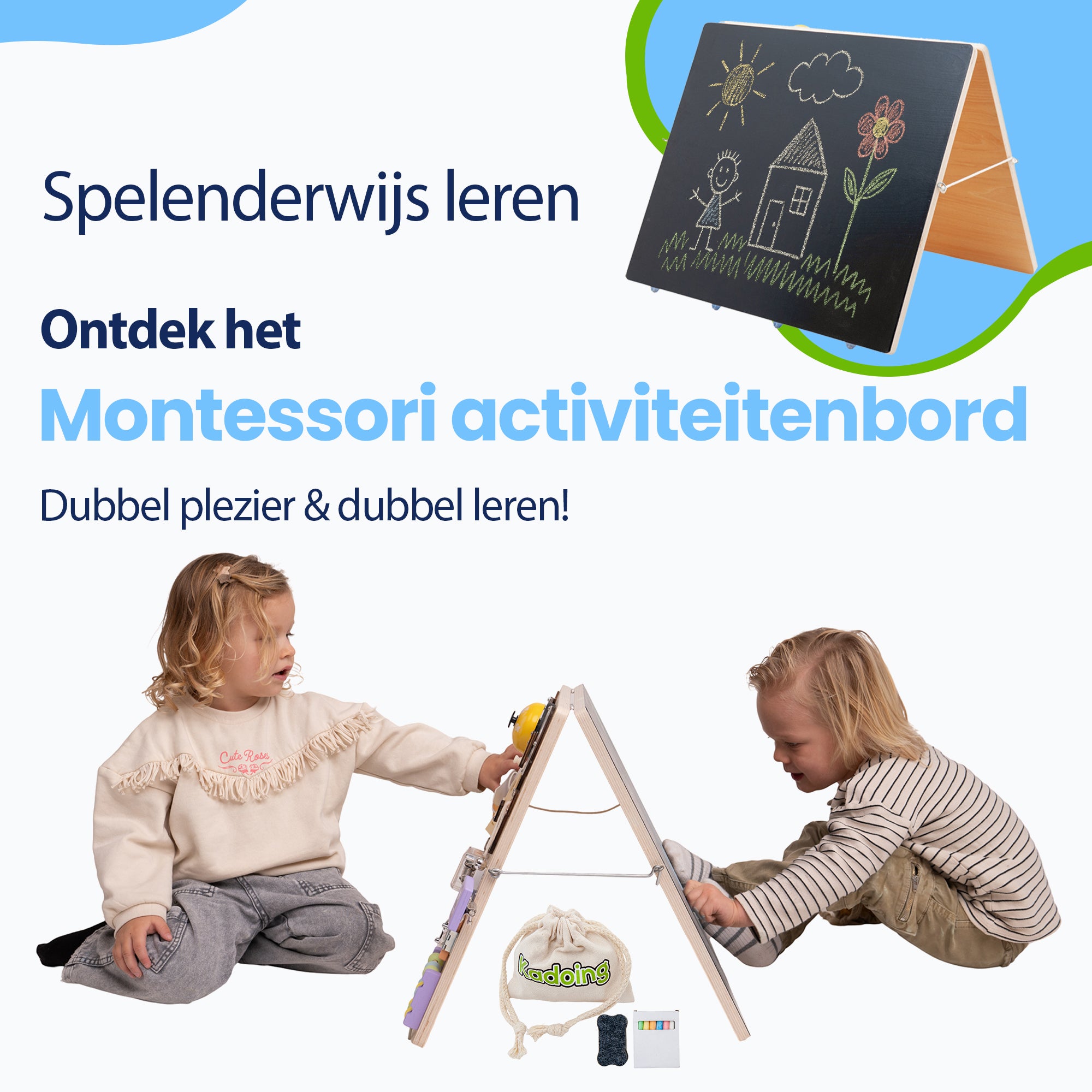
Toys that encourage children to discover, build, and experiment on their own can be especially helpful. For example, a busy board that combines multiple skills encourages children to find solutions independently.
Playing together teaches social skills
When children play together, they learn to consider others. They practice sharing, cooperating, listening, and negotiating. Disagreements and small conflicts may arise, but these situations often provide valuable learning opportunities.
Through social play, children develop skills that will benefit them later at school, during sports activities, and in everyday social situations.
Examples of social skills developed through play include:
- Working together toward a shared goal.
- Learning to win and lose gracefully.
- Listening to others.
- Making and following agreements.
- Resolving conflicts.
- Developing empathy.
Reading is also a form of playful learning
Not all forms of play are physical. Books, stories, and language games also contribute to children's development. Reading aloud and creating stories together stimulate imagination and help expand vocabulary.
You can easily add a playful element by asking questions about the story or encouraging your child to invent their own ending. This naturally combines reading and play.
Creative play supports development
Creative activities such as building, making music, drawing, and crafting stimulate multiple areas of development at the same time. Children learn to plan, experiment, and turn their ideas into something tangible.
Music is a great example. By discovering rhythms, recognizing sounds, and creating music themselves, children develop concentration, motor skills, and creativity.
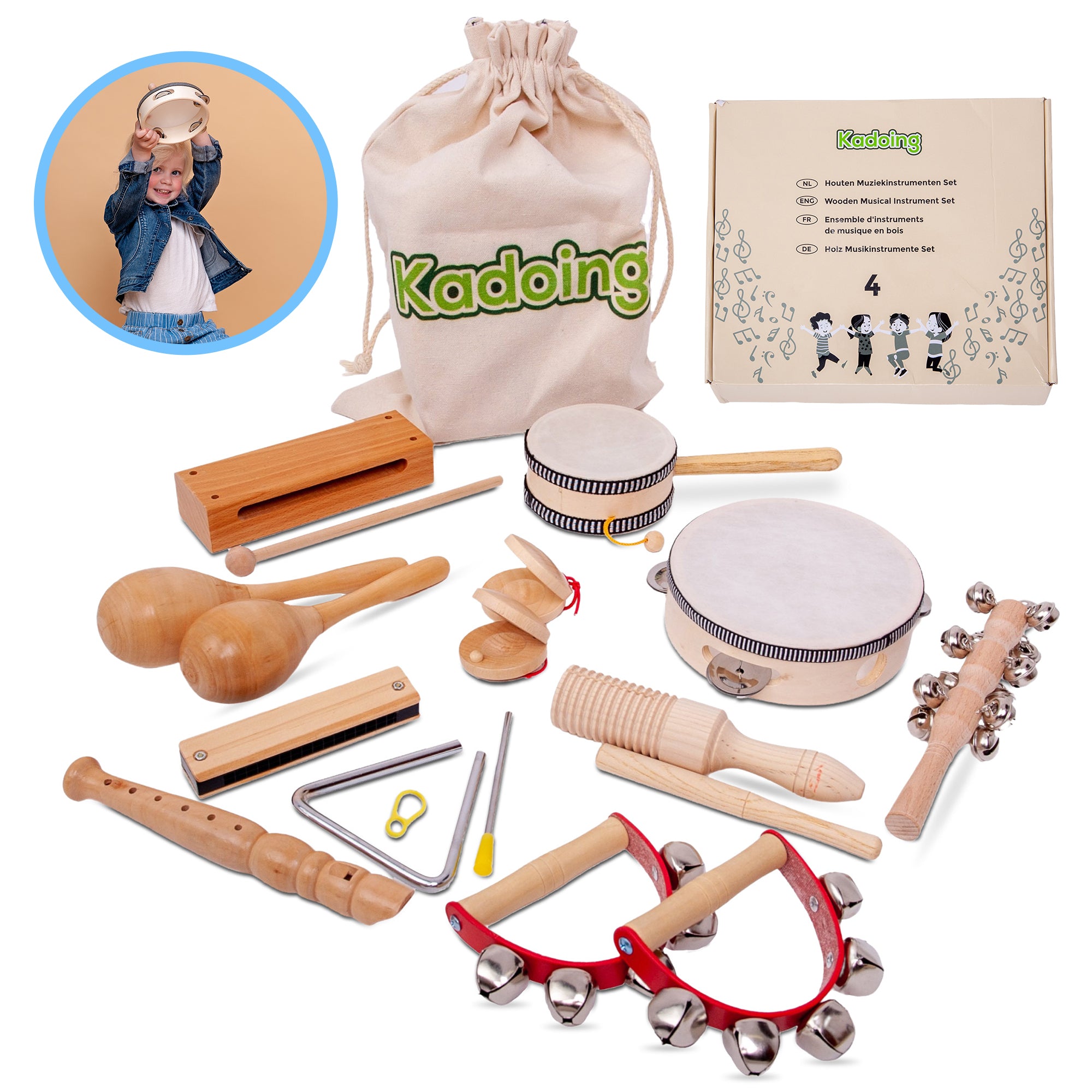
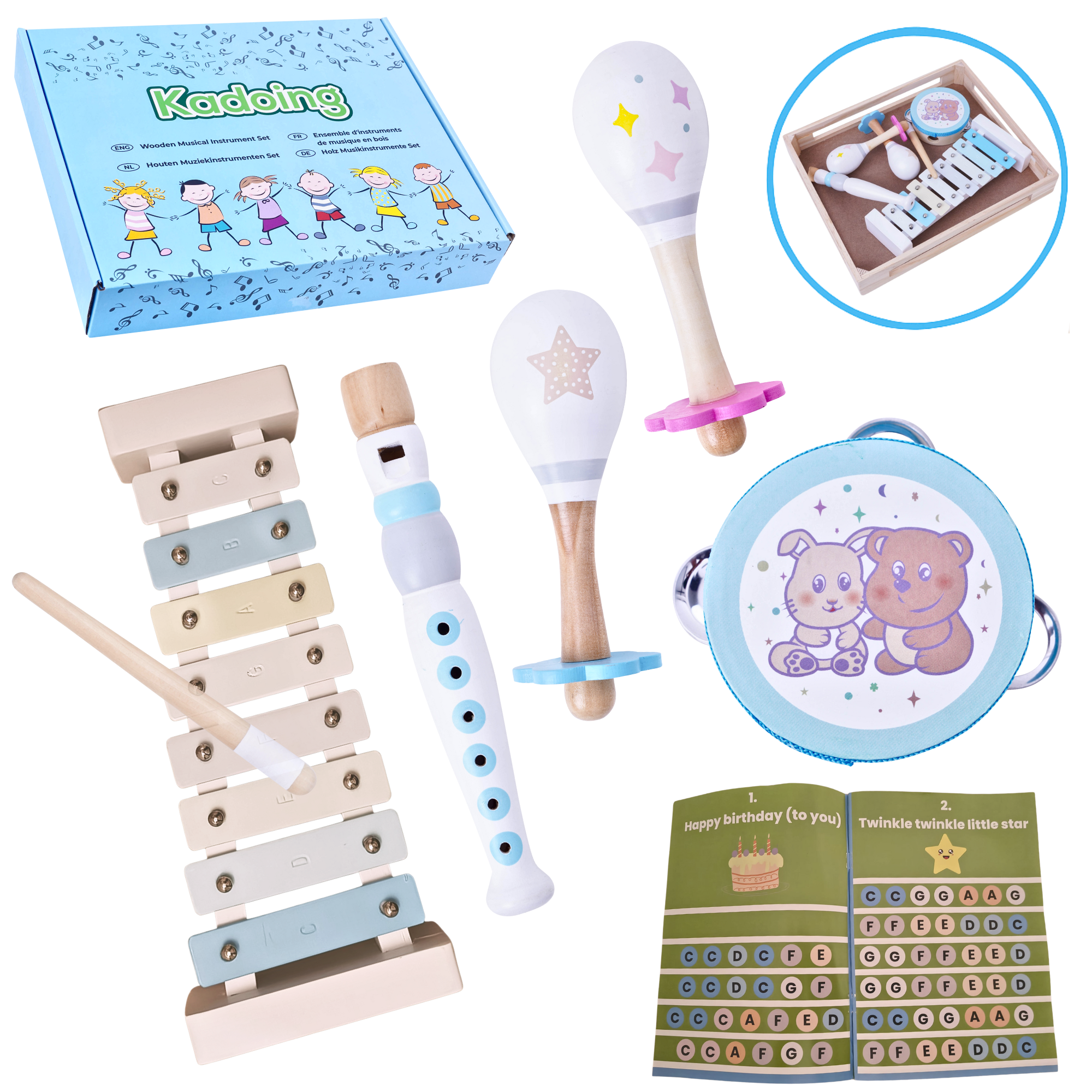
With a wooden musical instrument set, children can explore music and group play in a fun and engaging way.
How can you encourage more play?
In a world where screens demand more and more attention, it is sometimes necessary to consciously create space for play. Fortunately, it does not have to be complicated.
- Schedule daily free playtime.
- Allow children to decide for themselves what they want to do occasionally.
- Provide toys that stimulate imagination.
- Arrange playdates with other children.
- Spend time outdoors regularly.
- Limit screen time where possible.
Open-ended toys that can be used in different ways often remain interesting for longer periods. In collections featuring durable wooden toys, for example, you will find materials that encourage creative and independent play.
Play forms the foundation of healthy development
Play is much more than a fun activity. It helps children develop new skills, process emotions, build relationships, and gain confidence in themselves.
Whether a child is playing alone, exploring with friends, making music, building something, or inventing a story, every moment of play contributes to their development. That is why play is not simply important—it is essential for a healthy and happy childhood.
Would you like to learn more about parenting, child development, and learning through play? Be sure to explore the latest articles in our blog section.