A wooden stacking tower that is rebuilt every morning, or a plastic toy car that can be taken into the garden without a second thought: when choosing between wooden and plastic toys, there is rarely one perfect solution. What makes a toy enjoyable depends not only on the material, but also on your child’s age, the way they play and what your family needs on busy days.
For many parents, wood feels warm, calm and durable. Plastic is often lightweight, colourful and easy to clean. Both can have a valuable place in the play corner, as long as the toy is safe, suits the child’s stage of development and encourages genuine play.
Wooden toys versus plastic: the differences
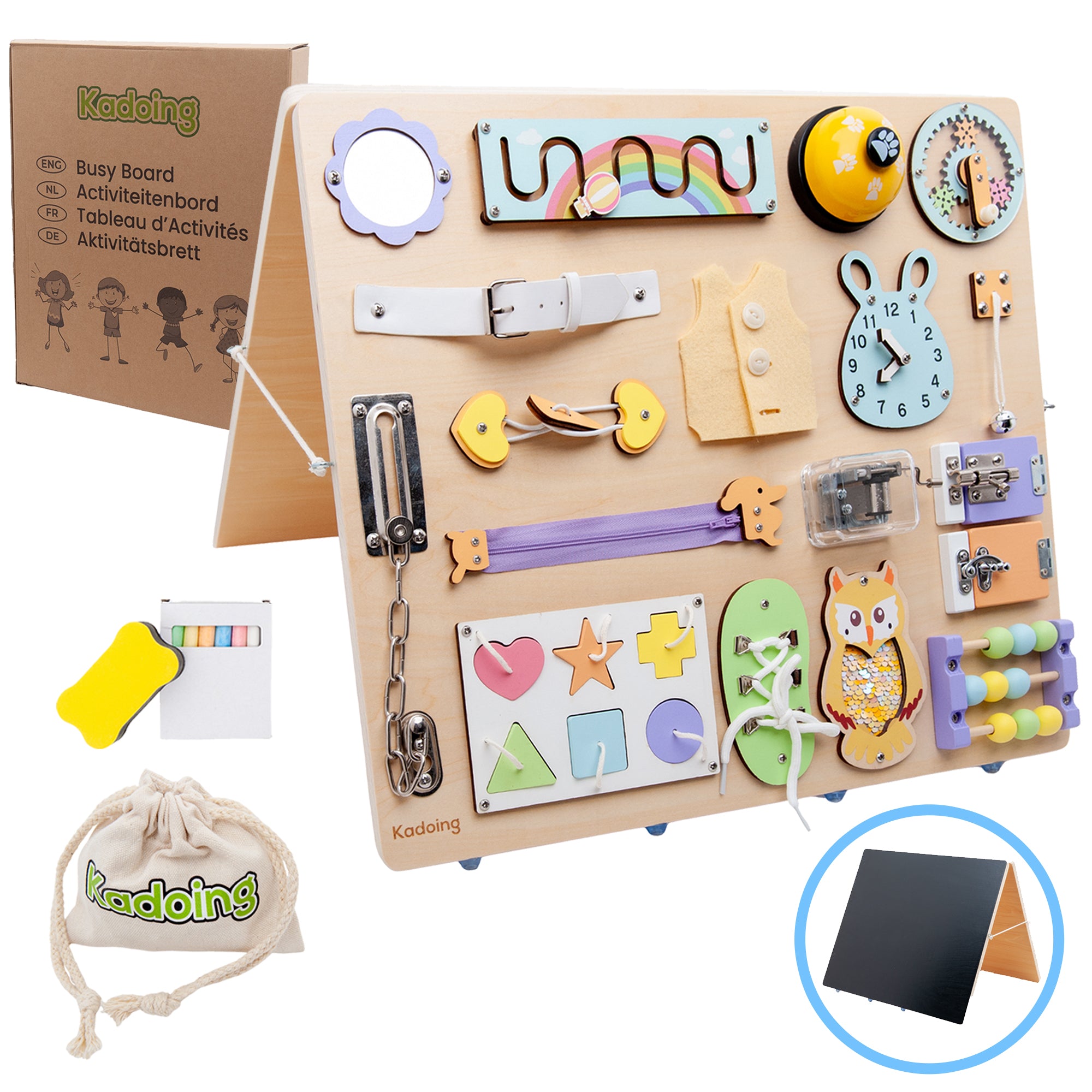
Wooden toys often have a calm appearance and a pleasant weight. A child can clearly feel the shape, texture and weight of blocks, a musical instrument or an activity board in their hands. This encourages focused exploration: stacking, sorting, rolling, building and trying again.
Plastic toys are usually lighter and can include more shapes, colours and moving parts. Think of bath toys, vehicles or outdoor toys. The material can be useful when something regularly gets wet or when a child likes to take toys everywhere.
The choice is therefore not only about wood or plastic. A simple wooden sorting board can offer new challenges for hours, while a plastic bucket in the sandpit may be exactly what a child needs at that moment. Focus mainly on the play experience a product offers.
Safety starts with looking, feeling and choosing
The material alone does not tell the whole safety story. Good toys, whether made from wood or plastic, are solidly finished, suitable for the child’s age and free from loose or damaged parts. Always check the recommended age, warnings and the CE marking. Especially for babies and young toddlers, parts must not be small enough to swallow or pose a choking hazard.
With wooden toys, a smooth finish is important. From time to time, check whether splinters, cracks or peeling paint have appeared, especially on toys that are used intensively. Wood can last a long time, but it still deserves a quick inspection before returning to small hands.
Check plastic toys regularly for cracks, sharp edges and loose parts. Stop using the toy when it is no longer intact. Toys made for young children and purchased from a reliable supplier give parents more peace of mind than products with an unclear origin or finish.
For little explorers, simplicity is often enough
Young children do not need toys that do everything for them. A few blocks, a shape sorter or a simple musical instrument leave room for their own ideas. This is valuable because your child chooses the pace, repeats actions and discovers things independently.
Toys with lights, sounds or many buttons can be fun as an addition, but they do not need to be the starting point. Pay attention to how your child responds. Do they continue playing with concentration, or are they mainly distracted by everything happening at once? That observation is more helpful than a general rule about materials.
Play value: what does a child learn from it?
Wooden toys often leave room for open-ended play: there is not just one fixed way to use them. A set of blocks first becomes a tower, later a garage and then perhaps an animal enclosure. Because the child gives the play its own meaning, they naturally practise imagination, fine motor skills and problem-solving.
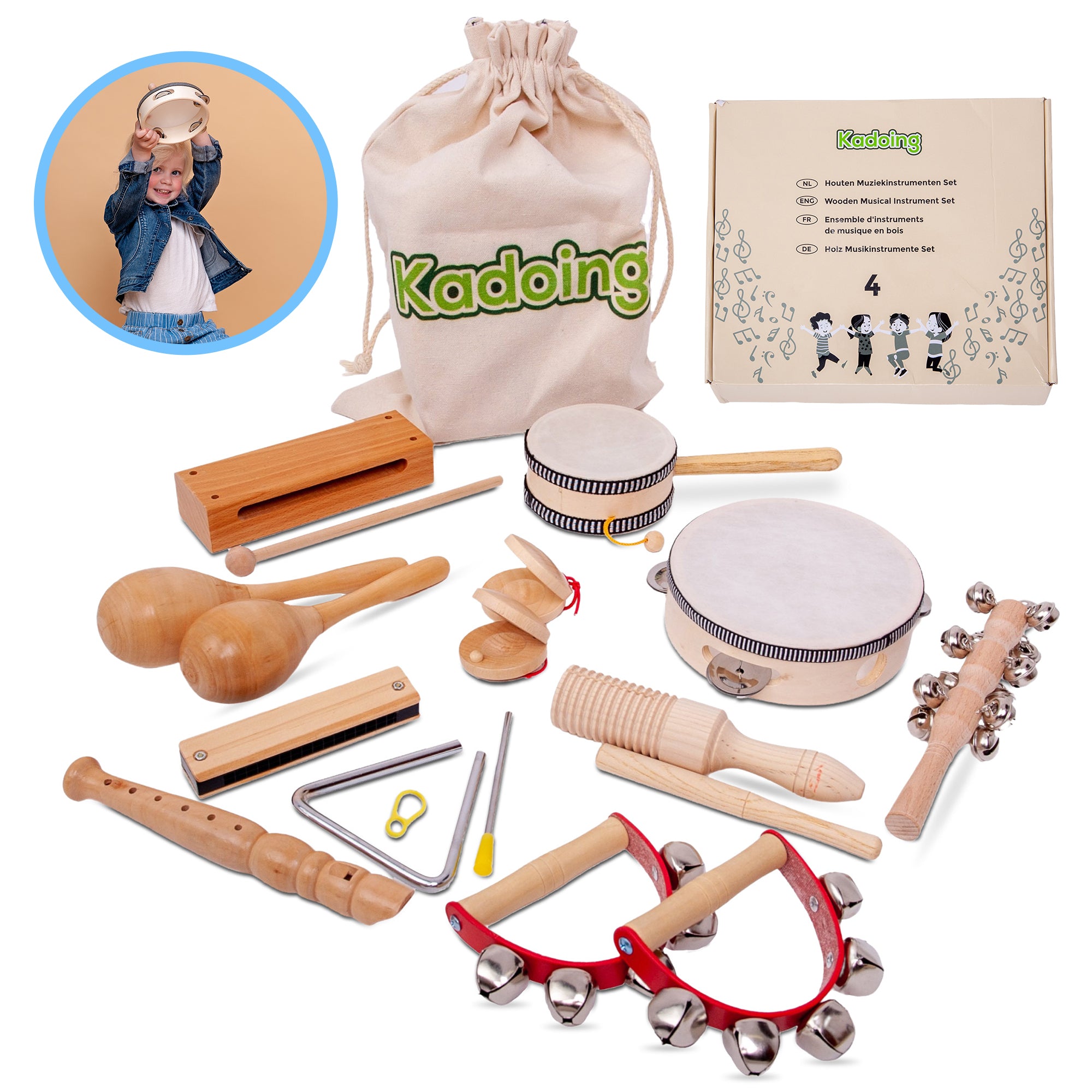
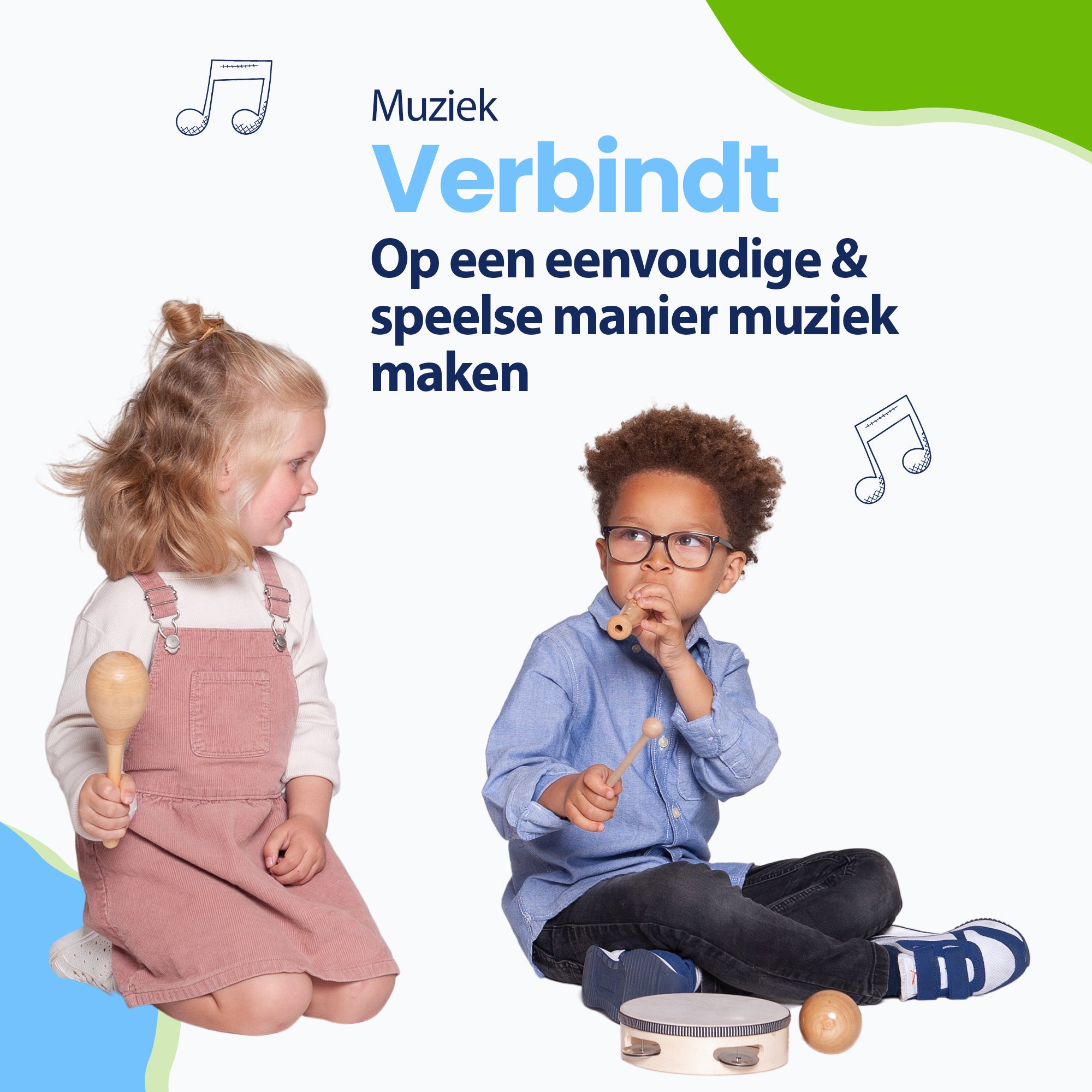
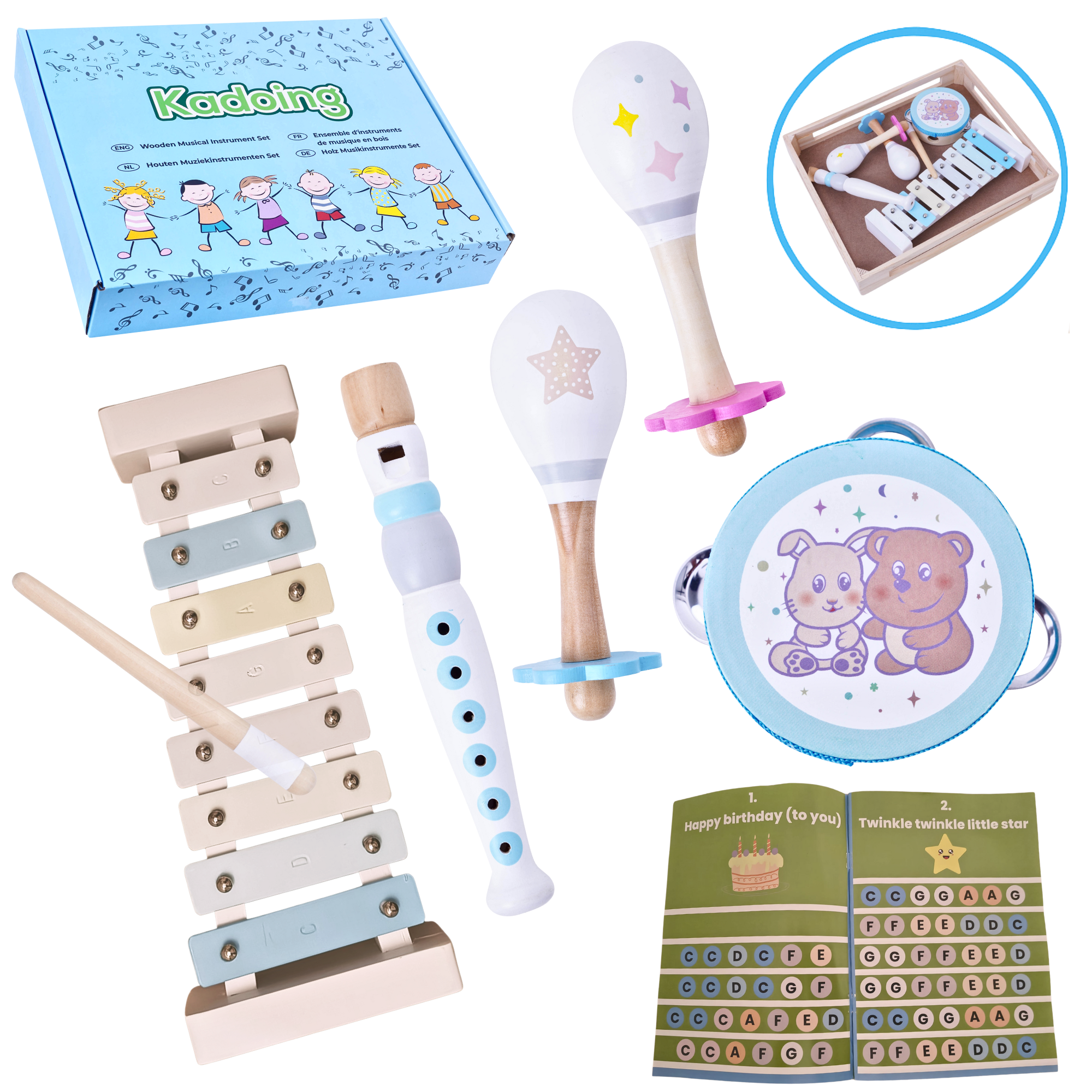
Wooden musical instruments also fit beautifully into calm play moments. A child discovers cause and effect by tapping, shaking or copying a melody. Making a rhythm together, singing a song or taking turns choosing a sound also turns play into a small moment of connection.
Plastic toys can offer developmental value too. A spade for moving sand, a doll for pretend play or a ball for throwing encourages movement, language and playing together. The difference lies less in the material than in the question: can my child actively do something with it?
A useful rule of thumb is that a toy does not need to demand all of a child’s attention. The best play often develops when your child has room to think, move, talk and repeat. This keeps toys interesting for longer and prevents the play corner from constantly needing new additions.
Sustainability requires a broader view
Wood is often seen as the sustainable choice, and that can certainly be true. Well-made wooden toys can last a long time, bring enjoyment to several children and still look attractive after years of play. Timeless toys without complicated electronic parts often have a particularly long lifespan.
However, wood is not automatically the best choice in every situation. The source of the wood, the finish, the packaging and how long the product is actually used all matter. A wooden toy that remains unused in a cupboard is less valuable than a favourite plastic toy that lasts for years and is passed on.
Plastic has a greater environmental impact when it is quickly thrown away. But choosing sustainably also means buying less, choosing more carefully and using products for longer. Select toys that can withstand rough handling, suit your child’s interests and do not lose their appeal after two play sessions.
By swapping toys, passing them on or buying second-hand, you extend the play life of both materials. In those cases, check especially carefully for wear and missing parts. This turns a conscious choice into a practical one as well.
Maintenance in real family life
In a family, toys should not only look good but also be manageable to maintain. Plastic can usually be wiped clean easily with a damp cloth and can therefore work well in the bathroom, garden or during creative play. Always follow the manufacturer’s care instructions, especially if the toy contains batteries, textiles or electronic parts.
Wooden toys generally require a little more care. A slightly damp cloth is often enough, followed by thorough drying. Soaking wood in water for a long time is not a good idea, as it can swell or become rough. For everyday indoor play, this small difference in maintenance is manageable for many families.
Above all, do not make things unnecessarily difficult for yourself. Keep wooden toys for calm indoor play areas and choose practical plastic toys for mud, water and sand. That way, you do not have to choose between two camps, but can use each material where it performs best.
Which choice suits your child?
For babies and young toddlers, simple, sturdy materials and shapes are often pleasant. A wooden rattle, a soft toy or large stacking blocks can invite touching, grasping and practising. As children grow older, their need for imagination, building, movement and playing together also increases.
Look at your child’s personality as well. One child may build with wooden blocks for a long time with great concentration. Another may prefer racing outdoors, moving water and driving vehicles through the sand. Both ways of playing are valuable.
The amount of toys also makes a difference. A clear selection that you rotate regularly often creates more calm than a full basket with too many stimuli and possibilities. Leave a few favourites visible and store the rest temporarily. When the toys return after a few weeks, they often feel new again.
Choose thoughtfully, not out of guilt
Wooden and plastic toys do not have to be opposites. Choose wood when you are looking for timeless, tactile toys that leave room for imagination and calm play. Choose plastic when low weight, water resistance or outdoor play matters most.
Ultimately, the most valuable toy is one that is safe in a child’s hands, used often and helps create lovely moments together. A melody on a wooden instrument, a tower falling over with laughter or an afternoon in the sandpit: that is where carefree play begins.