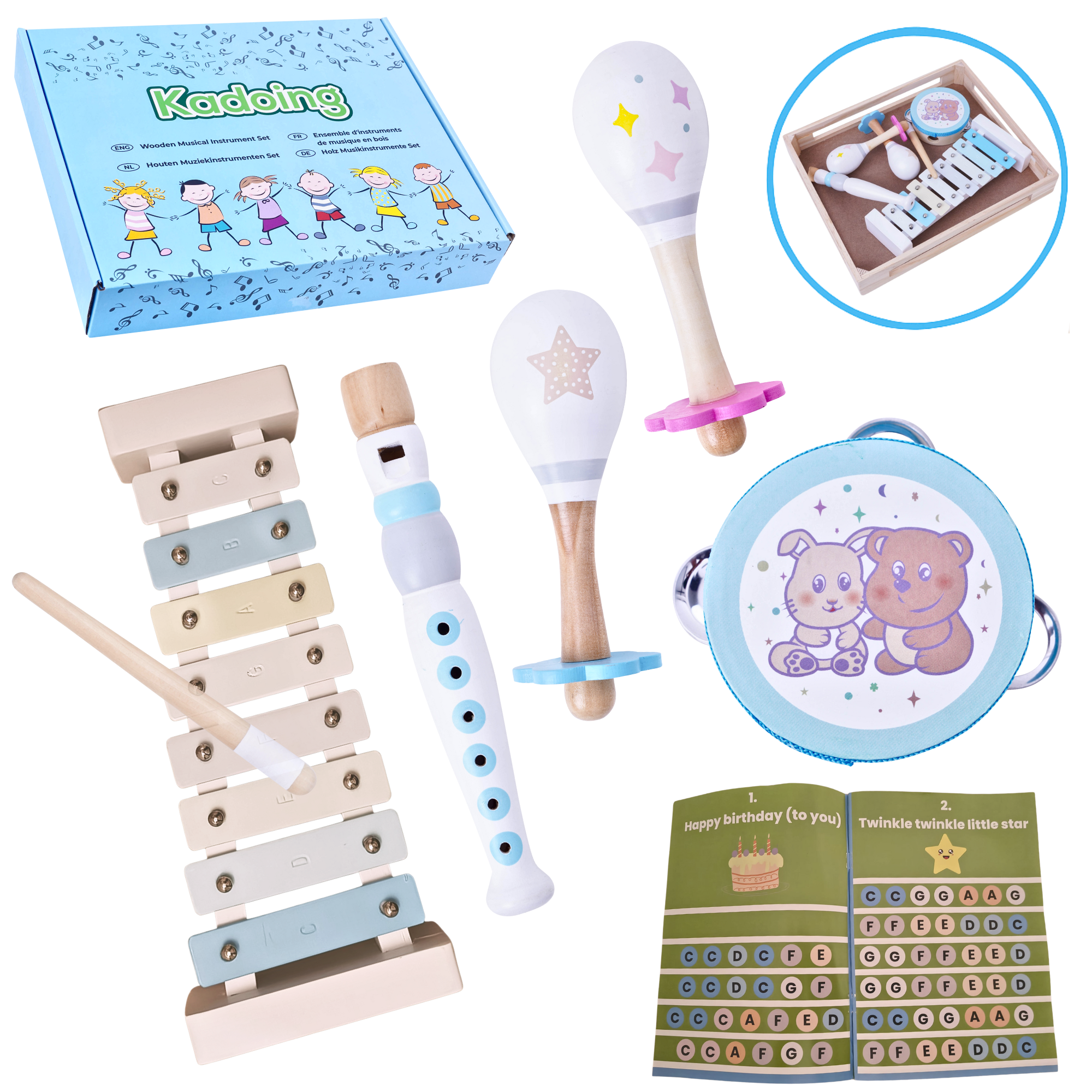
A drum that does not sound overly sharp, a xylophone that can handle a few bumps and a maraca that fits comfortably in small hands – these are often the details parents only start noticing once a child truly begins to play. People searching for wooden musical instruments for children are usually not just looking for another toy. They are looking for something that feels safe, looks beautiful in the home and at the same time supports their child’s development.
For young children, music is much more than making noise. It helps with listening, movement, repetition and connection. A child tapping a bell or copying rhythms is quietly practicing concentration, motor skills and self-confidence. That is exactly why it is worth paying attention not only to appearance, but also to materials, size and how an instrument fits into everyday family life.
Why wooden musical instruments for children are so popular
Wooden toys give many families a calm and familiar feeling. The same is true for musical instruments. They often feel sturdier than many plastic alternatives, and the sound is usually warmer and less harsh. Especially in a living room or play corner, that makes a noticeable difference. A wooden tambourine or mini drum invites children to play without immediately creating a chaotic atmosphere.
Many parents also consciously choose wood because it is more sustainable. A well-made instrument often lasts longer, can be passed down to siblings or cousins and fits a more mindful way of shopping. That does not mean every wooden instrument is automatically better. The finish, paint and construction still matter greatly.
For young children, the sensory experience also plays an important role. Wood feels different from smooth plastic. It has more texture, more weight and often offers a more comfortable grip. That makes it easier for toddlers and preschoolers to truly connect with what they are holding.
Wooden musical instruments for children: choose by age, not just appearance
A common mistake is choosing based on cuteness alone. A small drum set or colorful xylophone may look adorable as a gift, but if it does not match the child’s developmental stage, it is more likely to remain unused. For babies and young toddlers, musical play is mainly about discovering. Think of soft rattles, simple bells or instruments that respond to gentle movement.
From around the age of one, grabbing, shaking and tapping become more intentional. At that stage, simple instruments with a clear cause-and-effect experience work very well. A child shakes something and hears sound. They tap and notice differences in tone or volume. For toddlers from around age two, rhythm becomes more interesting. They start repeating, copying and experimenting with louder, softer, faster and slower sounds.
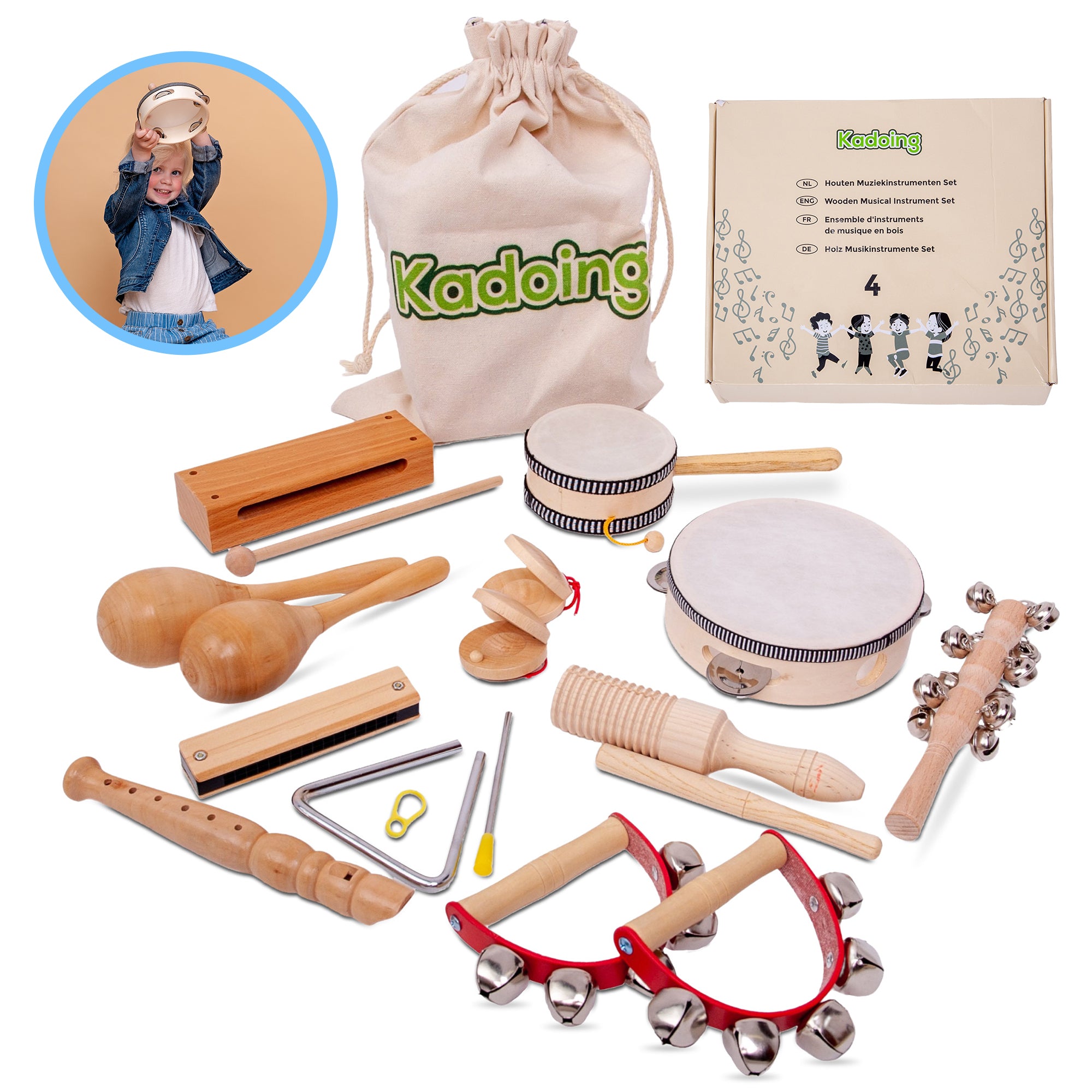
Preschoolers can already focus for a bit longer and often enjoy accompanying songs together with others. Wooden musical instrument sets like those from Kadoing can fit beautifully into this stage. Sets with multiple instruments are attractive as long as they remain organized and manageable. Too many loose pieces can actually create overstimulation. For many families, a smaller selection works better than an overflowing basket.
What to look for in safety and finishing
When it comes to wooden musical instruments for children, safety should always come first. That starts with smooth edges and sturdy connections. Parts should not come loose when a child shakes, hits or drops the instrument. Especially with instruments that include sticks, metal bells or stretched parts, it is smart to carefully inspect the construction.
It is also important to pay attention to the paint or coating used. It should be suitable for children’s toys, because young children still tend to put toys in their mouths. A natural appearance is nice, but safety is not determined by color alone. Even a brightly colored instrument can be perfectly safe if the finish is done properly.
Weight is another practical consideration. An instrument that is too heavy may slip out of small hands more easily or frustrate a child. One that is too light can feel cheap or slide around during play. The best option feels sturdy while still being easy for a child to handle.
For parents, sound level matters just as much. Not every instrument needs to be quiet, but it should remain pleasant inside the home. A warm sound and controlled volume make free play far more enjoyable, especially if there are several play sessions throughout the day.
Which instruments work well at different stages
Not every child responds to music in the same way. One child may love repetition and rhythm, while another enjoys free experimentation. Still, there are a few instruments that tend to work well in many families.
A rattle or maraca is often a wonderful first step. The effect is immediate, the movement is simple and it fits well with young children who are just beginning to understand cause and effect. A small drum or hand drum then helps with coordination and rhythm. Children learn that their movements influence sound.
A xylophone is popular because differences in pitch are immediately noticeable. That makes it especially interesting for toddlers and preschoolers who are beginning to recognize differences in sound. Do not expect melodies right away. The first joy lies in experimenting, listening and trying again.
Castanets, tambourines or small bell instruments can work very well for playing together. They are easy to understand, provide quick results and fit beautifully with songs, clapping games and group moments at home or daycare.
Playing, learning and calming down often go together
Parents sometimes mainly associate musical instruments with noise and chaos. That is understandable, but musical play does not need to be wild or loud at all. With the right instruments, it can actually become a calm ritual. Tapping rhythms together after dinner, accompanying a bedtime song or quietly discovering sounds in the morning can create structure in the day.
For young children, repetition feels comforting. A familiar song with a bell or soft drum can help during transitions: from playing to tidying up, from getting dressed to going outside or from bath time to bedtime. Music can make these transitions more predictable and therefore often calmer.
That is also what makes wooden musical instruments attractive for parents searching for toys with more value than simple entertainment. They support connection between parent and child. Parents do not need a musical background. Tapping the same rhythm together, taking turns making sounds or accompanying a simple children’s song is already more than enough.
How to avoid a disappointing purchase
Anyone giving a wooden musical instrument as a gift wants to choose something that immediately feels right. Yet disappointments often come from small details. The instrument turns out to be too large for tiny hands, produces a harsh sound or has more decorative value than playful value.
That is why it helps to first look at how a child naturally plays. Does the child enjoy tapping, shaking and moving? Then a rhythm instrument will usually fit better than one requiring more precise striking. If a child is sensitive to loud stimuli, choose a softer-sounding instrument with one clear function.
The play environment matters too. In a smaller home or apartment, a subtle instrument is often more pleasant than a loud one. And if you are looking for something for everyday use, it is usually better to choose one well-made instrument than a huge set that disappears into a toy basket after a week.
Maintenance is another consideration. Wooden toys do not require complicated care, but it is helpful when the surface is easy to clean and can handle frequent use. Especially with young children, toys are meant to be played with, not simply displayed beautifully on a shelf.
A wooden musical instrument as a meaningful gift
For birthdays, baby showers or holidays, a musical instrument is often a beautiful alternative to toys that are quickly forgotten. It feels more personal because it encourages shared experiences. Grandparents especially love giving them because they feel timeless. Friends and family often see them as original gifts that are both enjoyable and meaningful.
The best gifts are gifts that fit naturally into a family’s rhythm. A wooden instrument can do exactly that because it combines play and connection. Parents appreciate that it is not only exciting during unwrapping, but also still used weeks later during ordinary moments at home.
That idea fits naturally with a brand like Kadoing: toys do not need to be louder, faster or more overwhelming to be valuable. Often, the real value lies in what they add to an ordinary day – a calm play moment, a smile or a song shared together.
Buying wooden musical instruments for children with confidence
If you are unsure between several options, do not choose the instrument with the most features. Choose the one that best fits your child’s stage and interests. Simplicity often wins. A child does not need a complete music corner to experience joy, development and connection.
Pay attention to safety, size, sound and ease of use. Ask yourself whether it encourages daily play, whether it sounds pleasant inside the home and whether small hands can truly use it comfortably. Then you are not simply buying something beautiful, but something that becomes part of your family routine.
Sometimes musical joy begins with something very small: a few soft tones, a simple rhythm and a child proudly wanting to try one more time.
Frequently asked questions about wooden musical instruments for children
From what age are wooden musical instruments suitable?
Many simple instruments such as maracas, bells and small drums are suitable from around 1 year old.
Why do parents choose wooden musical instruments?
Wooden instruments often feel sturdier, sound calmer and fit well with sustainable toys.
Which instruments work well for toddlers?
Xylophones, tambourines, maracas and small drums are popular because they are simple and easy to understand.
Are wooden musical instruments safe?
Yes, as long as they are solidly finished, contain no loose parts and use child-safe paint and materials.
Is music good for the development of young children?
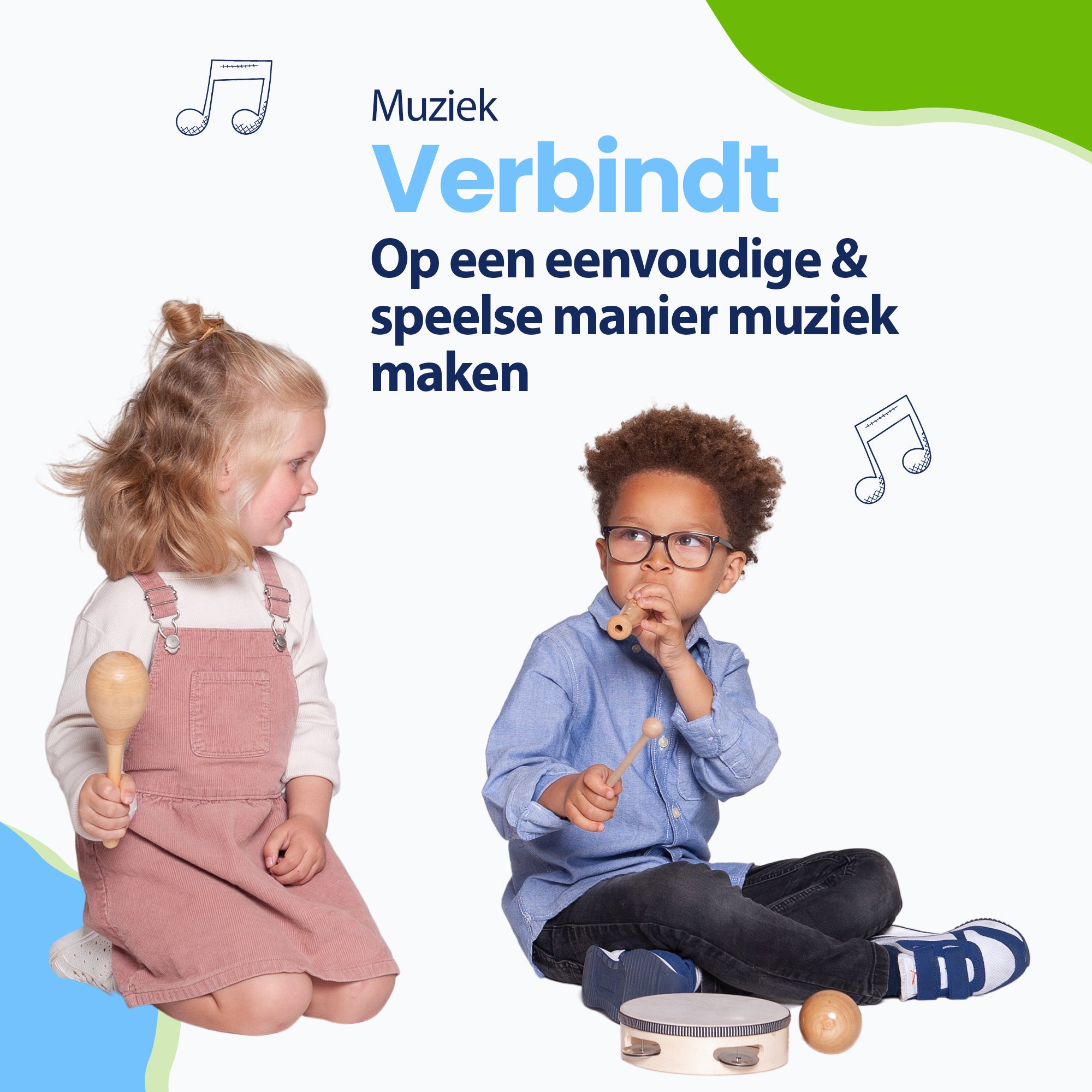
Yes, music supports rhythm awareness, listening skills, motor development and playing together with others.