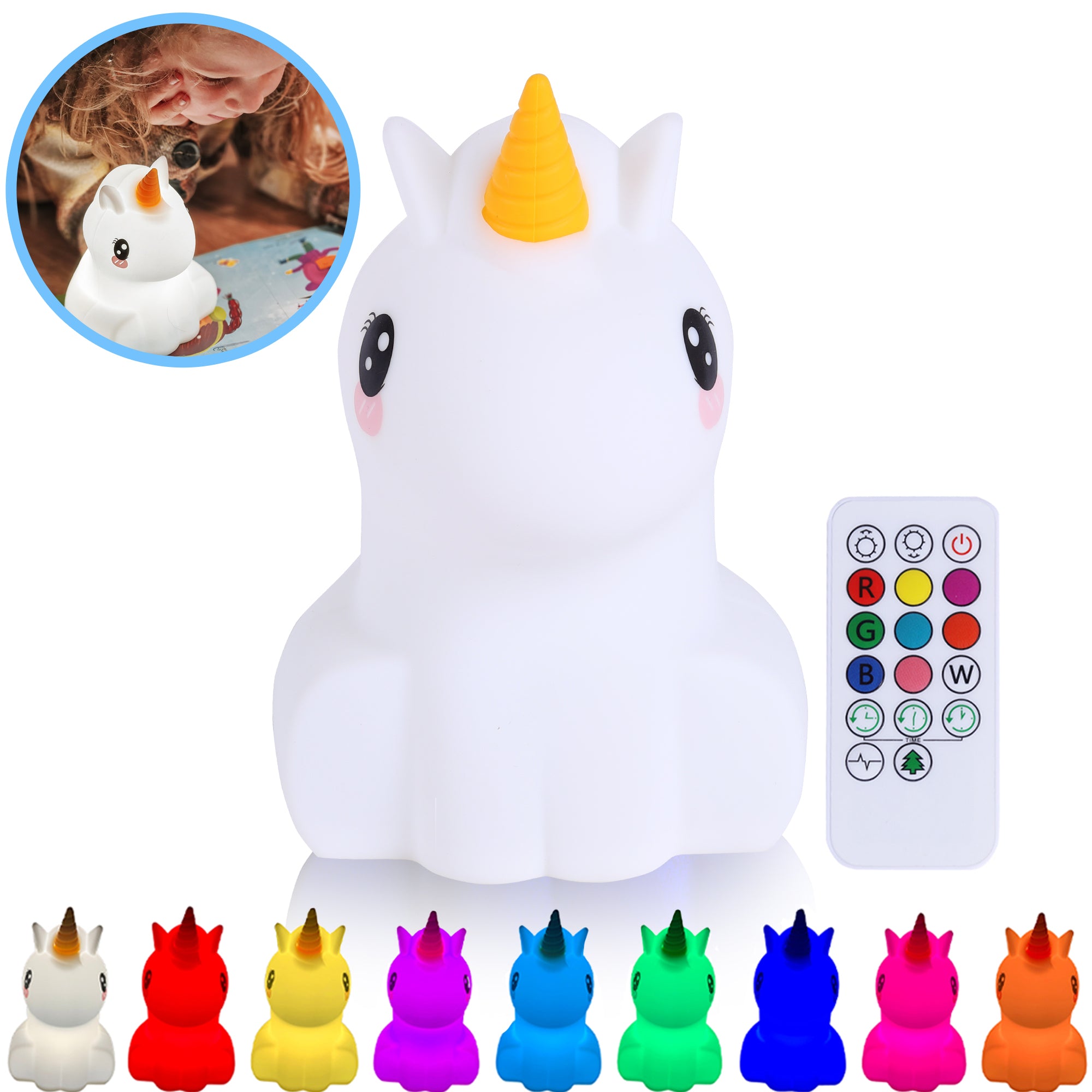
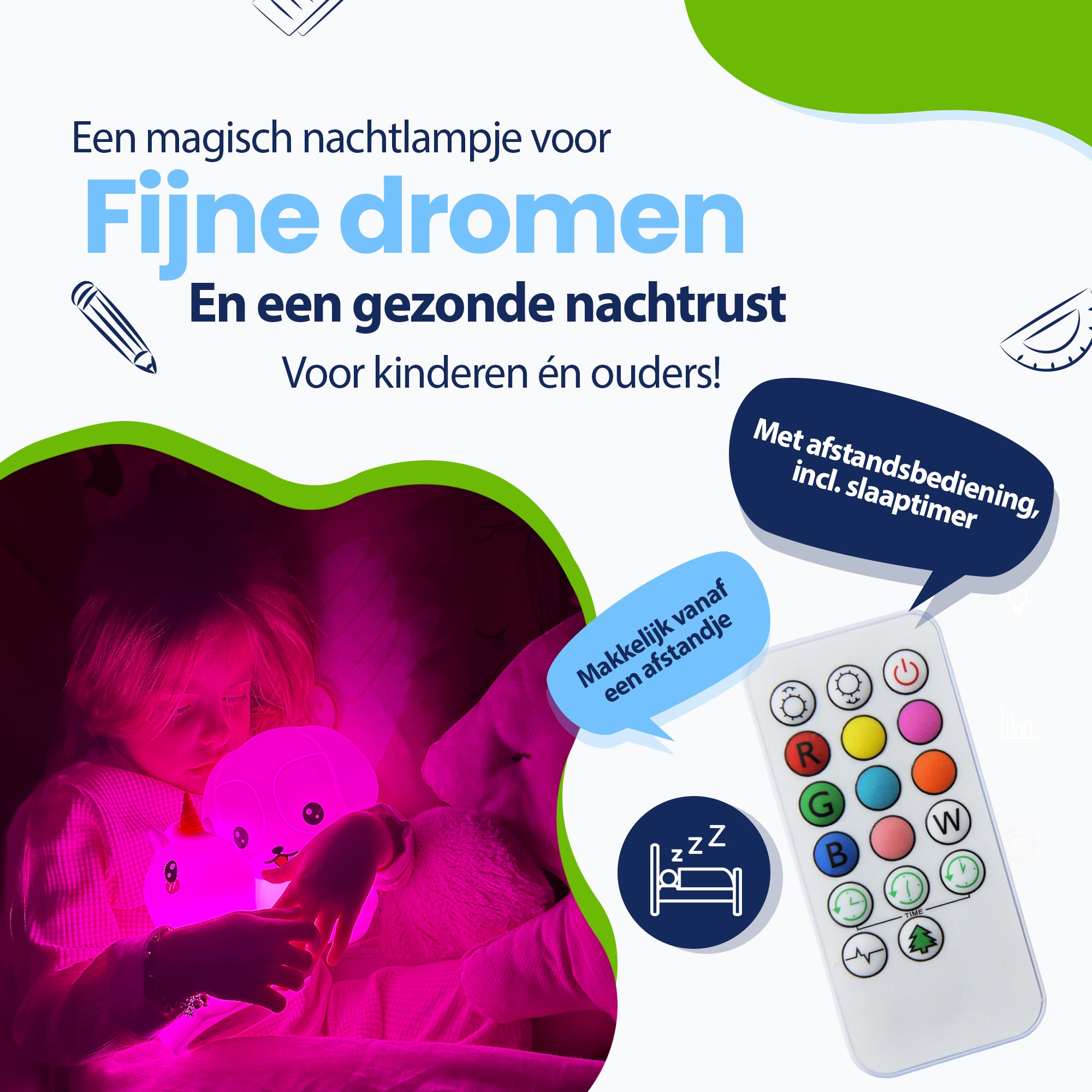
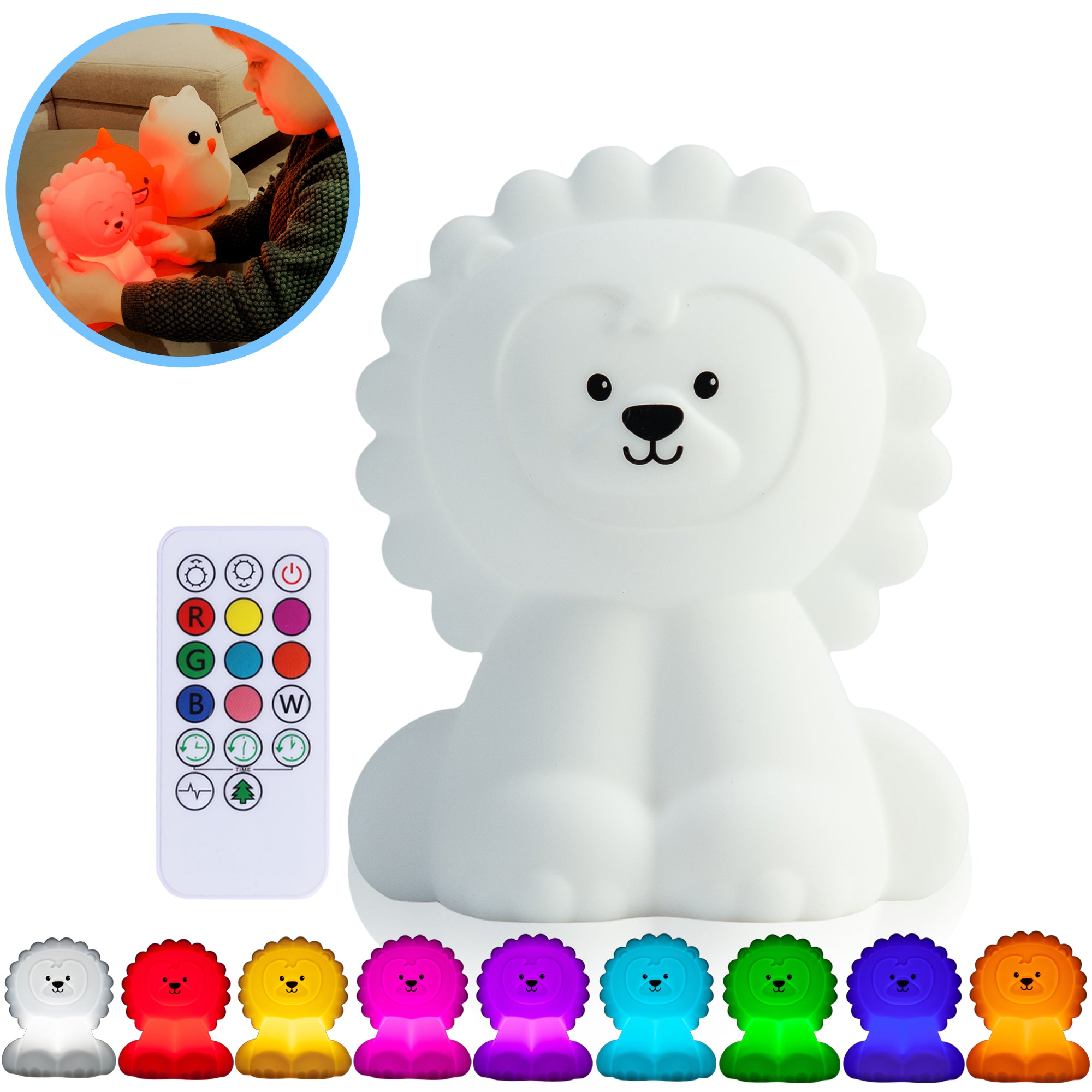
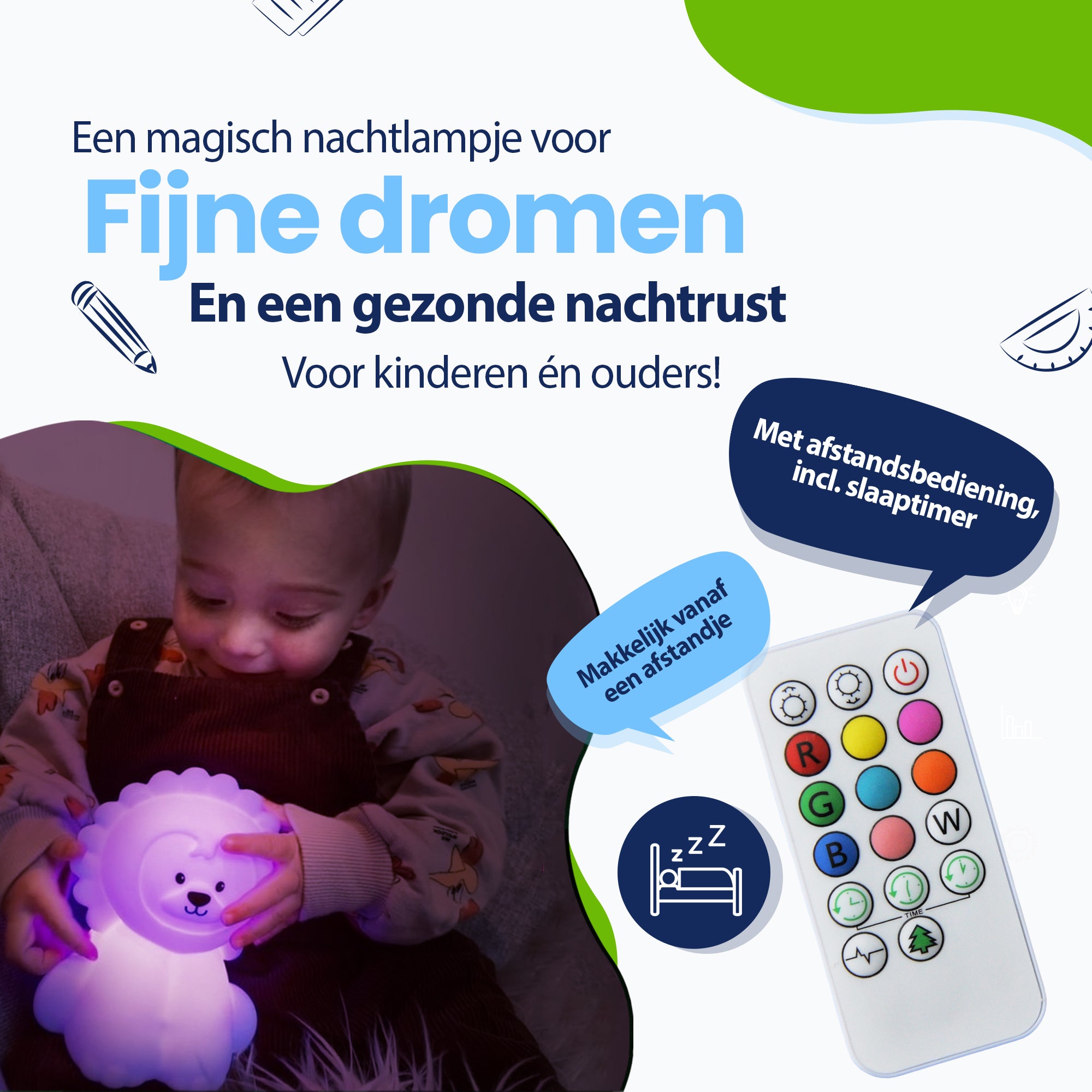
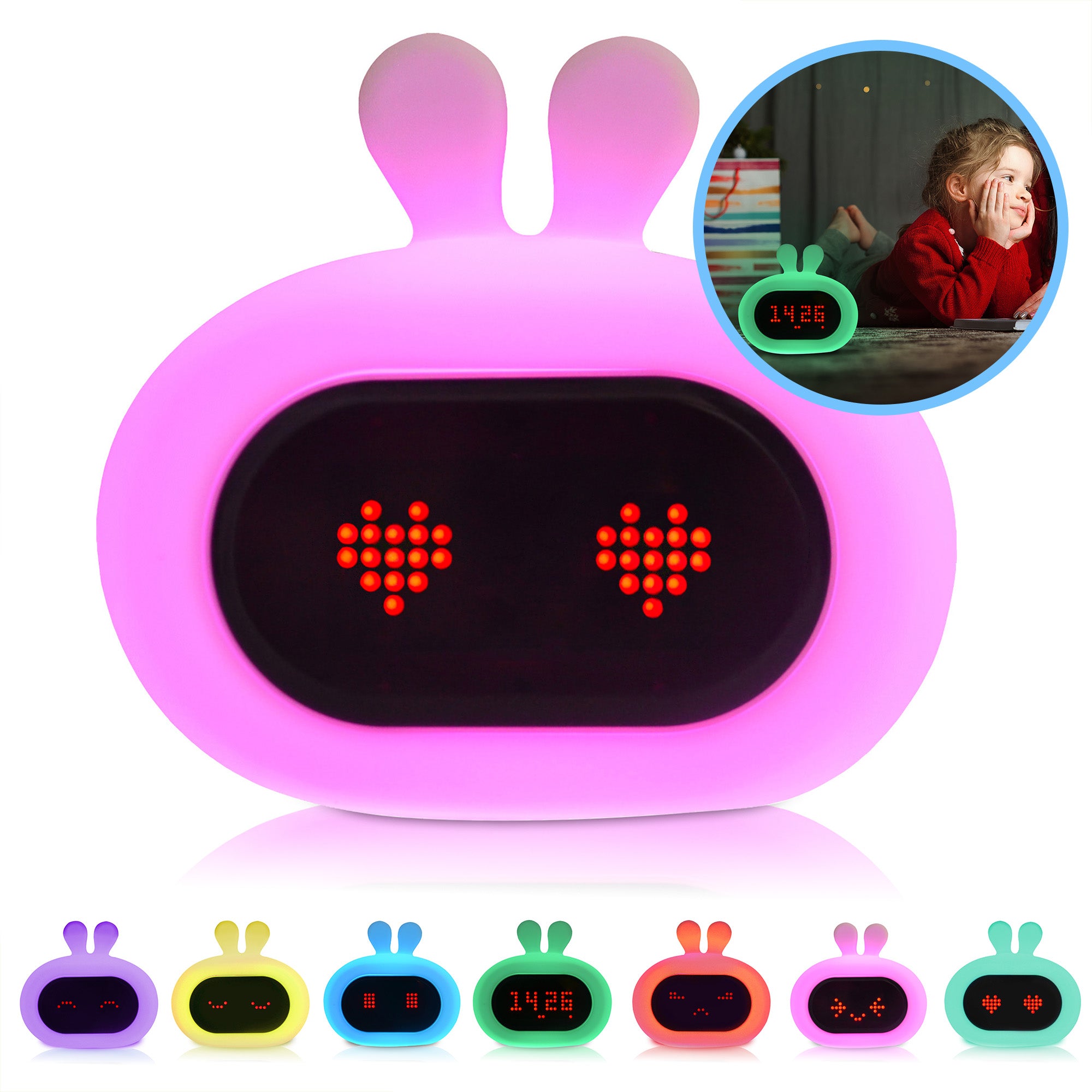
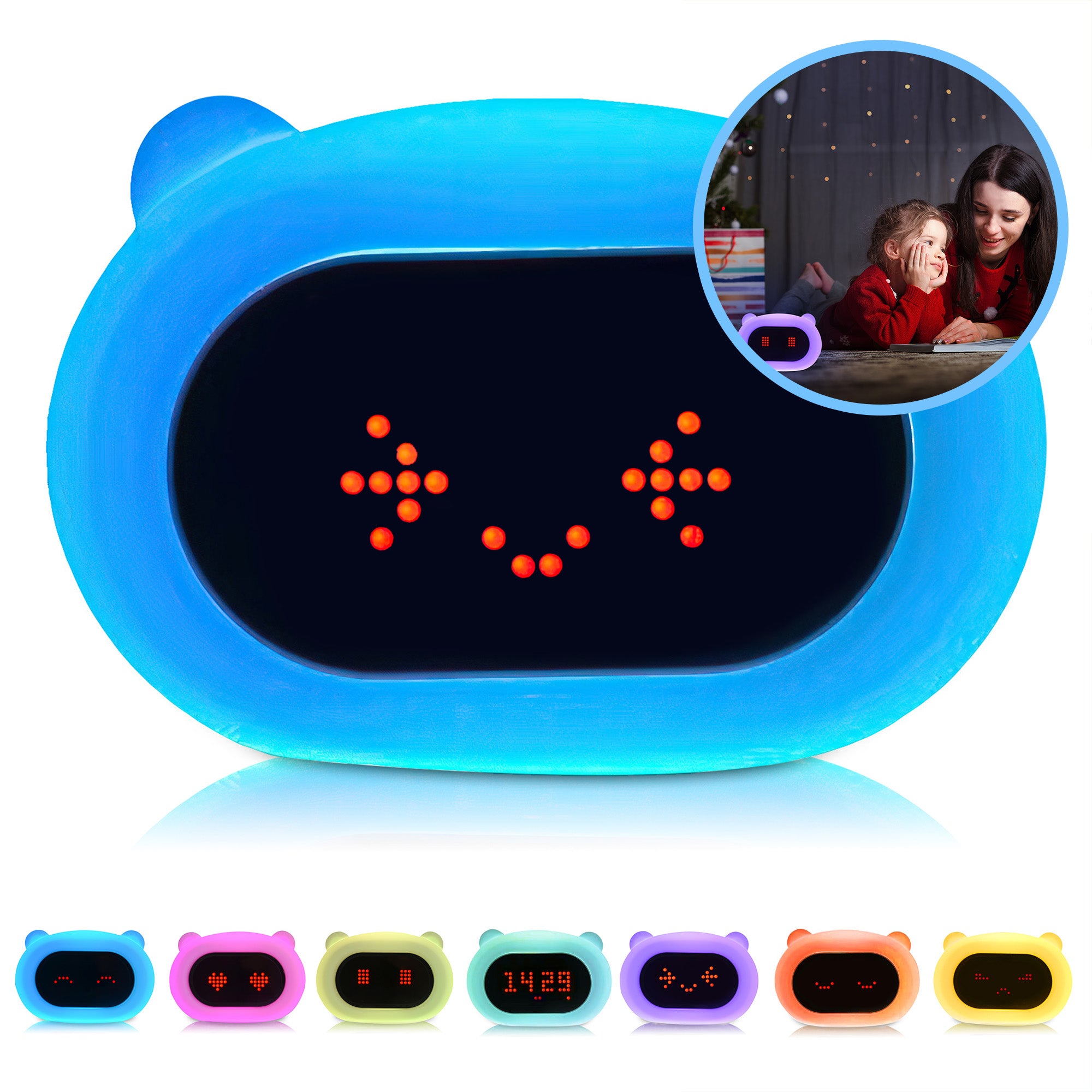
Anyone who has ever had a wide-awake child standing next to the bed at 5:24 in the morning knows that a sleep trainer is not just a nice gadget. A good review of a sleep trainer for children therefore does not start with colour or shape, but with the question: does this tool really help make mornings calmer and clearer for both child and parent?
In essence, a sleep trainer works very simply. With light, colour or a recognisable figure, it shows whether it is time to sleep, play quietly or get up. That predictability is especially helpful for young children. They do not need to be able to read a clock yet to understand what is expected. For parents, the benefit is often fewer discussions at the start of the day and more calm around bedtime.
Review of a sleep trainer for children: what makes a model good?
Not every sleep trainer suits every situation equally well. Some models look friendly, but in practice are too bright, too complicated or difficult to set. Others are very functional, but lack a warm look that fits less naturally into a cosy bedroom. The best choice is usually somewhere in the middle: clear for your child, pleasant for you and calm enough for everyday use.
A good model starts with clarity. Younger children benefit most from a simple signal. Think of red for sleeping and green or yellow for getting up. The fewer layers and buttons there are, the faster a child understands it. For toddlers and preschoolers, simplicity is often more valuable than extra functions.
Ease of use also matters a great deal. If you have to search for the right setting every evening, a sleep trainer can actually create extra unrest. Intuitive controls, logical buttons and a display that is not too busy make a real difference in daily life. Especially when you are tired yourself, you do not want to need a manual.
The light level also deserves attention. A sleep trainer should be visible without unnecessarily lighting up the room. Light that is too bright can be disturbing, while a signal that is too weak may not stand out in the early morning. Soft, warm light usually works best, without unnecessarily brightening the bedroom. It gives clarity without creating a restless atmosphere.
Which functions are really useful?
When you read reviews of sleep trainers for children, you often come across long lists of features. Yet not all extras are equally useful. What is practical mainly depends on your child's age and your routine at home.
For many families, three functions are the most valuable: a clear sleep and wake-up signal, a night light and a timer or alarm function that works reliably. That may sound modest, but this basic setup is exactly what makes a sleep trainer practical. A child learns to recognise repetition, and that is ultimately what this tool is meant for.
Some models also offer sounds, lullabies or white noise. That can be pleasant, but only if it fits your evening routine. For one child, soft music can be calming, while another may become more alert because of it. The same applies to a nap function or afternoon rest setting. Useful if you are still in that phase, but less relevant if your child is already a little older.
An analogue and digital time display can be a nice extra for preschoolers and young school-age children. This allows the product to grow with your child. At first, your child mainly follows the colours or the little face, and later they start to understand the clock better too. That makes a sleep trainer not only practical, but also supportive in developing a sense of time.
What parents often run into in practice
The biggest disappointment usually arises when expectations are too high. A sleep trainer is not a magic wand. It mainly helps as part of a fixed routine. If bedtimes differ every day or if the rules constantly change, it becomes harder for a child to connect the trainer's signal to what is expected of them.
Introducing it also requires a little patience. Some children understand the idea quickly, while others need a few days or weeks. That is completely normal. It helps to explain the sleep trainer during the day in a playful way. Show what the colours mean and repeat this calmly. Not as a strict system, but as a friendly tool that gives guidance.
Size is also not unimportant. A small model looks nicely subtle on a shelf, but it still needs to be clearly visible from the bed. A larger model stands out more quickly, but you want to avoid it becoming too dominant in the room. So it depends on the layout of the bedroom and on how sensitive your child is to light and stimuli.
Materials, safety and durability
For parents who choose consciously, more matters than functionality alone. A sleep trainer often stands close to your child every night. That means you want materials that feel solid, are safely finished and last a long time. That brings peace of mind.
So do not only look at the outside, but also at the build quality. Does the product feel sturdy? Is the cable safely placed, or is charging arranged in a practical way? Does the device remain stable on a bedside table? In children's bedrooms, these are important details.
Sustainability is not only about material choice, but also about lifespan. A sleep trainer that can grow with your child is often a more pleasant choice than a model that feels limited after just a few months. Think of adjustable light settings, a clear time display or a design that does not immediately feel childish as your child gets older.
For many families, design also plays a role. That is understandable. Calm in a child's bedroom is not only about routines, but also about appearance. Soft shapes, friendly colours and a calm design fit better in a bedroom than busy, loud models. A sleep trainer may certainly look nice, as long as its function remains the priority.
What age is a sleep trainer suitable for?
Most parents start looking at a sleep trainer when their child is old enough to understand simple agreements. This is often somewhere in the toddler or preschool phase. Around that age, children become increasingly able to connect the difference between sleeping and getting up with visual signals.
For younger toddlers, a very simple system usually works best. One colour or one clear little face is often enough. Older preschoolers may benefit more from a model with a clock display, timer or different settings for weekdays and weekends.
Still, age is not the only criterion. Character also plays a role. Some children like predictability and quickly pick up on a sleep trainer. Other children are more impulsive or test boundaries for longer. In that case, it helps to combine the trainer with calm repetition and realistic expectations. The device supports the routine, but it does not replace your guidance.
How do you choose the best sleep trainer for your family?
The best choice is rarely the model with the most functions. It is better to look at your daily moments. Do you mainly need a clear signal in the early morning? Then simplicity is more important than music or projections. Are you also looking for a night light for bedtime? Then soft adjustable light is a valuable plus.
Also think about your own use. As a parent, you set the device, often at the end of a long day. You do not want a complicated menu at that point. A sleep trainer that is clear at a glance usually brings more calm than a technical model that can do a lot but offers little convenience.
So read reviews with a practical eye. Pay less attention to loose superlatives and more to concrete experiences. Do parents mention clear colours, easy controls, pleasant brightness and consistent operation? That often says more than general words such as "handy" or "nice".
A calm design, simple controls and reliable operation are qualities many parents are ultimately most satisfied with. Products that combine these qualities often fit well into everyday family routines.
When a sleep trainer is less suitable
There are also situations in which a sleep trainer makes less of a difference. If your child finds the light signal exciting, is easily distracted by new objects or has little understanding of simple agreements yet, it may help to wait a little longer. Sometimes a basic night light is temporarily a better fit.
Disappointment can also arise when parents hope for immediate results. Change around sleep usually takes repetition. A sleep trainer supports that process, but it needs time to gain meaning for your child. Calm expectations often make the experience more pleasant.
That does not change the fact that many families do benefit from such a visual tool. Not because it solves everything, but because it gives just a little more clarity every day. And that is exactly what can make a big difference in busy family life.
A good sleep trainer ultimately feels like a small fixed anchor in your child's room. Not striking, not complicated, but clear and reassuring. If it suits your child's age, your rhythm and the atmosphere you want to create at home, it quickly becomes more than a little clock on a bedside table: it becomes a friendly part of a calm start to every day.