A rattle with a soft bell can instantly catch a baby’s attention. That is exactly why parents look for musical toys for babies: music stimulates, comforts and encourages discovery — but only when the toy truly matches the child’s age and situation. Especially during the first years, parents do not want any uncertainty about sounds, materials or small parts.
Musical toys are often more than simple entertainment. They can help babies follow sounds, practise grabbing and begin recognising rhythm. At the same time, babies are sensitive to strong stimulation. Something that seems fun in a shop can suddenly turn out to be too loud, too heavy or too overwhelming at home. A safe choice therefore starts not with colours or a cute design, but with calmness, simplicity and reliable materials.
Why safe musical toys are so important
Babies explore with their entire body. They look, listen, feel and also put toys in their mouths. That is why musical toys should not only sound pleasant, but also be safe in every situation. A smoothly finished wooden maraca or a soft musical plush toy feels completely different from plastic toys filled with buttons and loud effects.
Safety also means more than simply preventing accidents. Loud sounds can be overwhelming, especially for younger babies. Toys that constantly play music, flash lights and make unexpected noises can create restlessness rather than enjoyment. For parents looking for calm and meaningful playtime, that difference matters.
What should you look for when choosing safe musical toys for babies?
The first thing to check is always the age recommendation. It is there for a reason. A three-month-old baby needs something very different from a twelve-month-old child. During the first months, lightweight toys with soft sounds are usually most suitable. Later on, babies can move more independently, shake or tap objects, and the toy may become slightly more active.
After that, it helps to look at the material. Wood, fabric and silicone often feel calmer and more natural than cheap plastic, but here too the finish matters. Surfaces should feel smooth, without splinters, loose stitching or peeling paint. Ideally, choose materials that feel sturdy and are clearly designed for young children.
The construction is also important. Are there small parts that could come loose? Can the battery compartment be opened easily? Are there cords or strings that something could get caught in? With baby products, parents generally want as few vulnerable points as possible. Simple toys are often not only nicer to use, but safer as well.
Pay close attention to the volume
When it comes to musical toys, volume is perhaps the most underestimated factor. A short melody may seem harmless, but if the sound is sharp or loud and repeatedly played close to a baby’s ears, it quickly becomes unpleasant. Babies hear very sensitively and can easily become startled by sudden sounds.
A good rule of thumb is simple: if you already find the toy loud in a quiet room, it is probably too much for a baby. Gentle sounds, short melodies and instruments that respond to the child’s own movements usually feel much calmer. Think of a small bell, a softly toned xylophone or a music box with a soothing melody.
Shape, size and grip
Safe toys fit comfortably in small hands. A baby should be able to hold the toy without it feeling too heavy or awkwardly shaped. Rounded forms and soft edges feel more comfortable. Toys that are too large can more easily fall into the baby’s face or become difficult to control.
Grip also supports development. A simple wooden shaker or fabric rattle encourages babies to grab, release and try again. That makes the toy not only safer, but also more valuable for motor skill development.
Which types of musical toys usually work well?
Not every musical toy is automatically a good choice for babies. It depends on age, sensitivity and the moment of use. Calm and simple options usually work best.
Rattles and soft shakers are a wonderful starting point for many babies. They respond directly to movement without requiring complicated interaction. That helps babies understand: when I move, I hear something. This simple cause-and-effect play is exactly what fascinates young babies.
Soft musical plush toys or gentle music boxes can also work beautifully, especially during quiet moments. They are less about active experimentation and more about recognition and comfort. That makes them very suitable for bedtime routines or calm cuddle moments.
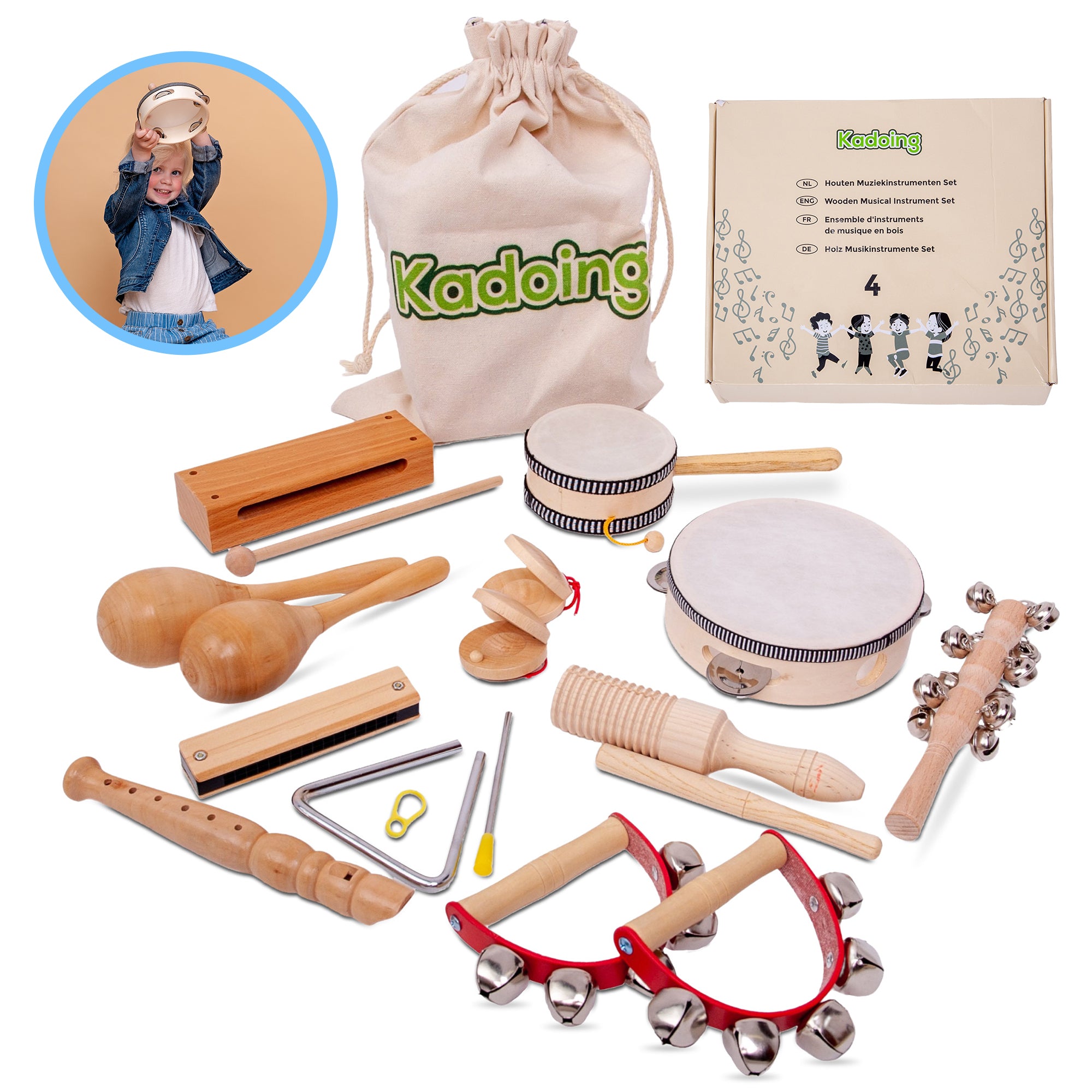
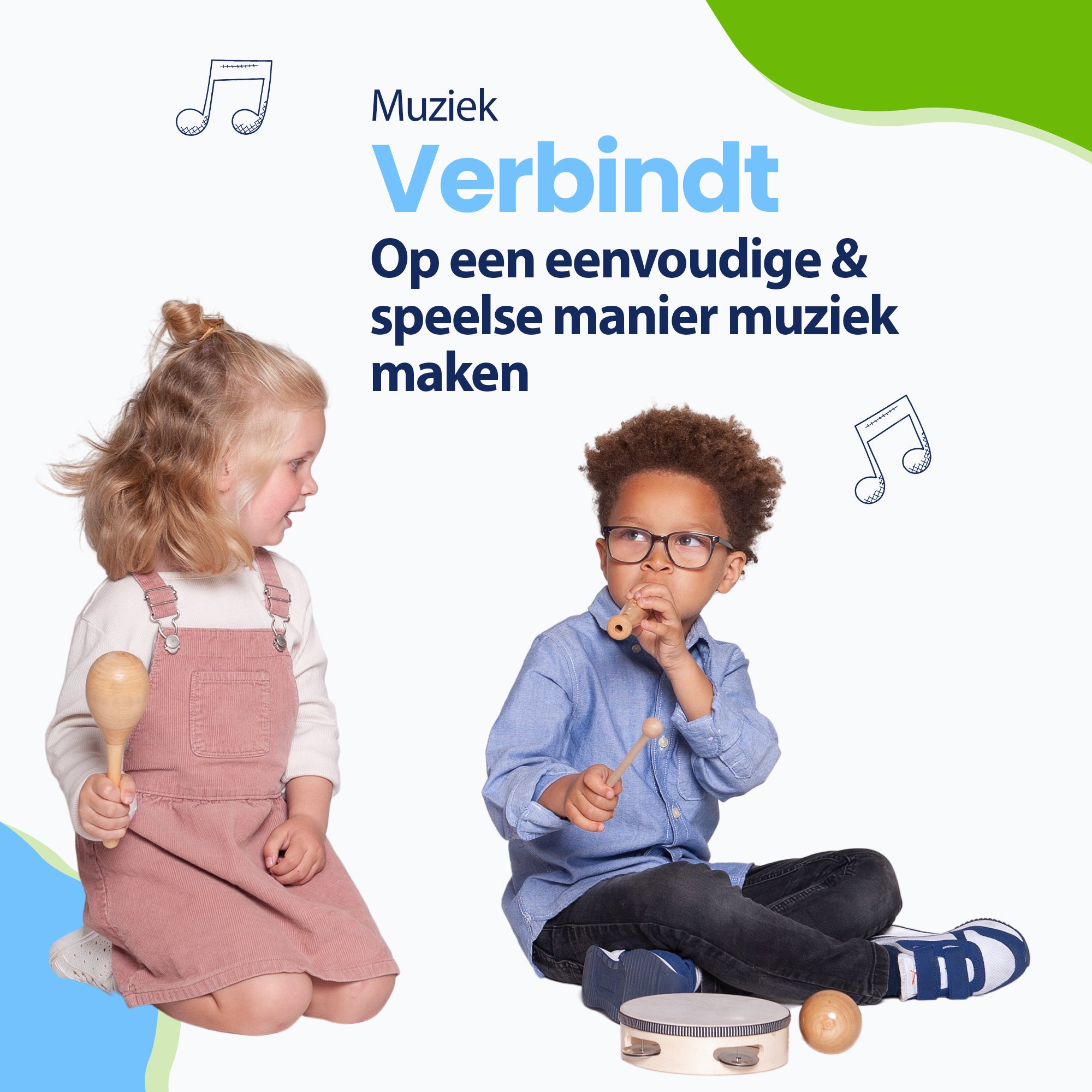
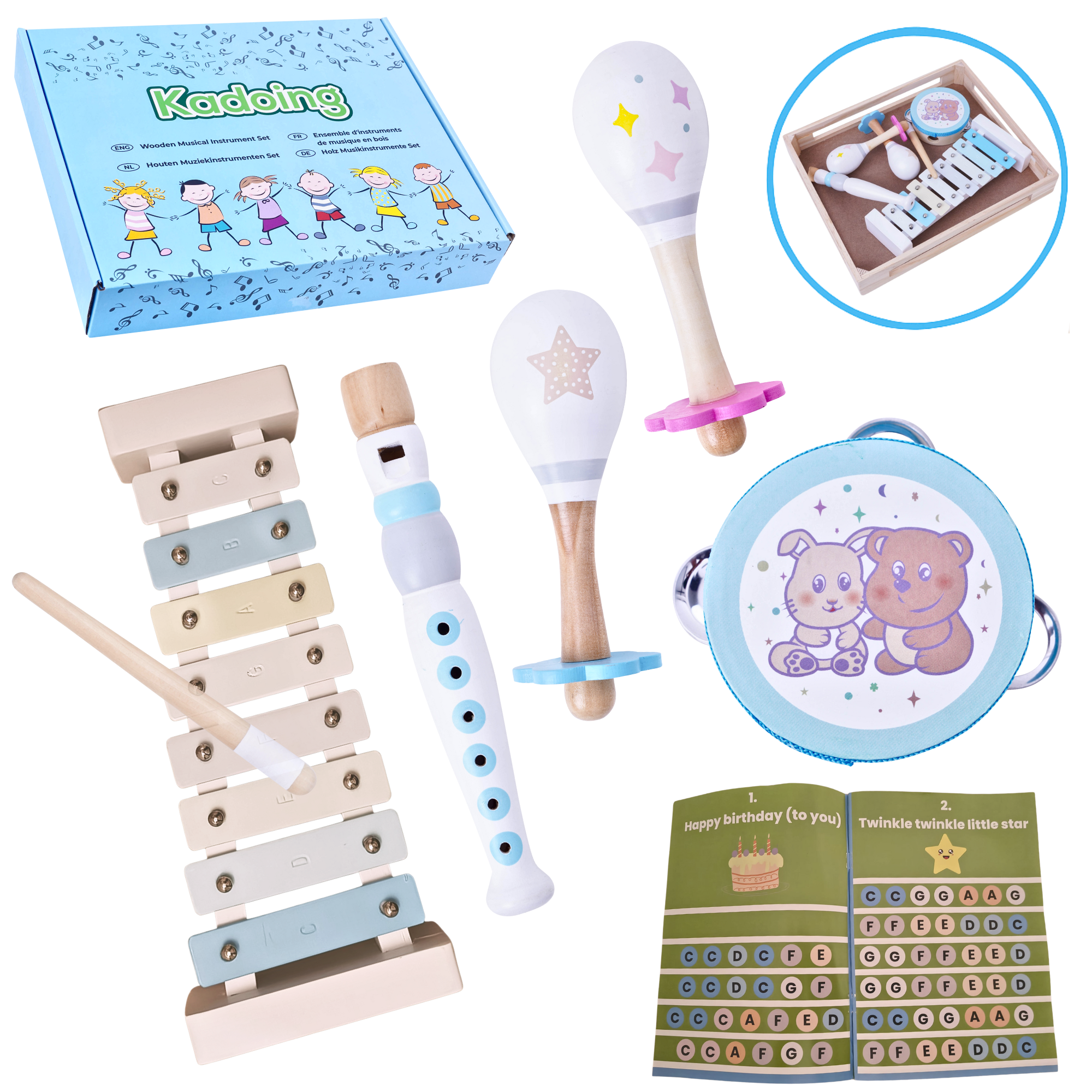
Small wooden instruments can become a lovely next step later on, provided they are well made. Wooden musical instrument sets like those from Kadoing often fit well into calm play moments and first discoveries of rhythm and sound. A small drum or baby-friendly xylophone can be enjoyable, but it remains important to pay attention to finishing quality and volume. Not every instrument sold as a children’s toy is automatically suitable for the youngest babies.
When is musical toy less suitable?
Sometimes a toy is not unsafe, but simply not the right match for your baby. A child who startles easily from sound will probably not enjoy a toy that suddenly begins singing loudly. Likewise, an electronic panel with endless melodies may become too stimulating for a baby who is already sensitive to overstimulation.
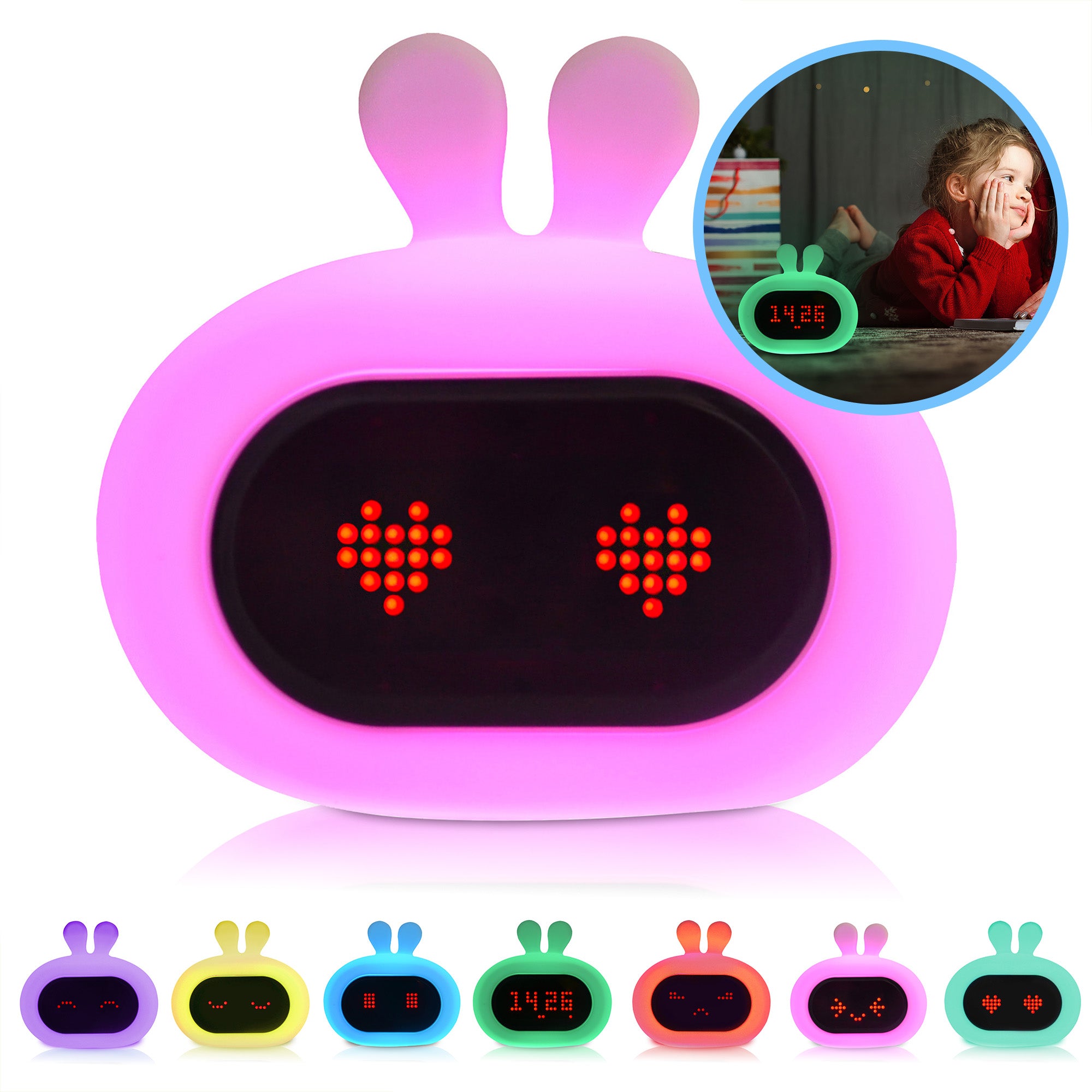
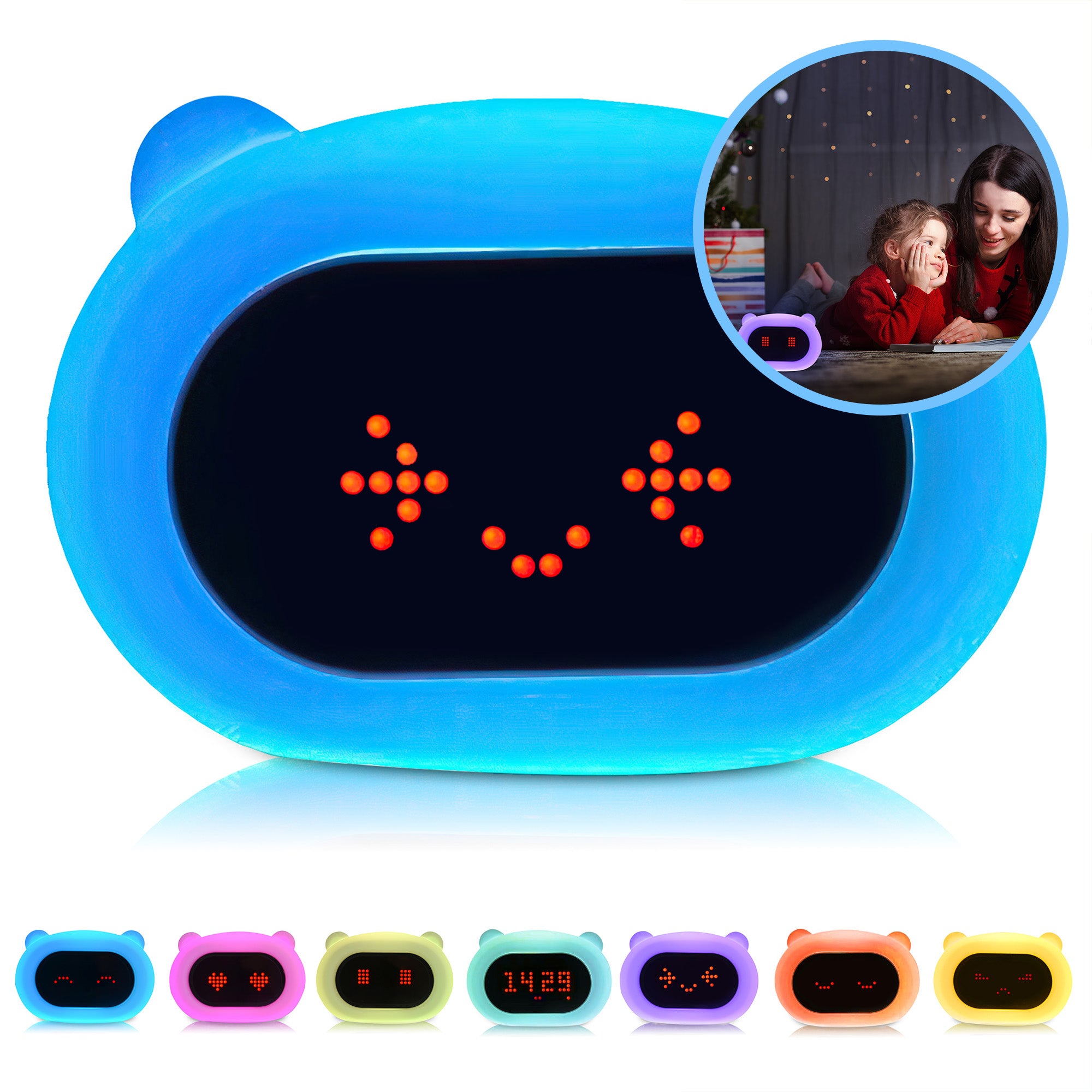
Not every musical toy is suitable right before bedtime either. Gentle tapping or a soft lullaby may feel calming, while flashing lights and energetic melodies tend to activate rather than soothe. So it is not only about what is safe, but also about when the toy is used.
This is often where parents notice the difference between toys that seem exciting for a moment and toys that genuinely fit into daily family life. Especially for quiet playtime and sleep routines, many families prefer soft sounds, natural materials and simple use.
Safe use at home also matters
Even carefully chosen toys should be introduced thoughtfully. It is best not to leave a baby alone with musical toys unsupervised for long periods, especially when the toy is still new. During the first days, it helps to observe: how does the baby react, how is the toy being held and does everything still remain intact?
Check toys regularly for wear and tear. With wooden toys, look for cracks or loose parts. With fabric toys, inspect seams and filling. Electronic toys require extra attention around batteries and closures.
Cleaning matters too. Babies naturally put almost everything into their mouths. That is why it helps to choose toys that can easily be wiped clean or washed according to the instructions. A safe product only stays safe when it is properly maintained.
Musical toys and development work well together
Well-chosen musical toys support far more than simple listening pleasure. Babies learn to follow sounds, notice differences and respond to rhythm. These are small steps, but they contribute to concentration, motor skills and sensory development.
Playing together makes an even bigger difference. When a parent gently shakes along, hums a melody or repeats the same rhythm, the toy suddenly becomes a shared moment. That is where much of the value lies. Not in having endless features, but in encouraging connection.
For many families, calm and open-ended toys work best. Not an overload of buttons, but something that leaves room for the child’s own pace. That also fits beautifully with a more conscious and sustainable choice: one high-quality musical toy that lasts a long time instead of several noisy toys that quickly end up forgotten in a cupboard.
A calm choice often feels best
If you are deciding between two options, the simpler one is often the safer choice. Fewer sounds, fewer parts and a clear purpose make it easier to judge whether something truly suits your baby. And that sense of calm is exactly what many parents are looking for.
At Kadoing, we often see this need clearly: toys may look beautiful, but above all they should support everyday life with a small child. Think of moments of discovery together, quiet comfort or peaceful play without too much stimulation. Music can play a valuable role in this, as long as the toy is chosen thoughtfully.
What parents often value in musical toys for babies
When parents search for musical toys for babies, they are usually not only thinking about safety standards. They are also asking a broader question: does this fit my child and our family? A soft rattle for daytime, a calming music box for the evening or a small wooden instrument for the next developmental stage can all be excellent choices, provided they match the child’s age, sensitivity and daily rhythm.
You therefore do not need the loudest or most eye-catching toy to bring something valuable into your home. Very often, the best choice lies in simplicity, natural materials and sounds that still feel pleasant after hearing them for the tenth time in one day. That makes playtime more enjoyable not only for your baby, but for you as well.
Choosing safely ultimately means choosing more than just a toy. It means choosing trust during playtime, less restlessness and small moments that genuinely feel good.
Frequently asked questions about safe musical toys for babies
From what age are musical toys suitable?
That depends on the product, but many soft rattles and simple music boxes are suitable from the first months onward.
Which musical toys are safe for babies?
Toys without loose parts, with gentle sounds and child-safe materials are usually the safest choice.
Are loud sounds bad for babies?
Babies are sensitive to loud or sudden sounds. Gentle tones and controlled volume are generally much more comfortable.
Are wooden musical instruments suitable for babies?
Some simple wooden instruments can be suitable, provided they are sturdy, well finished and appropriate for the child’s age.
Why do parents choose calm musical toys?
Calm toys help many babies relax more easily and reduce overstimulation during play.