A baby puts everything in their mouth, drops toys, pushes them across the floor and carefully explores every edge and texture. That is why choosing safe wooden toys for babies does not start with colour or design, but with peace of mind as a parent. You want something that looks beautiful, but above all something that feels safe and reliable in little hands.
For many parents, wooden toys have a calm and natural appeal. They feel pleasant, often last a long time and fit well with a conscious choice for fewer but better products. At the same time, wood alone does not automatically make a toy safe. The finish, size, paint used and age recommendation make all the difference.
How can you recognise safe wooden toys for babies?
Safe wooden toys for babies combine quality materials, solid craftsmanship and a design that matches a child’s stage of development. A smooth wooden block made from untreated wood can be safe, but only if it is large enough, free from splinters and does not contain loose parts. A beautifully painted rattle can also be a great choice, provided the coating is child-safe and firmly attached.
When it comes to babies, safety often comes down to three simple questions. Can my child put this in their mouth safely? Can anything come loose? And is it actually suitable for my baby's age? The last point is often underestimated. Toys intended for older children may look harmless but can still contain small parts, cords or more complex constructions.
Wood has the advantage of being sturdy and less likely to deform than some other materials. However, sturdy does not automatically mean risk-free. For example, a hard wooden figure may be less suitable for a very young baby who does not yet have full control over their movements and could accidentally bump themselves in the face. As always, context matters.
Pay attention to materials, paint and finishes
When choosing wooden toys for babies, the finish is just as important as the wood itself. Ideally, choose toys made from solid wood or high-quality wooden materials that have been carefully crafted. The surface should feel smooth, without rough spots, sharp edges or visible cracks.
Paint and varnish deserve extra attention. Babies explore toys with their mouths, so a child-safe finish is essential. You do not need to be a chemist to make a good choice, but it helps to be critical. Does the toy have a strong chemical smell? Does the paint feel sticky or flaky? Those are warning signs. Good baby toys feel solid, clean and well made.
Glued joints and decorative details should also be durable. Think of attached beads, wheels, bells or handles. If something looks decorative but could potentially come loose, it is not suitable for the youngest children. Simplicity is often a strong indicator of safety when it comes to baby toys.
When is untreated wood a good choice and when is it not?
Untreated wood appeals to many parents because it feels natural and pure. It can be an excellent choice for simple grasping toys or wooden blocks. However, untreated does not automatically mean better. Some types of wood absorb stains more easily or feel rougher, and not every natural surface is pleasant for small baby hands.
A safe and smooth coating can actually make a toy more durable and easier to clean. The question is not simply whether the wood is treated or untreated, but whether the finish is high quality and suitable for everyday use.
Size is often more important than parents realise
One of the first things to consider when choosing safe wooden toys for babies is size. Anything small enough to fit deeply into a baby’s mouth requires extra caution. Toys made up of multiple parts deserve especially careful inspection.
Bigger is not always better, because toys also need to be easy to hold. Babies benefit from shapes that are light enough to handle yet large enough to be safe. Think of a simple rattle, a sturdy wooden and silicone teething ring or a large grasping ring with rounded shapes.
Toys that are designed to “grow with your child” sound appealing, but they do not always work well in practice. A shape sorter with loose pieces may be wonderful later on but often comes too early for a young baby. Sometimes it is safer and more practical to choose toys that match your child’s current developmental stage.
Which types of wooden toys are often a good choice for babies?
Not every wooden toy is suitable during the first months of life. For babies, simple shapes and clear functions often work best. A wooden rattle, a grasping toy or a hanging toy for a play gym can be valuable choices when thoughtfully designed. These encourage touching, observing, grasping and repeating actions without creating too many stimuli.
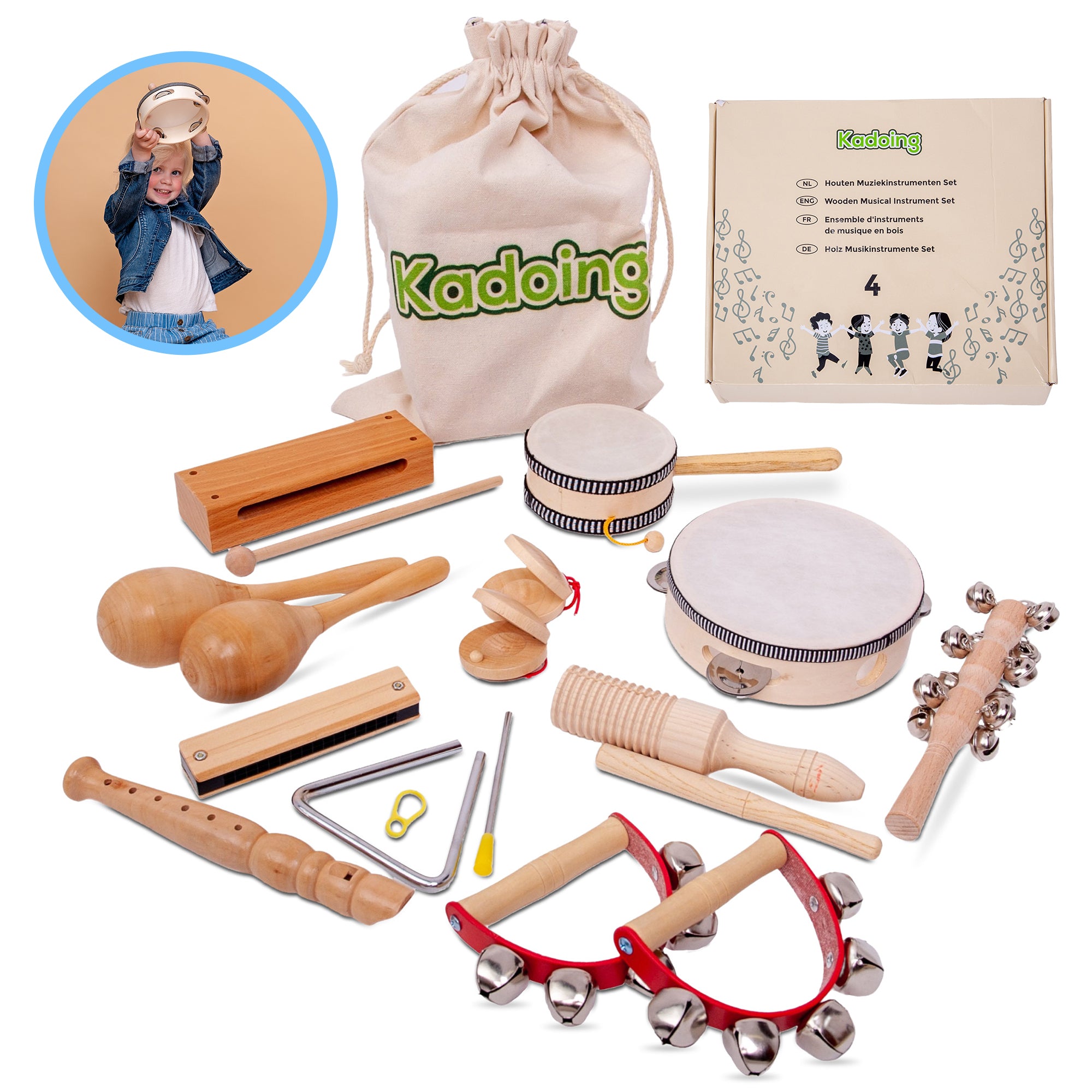
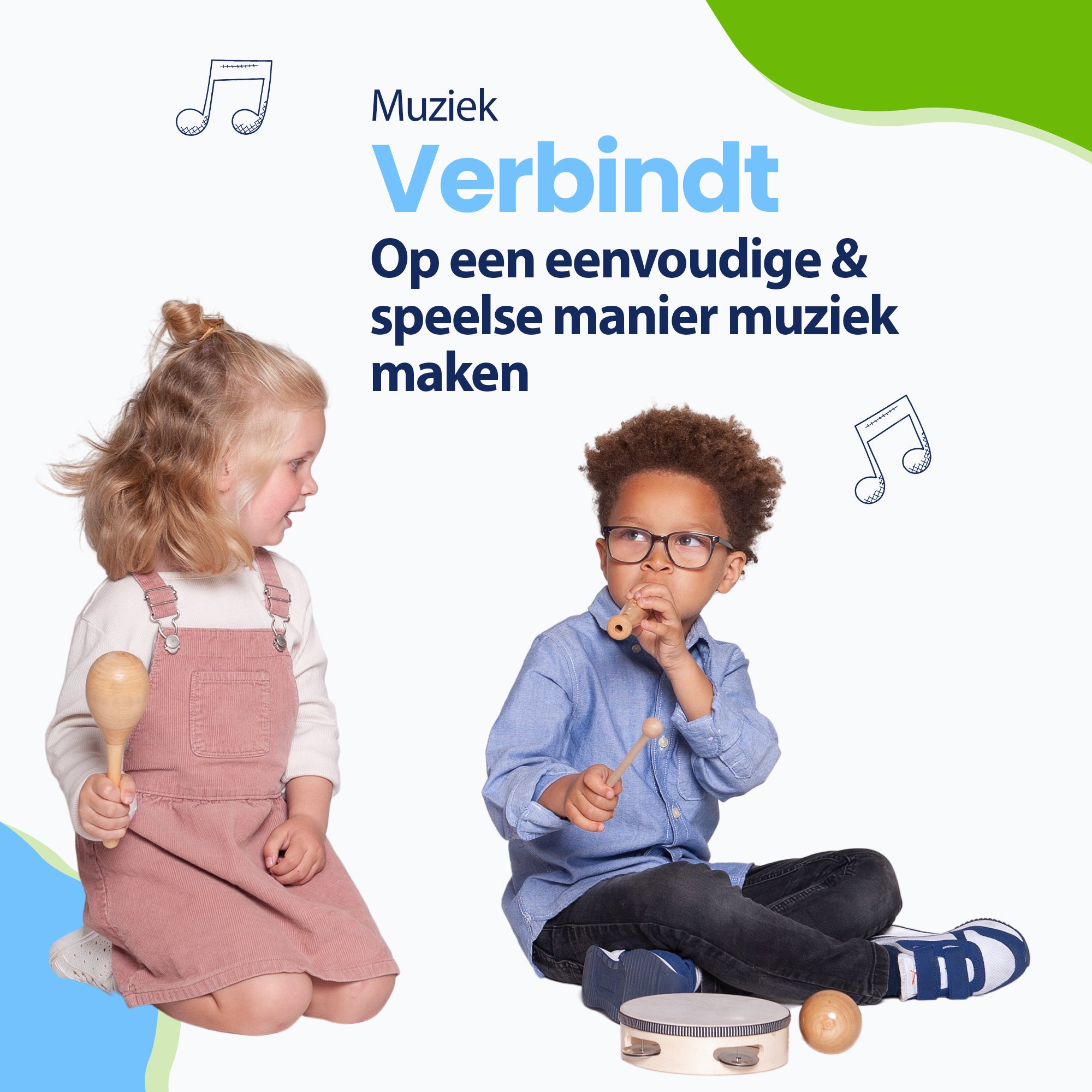
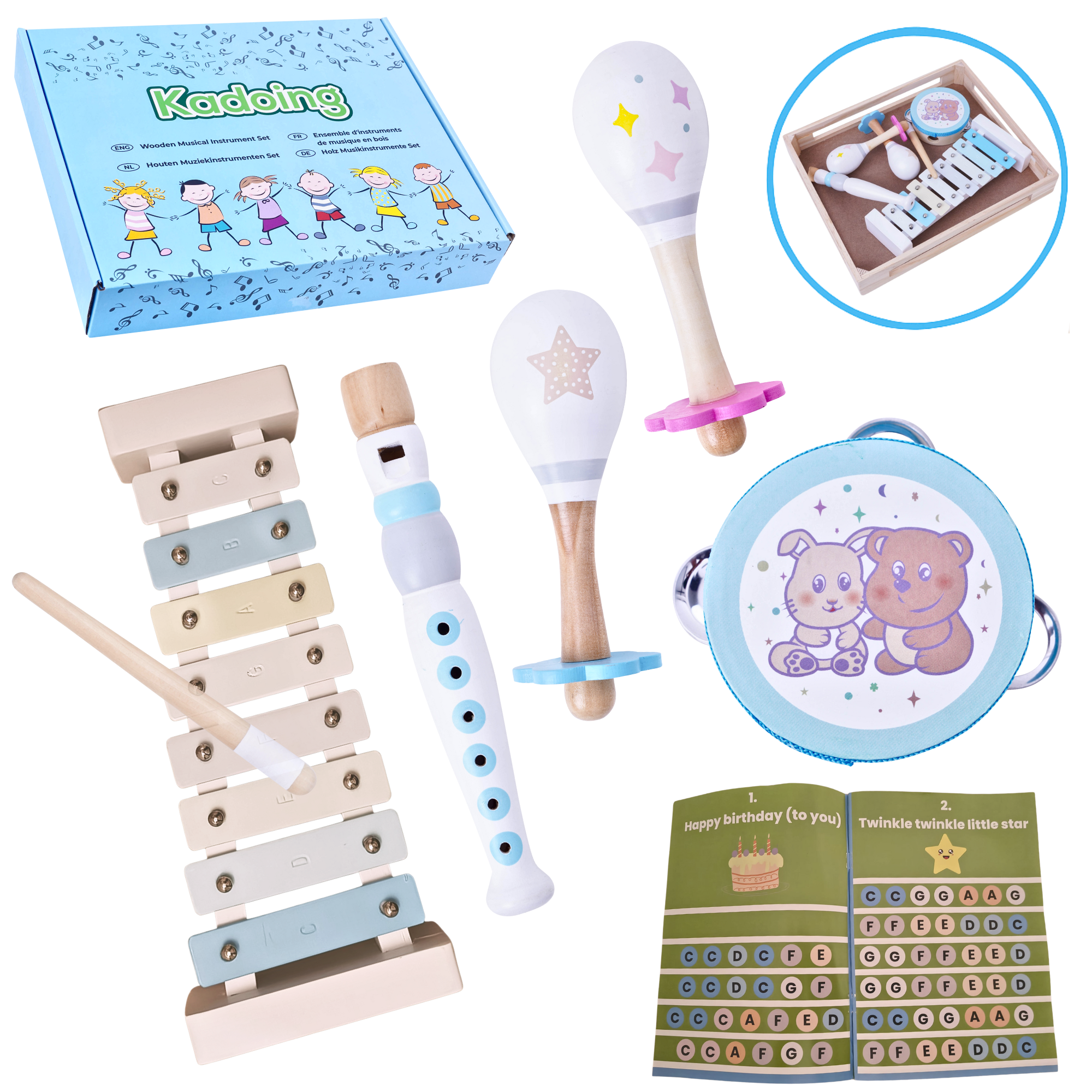
Wooden musical toys can also support development, provided they are simple and age-appropriate. Gentle sounds and a clear cause-and-effect experience can be highly rewarding. Think of a small instrument that is well constructed, not too heavy and free from loose parts. Music does not need to be loud or complex to be engaging.
Pull-along toys, stacking towers with small parts or toys containing magnets are generally better suited to older children. That does not make them bad choices; they are simply not suitable for every baby or every stage of development. Choosing safely often means waiting for the right moment.
How to check wooden toys at home
Even when a toy is brand new, it is wise to carry out a quick safety check. Start by looking at the edges and joints. Run your hand over the surface to ensure everything feels smooth. Gently shake the toy to hear whether anything rattles or feels loose. You do not need to pull on it aggressively, but it is sensible to check that all parts are securely attached.
Next, smell the toy. A neutral or light wooden scent is usually perfectly fine. A strong chemical smell often gives parents good reason to feel uncomfortable. Also keep an eye out for signs of wear during the first few days of use. If paint starts peeling, cracks appear or a part becomes unstable, it is safest to stop using the toy.
Regular cleaning is important as well. Wooden toys have a timeless look but still require maintenance. Avoid harsh cleaning products and clean them according to the manufacturer's instructions. This helps keep the finish attractive and safe for longer.
Second-hand wooden toys: charming but worth checking carefully
Second-hand wooden toys can be a sustainable choice because quality toys often last for years. However, they require extra attention when intended for babies. Older toys may have wear that is not immediately visible, such as small cracks, weakened joints or ageing paint.
Check carefully for splinters, peeling finishes and damage. If in doubt, it is better to keep a second-hand toy for decoration or for later use rather than giving it to a baby who still explores the world primarily through their mouth.
Safety and development can go hand in hand
Parents do not have to choose between safe toys and developmental toys. For babies, simple toys are often the most effective. A calm shape, a pleasant texture and a gentle sound encourage repetition. And repetition is exactly how young children learn about the world around them.
That is also why wooden toys fit so naturally into everyday life. Not as a distraction, but as a tool that supports meaningful and attentive play. A baby who turns a grasping ring, picks up a rattle again and again or listens to a gentle sound is quietly developing motor skills, sensory awareness and concentration.
For a brand like Kadoing, this philosophy feels natural: less rush, more trust in simple products that fit a young child’s pace. For many parents, that brings just as much calm as it does for the child.
Common misconceptions about safe wooden toys for babies
A common misconception is that natural materials are automatically safe. It sounds logical, but safety depends on the whole product. Wood can still be poorly finished, too heavy or an unsuitable size.
Another misconception is that more expensive automatically means safer. Quality certainly matters, but a higher price tag alone does not tell the whole story. Instead, focus on the construction, finish, age recommendation and how thoughtfully the toy has been designed.
Even minimalist design can be misleading. Calm colours and attractive aesthetics are wonderful, but they do not replace proper safety features. The most beautiful toy in the nursery still needs to withstand chewing, dropping and everyday use.
What should you consider when giving a toy as a gift?
If you are buying wooden toys as a gift for a baby, you are often choosing with your heart. That is lovely, but practicality matters too. Look beyond what is cute and think about what parents will feel comfortable allowing their child to use. If possible, ask about the baby’s age and whether they already have toys suitable for their current stage of development.
A safe gift does not need to be complicated. It should be sturdy, easy to understand and suitable for everyday play. That is often where its greatest value lies: not in having the most features, but in providing the most confidence.
If you are unsure, choose something simple that can be used right away. For a baby, a well-designed grasping toy is often more valuable than a large multifunctional product that remains unused for months.
When you search for safe wooden toys for a baby, you are really searching for more than just a toy. You are looking for something that provides reassurance, supports your child’s development and can be used with confidence. You are looking for a small piece of certainty during a stage of life where everything feels new. That is why it is worth choosing carefully, so play feels easy, safe and aligned with the calm foundation you want to give your child.
Frequently asked questions about safe wooden toys for babies
At what age are wooden toys suitable for babies?
It depends on the specific product. Always check the recommended age and choose toys that match your baby's stage of development.
Are wooden toys safer than plastic toys?
Not necessarily. Safety depends mainly on the design, construction, materials used and whether the toy is appropriate for the child's age.
What should I look for in wooden toys for a baby?
Pay attention to size, rounded edges, sturdy parts, child-safe paints and a splinter-free finish.
Can babies put wooden toys in their mouths?
Yes. Babies often explore toys with their mouths, which is why it is important to choose toys specifically designed for babies and finished with safe, child-friendly materials.