A nursery can quickly feel complete once the cot, changing table and wardrobe are in place. Yet true calm often lies in the details. Montessori toys for the nursery are a good example: toys that not only look beautiful, but also match the way a baby gradually discovers the world.
In a Montessori-inspired nursery, it is not about having lots of things. Fewer stimuli, natural materials and toys that invite independent discovery often create more focus and more calm. That is pleasant for your baby, but also for you as a parent. You do not have to keep wondering what is suitable, because the room naturally supports what your child needs at that moment.
What does Montessori mean in the nursery?
Montessori is often associated with independence, but with babies it starts very small. Think of looking, grasping, listening, feeling and repeating. A baby does not learn from busy toys that do everything at once, but from simple experiences that are clear and predictable.
You can see this reflected in the nursery. A Montessori environment is clear, calm and aligned with the child’s stage of development. Toys have a clear role within that. Not as decoration and not as distraction, but as an invitation to explore something independently.
That does not mean everything at home has to strictly follow a method. Many parents simply choose a few elements consciously because they work well in everyday life. A wooden rattle, a soft play area, a mobile with calm shapes or a simple music box can already be enough to change the atmosphere of the room.
Why Montessori toys fit well in the nursery
The nursery is often the first place where rhythm and security come together. You feed, comfort and dress your baby there, and slowly build familiar moments. Toys that fit into that setting can therefore be supportive rather than eye-catching.
Montessori toys for the nursery fit well with this idea because they do not make the room feel fuller, but more functional. A baby does not need to be overwhelmed by colours, buttons and sounds. On the contrary: many babies respond well to toys that offer one experience at a time. A bell with a soft sound. A ball that rolls slowly. A teething ring made of wood or silicone with a clear shape.
There is some nuance, of course. Some babies seek more stimulation than others. What feels calming for one child may feel too limited for another. That is why it is wise not only to look at the Montessori style, but especially at your own baby. How does your child respond to sound, movement and new materials? That often gives more direction than a fixed list of must-haves.
What should you pay attention to when choosing?
The best choice is usually simple. Instead of placing lots of toys out at once, it helps to look at material, function and timing. Wood, cotton and other natural materials often feel pleasant and fit well in a calm room. This is not only an aesthetic choice, but also a practical one. They look less busy and combine easily with a calm interior.
It is also helpful to look for one clear play experience per item. A grasping toy to hold, a mirror to look into, a soft ball to roll. Toys with a clear function help babies make connections. This often makes play more focused.
Timing is at least as important. What is suitable for a newborn is different from what suits a baby of eight or ten months. Offering something too early can sometimes lead to frustration, while offering it too late may provide too little challenge. A nursery therefore grows along with your baby.
From 0 to 3 months
In the first months, much revolves around looking and listening. Contrasts, calm movements and gentle sounds are a good fit. A simple mobile above a safe place to look can be enough. A baby-safe mirror at eye level, for example near a play mat, also invites observation.
At this stage, toys do not need to do much yet. It is mainly about slowing things down. Your baby learns to focus, recognise sounds and discover their own hands. That is exactly why less often works better.
From 3 to 6 months
From this point, there is more interest in grasping, feeling and moving. Lightweight rattles, soft sensory cloths or a wooden grasping toy are a good fit. A play gym with a few hanging toys can also be helpful, as long as it is not too busy.
Many parents notice at this stage that their baby can play independently for longer when the environment remains clear. Not because toys work miracles on their own, but because a calm setup helps a baby stay with one experience.
From 6 to 12 months
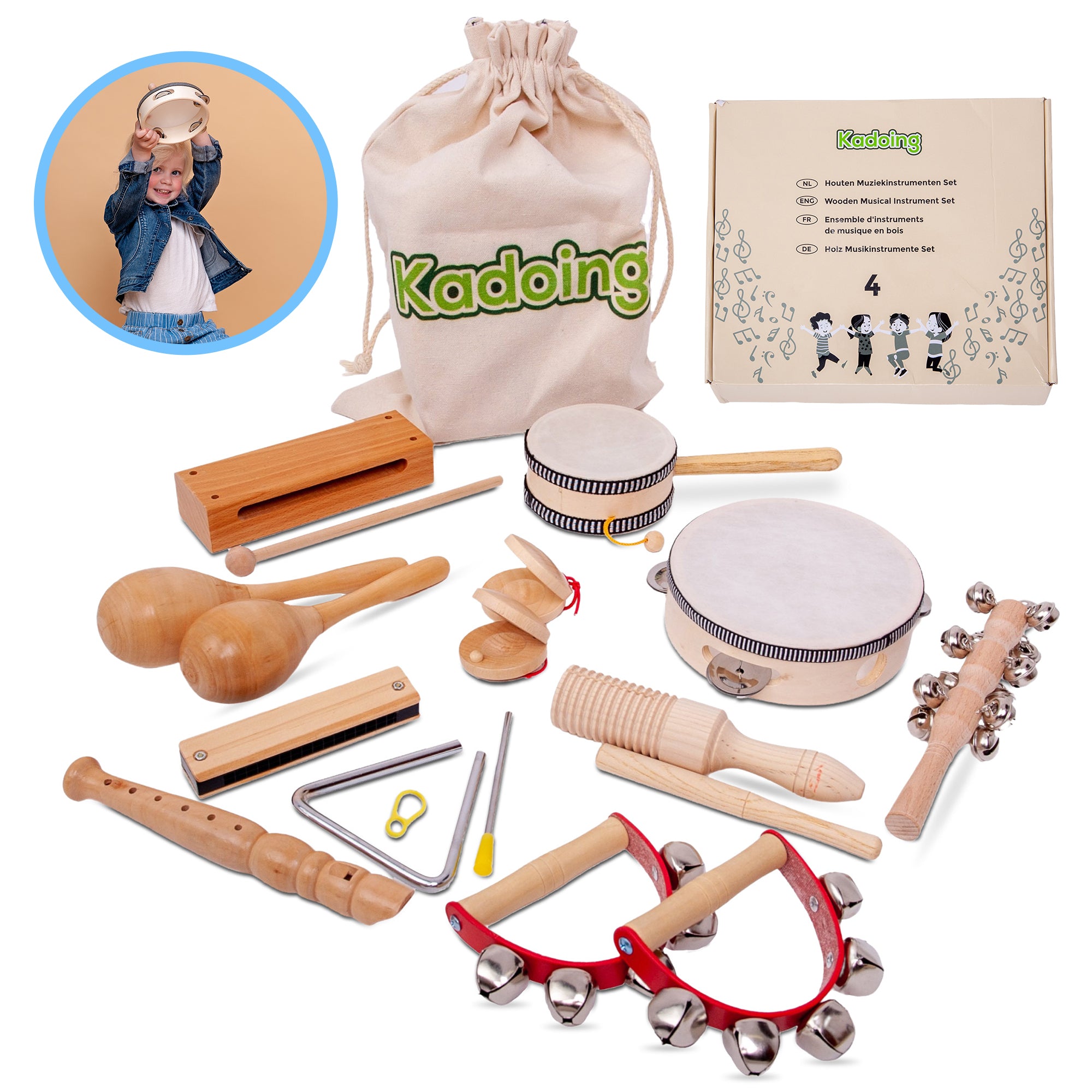
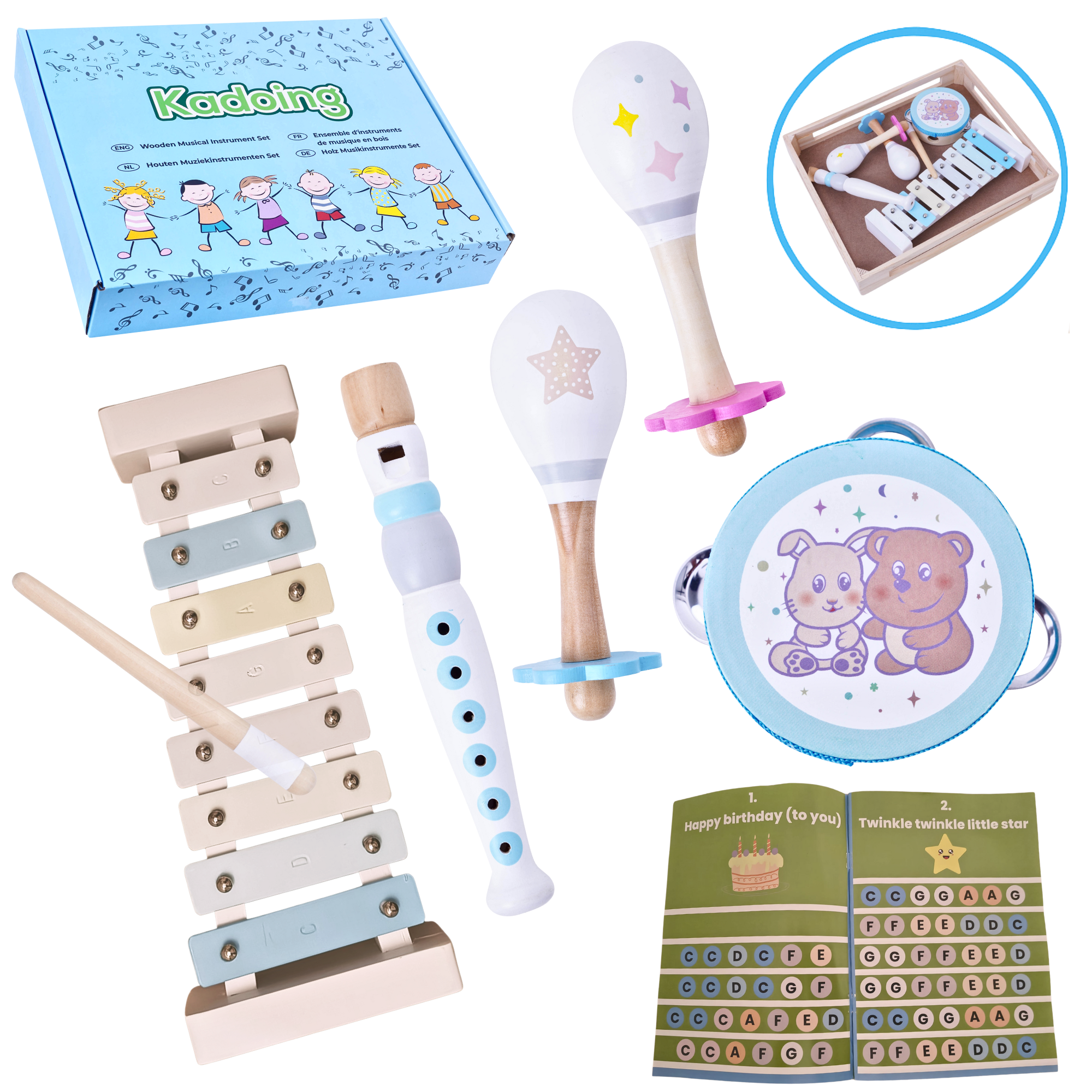
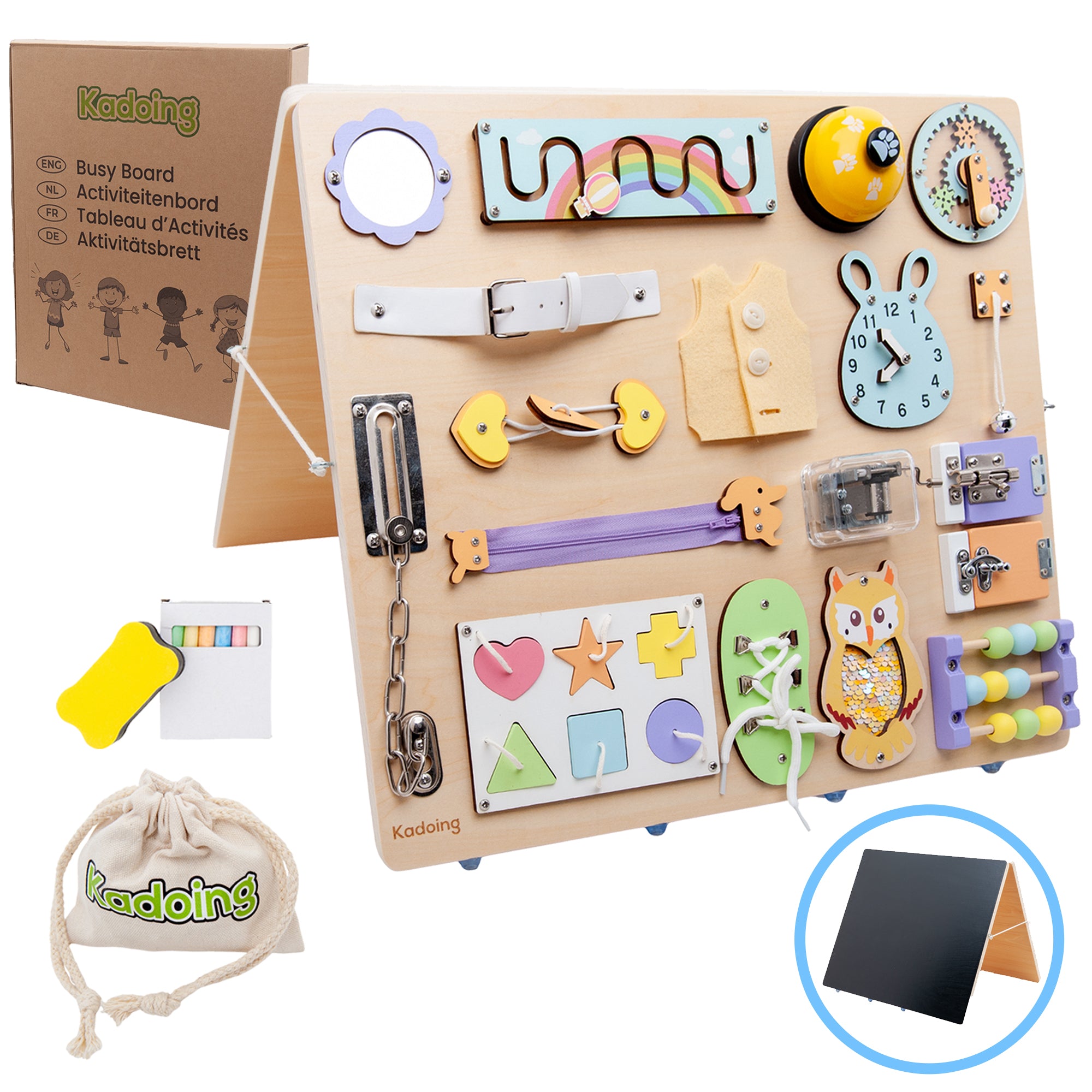
Now the world becomes more active. Rolling, sitting, reaching, throwing and moving objects receive more attention. Think of stackable elements, a soft ball, simple musical toys or an activity board that is suitable for young children. The challenge is to offer enough without filling the room.
A good rule of thumb: place four suitable items out rather than twelve different ones. This keeps the choice manageable and often makes it easier to see what your baby truly returns to.
Calm in the room starts with what you leave out
Many parents look for the perfect toy, while the biggest benefit sometimes lies in what you do not place in the room. An overcrowded shelf, flashing lights and toy baskets that are overflowing make the nursery more restless than necessary. That is not immediately a problem, but it often works less well if you are trying to create a calm atmosphere.
A Montessori approach helps you choose more consciously. Not every toy needs to be in the nursery. You can easily keep a small selection visible and store the rest away. By rotating toys, they stay interesting and the space feels calmer.
This is also practical during care moments and before bedtime. A room that does not constantly demand attention supports a softer transition between playing, cuddling and resting. For many families, that is exactly what the nursery is meant for.
Safety and sustainability belong together
In a nursery, you want to be able to trust what you place there without doubt. Always pay attention to sturdy finishing, safe paints or coatings, rounded shapes and materials that are suitable for young children. Loose parts or decorative elements that are not intended as toys are better avoided.
Sustainability also plays a role here. Well-chosen toys often last longer, both in quality and in interest. Simple toys are less quickly forgotten because they do not depend on a trick or battery effect. That makes them more suitable to pass on to a younger sibling or another family.
For many parents, that feels reassuring. Not only because it is a more conscious purchase, but also because it brings calm when something truly has a place in daily life. Kadoing fits well with that idea: products that support the family without making the room or your mind feel fuller.
How do you create a Montessori corner without redecorating?
You do not need to redesign the entire nursery to create a Montessori atmosphere. Often, a small, fixed play area is enough. A soft mat, a low basket with a few toys and possibly a safe mirror together create a calm base.
Focus especially on accessibility and simplicity. When toys are visible and not hidden in deep boxes, they are more inviting for independent looking and choosing. For a young baby, this mainly means being able to look and reach in a focused way. For an older baby, it is more about taking, putting back and trying again.
The rhythm of the room also makes a big difference. Toys that invite discovery during the day and disappear from view again in the evening help give the room different functions. This keeps the nursery not only beautiful, but also logical to use.
What you do not need to buy
Perhaps the most reassuring thing about Montessori is that it is not about buying more and more. You do not need to create a perfect nursery, nor do you need to build a collection of educational toys. A few thoughtful choices often make more difference than a full room.
If an item looks beautiful but has no clear function, it is often perfectly fine to skip it. The same applies to toys that mainly make a lot of noise or movement without giving your baby anything real to discover. Not everything marketed as stimulating actually feels pleasant in a nursery.
The best room is ultimately not the room with the most things, but the room where your child feels safe and where you as a parent experience calm. You often notice this in small moments: a baby looking attentively, playing peacefully or lying contentedly in a comfortable spot.
So when decorating a nursery, you do not need to make it complicated. Start small, observe your child carefully and choose toys that fit the moment. That is where the lovely combination of development, comfort and everyday calm begins.