A 2-year-old wants to do everything independently. Pour by themselves, open things by themselves, stack by themselves, try things by themselves – and often decide for themselves how long they want to continue. That is exactly why Montessori toys for 2-year-olds are such a wonderful choice for many parents: they match a child’s strong desire for independence, without making playtime overwhelming or overstimulating.
Around the age of two, a lot changes. Your toddler understands more, moves with greater confidence and has a longer attention span than just a few months earlier. At the same time, it is still an age of repeating, feeling, watching and practicing. Good toys do not need to do a lot. Most importantly, they should match what a child naturally wants to discover at that moment.
What is good Montessori toy for a 2-year-old?
Montessori toys are toys that encourage children to actively do something themselves. Not simply pressing a button and waiting for a sound, but sorting, sliding, opening, closing, building, pouring or combining. The idea behind this is calm and logical: children learn best when they can experience for themselves how something works.
For a 2-year-old toddler, this usually means simple toys with a clear purpose. Think of shape sorters, stacking rings, wooden puzzles with large knobs or activities that help practice fine motor skills. Toys do not need to be complicated to be educational. In fact, simplicity often helps children focus better.
What many parents appreciate is that this type of toy also creates calmness. Many parents notice that 2-year-olds play with greater concentration for longer periods when toys stay simple and do not demand too much at once. Fewer flashing lights and loud sounds often mean more focus. That is not only pleasant for your child, but also for the atmosphere at home.
Why Montessori toys work so well for 2-year-olds
Two-year-olds are in a stage where cause and effect become increasingly clear. They notice that a block either fits or does not fit somewhere, that a drawer can open, or that water overflows when too much is poured. Montessori materials connect perfectly with this stage by not doing everything for the child, but instead creating room for self-discovery.
This helps develop several skills at the same time. Your toddler practices fine motor skills, learns problem-solving and builds self-confidence. A child who finally fits the correct shape into the right opening after five attempts learns much more than simply recognizing shapes. They also learn: I can do this myself.
Still, not every so-called Montessori product is automatically a good choice. Some products mainly use the word as a style label. Beautiful neutral colors and wood are nice, but the real question is: does this toy encourage independent, purposeful play? If the answer is no, then it is mostly decorative.
What should you pay attention to when choosing?
At this age, safety should always come first. Choose materials that are sturdy and well-finished, without small loose parts that could still end up in a child’s mouth. Wood is popular because it feels durable and often lasts a long time, but even then the finish remains important. Smooth edges, child-safe paint and a size suitable for small hands truly make a difference.
After that, look at the developmental level. Many parents buy toys that are too difficult, often with the idea that a child can grow into them. That sounds logical, but with toddlers it often has the opposite effect. If something is too difficult, a child loses interest more quickly. It is better to choose toys that offer just enough challenge to create successful experiences.
Also pay attention to openness in play. An activity with one clear action can be very valuable, but it is nice when a child can explore it in different ways. Stacking cups are a perfect example: children can stack them, sort them, fill them, empty them and knock them over. That often makes them more interesting than toys that only do one thing.
Toys that often work well from age 2
Wooden shape sorters remain popular, and for good reason. They help with recognition, comparison and spatial awareness. For 2-year-olds, a simple version usually works better than a complicated one with many different shapes.
Stacking towers and stacking blocks also fit this developmental stage perfectly. Children practice balance, order and concentration with them. In addition, repetition at this age is not a sign of boredom, but rather a sign of learning. A toddler who builds and knocks over the same tower ten times is doing exactly what belongs to this age.
Puzzles with large pieces are also very suitable, especially when the images are recognizable. Think of animals, vehicles or everyday objects. It helps when the puzzle stays simple and organized. Four good pieces often provide more enjoyment than twelve frustrating ones.
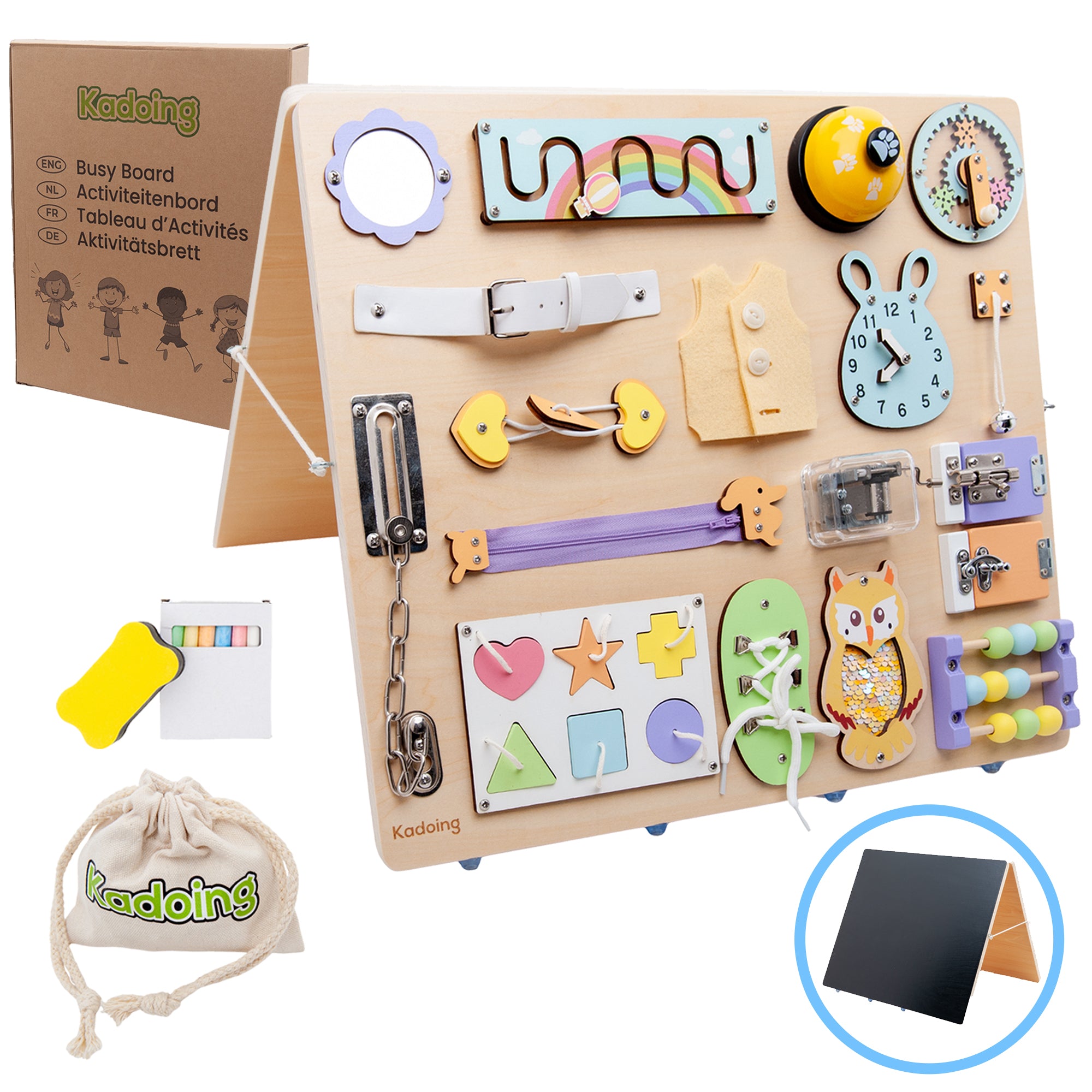
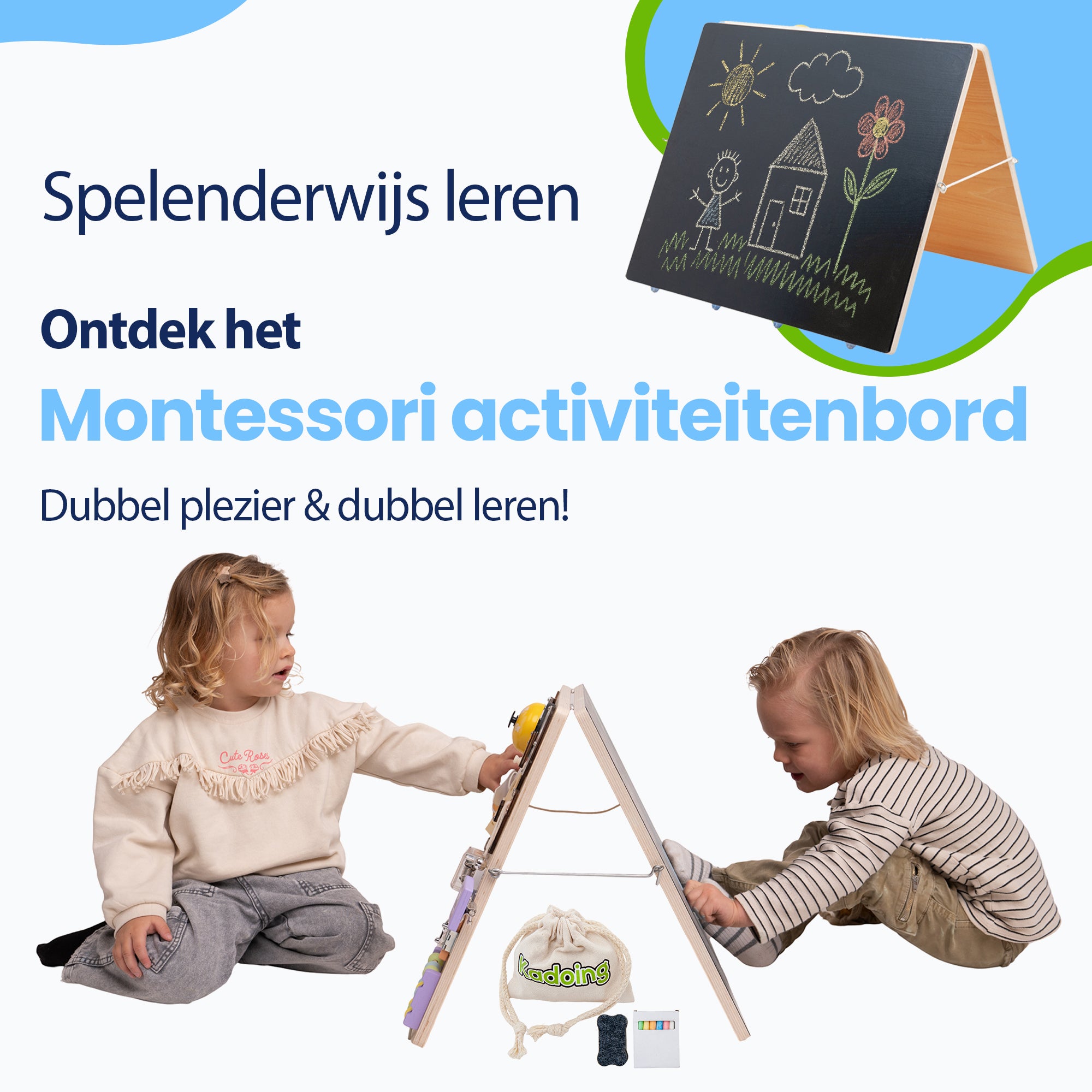
Calm activity boards like those from Kadoing can also be valuable, as long as they are clearly arranged. They practice practical actions that later return in daily life. Parents often appreciate this extra, because play then directly contributes to development instead of standing apart from it.
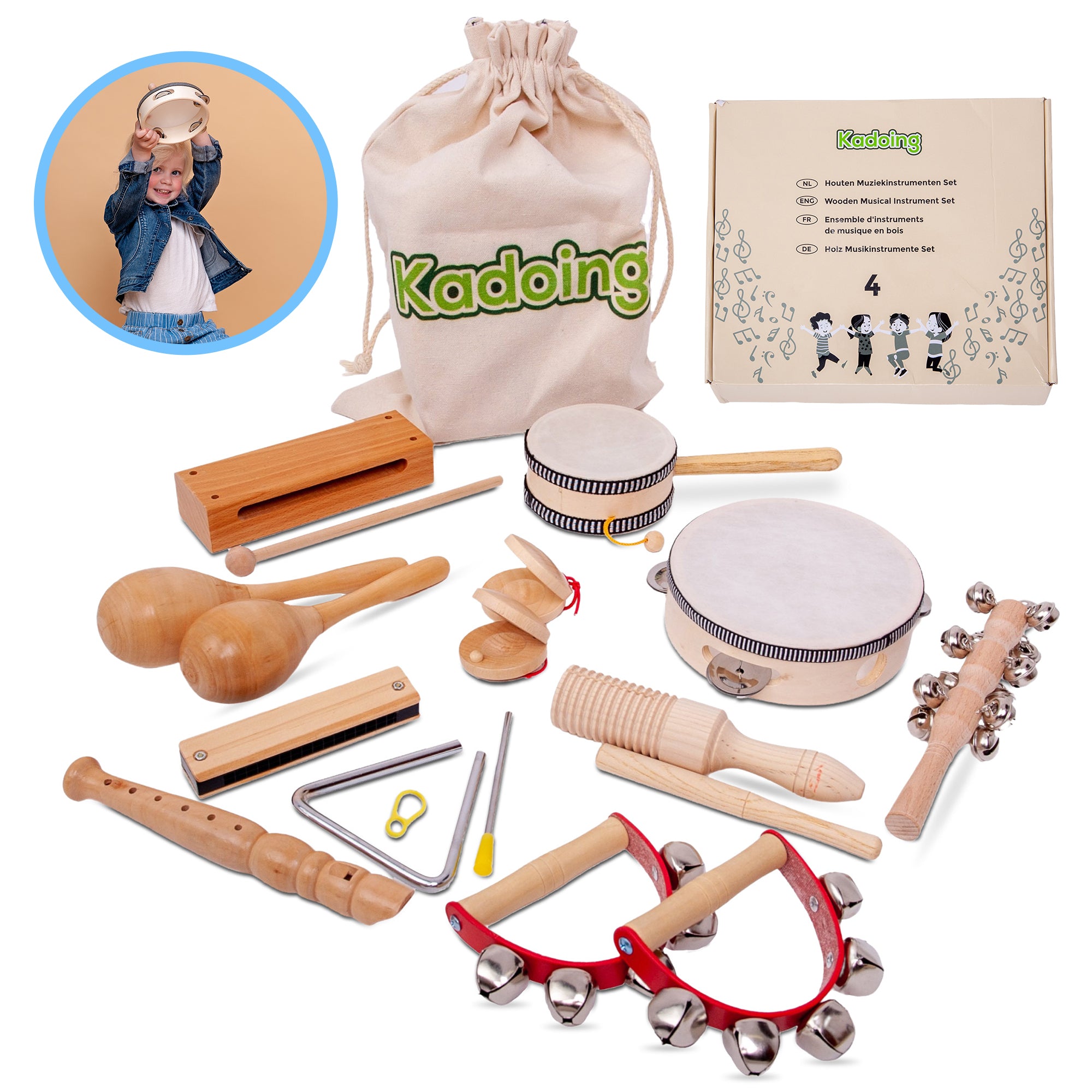
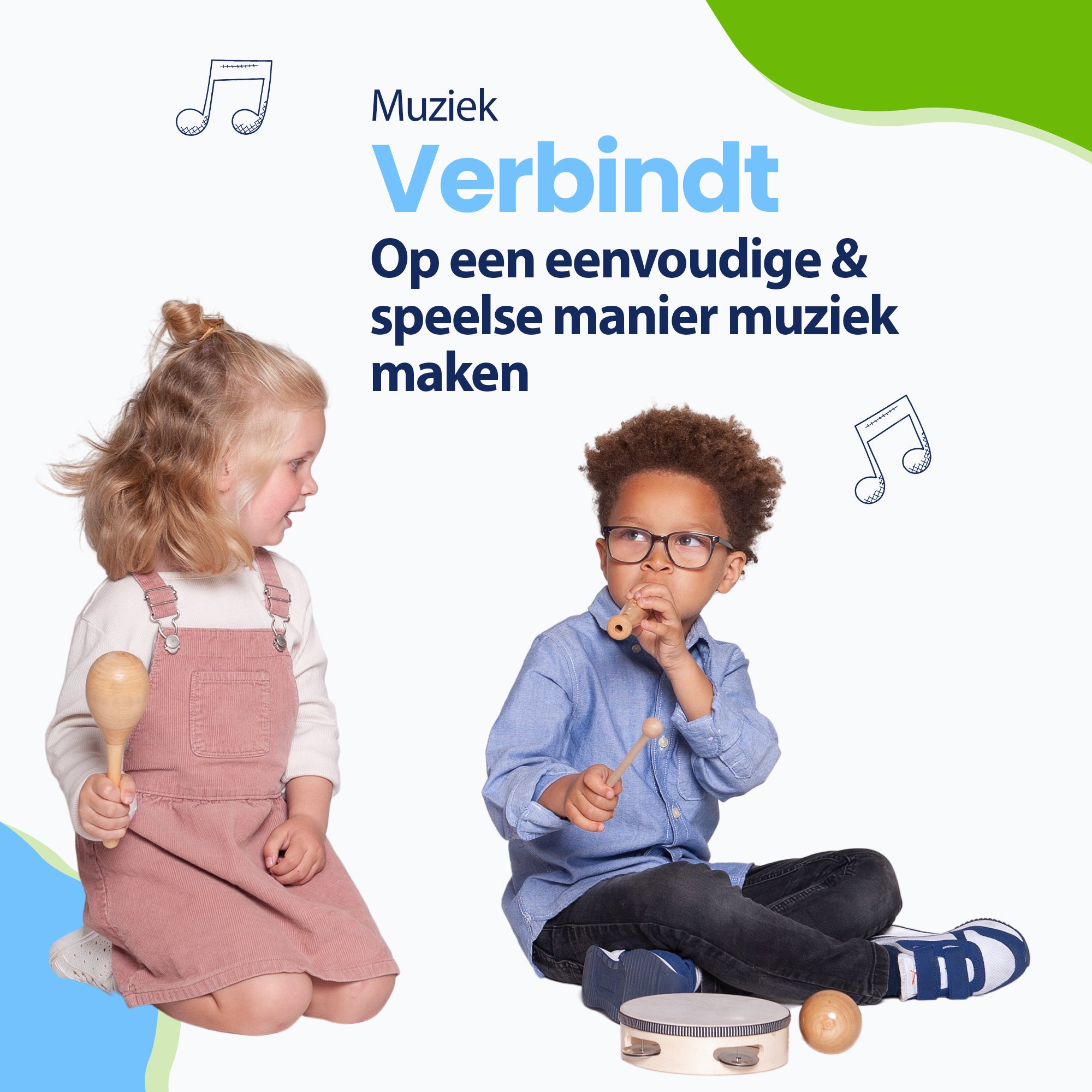
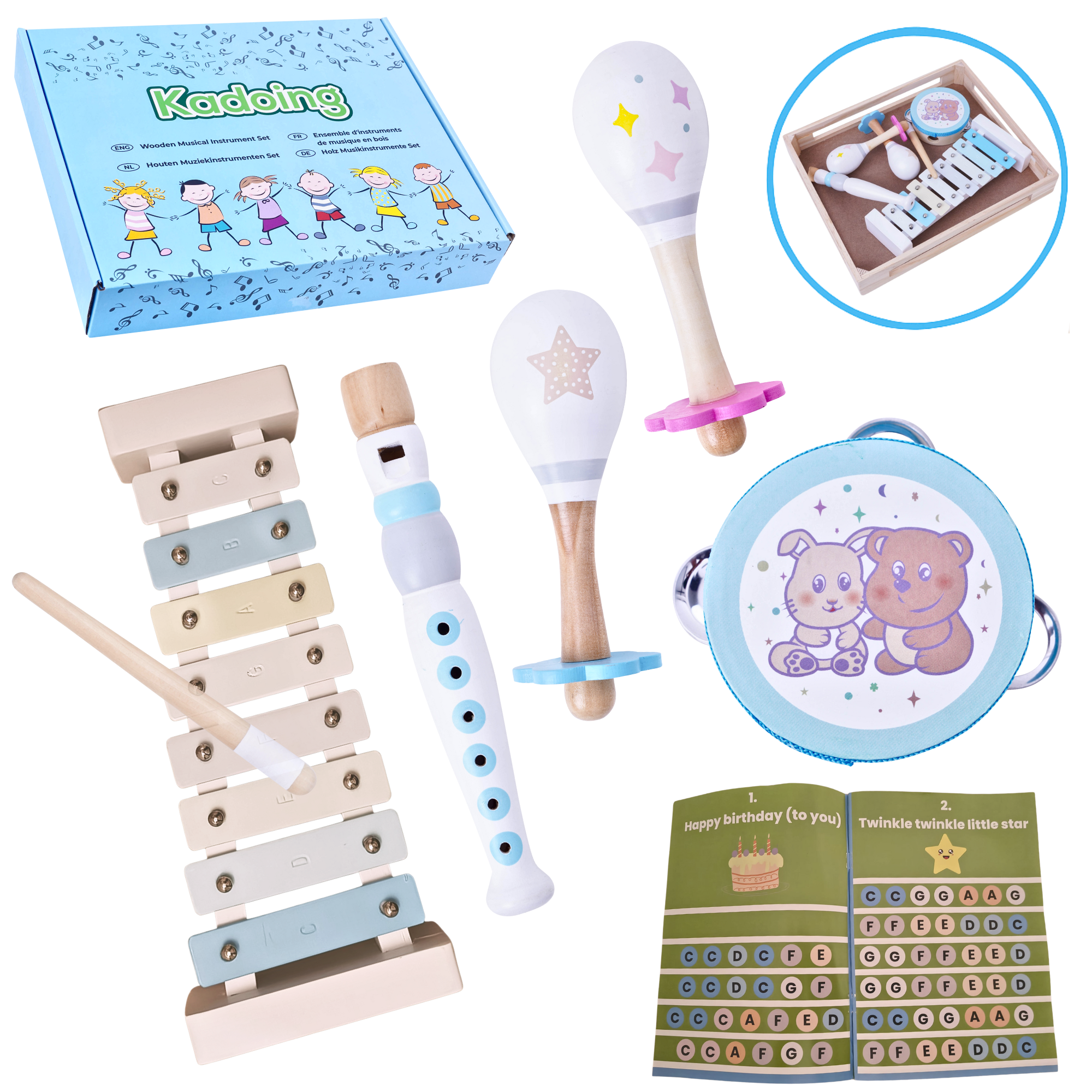
Simple wooden musical instruments also deserve a place on this list. A 2-year-old loves discovering rhythm, sound and repetition. Think of a xylophone, tambourine or small drum. Musical play is not only fun, but also supports listening, movement and pattern recognition. Here too, less is often more. One good instrument often invites more meaningful play than a noisy set full of stimuli.
Less toys, more attention
Montessori is not about filling your home with as much educational material as possible. In fact, a limited selection often works better. When there are too many choices, toddlers become distracted more easily. A small selection that is visible and easy to reach helps children choose independently and stay engaged longer.
That does not mean you constantly need new toys. Rotating toys often works surprisingly well. Put part of the toys away for a while and offer them again after a few weeks. Something that was previously ignored may suddenly become interesting again. For parents, this is a practical way to keep the home calm while also being more conscious about purchases.
Sustainability naturally plays a role in this as well. Well-chosen toys that last a long time, are sturdy and can be used through different developmental stages often feel far more valuable than a quick purchase that disappears into a closet after a week. Especially with wooden toys, quality and durability often go hand in hand.
The role of the parent: participate, but do not take over
A common mistake is that adults help too quickly. Of course you want to prevent frustration, but toddlers actually benefit from struggling a little. Watching, trying and trying again – that is where the learning process happens.
So you do not need to demonstrate everything. Often, observing is enough. If you do help, keep it small and calm. Show one step and then give the activity back to your child. That way, the feeling of independence remains intact.
This is also what makes Montessori toys so pleasant during busy family days. It does not require a big program or a perfect play corner. A calm moment at the table, a basket with suitable materials and a parent who is available without constantly directing is often enough. That fits perfectly with the kind of everyday quality time many families are looking for.
What if your child does not play with it right away?
That does not immediately mean you chose the wrong toy. The timing may not be right yet, the toy may be too difficult, or perhaps too simple. Sometimes it helps to place the activity somewhere else or offer it during a calmer moment.
Temperament also plays a role. One child enjoys precise activities like sorting and puzzling, while another mainly wants to move, carry and fill objects. Montessori is not a strict checklist of required toys. It works best when you look at your own child and take their interests seriously.
That is why comparing children is rarely useful. While one toddler may already spend long periods sorting beads, another may mainly enjoy opening and closing boxes. Both can be highly educational, as long as the play matches the child’s needs at that moment.
A calm choice for every day
Parents searching for Montessori toys for 2-year-olds are often not just looking for something fun, but for something that truly fits this stage of development. Something that supports growth without overwhelming. Something that feels safe, lasts a long time and brings calmness into the home instead of extra chaos.
That is exactly where a thoughtful choice makes the difference. Not the most toys, but the right toys give a toddler room to grow. And for parents, that often provides just as much confidence as joy. With brands like Kadoing, you can clearly see this combination: play can be soft, thoughtful and meaningful, especially in the small moments of everyday life.
So do not only look at what looks beautiful in the nursery, but especially at what invites your child to try things independently. That is often where the best play begins – and sometimes also where the greatest calmness starts.
Frequently asked questions about Montessori toys for 2-year-olds
What Montessori toys are suitable for a 2-year-old?
Toys that encourage independent discovery often work best. Think of stacking blocks, shape sorters, wooden puzzles and activity boards.
Why do Montessori toys work well for toddlers?
Montessori toys help toddlers practice independently, solve problems and play with concentration without overstimulation.
Are wooden toys better for a 2-year-old?
Many parents choose wooden toys because they are sturdy, durable and visually calmer than brightly colored plastic toys.
How many toys does a 2-year-old need?
A limited selection often works better than too many toys at once. Fewer choices usually create more focus.
Are activity boards suitable from age 2?
Yes, calm activity boards with zippers, sliders and turning elements often match the curiosity of toddlers very well.