A low shelf, a rug on the floor, and toys that actually get used – a Montessori play corner at home often starts with less, not more. For many parents, that comes as a relief. No busy play area full of distractions, but a calm space where your child can choose, explore, and tidy up independently.
That sounds simple, but in practice it often raises questions. How many toys should you put out? Do you need a separate room? And what if your child mainly pulls everything off the shelf at once? The good news is that a Montessori corner at home does not have to be perfect. It simply needs to fit your family, your space, and your child's age.
Why creating a Montessori play corner at home works so well
The strength of a Montessori play corner lies in its simplicity and organization. Young children often play better when they do not have to choose from ten toy bins at the same time. When materials are visible, accessible, and logically arranged, independent play becomes much more appealing. A child sees what is available, picks something up, uses it, and gradually learns to put it back as well.
For parents, this often brings more calm into the home. Not because a play corner solves everything, but because the environment feels less chaotic. A child-friendly setup supports everyday moments: playing together in the morning, allowing your child to explore independently while you tidy up, or offering a peaceful activity after a busy afternoon.
Montessori does not mean strict or minimalist. It is mainly about respecting the child, creating simplicity in the environment, and offering materials that encourage meaningful use. Wood, soft colors, and open storage often fit this approach well, but the most important thing is that the space remains clear and accessible.
Start small: choose the right location first
A dedicated playroom is wonderful, but certainly not necessary. A corner of the living room, part of a child's bedroom, or even a free wall in the dining area can be enough. Focus on where your child feels comfortable and where play naturally fits into daily life.
The best location is usually bright, calm, and away from heavy foot traffic. A spot next to the television is often less ideal because screens and sound demand attention. A corner near a window or along a quiet wall often works better. Your child can concentrate more easily there while you can still keep an eye on things.
Also consider your family's daily routine. For some families, a play corner in the living room is ideal because a toddler can play nearby. For others, a dedicated spot in the child's bedroom creates more peace. It depends on your child's age, your living space, and how independently your child already plays.
What belongs in a Montessori play corner – and what doesn't?
When creating a Montessori play corner at home, selecting materials is actually the most important step. Not everything needs to be visible. A small, thoughtful selection often works better than a large collection of toys. Aim for six to ten activities that each develop different skills, such as fine motor skills, stacking, sorting, making music, or imaginative play.
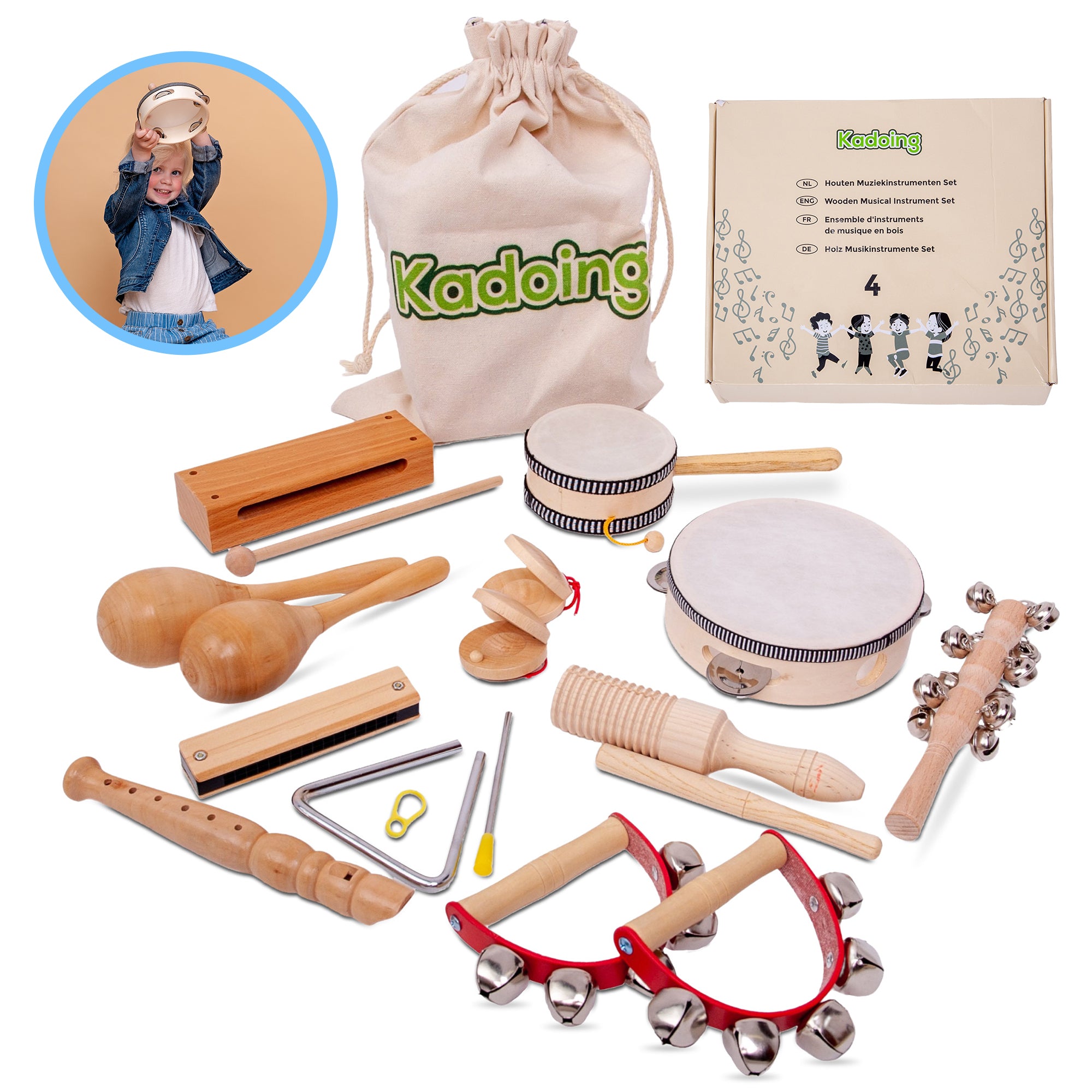
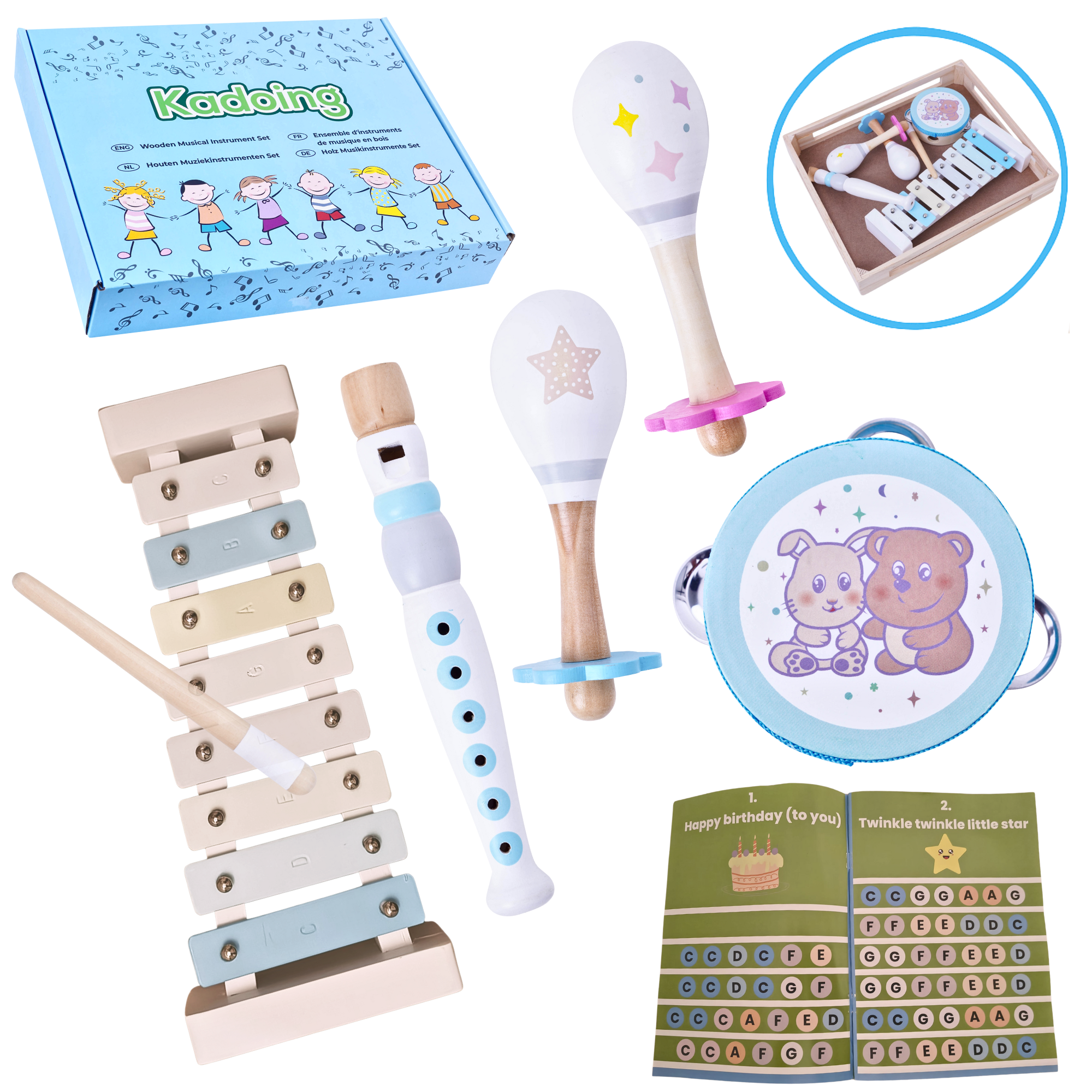
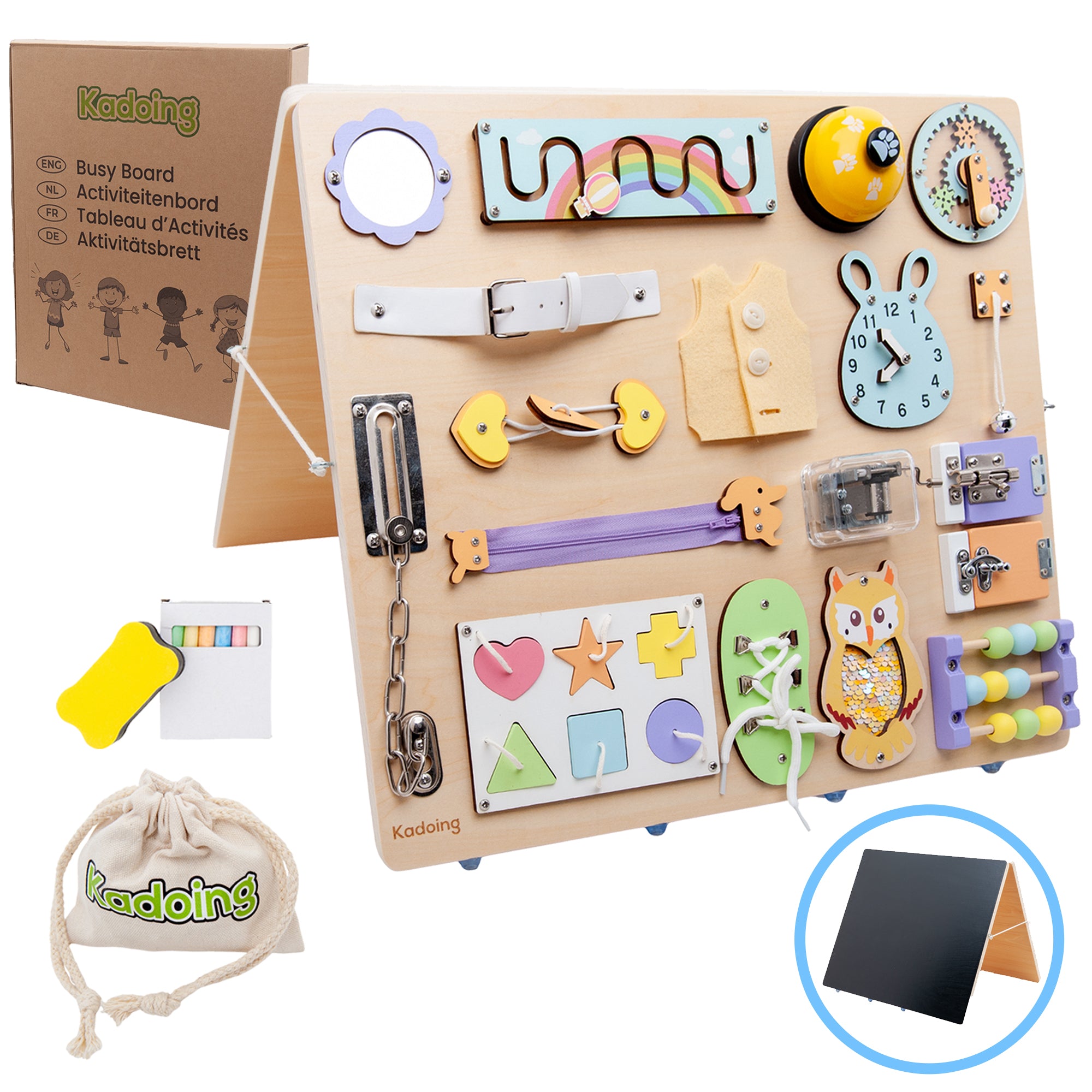
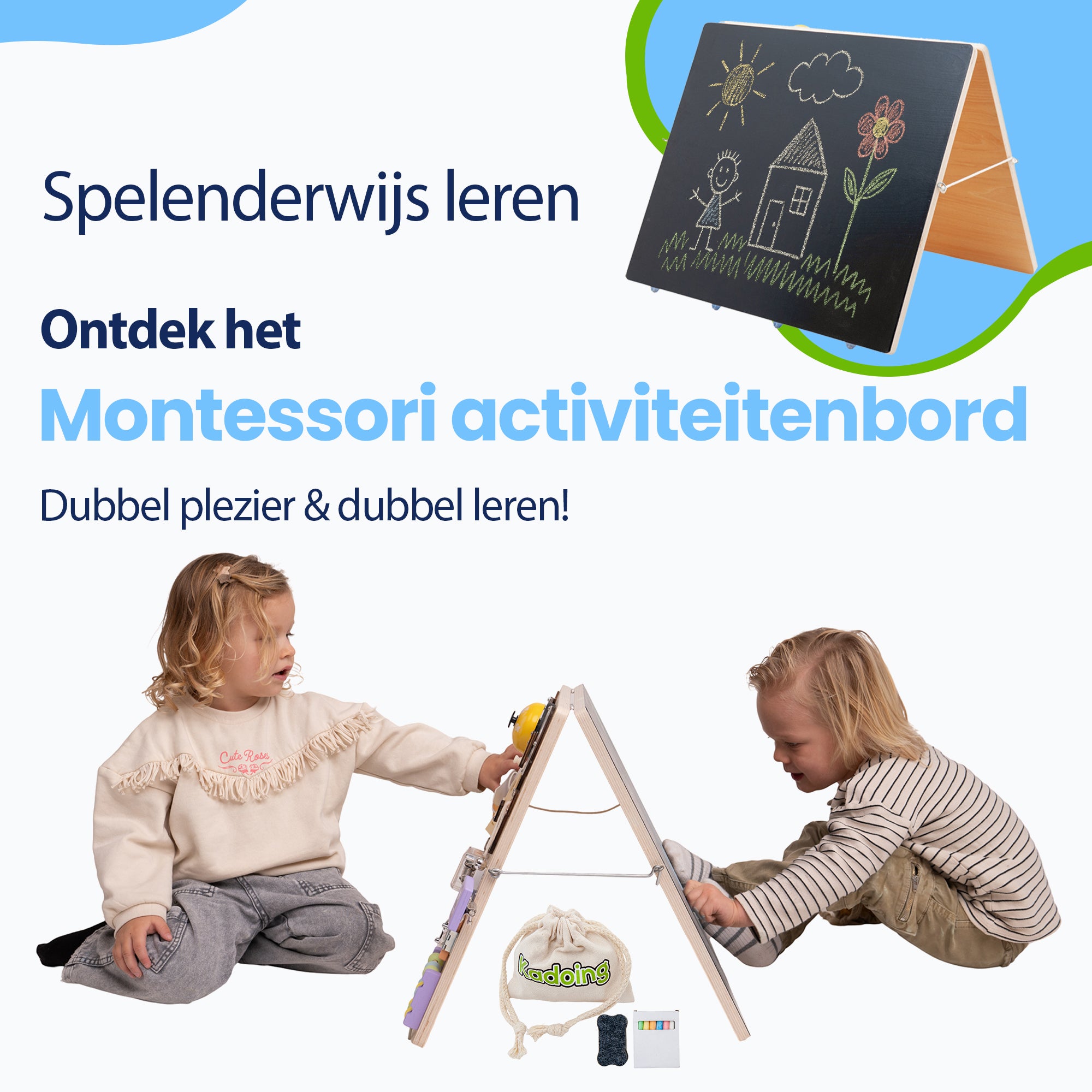
Choose materials your child can independently pick up and use. Wooden puzzles, stacking toys, shape sorters, simple musical instruments, sensory materials, or a Montessori busy board are often excellent choices. Books can also have a place, preferably displayed with the cover facing forward rather than only showing the spine. This tends to invite more interest.
What usually works less well are toy baskets filled with mixed items, noisy plastic toys with lots of buttons, or materials that can only be used with adult supervision. That does not mean you need to get rid of them. It simply means they do not all need to be displayed in the play corner at the same time.
A child-height setup makes all the difference
A Montessori corner is built around independence. That is why the setup is at least as important as the toys themselves. Ideally, use a low open shelf so your child can see everything without needing help. Place materials in small baskets or on trays, each with its own clearly defined spot.
A rug or mat on the floor also helps. It literally marks the place where play can happen. For young children, this is surprisingly clear. A low mirror, a small chair, or a simple bookshelf can complete the space, as long as the overall atmosphere remains calm.
Try not to overcrowd the area. Empty space is not something missing; it is part of what creates a sense of calm. Because of this, each activity stands out more and your child has a better opportunity to focus deeply on it.
Materials that create a calm atmosphere
Natural materials often feel warmer and more calming in the home. Wood, cotton, and neutral colors help keep the play corner organized and uncluttered. This is not only visually appealing but also practical: fewer visual distractions make it easier for children to choose.
That does not mean everything has to be beige. A few soft colors or a striking musical instrument can be very inviting. As long as the foundation remains calm, the space will stay balanced.
Safe and practical for everyday life
Always consider what realistically works in your home. An open glass vase with flowers may look beautiful in inspiration photos, but it is often not the smartest choice with an adventurous toddler. Instead, choose sturdy and safe items that can handle daily use.
Check that furniture is stable and that materials are appropriate for your child's age. Independence only feels comfortable when the environment feels safe – for both your child and yourself.
Rotating toys is smarter than constantly buying more
A common mistake is thinking that a Montessori play corner always needs new toys. In reality, rotating materials can achieve much more. Store part of the toy collection out of sight and switch a few activities every one to two weeks.
This keeps the play corner interesting without making it overcrowded. Toys that have been put away for a while often feel new again. It also becomes easier to see what currently interests your child most. Is sorting suddenly a favorite activity? Then you can offer more opportunities for that. Is music especially popular? Then a simple wooden xylophone or shaker may be used more often than a complicated game.
This variety also helps you as a parent. You do not need to constantly come up with new ideas. Instead, you simply observe what fits your child's current stage of development. That often makes parenting feel a little lighter.
Creating a Montessori play corner for different ages
The ideal setup changes as your child grows. For babies, the focus is mainly on looking, feeling, and moving. A soft play mat, a low mirror, a few grasping toys, and a simple basket with safe materials are usually enough.
For toddlers, practicing skills becomes more important. Think about stacking, opening and closing, sorting shapes, and simple cause-and-effect materials. Everything should be clear, hands-on, and accessible. Toddlers learn through repetition, so never underestimate simple activities.
Preschoolers often want more choice and opportunities for pretend play. At that stage, you can expand the space with books, practical life materials, wooden musical instruments, or a small shelf with activities that require concentration. However, the principle remains the same: not too much, but well organized.
When your child mostly makes a mess
It happens. And honestly, it is part of the process. Learning to choose independently also means learning how to use materials. Do not expect a new play corner to be used perfectly right away.
Help by demonstrating how to take an item, use it, and return it. Stay calm and avoid lengthy explanations. Children learn a great deal through observation. If you repeat this for a few days, the structure will gradually become familiar.
Do you notice everything constantly ending up on the floor? Then the selection may still be too large, or the materials may be too difficult. Offering less is often more effective than becoming stricter. A good Montessori corner supports positive behavior instead of constantly working against it.
Keeping the play corner enjoyable for both of you
The best play corner is not the one that looks perfect in photos, but the one that works for your family. Sometimes that means a simple shelf in the living room. Sometimes it is a small reading corner in a bedroom. And sometimes you discover that your child plays best with only four materials available at a time.
So do not only focus on what seems educationally correct. Also pay attention to what creates peace and balance in your home. A play corner can support development, but it can also make daily life easier. For many parents, that is where the real benefit lies: less searching, fewer distractions, more room for independent play, and more opportunities to enjoy time together.
If you want to start today, begin with one shelf, a few thoughtful choices, and a simple question: what does my child truly need right now to play happily and confidently? Very often, that is more than enough to create a space where calm, curiosity, and confidence come together.