Music helps children relax, move, listen, and learn. Discover how music can support your child's development.
Music often plays a role in children's lives from an early age. Think of lullabies, dancing in the living room, singing children's songs, or making music together. But music is more than just fun—it can also contribute to your child's language development, motor skills, concentration, and creativity.
Why music is important for children
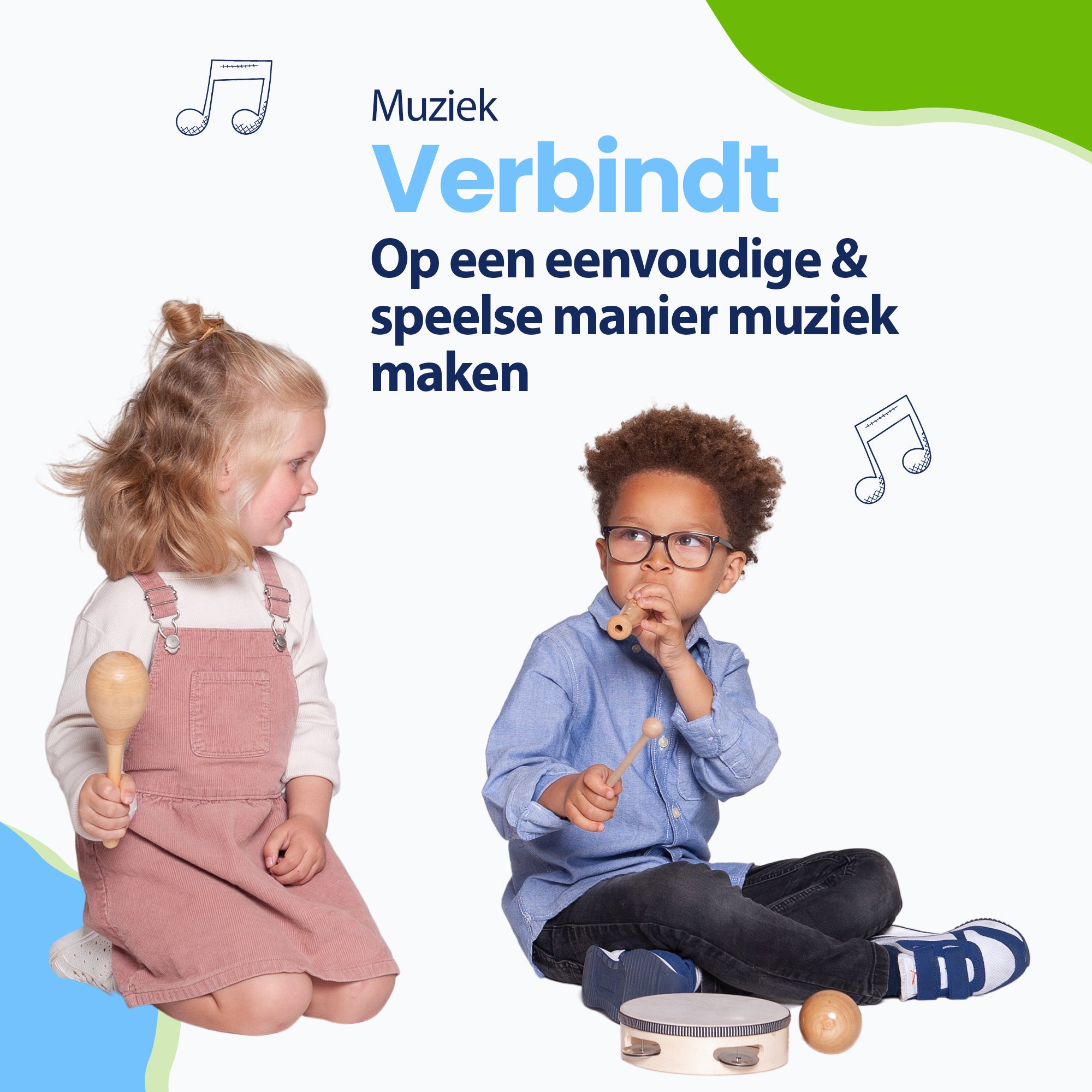
Children learn a great deal through listening, movement, and repetition. Music naturally combines all of these elements. A simple song helps children remember words, recognize rhythm, and experience emotions. By singing and making music together, children also practice listening, taking turns, and responding to others.
A musical upbringing does not have to be complicated. You do not need to play an instrument or be a music expert. The most important thing is having fun together with sounds, rhythm, and movement.
Music stimulates language development and memory
Many children's songs are built around repetition, rhyme, and clear sounds. This makes them ideal for learning new words. Children often remember lyrics more easily than ordinary sentences because melody and rhythm help store information in memory.
By singing songs, children practice pronunciation, vocabulary, and sentence structure. Their memory is also strengthened as they learn lyrics, sequences, and accompanying movements.
Music helps with rhythm, counting, and concentration
Music teaches children to listen to timing, tempo, and rhythm. Clapping along to a beat, dancing to music, or counting within a song helps children develop a sense of structure through play.
Music can also improve concentration. A child listening to a song, copying a rhythm, or playing an instrument must focus their attention and respond to sounds. This makes music a valuable activity for young children.
Music supports emotions and relaxation
Music can help children recognize and express emotions. An upbeat song encourages dancing and movement, while calming music can help children relax after a busy day.
Is your child feeling upset, sad, or overstimulated? Music can be a wonderful way to release tension. Dancing together, softly singing along, or simply listening quietly can help restore a sense of calm.
Music contributes to motor skill development
When children dance, clap, drum, or shake an instrument, they are developing their motor skills. Large movements such as jumping and dancing support gross motor development, while smaller movements such as holding an instrument or tapping to a rhythm strengthen fine motor skills.
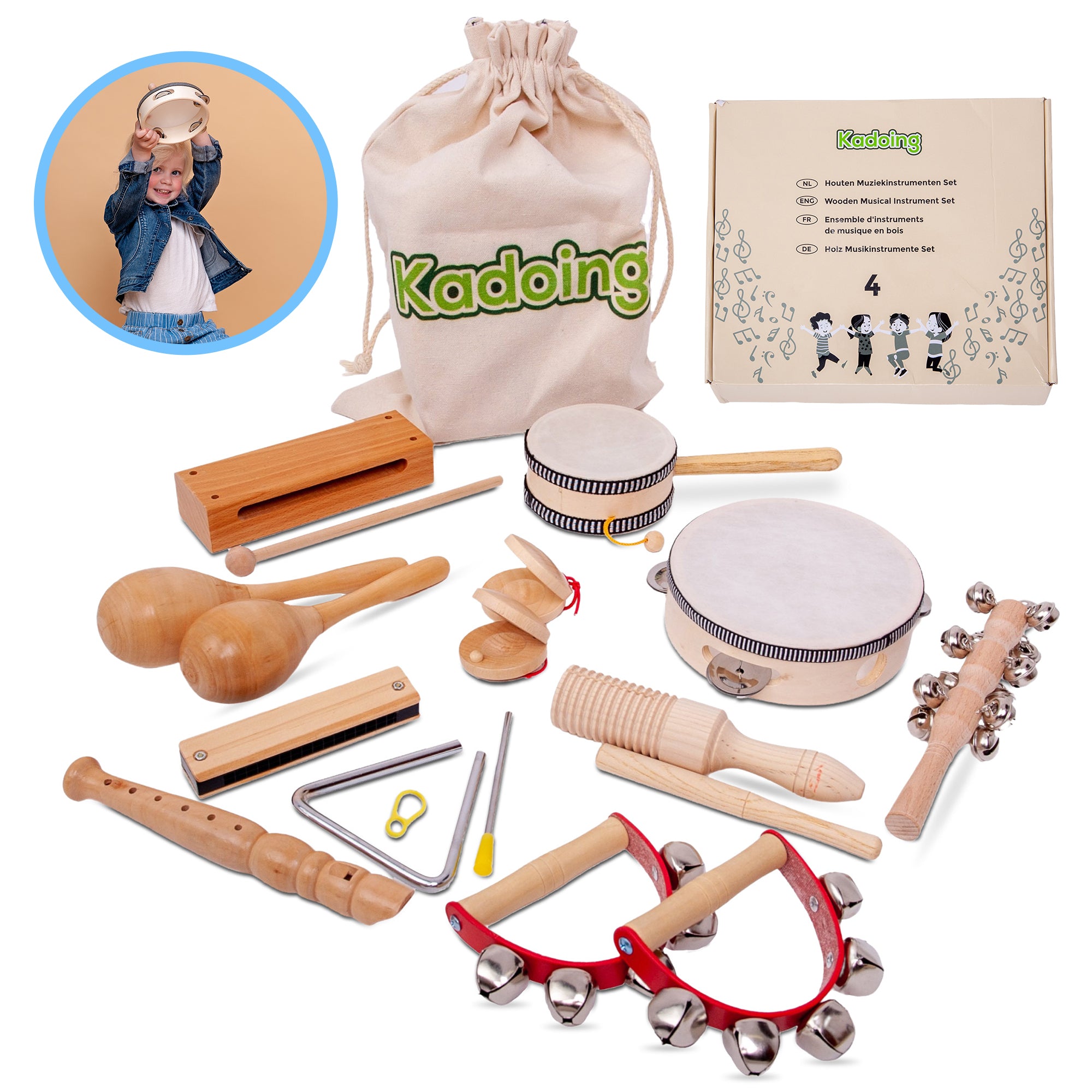
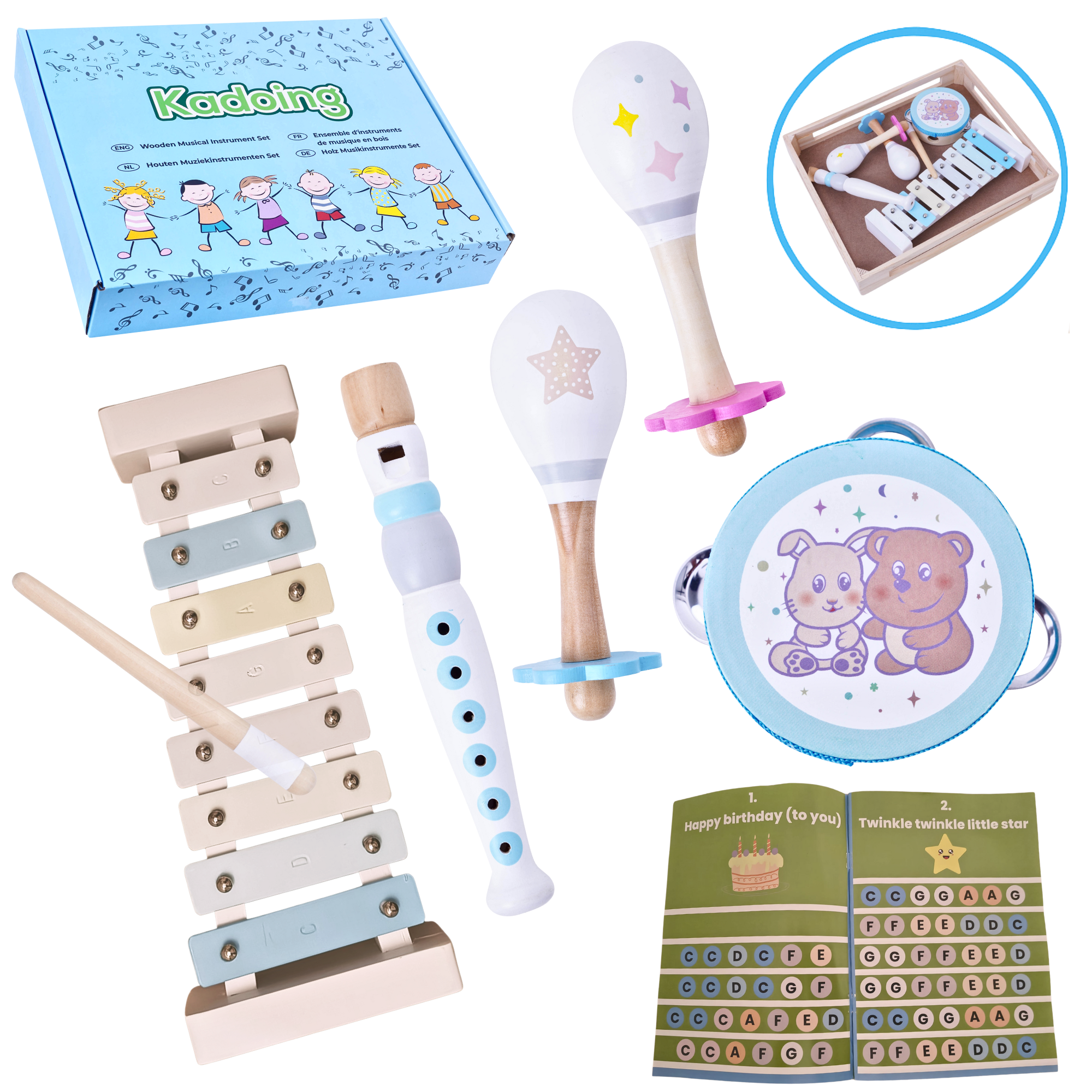
This is why making music is especially valuable. With a wooden musical instrument set, children can safely experiment with sounds, rhythms, and movement.
Music helps children discover their own preferences
By introducing different musical styles, children discover what they find beautiful, funny, calming, or exciting. From children's songs to classical music, jazz, pop, or world music, every genre can contribute to musical curiosity.
It can also be fun to share music you enjoyed when you were younger. This makes music not only educational but also a wonderful way to share stories and memories.
Making music with children
Your child does not need formal music lessons to enjoy music. At home, you can easily start by singing, clapping, dancing, or using simple instruments. Think of a tambourine, bells, rhythm sticks, or a small drum.
For young children, exploration is more important than perfection. Allow your child to experiment freely with sounds and rhythms. This helps build confidence while keeping music enjoyable.
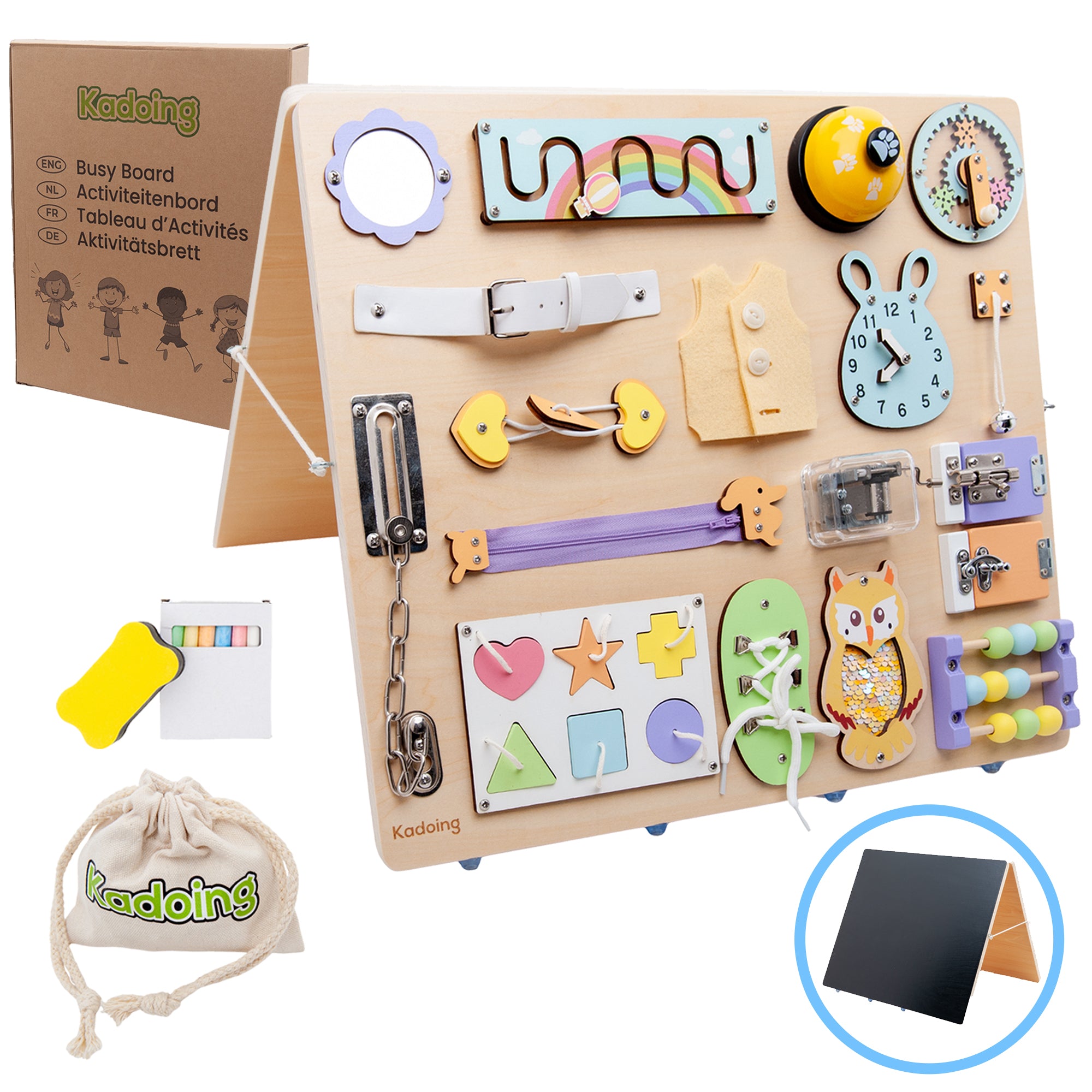
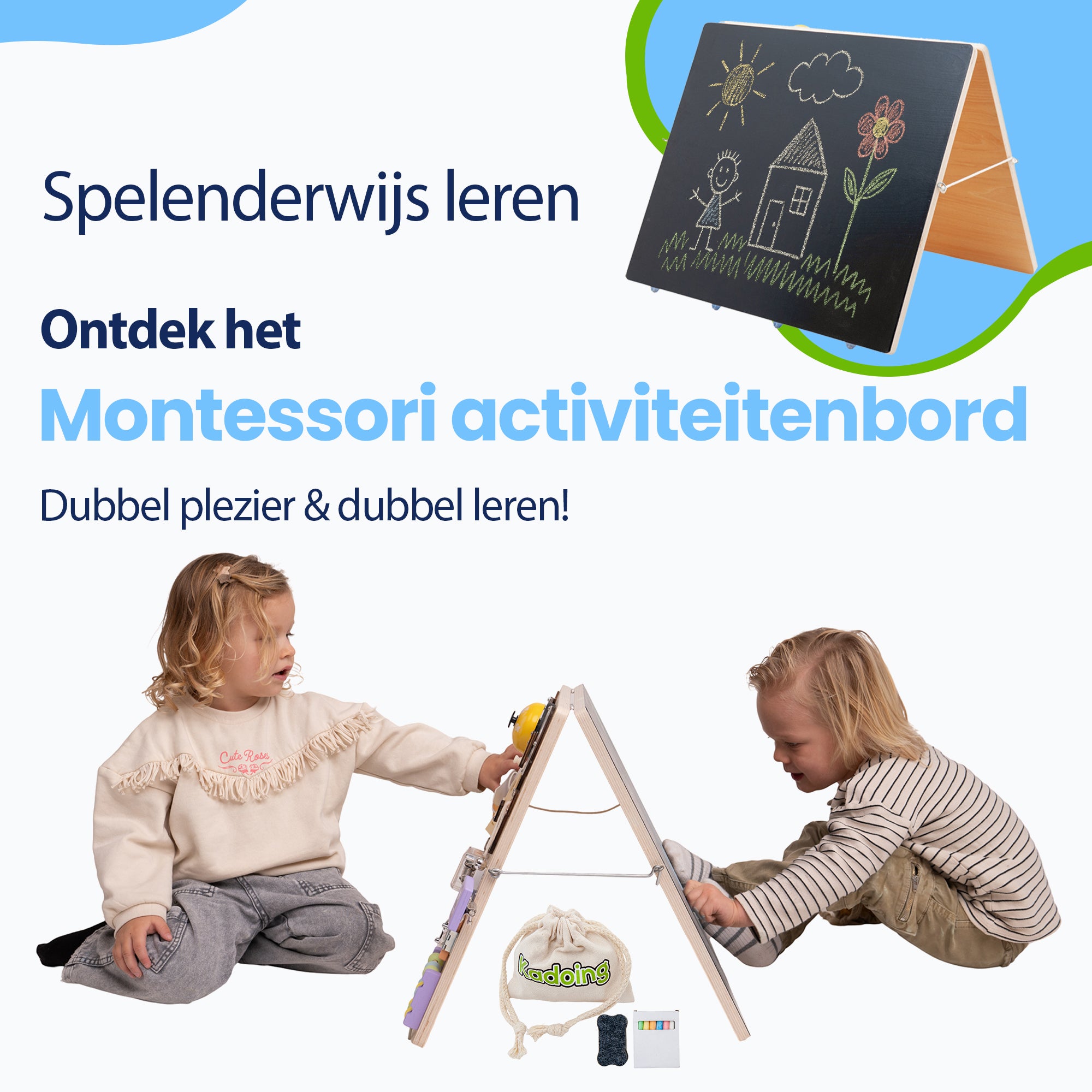
In our collection of durable wooden toys, you will find products that support creativity, motor skills, and development through play.
Kadoing's musical instrument sets
At Kadoing, we believe in sustainable play experiences that help children grow. Our musical instrument sets are designed to introduce children to rhythm, sound, and movement in a playful and engaging way.
With the 18-piece wooden musical instrument set, your child can play together with others, explore sounds, and gradually develop a sense of music. It is perfect for home use, daycare environments, or as an educational gift.
Conclusion
Music is much more than entertainment. It supports language development, memory, concentration, motor skills, creativity, and emotional growth. By singing, dancing, and making music together, you give your child a playful and valuable foundation for the future.
Would you like to introduce your child to music in a fun and engaging way? Explore Kadoing's wooden musical instrument sets and discover how much joy music can bring.