A little drum sounding for the first time at the kitchen table, a bell drawing curious eyes or small hands gently tapping a xylophone: music invites discovery. But how do you introduce wooden musical toys without immediately creating too much stimulation, noise or expectation? The answer is surprisingly simple: start small, play together and let your child set the pace.
Wooden musical toys do not need to turn into a performance. It is precisely the calm, repeated sounds and free experimentation that make them valuable. A child can listen, hold, tap, shake and sometimes do nothing at all. In this way, musical play can grow into a lovely everyday moment that brings together attention, discovery and enjoyment.
How do you introduce wooden musical toys step by step?
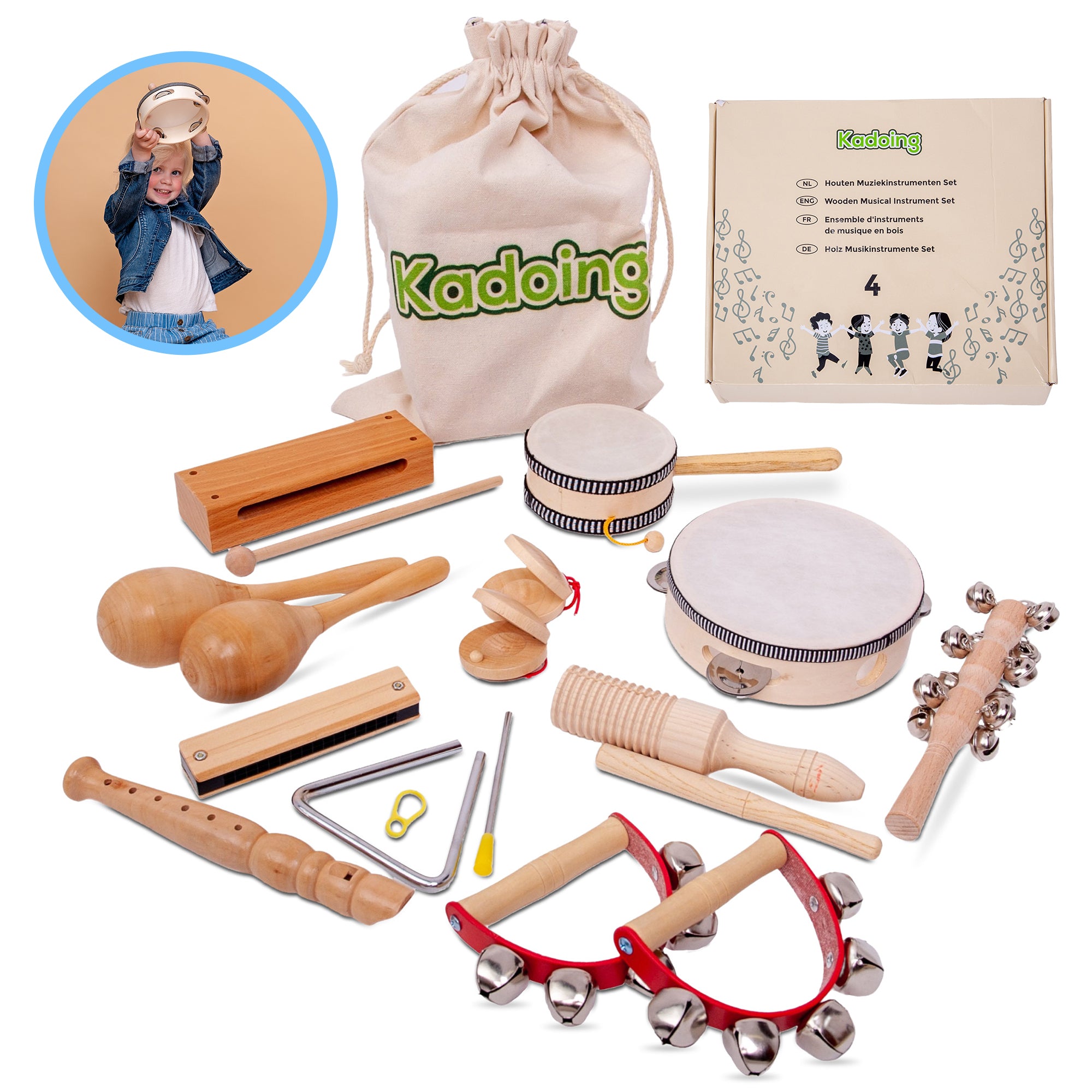
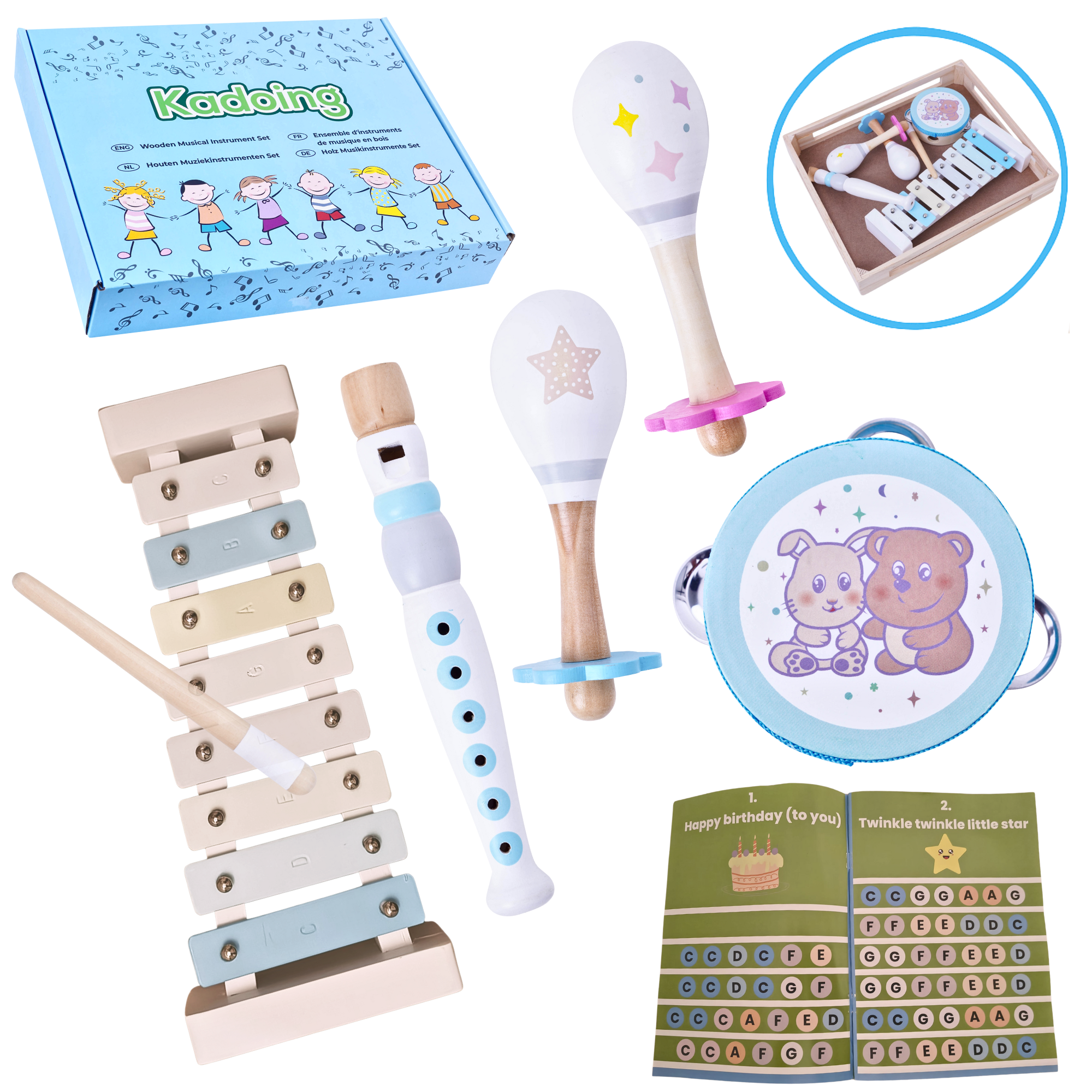
Do not put out an entire collection of instruments straight away. Choose one simple musical toy, such as a wooden rattle, bells, a drum or a xylophone. Place it in a quiet spot where your child feels safe, for example on a rug in the living room. Especially for young children, it can be pleasant to begin with one instrument rather than offering too much choice at once.
First, show what the toy can do. Tap the drum once or twice, gently shake the rattle or play two separate notes on the xylophone. Then wait for a moment. That silence gives your child space to watch, listen and take the initiative. Some children pick up the instrument straight away, while others observe for a few minutes first. Both reactions are completely normal.
Then join in without taking over. You could, for example, tap quietly on the table when your child beats the drum. Or repeat a sound your child has just made. This sends a simple message: I hear you, and I am joining you. These small moments of taking turns make musical play not only more enjoyable, but also more familiar.
Feel free to keep the first play sessions short and watch your child’s level of interest. Stop, for example, when you notice their attention beginning to fade. Tomorrow, the instrument will simply be there again, ready for a new sound.
Choose an instrument that suits your child’s age
Not every wooden musical instrument feels right at the same stage. For babies and young toddlers, instruments that are easy to grasp are usually the most comfortable. Think of a sturdy rattle, a wooden shaker or a small drum suitable for the stated age. The movement is clear: hold, move, listen.
For toddlers, it can become interesting to discover that a tap creates a sound and that different movements can produce different sounds. A drum, xylophone or simple sound block then offers plenty of scope for experimentation. Producing a recognisable rhythm or song is not the aim. Trying things out and making their own discoveries can take centre stage.
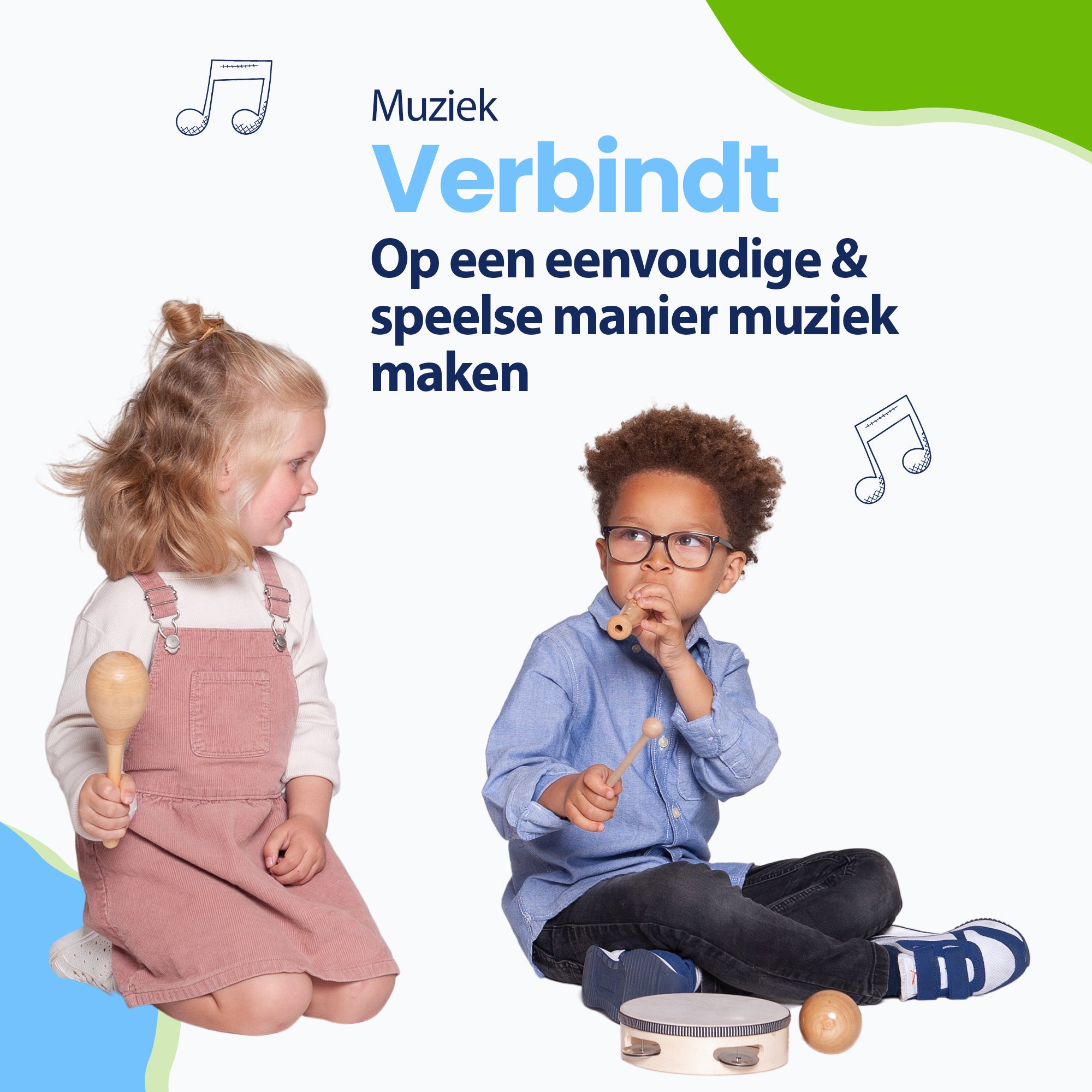
For preschool children, musical toys can also become a shared activity. Sing a familiar children’s song and let your child tap along at one set moment. Or take turns: you make a short rhythm and your child tries to copy it. It does not have to sound perfect. The fun lies in listening to one another and creating something together.
Always pay attention to the toy’s age guidance and safety warnings. Small parts, loose beaters and cords can make a toy unsuitable for young children. Use the toy only as instructed and supervise play when this is recommended for the product or age group. You should also check wooden toys regularly for damage, splinters or parts that are coming loose.
Make room for sound, but also for calm
It is fine for music-making to be heard. Even so, it helps to choose a pleasant place and a simple framework beforehand. A wooden drum sounds very different in a quiet living room, for example, than in a busy room with the television on. Turn off other sounds for a while and give your child the chance to really hear what is happening.
Agree on simple rules with a toddler or preschool child. The drum stays on the floor or table, the beaters are for the instrument and we play softly when someone needs to rest. It is better to say what is possible than only what is not allowed. For example: “Let’s hear how softly the drum can sound.” Setting boundaries then becomes part of the game without holding back curiosity.
Some children are sensitive to loud or unexpected sounds. In that case, you can start with gentle instruments, such as a rattle with a mild sound or a small wooden sound disc. You can also place a cloth under a drum to soften the sound a little. The aim is not to make as much noise as possible, but to create an experience that remains pleasant for your child.
Follow your child’s interest
A wooden musical instrument often offers more possibilities than adults initially see. A child can play a xylophone with a beater, but also explore how the sound changes when they tap it with a finger. A drum can be a rhythm instrument, but it can also become part of imaginative play: a bus steering wheel, a saucepan or a stage.
Try not to correct those ideas too quickly. Of course, you should make sure that the toy is used safely and with care, but within those boundaries a child can explore freely. If your child mainly listens to a rattle instead of shaking it, that is play too. If they keep choosing the same note on the xylophone, that repetition may be particularly fascinating.
Watch for small signals. Is your child laughing, looking attentively, repeating a movement or seeking your gaze? You are probably on the right track. If your child turns away, repeatedly throws the instrument aside or becomes restless, a break may help. Not every child feels like musical play every day, and that is perfectly fine.
Connect musical toys with everyday moments
The most relaxed introduction often happens not during a specially planned play session, but as part of a familiar routine. You could put out the xylophone after breakfast, for example, when there is still a little time before you leave. Take a wooden shaker to the play mat for a quiet moment together. Or make up a little farewell song before bath time, with two gentle taps on the drum.
By occasionally offering an instrument at the same time of day, it becomes familiar without turning into an obligation. Music can become part of recognisable transitions: from playing to tidying up, from coming home to relaxing or from a busy period to a quiet moment together. Do choose a time when you can genuinely be present for a while too. Your attention is at least as valuable as the instrument itself.
You do not need a musical background. Humming a simple tune, clapping your hands or tapping the rhythm of words is already enough. You could sing your child’s name in a calm rhythm, for example, and let your child answer with a tap. This gives music a personal meaning without making it complicated.
How to keep wooden musical toys enjoyable to use
Always follow the product’s care instructions. For many wooden toys, cleaning with a slightly damp cloth is sufficient and it is better to avoid immersing them in water. Allow the toy to dry thoroughly afterwards.
A small, fixed selection often works better than a full basket. After a while, swap one instrument for another so there is something new to discover. A drum that has spent a week in the cupboard can suddenly become interesting again. This helps keep play manageable and prevents everything from competing for attention at the same time.
Check the toy regularly for loose parts, cracks, worn cords and edges that have become rough. When choosing a toy, also pay attention to the product information about materials, paint or varnish and the stated age. Sturdy toys that remain attractive and usable for a long time can sometimes later be passed on to a sibling or another child.
A first melody does not have to lead anywhere. Sometimes one gentle tap on a wooden drum is enough for a smile, a look of recognition and a small moment that belongs entirely to the two of you.