Which wooden toys suit your child's age? Babies mainly explore toys by touching and grasping them, while toddlers enjoy stacking, sorting and copying others. Preschool children increasingly use toys to invent their own stories and ideas for play. In this guide, you will discover which types of wooden toys may suit different ages and what to consider when choosing them.
Wooden toys appeal to many parents and gift buyers because of their calm appearance and sturdy feel. Yet not all wooden toys are the same. The best choice depends not only on what looks lovely, but also on how a child can play with it, which materials have been used and how much room the toy leaves for their own imagination.
Why wooden toys can be so enjoyable
Wood feels different from plastic: warm, natural and often pleasant to hold. Wooden toys usually have a clear, simple shape. This means that play does not have to follow a set plan. A set of blocks can be a tower today, an animal enclosure tomorrow and part of a shop next week.
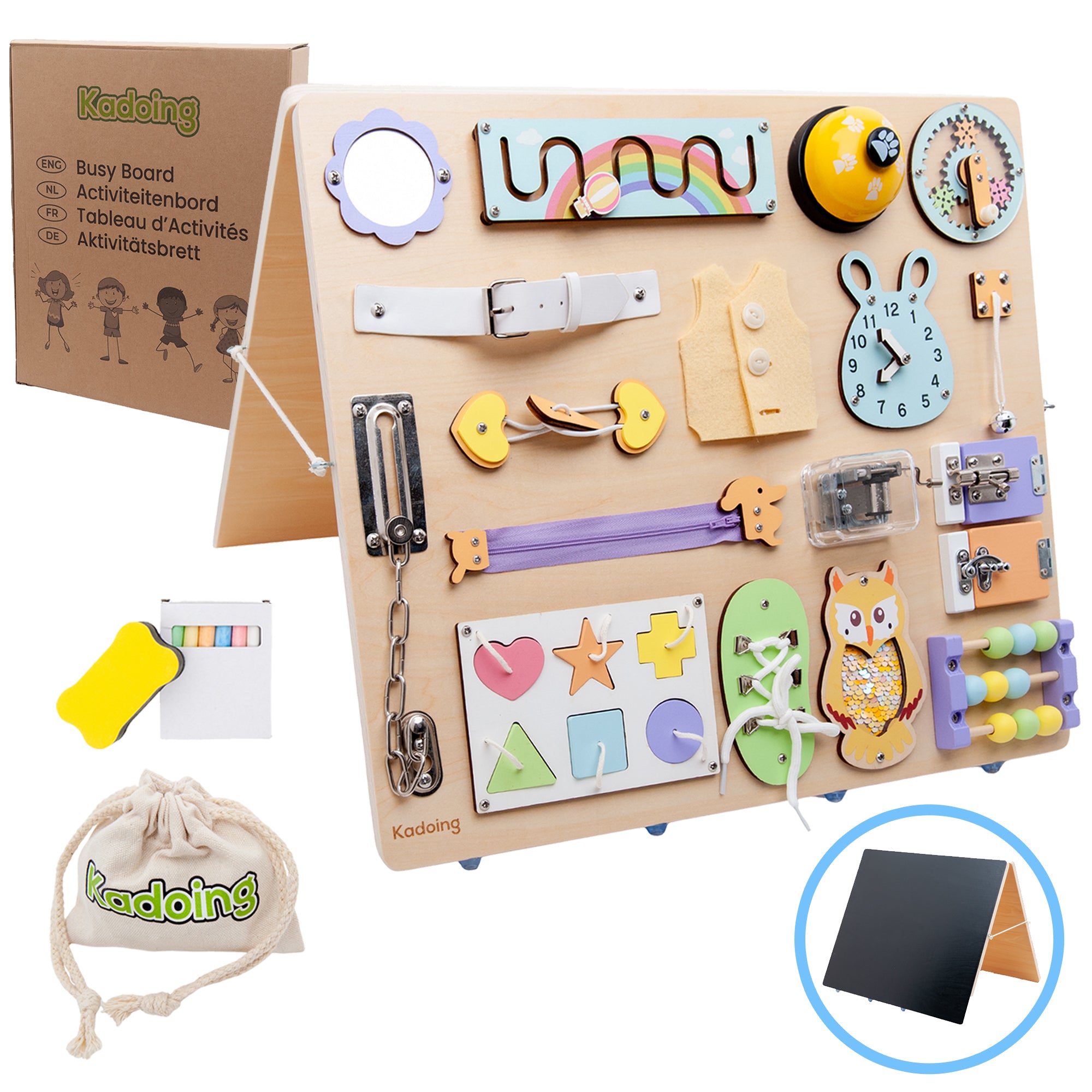
This open-ended quality can be lovely for young children who discover things as they go. They practise stacking, sorting, rolling, tapping or making music, for example, without needing much explanation. That does not mean simpler is always better. Some children are particularly excited by a detailed toy kitchen or an activity board with different challenges. Above all, notice what your child currently enjoys spending time on.
Wooden toys can be enjoyable for the family too. A few carefully chosen pieces often invite calm play together and are easy to combine with what is already in the toy basket. Having fewer toys can help some families keep things manageable, but there is no fixed ideal number. What matters is leaving enough space for real play.
A guide to wooden toys: choose by age and interests
The manufacturer's age recommendation and safety warnings are always the starting point when choosing toys. Also consider your child's interests and skills. One child loves building blocks, while another prefers making music, sorting or discovering simple role play. Choose toys that are both safe for their age and suited to what they enjoy.
For babies and younger toddlers
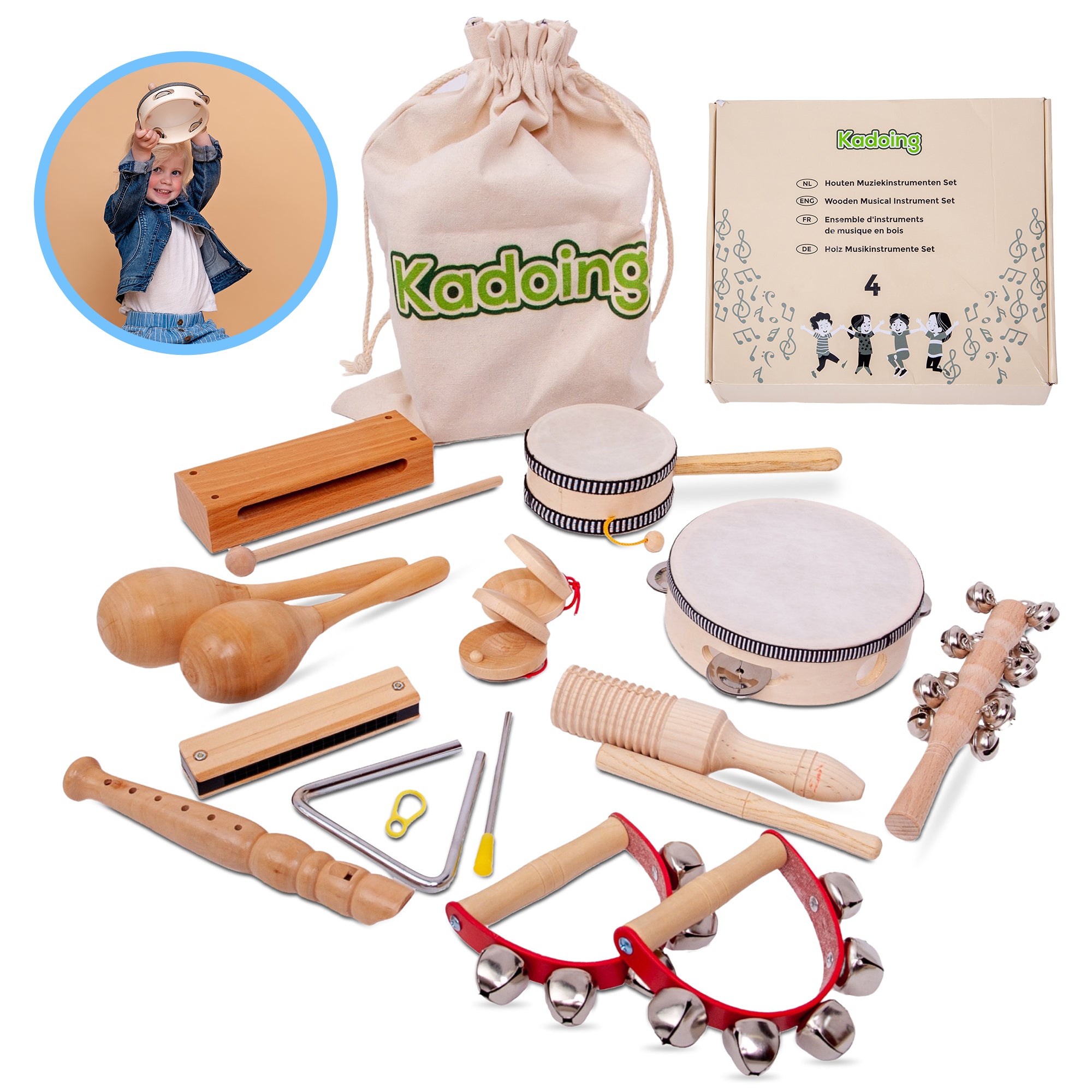
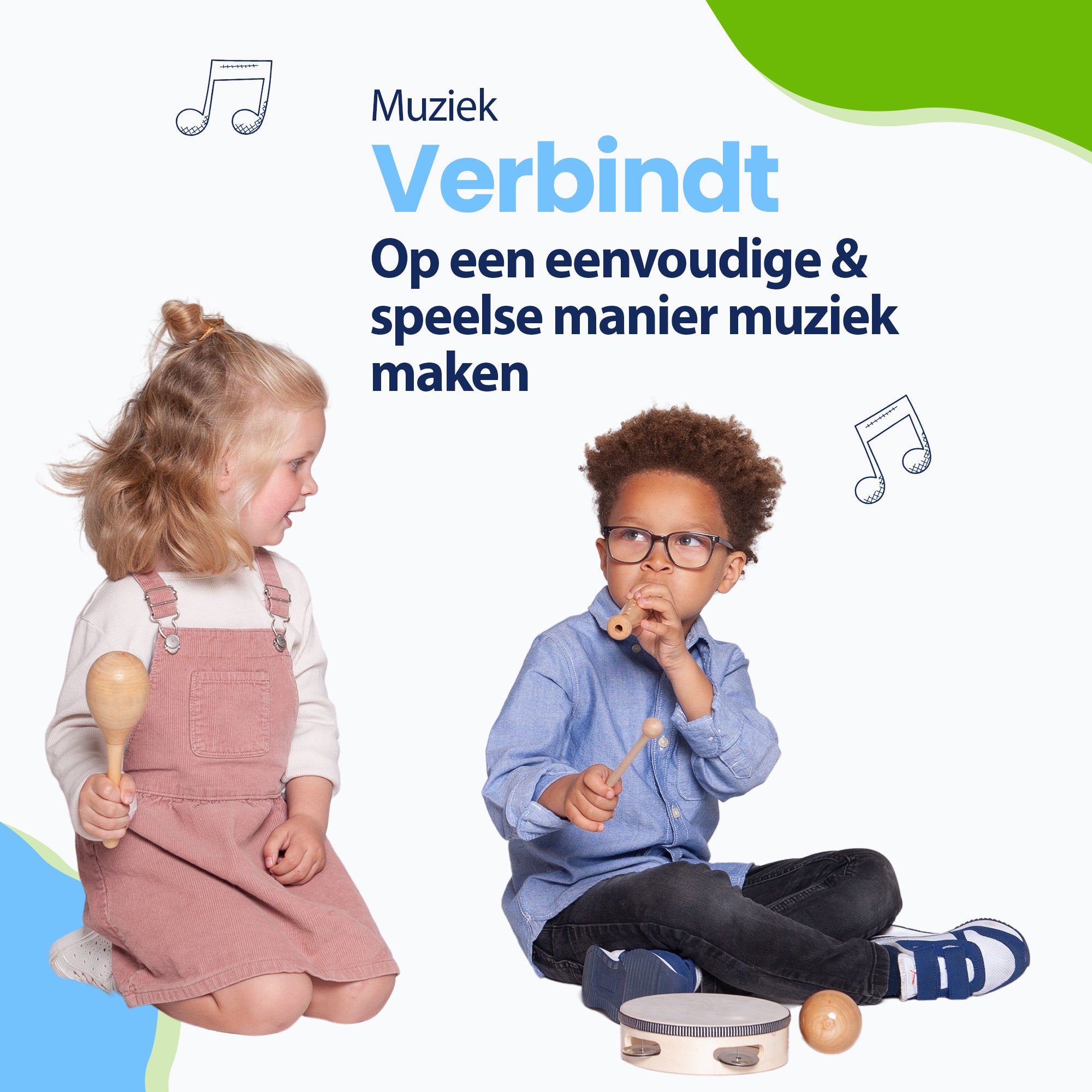
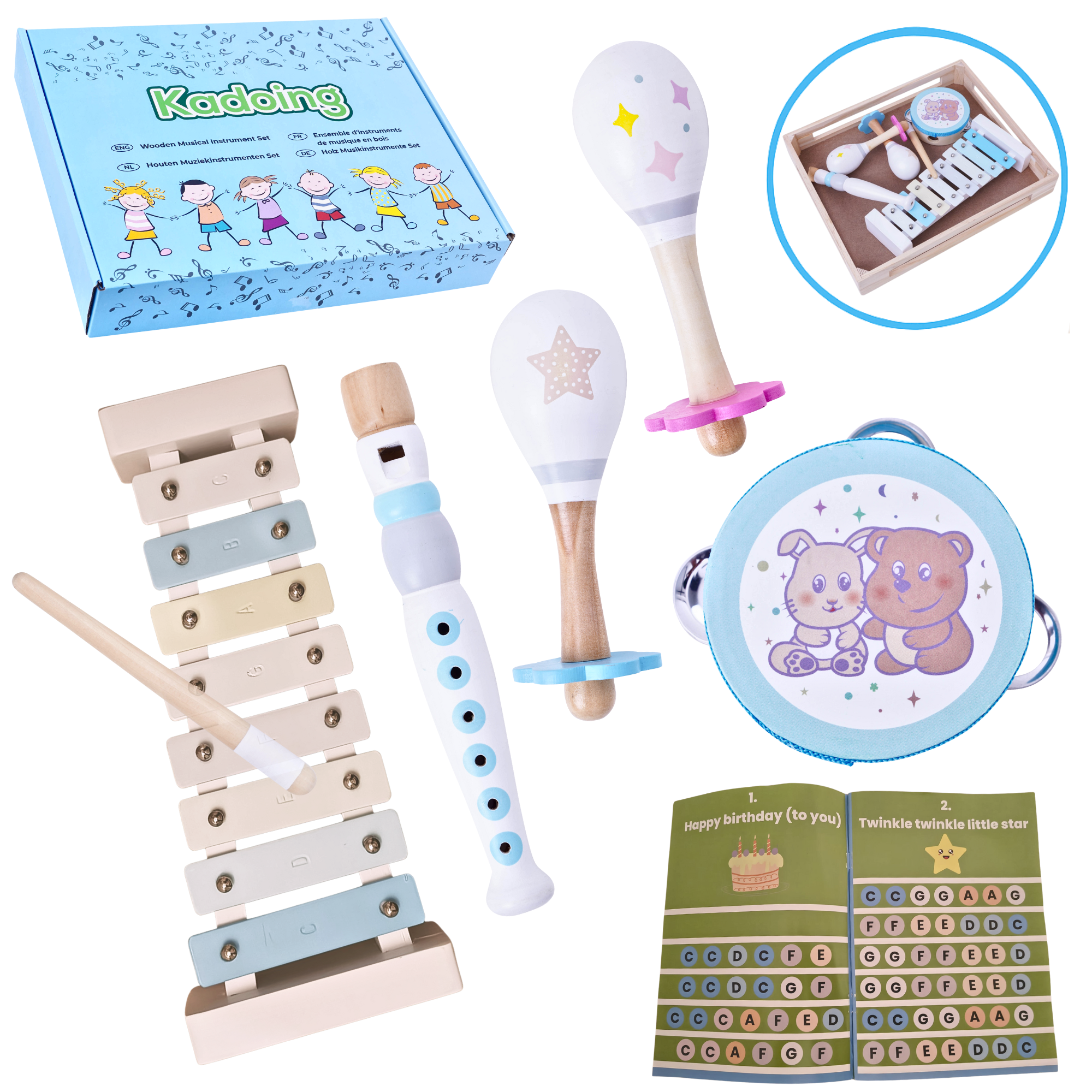
For babies, you might consider a wooden rattle or grasping toy designed specifically for their age. Simple musical instruments may also become interesting for older toddlers, provided they are suitable for their age. You can also read about introducing wooden musical toys during playtime together.
At this stage, choose smoothly finished shapes that are comfortable to hold. Always check that the toy is suitable for the stated age and that there are no small parts when these are not yet appropriate. With young children, it is best to stay nearby during play, even when a product is intended for their age.
For toddlers who love trying things out
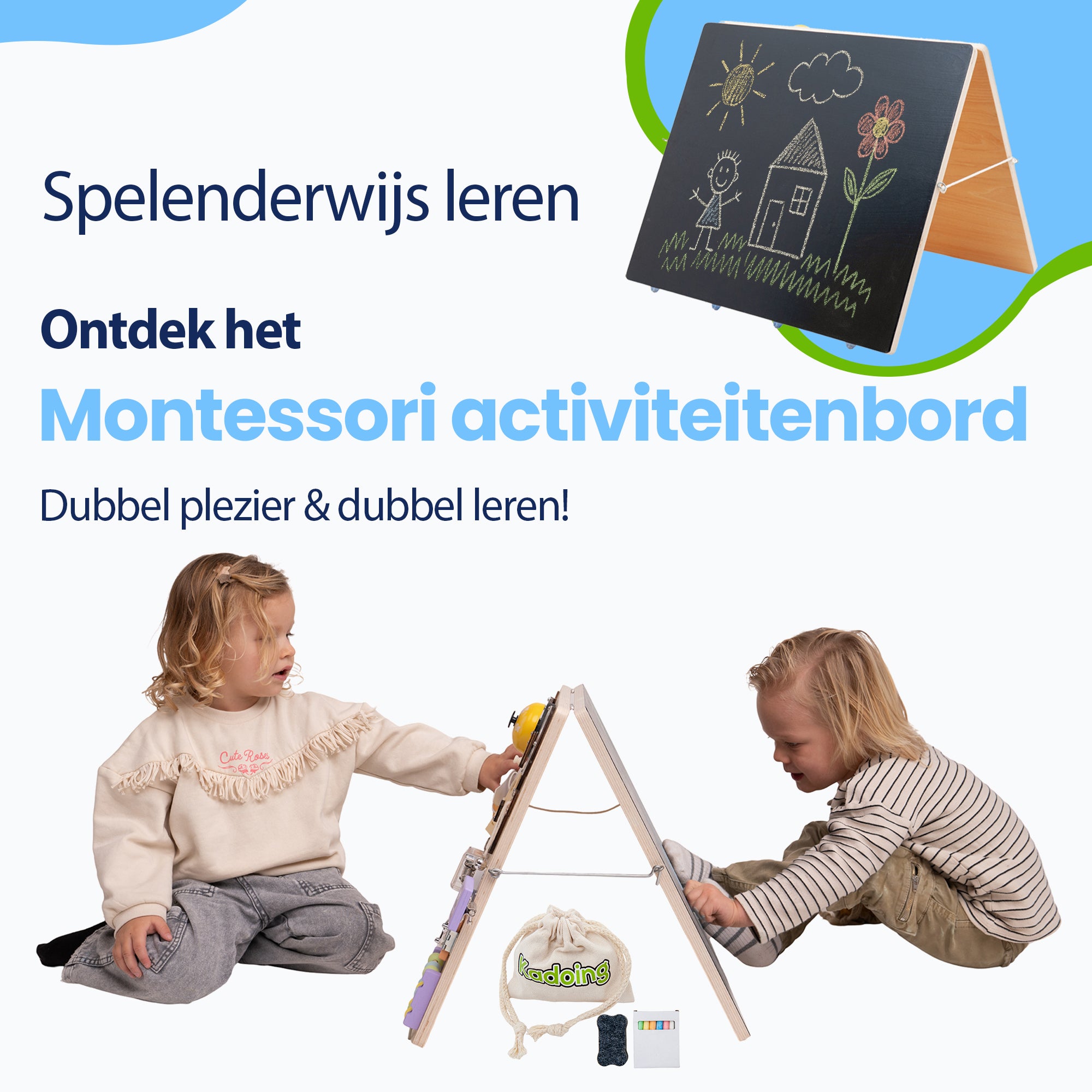
Toddlers want to do lots of things themselves. They open, stack, transport, repeat and copy adults. Large building blocks, inset puzzles, pull-along animals, shape sorters and simple musical instruments can fit well with this. An activity board can also invite turning, sliding and exploring, provided it is suitable for the child's age and used according to the safety instructions.
Repetition does not mean a toy quickly becomes boring. Practising the same little skill again and again helps a toddler feel more confident about what they can already do. Give the toy time. A basket with a few options sometimes works better than offering everything at once.
For preschool children with stories of their own
From preschool age, imaginative play often takes on a bigger role. Wooden animals, vehicles, dolls' house furniture, a play kitchen or building materials can be the starting point for long stories. A child decides who is going on a journey, what is being cooked or how a tall bridge can stay standing firmly.
At this stage, toys can certainly be a little more complex, as long as they suit what a child can already do. A challenging puzzle can be fun, but if frustration keeps taking over, it may be left untouched. Sometimes it helps to begin together and then take a step back. That way, the play remains the child's own.
Look beyond appearance
Beautiful wooden toys are lovely to give, but a thoughtful choice starts with the practical details. When comparing products, pay attention to these four points:
- Finish: Feel whether the edges are smooth and check that paint, varnish and parts look well finished.
- Material information: Look for clear information from the seller about the type of wood, paint or finish used. Transparency helps you make a more informed choice.
- Age recommendation: Follow the recommended age and pay particular attention to small loose parts, magnets, cords or parts that could come off.
- Play value: Ask yourself what a child can do with it. Is there room to build, imagine, practise or play together?
Certification labels and product information can also help, but they do not replace your own checks. Look toys over carefully again when they arrive and temporarily stop using damaged items until you know what is wrong. This is no reason for worry, but a simple habit that goes with playing with care.
Choosing sustainably without needing to be perfect
Wooden toys are often seen as a thoughtful choice, but sustainability involves more than the material alone. A toy that lasts a long time, is regularly taken out to play with and can perhaps be passed on usually fits better with a calm, considered approach to buying than something forgotten after a few days.
Look for clear information about origin and finish. Wood from responsibly managed sources may be worth considering, as may products with replaceable or sturdy parts. At the same time, not every toy has to be an heirloom to be valuable. Sometimes a small instrument for a birthday song or a simple puzzle for a rainy afternoon is just enough.
Think about what you already have too. Wooden blocks take on a new life with a cloth as a picnic blanket, a few animal figures or a cardboard box as a garage. Combining materials keeps play surprising without always needing something new.
How to invite children to play
Toys do not have to be on display all the time to stay interesting. A simple rotation can make a difference: place a few items where they can be seen and put the rest away temporarily. After a week or two, a familiar toy can sometimes feel new again.
Make it easy to get started too. Put blocks on a rug, place a basket of wooden instruments within reach or begin with two animals and a little story yourself. Young children often watch first before joining in. Then follow their lead, even if their plan involves deliberately knocking the tower down.
Playing together does not have to mean a long activity. Five minutes of clapping a rhythm, building a train track or naming colours while tidying up can already be a lovely moment of connection. When a child prefers playing alone, that is valuable too, of course. The variety keeps it enjoyable.
A gift that fits everyday life
When giving wooden toys, you can think beyond the packaging. Ask parents what their child currently enjoys: music, vehicles, animals, building or role play. A gift that fits an existing interest often finds its place in everyday play more quickly.
For a first birthday, a large, simple item may be suitable. For a toddler, toys with movement or a clear action are often appealing. For a preschool child, the chance to create a world of their own can make the difference. Unsure? Choose something with several possibilities for play rather than a product with just one fixed function.
Which wooden toys are the best fit depends on your child's age, interests and skills. Simple, age-appropriate grasping toys are one option for babies, while toddlers often enjoy stacking, sorting and exploring. Preschool children may particularly enjoy building materials and toys for imaginative play. Always check the age and safety information and, above all, choose something your child enjoys playing with.