A wooden train that travels through the living room every day, a little musical instrument for a first homemade concert or an activity board full of small discoveries: toys often become a familiar part of family life. With FSC-certified toys, you can pay closer attention to the origin of the wood used. This provides helpful guidance when sustainability plays a part in your choice.
What exactly are FSC-certified toys?
FSC stands for Forest Stewardship Council. The certification concerns the origin of materials from forests and recycled sources. FSC sets requirements for responsible forest management and for the supply chain in which certified material is processed and traded.
For toys, an FSC label therefore does not simply mean that a product is made of wood. Wood is a natural material, but the way it is sourced and processed can vary. FSC certification makes the route from raw material to product more traceable within the supply chain. For parents and gift-givers, this is a practical indicator when sustainability influences their choice.
It is important to read exactly what is stated about a product. The use of the FSC logo is governed by rules, and certified companies in the supply chain must comply with the applicable FSC requirements. If the certification is clearly shown on the packaging or in the product information, you can make a more informed comparison than when only words such as ‘natural’ or ‘green’ are used.
The different FSC labels
You may come across three labels. FSC 100% means that the material comes from FSC-certified forests. FSC Mix indicates a combination of FSC-certified material, recycled material and/or controlled sources. FSC Recycled means that the product is made from recycled material.
Which label suits you best depends on what matters to you and on the type of product.
Why FSC-certified toys can be a good choice for families
Children generally do not look at a certification label. They notice whether a block feels comfortable in their hand, invent a story about a wooden animal or enthusiastically beat a little drum. For adults, however, the origin of the material may be an important factor when choosing toys.
Many simply designed wooden toys can be used in different ways. Wooden figures, for example, might be part of a zoo today and a child’s own imaginary adventure tomorrow.
This does not mean that wood is automatically better than every other material. Some types of toys need textiles, metal or plastic to work well or last a long time. Think of a cuddly toy, a lamp or parts that need to move. The most suitable choice is often a product that matches your child’s age and interests, is carefully finished and will genuinely be used at home.
Look beyond the certification label
An FSC label provides valuable information about the wood, but not about every aspect of the toy as a whole. Anyone wishing to choose thoughtfully can therefore also look at safe materials for children’s toys and practical considerations. Is the size appropriate for the age? Are the parts firmly attached? Is the toy easy to clean and can it withstand everyday use?
Also look for clear product information. Manufacturers should state the age for which a product is suitable and include any relevant warnings. Toys placed on the EU market must bear a CE marking. Through this marking, the manufacturer declares that the toy meets the applicable European requirements. FSC certification serves a different purpose: it concerns the origin of the wood or paper used.
The finish also deserves attention. A smoothly sanded surface feels pleasant in small hands. For paint or varnish, check whether the information is clear and whether the product is intended for your child’s age. For toys aimed at young children, also pay close attention to the age indication, warnings and any small or detachable parts.
Choose according to how your child plays at home
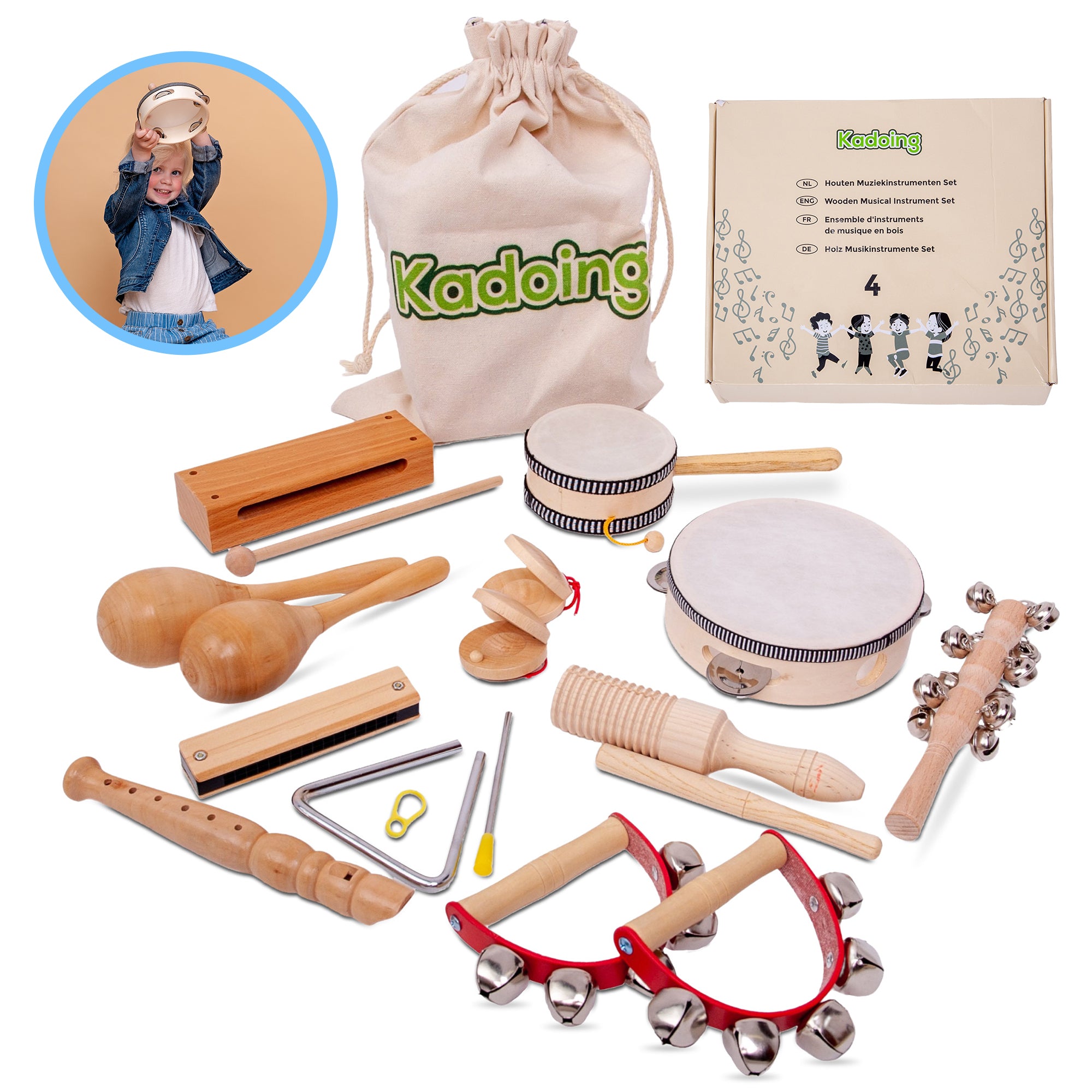
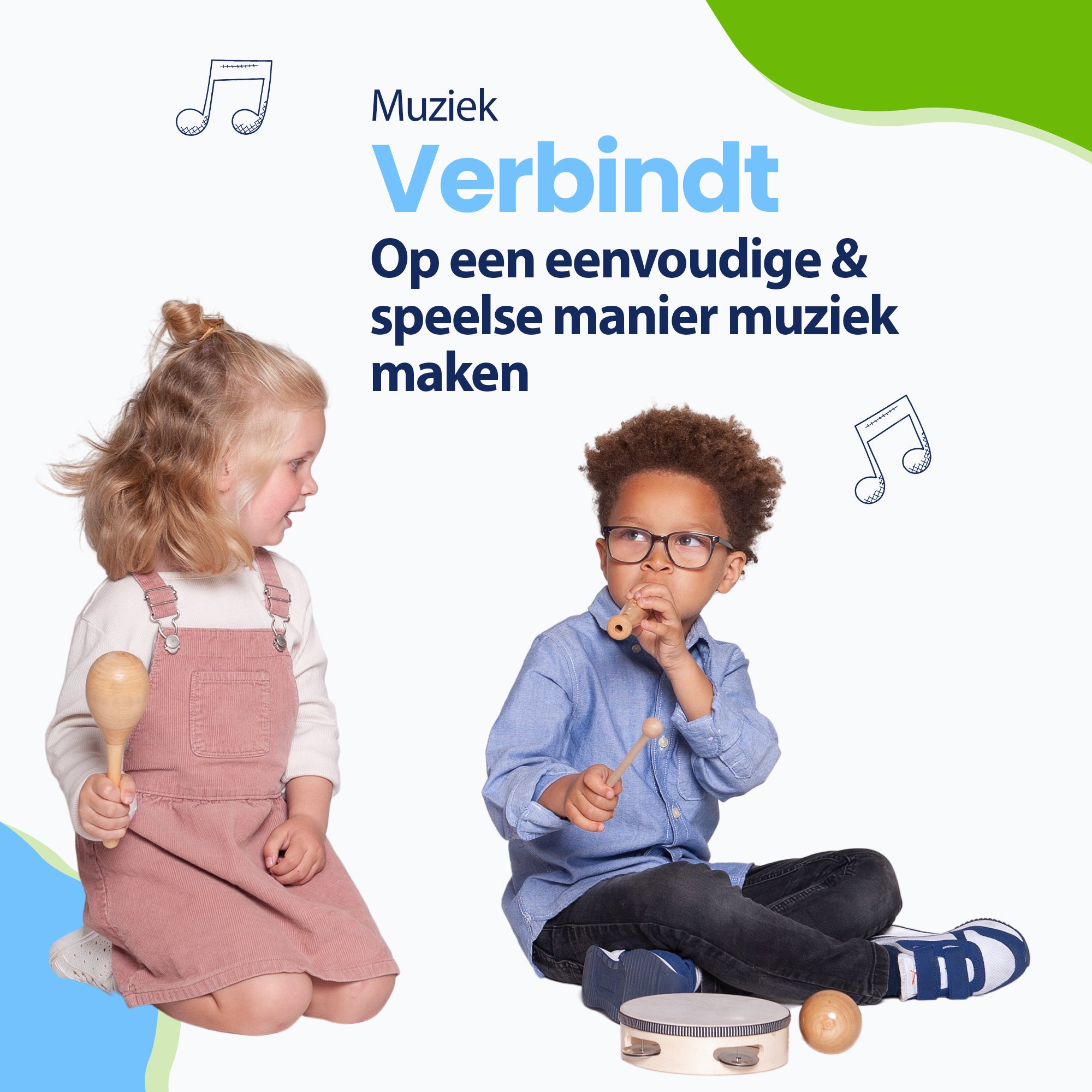
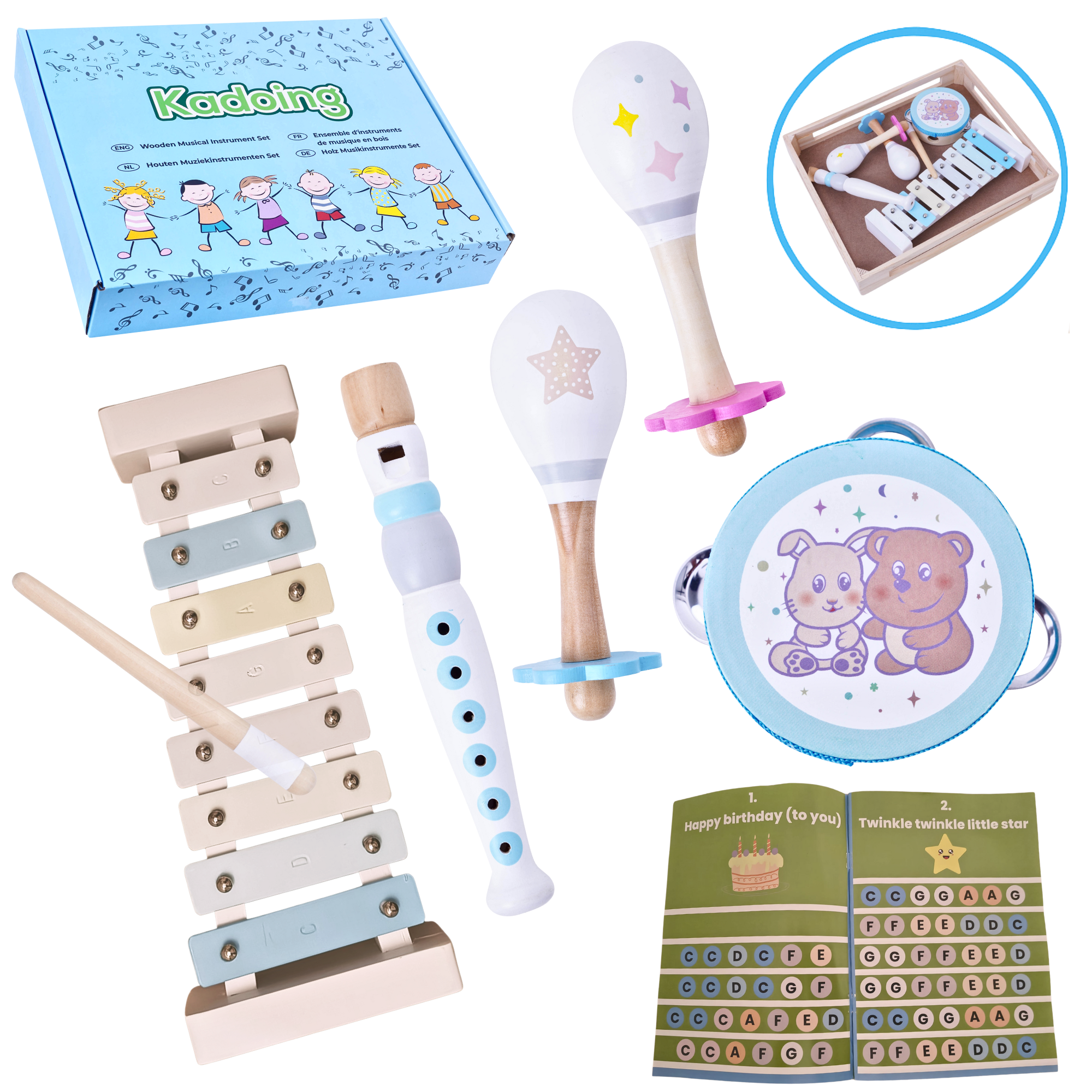
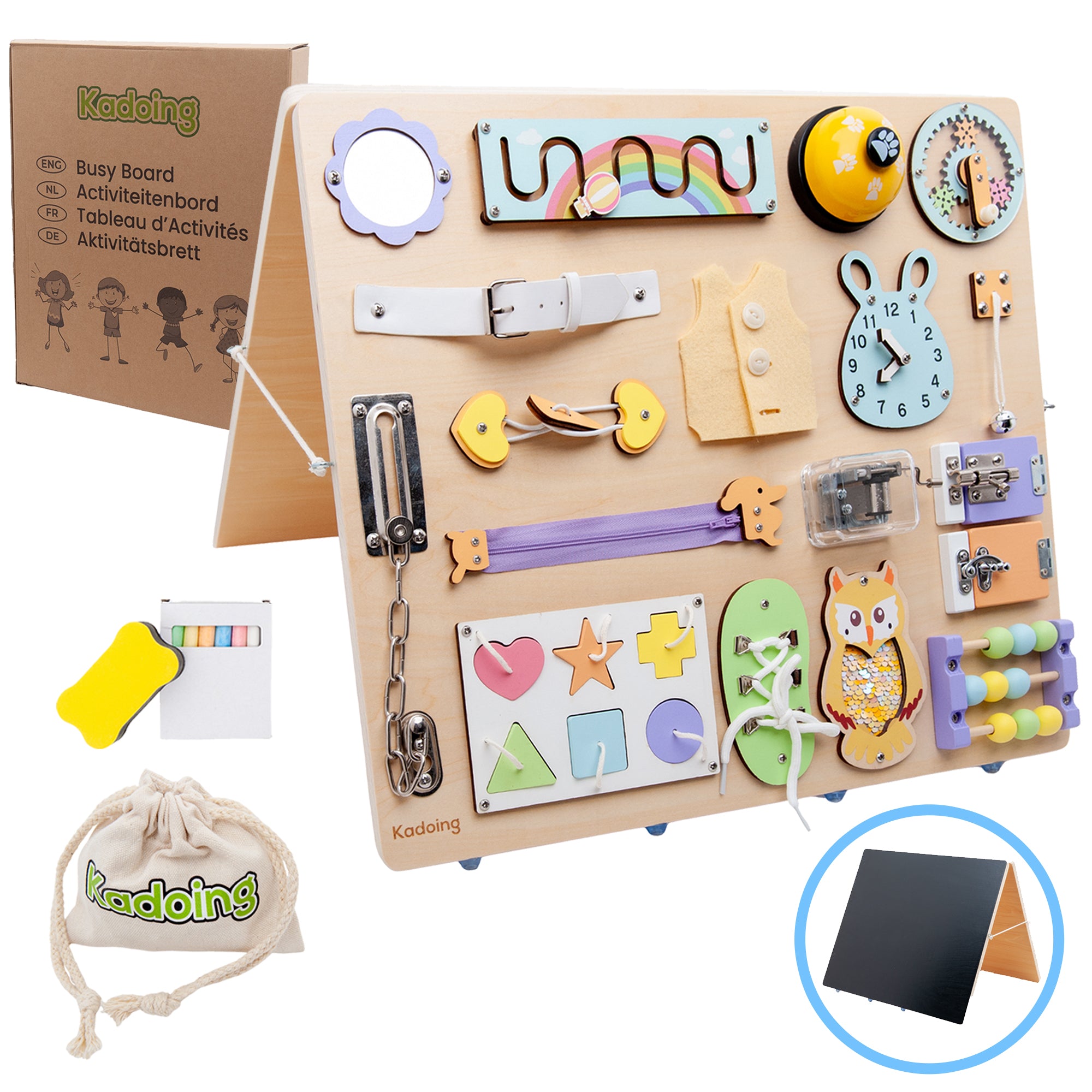
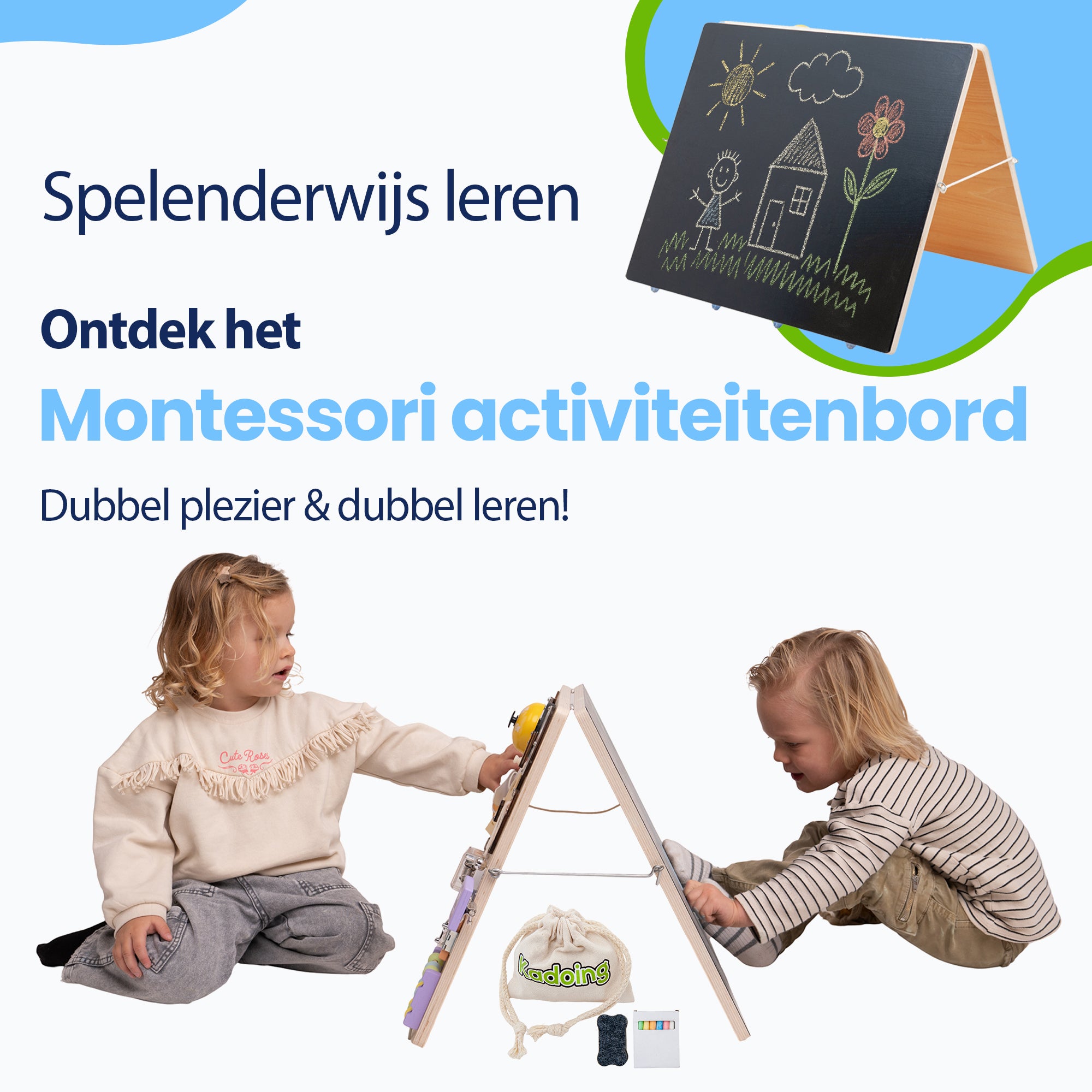
Choosing a suitable toy is not only about what looks attractive, but also about how a child likes to play. For a child who enjoys making sounds, a wooden musical instrument can be an invitation to explore rhythm and sound. An activity board may suit a toddler who likes moving sliders, turning parts and opening flaps. Wooden blocks are ideal for children who want to build, knock things down and start again and again.
You can keep the selection manageable by not putting out every toy at the same time. Temporarily storing some toys and swapping them later is a simple way to create variety.
A designated place for toys can also be practical. Consider a low basket in the living room, a shelf in the child’s bedroom or a regular spot at the table. It does not have to be perfect. A home where children play is allowed to be a little untidy sometimes.
How to keep wooden toys looking good for longer
Making a sustainable choice also means using items with care. Wooden toys can withstand plenty of play, but benefit from simple maintenance. Always follow the manufacturer’s care instructions first when cleaning. For many wooden toys, gently wiping them with a slightly damp cloth is sufficient. Soaking wood in water for a long time is generally unsuitable.
Occasionally check that everything is still intact, especially with toys that are used intensively or passed on to a younger brother, sister or cousin. Loose parts, splinters or damage are signs that the toy should no longer be used until you have assessed whether it can be repaired safely and responsibly.
Store wooden toys in a dry place and follow any storage instructions from the manufacturer. This helps keep the material in good condition for longer. A wooden item that lasts for years may later become a special gift for another child. The small signs of use then tell the story of how much it was enjoyed.
Giving FSC-certified toys as a gift
For a visit to a new baby, a birthday or a festive occasion, FSC-certified toys can be a suitable choice if you want to consider the origin of the wood used. Choose one item that suits the child’s stage of development rather than something that is mainly large or eye-catching. For example, consider a toy that the manufacturer identifies as suitable for the child’s age, such as simple blocks or a musical instrument for a slightly older child.
Not sure what the child already has? Ask about their favourite way to play, the available space or something that is still on their wish list. This increases the likelihood that your gift will genuinely be used at home.
Choosing toys thoughtfully does not have to be complicated. Check the age indication, warnings and product information, look at which FSC label is used for wooden toys and choose something that suits the way the child likes to play. This allows you to consider the origin of the material as well as safety and practical use.