A tower of blocks tumbles down, the dressing-up clothes are on the sofa and a collection of animal figures suddenly appears under the table. Getting your child to help tidy up may sound like another task in an already busy day. Yet tidying up together can become a small, familiar moment: not perfect, but manageable and suited to your family.
Children do not need to tidy a whole room by themselves straight away. A simple task, a clear place for toys and your calm presence are often enough to get started. Some days it happens easily; on others, it takes more effort. That is part of it.
Why tidying up together can be worthwhile
Tidying up is about more than a clear floor. It gradually helps children discover that toys can have a regular place and that playtime can have a calm ending. This gives the day structure, especially after a busy afternoon or just before the evening routine.
Joining in makes tidying feel less like an instruction from above. You show how it works: pick up a few blocks together, put the train back in the basket and describe what is happening. For young children, copying is often much easier to understand than a long explanation.
Do not expect an adult idea of order. A toddler can help put all the wooden shapes into a tub, even if they are not neatly sorted. An older child may enjoy working out together where craft materials, puzzles and favourite soft toys belong. The task grows with what your child can already do and wants to try.
Getting your child to help tidy up starts small
A common pitfall is asking a child to tidy an entire room. For a young child, that is a big, vague request. Choose one very specific starting point instead: “Shall we put the cars in this basket first?” If that works, a second step sometimes follows naturally. If not, one finished task is still a good start.
Keep the surroundings as simple as possible. Toys used every day are best kept at your child's height, in low tubs or open baskets. A picture on a basket, of blocks or dolls, for example, can help if your child cannot read yet. Too many different storage places make choosing harder.
Having fewer toys in view at once can also bring calm. There is no need for a drastic clear-out. Some families rotate some of the toys weekly or monthly. Things temporarily out of sight often feel new again later, while tidying remains more manageable.
Choose an age-appropriate task
A young toddler can put a ball in a basket or help return a book to the shelf. A toddler can help sort by type or colour, as long as it stays playful and not too precise. Preschoolers can often have a small, regular responsibility, such as closing the dressing-up box or gathering the puzzles.
Older children can help think of a system that works for them. Perhaps they want to keep construction sets together or have a separate place for unfinished drawings. Offer choices within a clear boundary: “Would you like to put away the felt-tip pens or the animals first?” Choice gives them a say without making tidying time go on endlessly.
Try not to compare your child with a sibling or friend. Temperament, age and how busy the day has been all play a part. Something done reluctantly today may be a familiar habit in a few weeks.
Make tidying up a familiar part of the day
A regular transition often works better than having to stop unexpectedly each time. You might agree to tidy up before a meal, before going outside or before the bath-time routine begins. The moment becomes predictable: play, finish, tidy, move on.
Give a warning beforehand. For example, say five minutes in advance that you will soon be finishing. For younger children, it helps to make the time visible or audible with a short song, a gentle timer or the same little phrase each time. A familiar tidy-up song can keep things light, but it does not need to become a race.
Keep it short. Ten minutes of focused tidying together is often nicer than half an hour of negotiation. If there is a lot out, choose what is needed at that moment: clear a safe path, put materials back in the basket and gather small loose parts. The rest can wait until later if necessary.
Put what is going well into words
Specific, calm appreciation often feels better than a general “well done”. Describe what you see: “You found all the animals” or “Now we can use the table for drawing again.” This shows your child that their contribution matters.
Try not to link tidying up to a reward every time. A sticker or sweet can make the moment a bigger deal than it needs to be and is difficult to sustain. Finishing together, a pleasant next activity and a manageable play space are usually natural rewards in themselves.
When your child protests, it helps to acknowledge first that stopping can be disappointing. “You were having such a lovely time building. Let's take a photo so you can carry on tomorrow.” Then keep the boundary friendly: now we are putting some things away. Sometimes a child really wants a construction to stay up. If there is room, a regular spot on a small cabinet or a tray can help.
What if tidying up keeps becoming a battle?
First look at the request itself. Is the task too big, does it come when your child is tired, or is it unclear where everything belongs? Small adjustments often work better than repeating yourself more firmly. Starting together, putting out one fewer basket or planning tidying time a little earlier may help.
Avoid long discussions about every individual object. Stay close and calmly repeat the next step. You might say: “I'll do the books; you choose the things for the blue tub.” If a child really is not joining in, you can help bring the task to an end for now without turning it into a major conflict. Tomorrow brings another chance to practise.
Notice your own expectations too. A home with children is a place for living, playing and discovering. A few things on the table do not mean the routine has failed. The aim is a system that helps you find things and move on together, rather than a showroom.
Give toys a place that encourages care
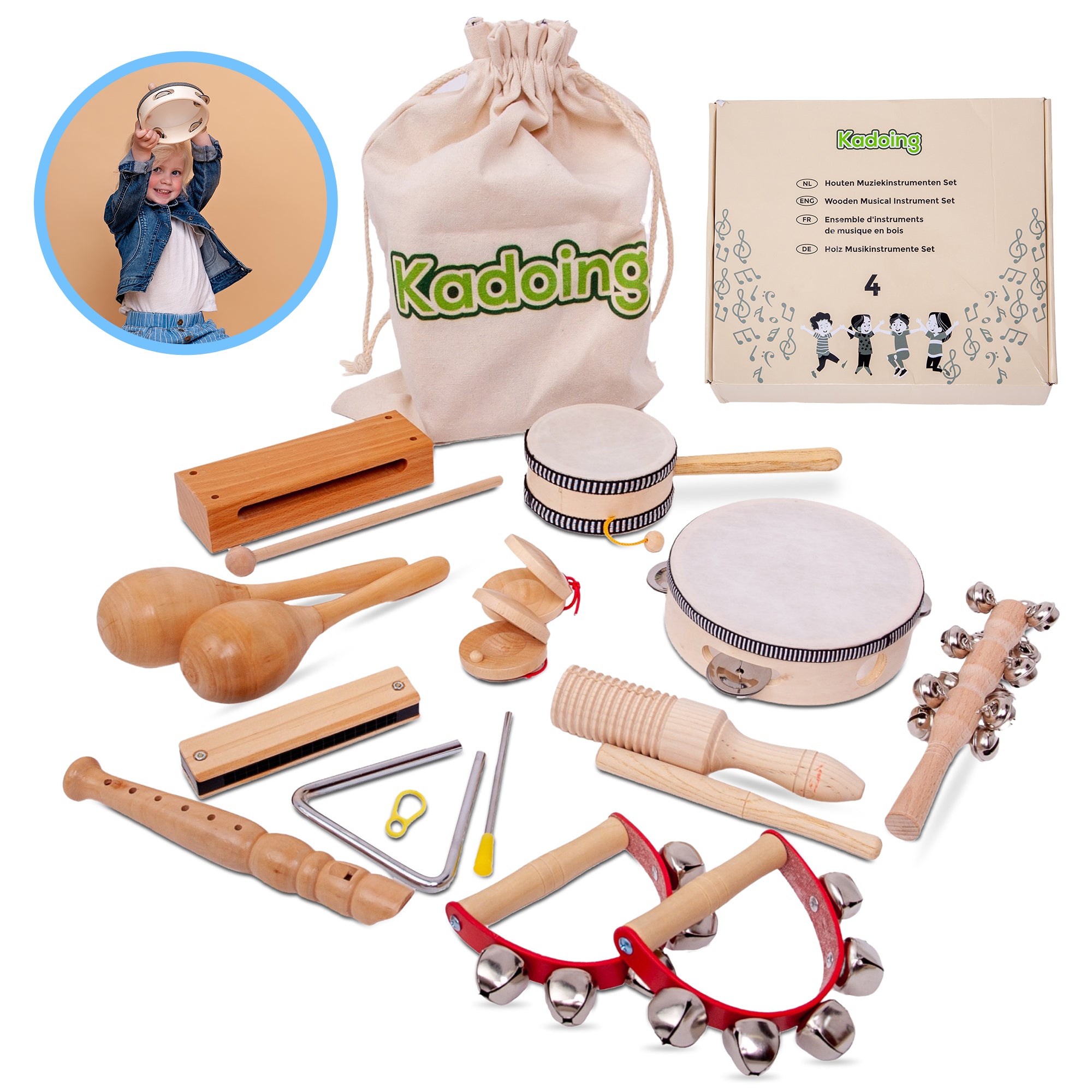
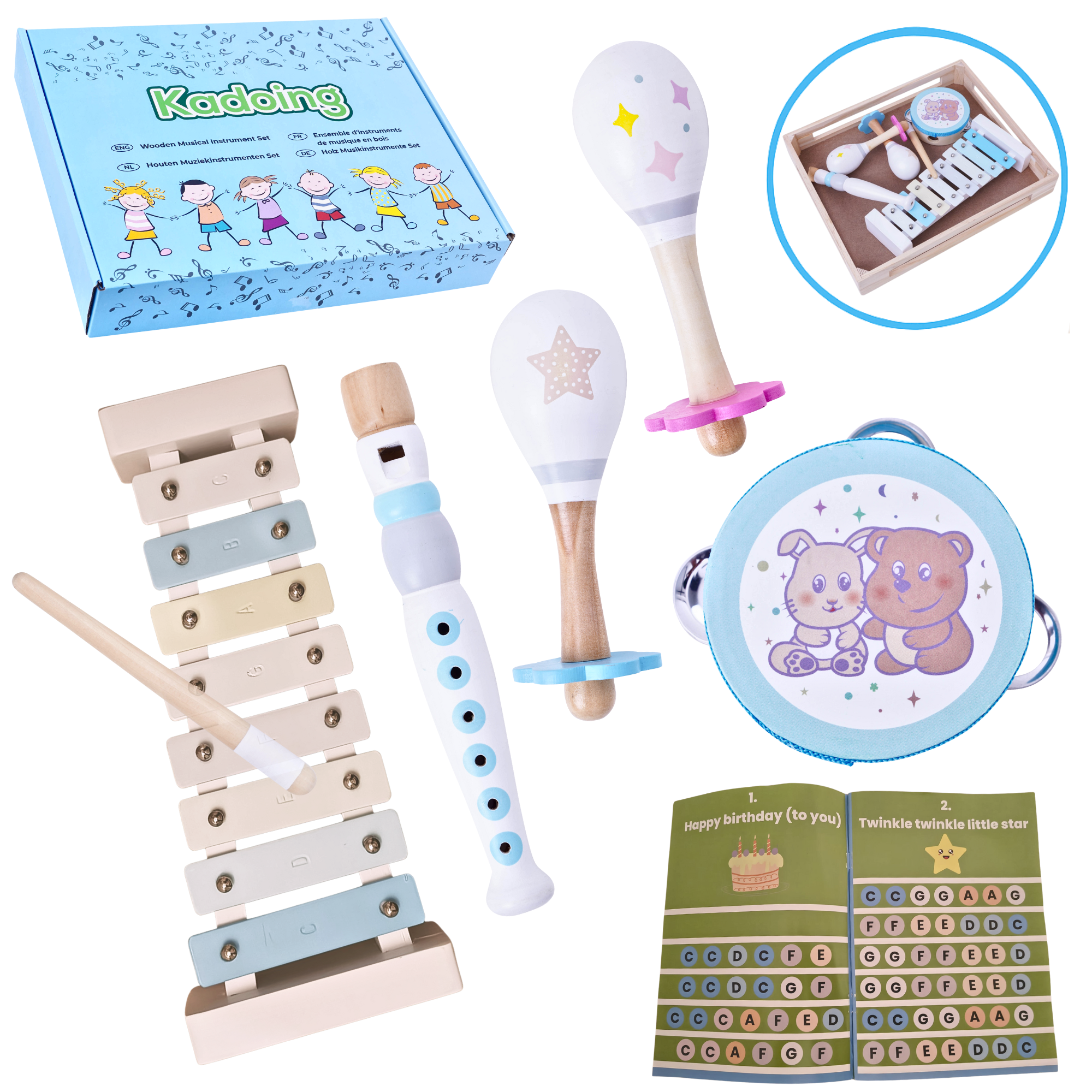
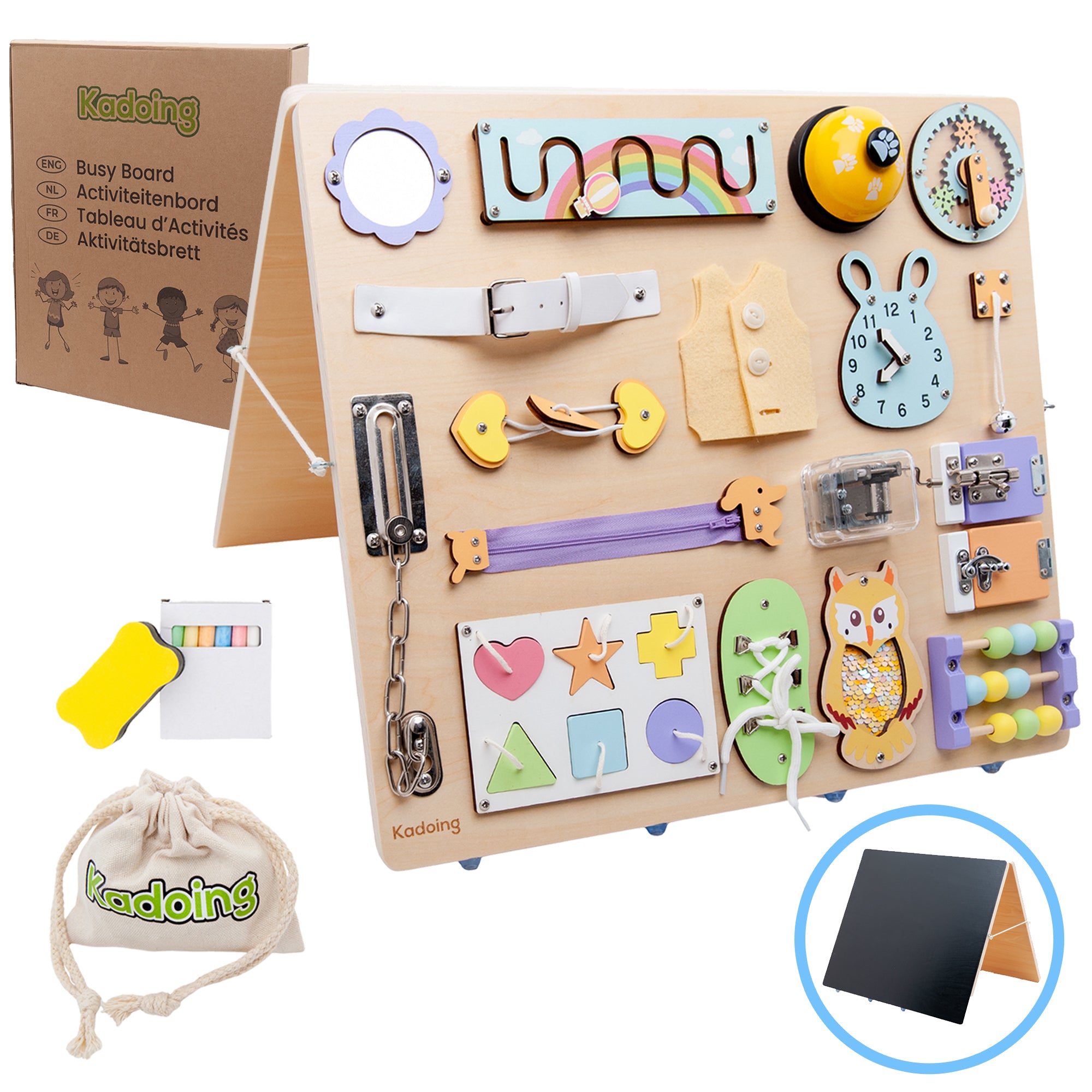
Toys stored in an organised way are often easier for children to take out and put back. A wooden musical instrument in an open basket, an activity board in a regular play spot or a soft toy in a low basket invites both taking out and putting away. This does not guarantee that a child will always tidy up, but it makes the action clearer.
Check together from time to time whether the tubs still make sense. Play interests change quickly. A basket full of parts that are no longer used makes tidying unnecessarily complicated. Choosing together what stays, what can go to another room and what is put away temporarily gives your child a small role in caring for their belongings.
Sometimes tidying is also a chance to end a game well. Tuck the doll under her blanket, put the train in its shed or sing one more line of the song that went with the toy. Little rituals like these make the transition gentler without taking much time.
A calm habit grows step by step
Getting a child to help tidy up mainly takes repetition, not perfection. Start with one regular task, keep your words simple and help when needed. Some days it becomes a cheerful game; on others, it is just three blocks in a basket. Both count.
When tidying can be a small, familiar part of your day, it leaves room for what comes next: eating together, reading a book or simply playing quietly again in a room where everything has a little more space.