A child who keeps trying to stack a block, wants to hold a spoon independently, or carefully explores a rattle with both hands is learning far more than you might realise. Encouraging motor skills through play often doesn't start with a complicated plan, but with small, peaceful moments at home where a child is free to try, feel and repeat. That's exactly where development naturally fits into everyday family life.
Why encouraging motor skills through play works so well
Young children learn with their whole bodies. They don't only discover the world by watching and listening, but above all by grasping, crawling, pushing, lifting and balancing. When movement is connected with enjoyment, practising doesn't feel like practising. It feels like playing, exploring and discovering what they can do on their own.
That's what makes play so powerful. A child building a tower isn't only training their hands, but also concentration, timing and patience. A toddler trying to fit a shape into the correct opening is developing hand-eye coordination and problem-solving skills at the same time. In this way, learning and fun naturally go hand in hand.
For parents, this often brings peace of mind. You don't have to keep inventing new activities or follow a strict programme. Everyday moments already offer valuable opportunities, as long as there's room for movement and independent exploration. It's also worth remembering that motor development isn't about being faster than other children, but about what suits your own child. One child may start climbing early, while another spends longer practising small hand movements. Both can be completely normal.
Gross and fine motor skills: what's the difference?
When parents read about motor development, they often come across two terms: gross motor skills and fine motor skills. Gross motor skills involve larger body movements such as rolling over, crawling, walking, jumping and climbing. Fine motor skills involve smaller, more precise movements such as grasping, twisting, threading, drawing or undoing buttons.
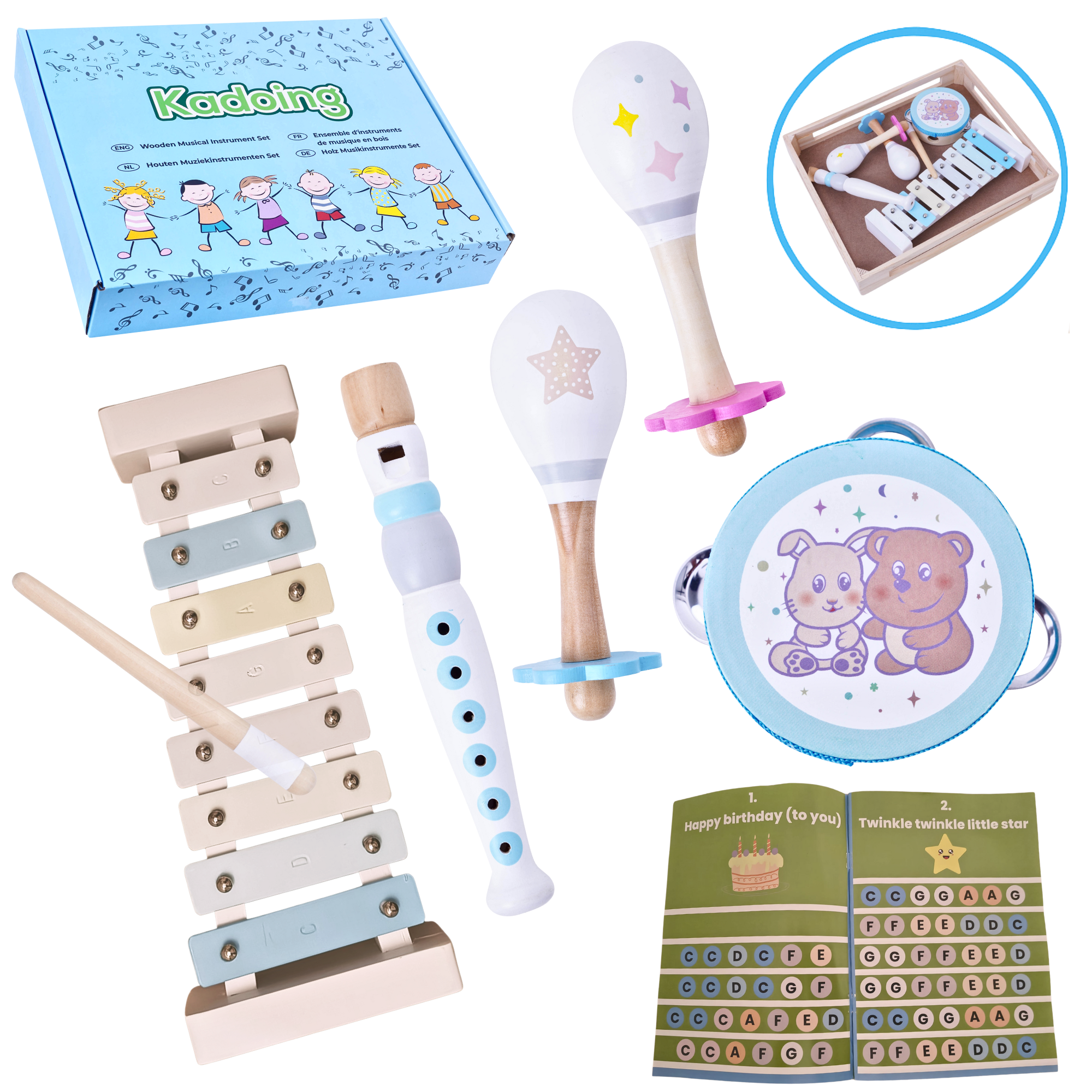
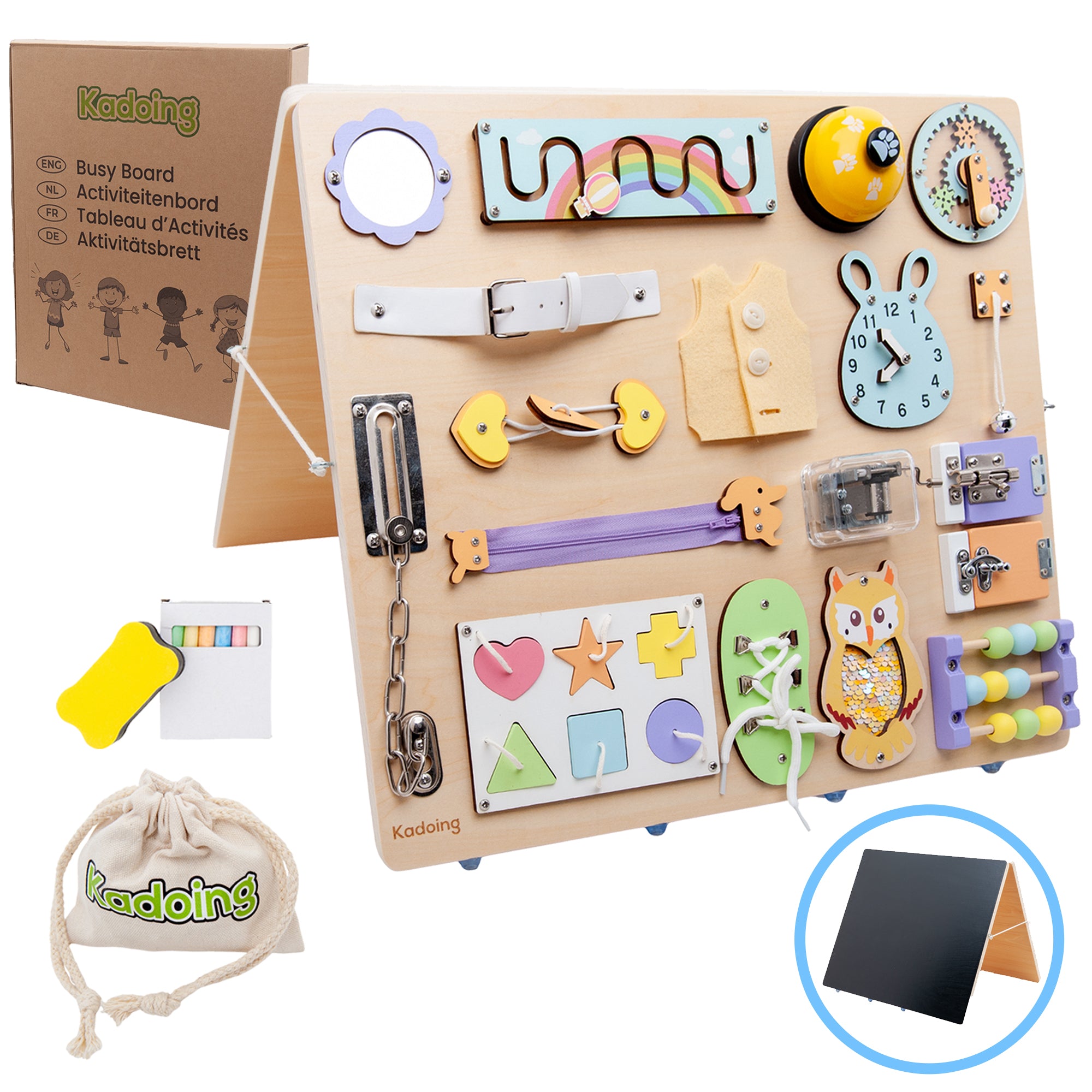
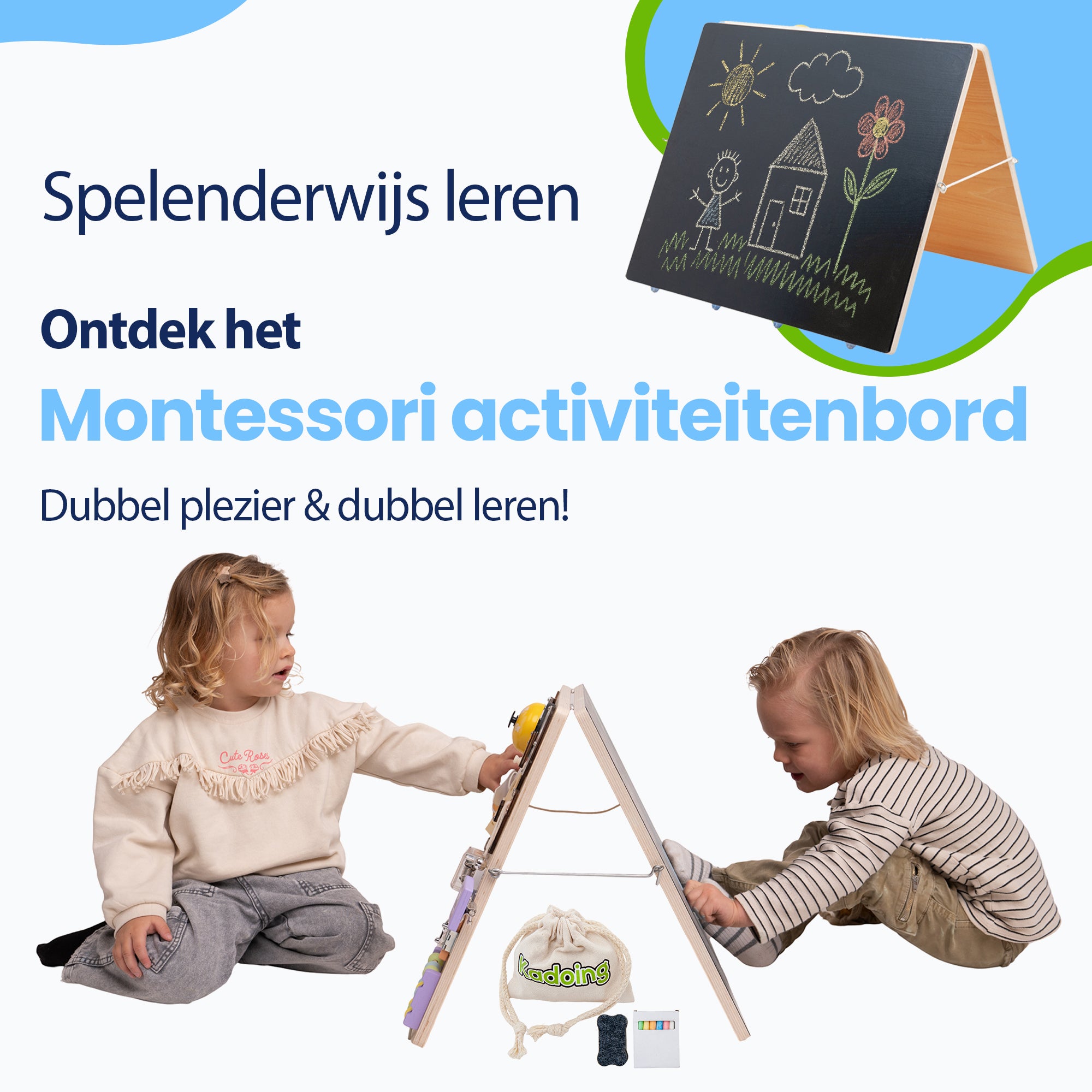
In reality, these two areas constantly work together. A child playing with an activity board uses their fingers to move sliders, while also needing to sit or stand steadily. A child experimenting with a wooden musical instrument practises rhythm and hand movements, but also posture, controlled force and listening skills.
That's why it helps not to think too rigidly in separate categories. Variety is often more valuable than perfection. The best activities develop several skills at once, without children even realising it.
Encouraging motor skills through play at every age
Babies: feeling, reaching and rolling
For babies, much of their learning starts with sensory exploration. A soft ball, a lightweight rattle or different textures invite them to reach, grasp and hold. Tummy time also remains important, as it helps strengthen the neck, shoulders and back. This forms the foundation for rolling, shuffling and eventually crawling.
It's important not to overwhelm babies with toys. Too many lights, sounds or other stimuli can distract from the movement itself. Simple materials often work best because babies can truly experience what happens when something rolls, rattles or moves.
Toddlers: doing it themselves, stacking and carrying
Toddlers often have a strong desire to do everything by themselves. It can be messy, but it's incredibly valuable for motor development. Eating with a spoon, stacking blocks, threading large beads, opening and closing a box or moving toys around the room—these repeated actions are exactly what help children develop their skills.
Gross motor movements also become more advanced during this stage. Walking develops into running, climbing and jumping. That's why toddlers benefit from a balance between quiet play at a table or on the floor and active moments that involve the whole body.
Preschoolers: combining, planning and refining
As children reach preschool age, their movements often become smoother and more controlled. They can cut, draw, build and complete puzzles with greater precision. At the same time, they look for more physical challenges, such as hopping, catching, dancing or following an obstacle course. This requires not only strength and coordination, but also planning: What should I do first? How do I keep my balance? How hard should I throw?
At this stage, open-ended toys are often an excellent choice. Toys that can be used in different ways each time remain interesting for longer and naturally grow with your child's development.
What works at home without taking much extra time?
Parents don't always have time to prepare elaborate activities, and that's perfectly fine. Everyday moments already offer countless opportunities. Let your child put socks into a basket, turn the pages of a book, try placing a lid on a box, sort toys or help set out napkins. These may seem like small tasks, but for little hands they're meaningful practice.
There's plenty to discover on the floor as well. A pile of cushions to climb over, a strip of tape to walk along or blocks stacked from large to small require almost no preparation. The biggest difference comes from giving your child the space to practise without stepping in straight away.
It also helps to follow your child's pace. Some children love repeating the same activity, while others are constantly looking for something new. Neither approach is better than the other. By observing carefully, you'll often notice exactly what your child needs at that moment.
Toys that truly add value
Not every toy supports motor development equally well. Toys that do everything for the child leave less room for independent movement and exploration. Materials that encourage children to grasp, twist, stack, slide, tap or build usually offer much greater developmental value.
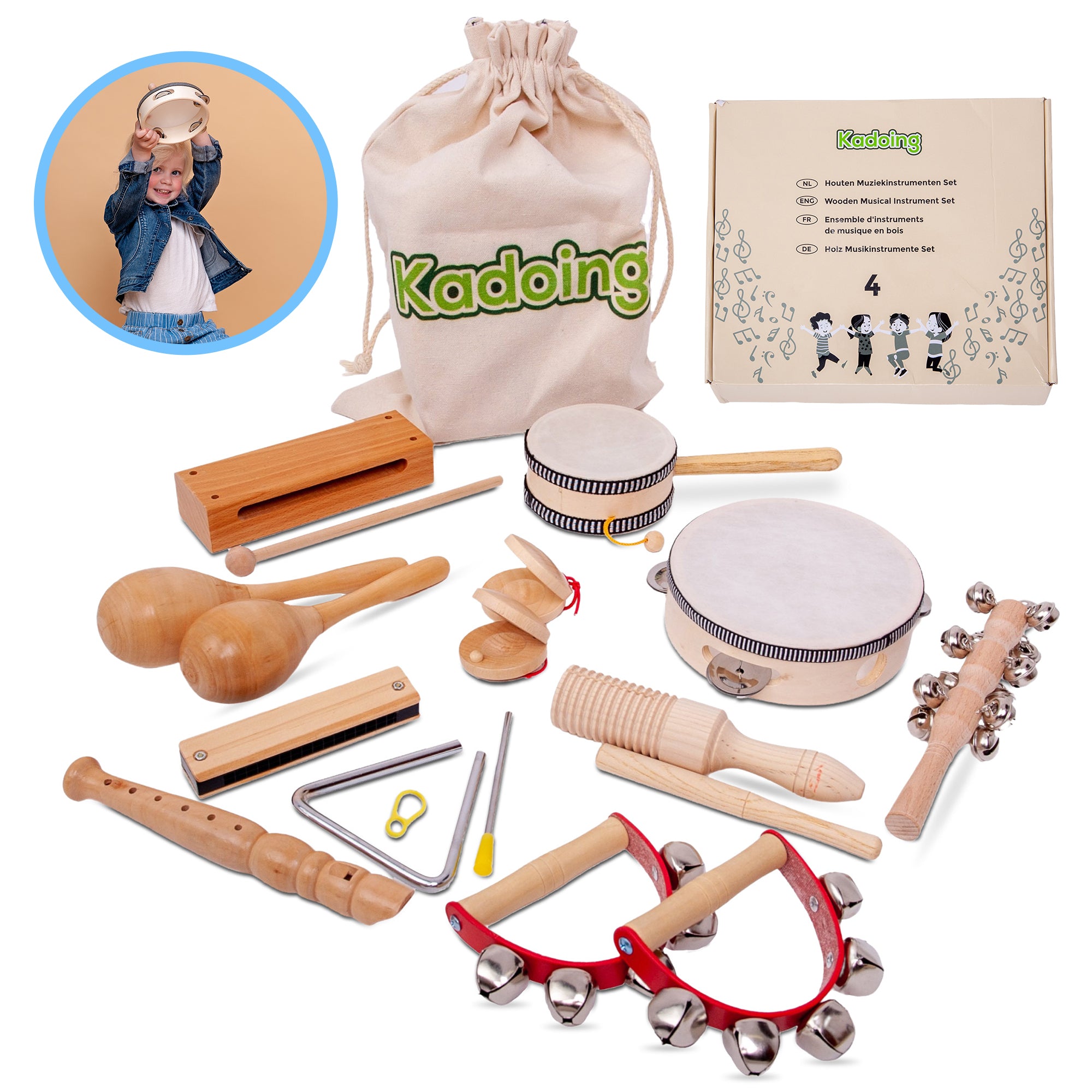
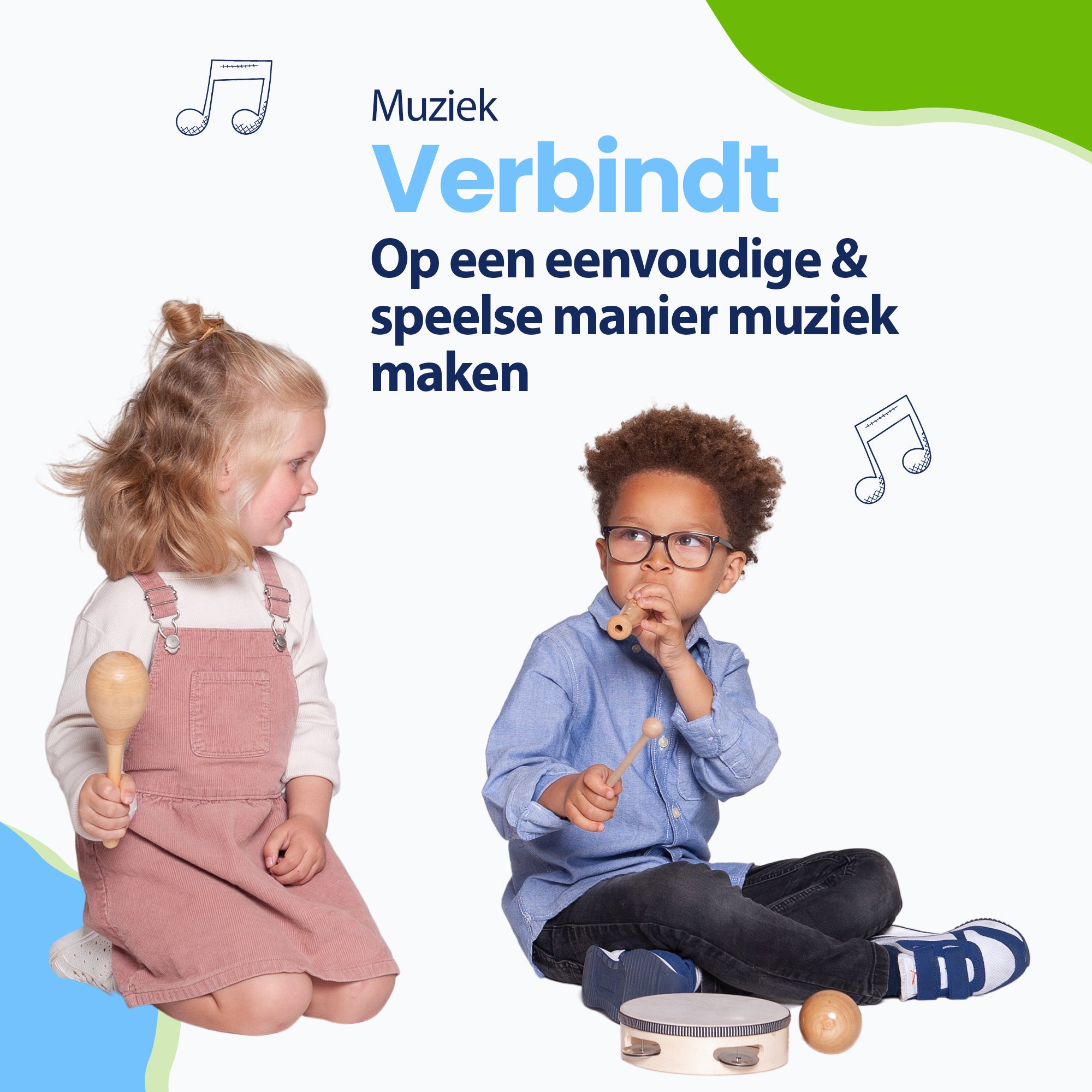
Wooden toys appeal to many families because they're sturdy, simple and visually calming. An activity board, for example, helps children practise sliders, buttons and fastenings. This requires precise hand movements while also encouraging independent exploration. Wooden musical instruments are also excellent for developing rhythm, listening skills and controlled hand and arm movements.
At the same time, it's important to choose toys that suit your child's age, interests and stage of development. The best toy isn't necessarily the one with the most features. Toys that are too difficult can become frustrating, while toys that are too easy quickly lose their appeal. A small challenge is often exactly what's needed.
Calm and repetition are just as important as challenge
When people think about motor development, they often picture action and movement. However, calm and repetition are equally important. Children learn by doing things again and again. Knocking over the tower once more. Picking up the bead again. Trying to stand on one leg one more time. What seems repetitive to adults is exactly how children develop new skills.
That sometimes requires patience. Especially in a busy family life, it's tempting to step in as soon as something takes a little longer. Yet waiting for a moment is often more helpful. Not because children should do everything by themselves, but because succeeding through their own efforts builds confidence. Gentle encouragement usually works better than rushing to help.
A calm play environment can also make a big difference. Fewer distractions, well-organised toys and regular moments for free play help children stay engaged with an activity for longer. That naturally leads to deeper learning and more meaningful practice.
When less is more
More toys don't automatically lead to more development. Too much choice can encourage children to move quickly from one toy to another without really engaging with any of them. A smaller selection, rotated weekly or from time to time, often works surprisingly well.
This fits perfectly with a thoughtful approach to choosing toys. Durable products that last for years and can be used in different ways are ideal for families who want to combine a calm home environment with development-focused play. For many parents, that's where the real benefit lies: fewer distractions, more quality time and more opportunities for genuine connection.
What should you pay attention to as a parent or caregiver?
Above all, look at your child's engagement. Are they curious? Do they try again when something doesn't work straight away? Do they naturally switch between watching, feeling and doing? If so, you're usually already on the right track. Encouraging motor skills through play doesn't have to be perfect or performance-driven. It's about creating safe opportunities to explore.
Comparing your child to others is rarely helpful. Every child develops at their own pace, and personality also plays an important role. A cautious toddler moves differently from a child who confidently explores everything. As long as you follow your child's interests and abilities, you're helping to build both confidence and skills.
Many families find it helpful to have a few regular anchor points throughout the day: a quiet play session in the morning, an active moment after the afternoon nap or outdoor play, and later a small activity at the table or on the floor. This way, development becomes a natural part of everyday life together rather than another task on the to-do list.
Parents who consciously make space for these moments often notice that the biggest progress happens during the most ordinary situations. A little hand that suddenly grips with more confidence, a tower that stays standing just a little longer, or a child proudly saying, "Look, I did it myself." Those are the moments that may seem small, but feel incredibly meaningful.