A wooden train with a sticky roof, blocks that have fallen on the floor or a music set covered in tiny fingerprints: it is all part of play. Anyone wanting to clean wooden toys safely mainly wants to know one thing: how can you freshen up a toy without putting its finish, colour or your child's safety at risk? Fortunately, it does not need to be complicated. With very little water, a gentle approach and thorough drying, wooden toys remain pleasant to hold and ready for the next playtime.
Why wood needs a different approach
Wood is warm, strong and durable, but it is also a natural material. Unlike plastic, it absorbs moisture. If you leave a wooden puzzle in water for a long time or hold it under a running tap, the wood may swell, warp or start to feel rough. The finish on painted toys may also become dull or begin to peel.
That is why wiping is better than washing. The aim is not to soak and sterilise toys, but to carefully remove visible dirt and everyday residue. Regular, careful cleaning helps toys stay attractive for longer and gives parents peace of mind when little hands start playing with them again.
How to clean wooden toys safely
Before cleaning, always check the manufacturer's care instructions. If they do not prescribe a different method, start with a soft, slightly damp cloth. For more stubborn dirt, and if the care instructions allow it, you can use a small amount of mild, fragrance-free washing-up liquid. Ideally, choose a clean microfibre cloth or a soft cotton cloth. A rough scouring sponge can leave scratches, especially on varnished or painted wood.
Dampen the cloth slightly and then wring it out thoroughly. It should not drip. Gently wipe the toy, paying extra attention to the areas your child holds most often. Is there a sticky mark? Hold the damp cloth against it for a few seconds and then wipe gently. Scrubbing is rarely necessary.
Remove any soap residue with a second clean cloth that is only slightly damp. Dry the toy straight away with a dry cloth, then leave it to air-dry completely in a well-ventilated place. Do not put it on a radiator or use a hairdryer. Rapid, intense heat can cause wood to crack or warp.
A simple routine for busy days
When cleaning has to fit between breakfast, getting dressed and heading out, a set routine helps: first remove dry dirt, then wipe carefully, dry immediately and only put the toy away once it is completely dry. It takes very little time and prevents moisture from remaining in seams, holes or joints.
What you should avoid using
Because children hold toys close to their faces and sometimes put them in their mouths, a strong cleaning product may sound appealing. For wood, however, it is usually not a good choice. Bleach, harsh all-purpose cleaners and products with a high alcohol content can damage paint, varnish or the natural protective layer. They can also leave behind a strong smell that does not belong with calm, carefree play.
It is also best not to use disinfectant sprays as a standard solution. They are generally unnecessary for everyday use and can dry out or discolour the wood. The same applies to abrasive powders, scouring pads and fragranced or alcohol-based cleaning wipes.
Vinegar is often mentioned as a household remedy, but restraint is important here too. Even a diluted solution may discolour wood and damage certain finishes. If you do not know exactly how the toy has been treated, choose the mildest option: a well-wrung cloth with a little mild washing-up liquid.
Essential oils are not needed for everyday cleaning either. They may leave a strong scent or residue. A simple, gentle cleaning method is therefore usually sufficient.
Painted, varnished or untreated wood: look carefully first
Not every wooden toy has the same finish. Painted blocks, a varnished activity board and untreated wooden figures react differently to moisture. Always check the label, packaging or the maker's care instructions first. These take priority over general advice.
For painted or varnished toys, a slightly damp cloth is usually enough. If in doubt, test it on a small, inconspicuous area first. Does colour come off on the cloth, does the surface become matt or does it feel rough? Stop using that method and use only a dry, soft cloth from then on, unless the instructions say otherwise.
Untreated wood requires extra care. It absorbs moisture more quickly and may become darker as a result. Start by dusting it dry or use a soft brush for edges and grooves. Only use a very small amount of moisture on a clear stain, followed by immediate drying.
An oil or wax treatment may be part of the maintenance for some untreated products, but it is not a cleaning step to apply without guidance. Only use a product that the manufacturer explicitly recommends and that is suitable for children's toys. An attractive sheen is less important than a safe, pleasant surface.
Extra care for musical toys and toys with components
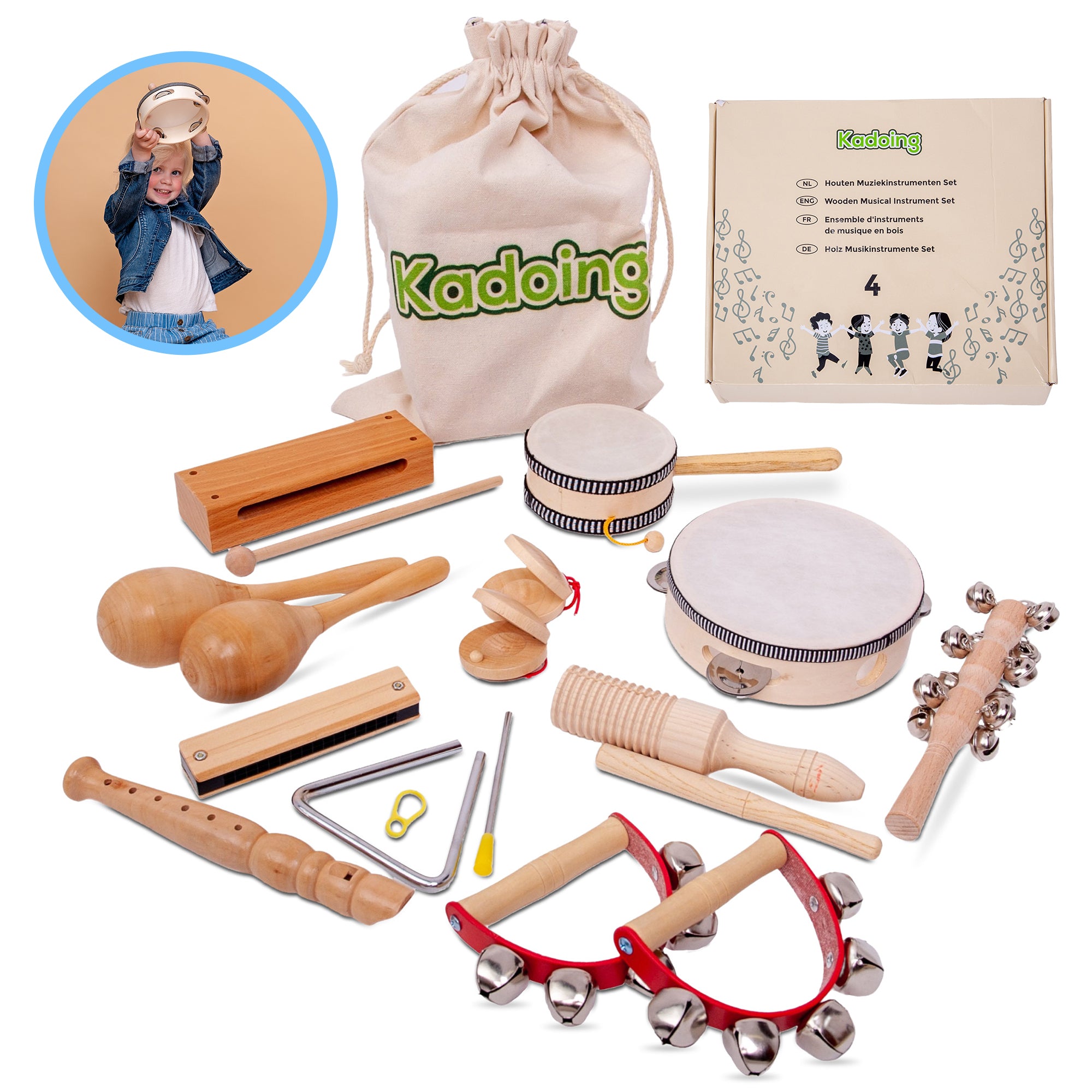
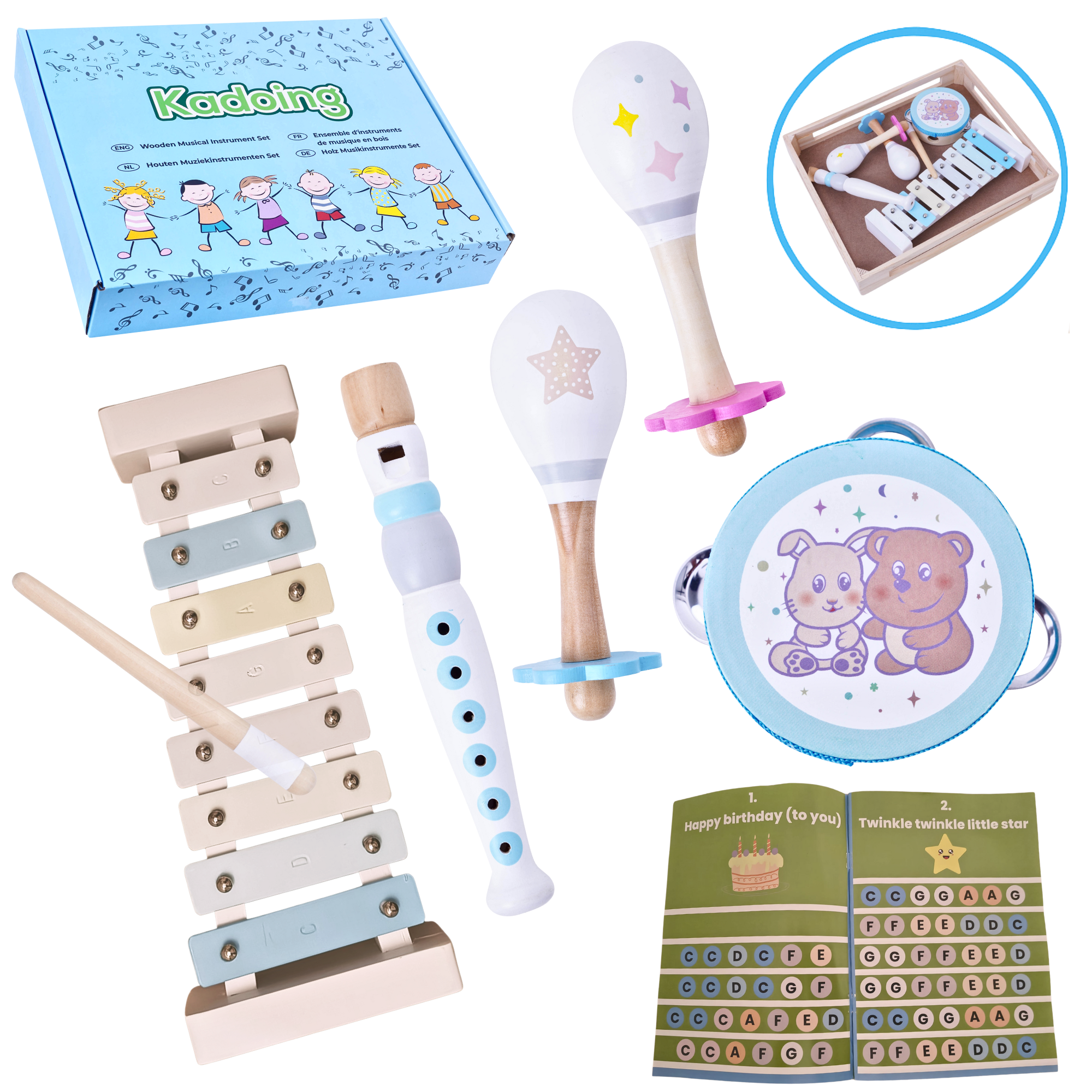
Wooden musical toys require an even drier approach. With a xylophone, drum, wooden piano or toys containing bells and metal parts, you want to prevent moisture from getting beneath keys, around screws or into small openings. Wipe the surface with a barely damp cloth and dry it immediately. Never spray anything directly onto the toy.
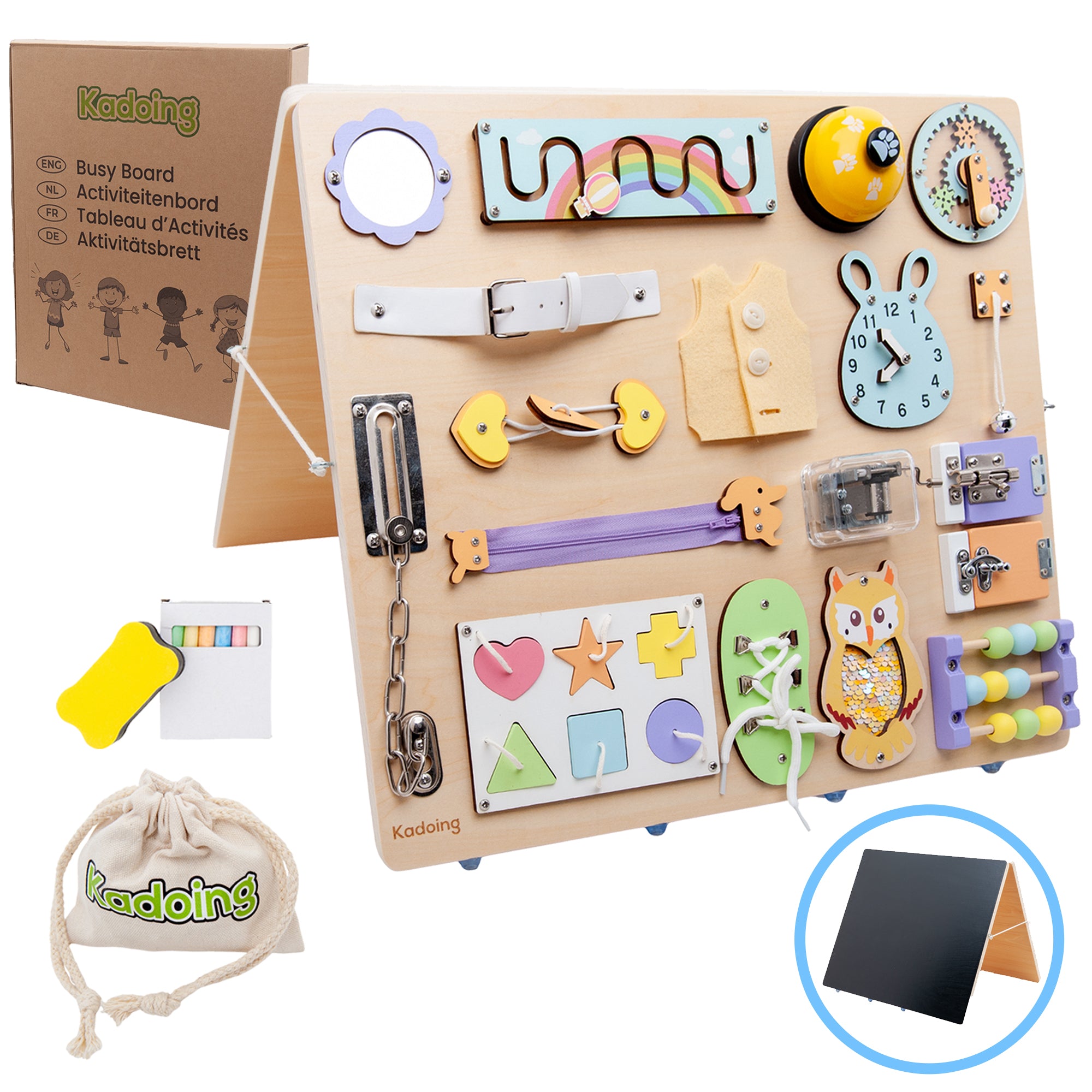
For activity boards, shape sorters and toys with cords, wheels or hook-and-loop fasteners, first remove dirt with a soft, dry brush. Then use a damp cloth only where needed. While cleaning, check straight away for loose parts or splinters, damaged cords or sharp edges. This brief check offers valuable peace of mind before the toy returns to the play corner.
What about sand, modelling clay or food?
Allow wet mud or modelling clay to dry first. You can then gently brush it away. This prevents you from rubbing dirt deeper into the wood grain with water. Food residue is best removed as quickly as possible with a slightly damp cloth, as dried-on food often requires harder rubbing.
For crayon or pencil marks, a soft white eraser can sometimes work well on untreated wood, but test this on an inconspicuous area first too. If it will not come off without pressure or without affecting the colour layer, it is better to leave a faint mark. Toys do not need to remain showroom-new to stay valuable.
How often should you clean wooden toys?
That depends on how and where they are used. Toys played with every day can be dusted regularly and wiped whenever marks appear. Toys that mostly sit in a toy basket and are rarely used need a thorough clean less often.
If disinfection is necessary for a specific reason, follow the manufacturer's instructions for that toy and use only a suitable product. Do not automatically wet everything. Focus on the pieces that have actually been used and have visible dirt. This keeps cleaning manageable while protecting the material.
Once dry, store wooden toys in a dry place, not in a damp bathroom or a closed box while they are still clammy. An open basket or cupboard helps air circulate around the toys. It is a small habit that makes a significant difference to their lifespan.
When cleaning is no longer enough
Sometimes replacement is safer than repair. Set a toy aside if it has splinters, deep cracks, a strong smell caused by prolonged moisture, or paint or varnish that is visibly flaking. A loose part that cannot be securely reattached also needs attention before your child continues playing.
Light signs of use or a small scratch are usually no reason to discard a toy straight away. Wooden toys are allowed to live and collect memories. Those sturdy blocks, instruments and figures often accompany children for years of imaginative play, quiet moments together and the first steps towards independent discovery.
A soft cloth, a little patience and a careful look at the material are usually enough. This keeps the play corner not only tidy, but above all a familiar place where little explorers can play with confidence.