A toddler who keeps stacking the same blocks, a young child who endlessly wants to press buttons, or a preschooler who hears rhythm in everything – these are not small habits, but ways children make sense of the world. That is exactly why educational toys for young children are more than just an extra. They can become a calm and valuable part of play, learning, and spending quality time together at home.
For many parents, choosing toys feels both simple and difficult at the same time. You want something fun, but also age-appropriate, safe, and durable enough to last beyond a few days of excitement. There is another factor too: toys should not only be good for a child, but also fit into family life. It helps when they encourage independent play, avoid overstimulation, and easily become part of your daily routine.
What makes educational toys for young children truly educational?
Educational toys do not need to visibly "teach" a child something to be valuable. In many cases, their strength lies in open-ended play. A stacking tower does more than teach colours or shapes. It also helps children understand cause and effect, develop patience, and strengthen fine motor skills. A musical instrument does more than create sound. It encourages children to listen, repeat, move, and experiment.
Good educational toys support development without forcing it. They give children room to explore, make mistakes, and try again. This is very different from toys that mainly offer sounds, lights, or fixed buttons. Those can be entertaining, but often leave less room for imagination and creativity.
For young children, simple toys often work best. Not because more features are wrong, but because young children benefit from clarity and simplicity. When a toy is easy to understand, it creates a sense of calm. From that calm, concentration can grow.
Educational toys for young children by age group
For babies and young toddlers
In the earliest stage, much of learning revolves around touching, looking, grasping, and repeating. Soft materials, wooden rattles, simple shapes, and toys with different textures are all excellent choices. Babies learn through their senses. Anything they can hold, turn, or gently move helps support that process.
At this stage, less is often more. One carefully chosen toy that feels comfortable in little hands and can be explored safely often offers more value than a basket full of busy toys. Focus especially on safety, quality, and weight. Toys should be light enough to hold and strong enough to withstand everyday use.
For toddlers
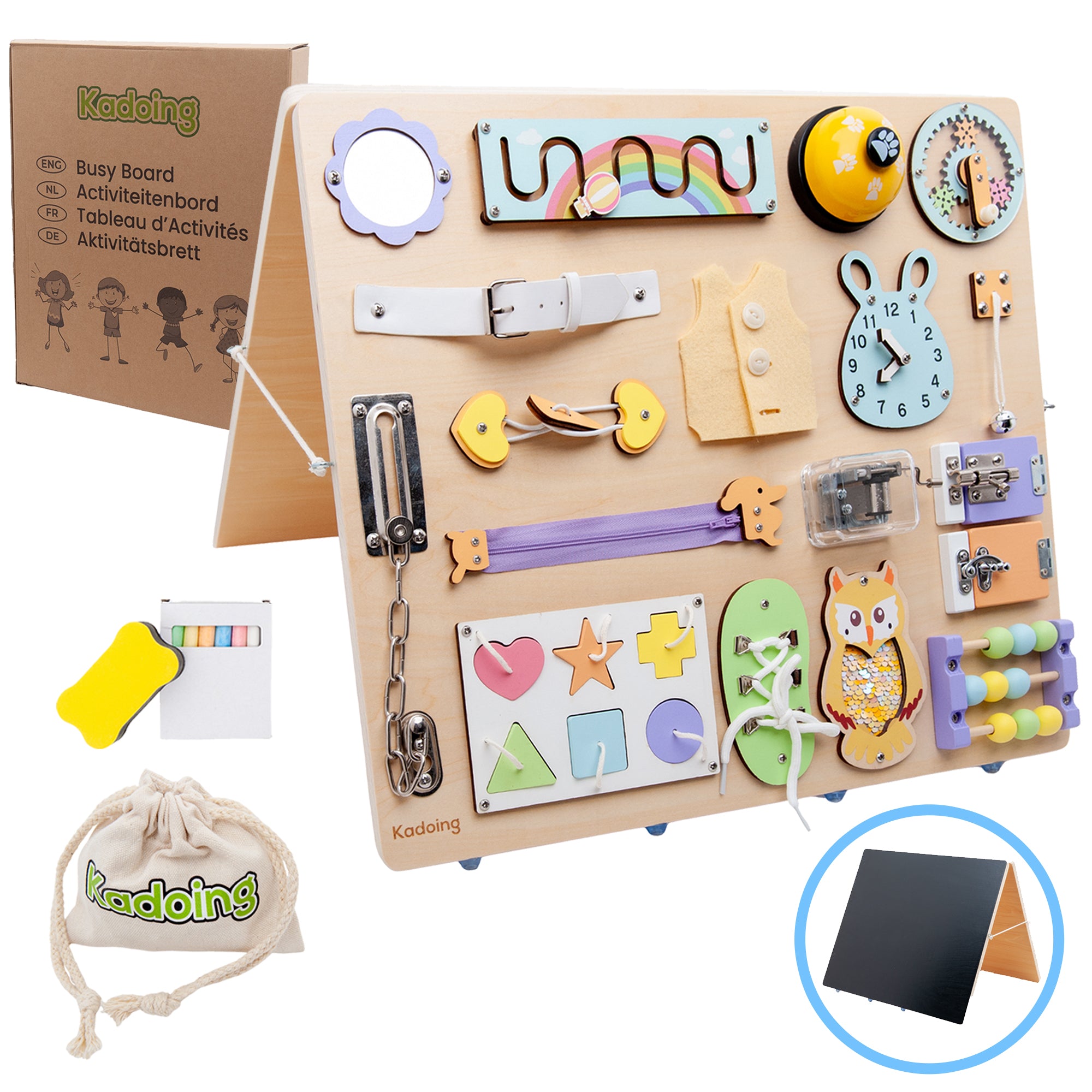
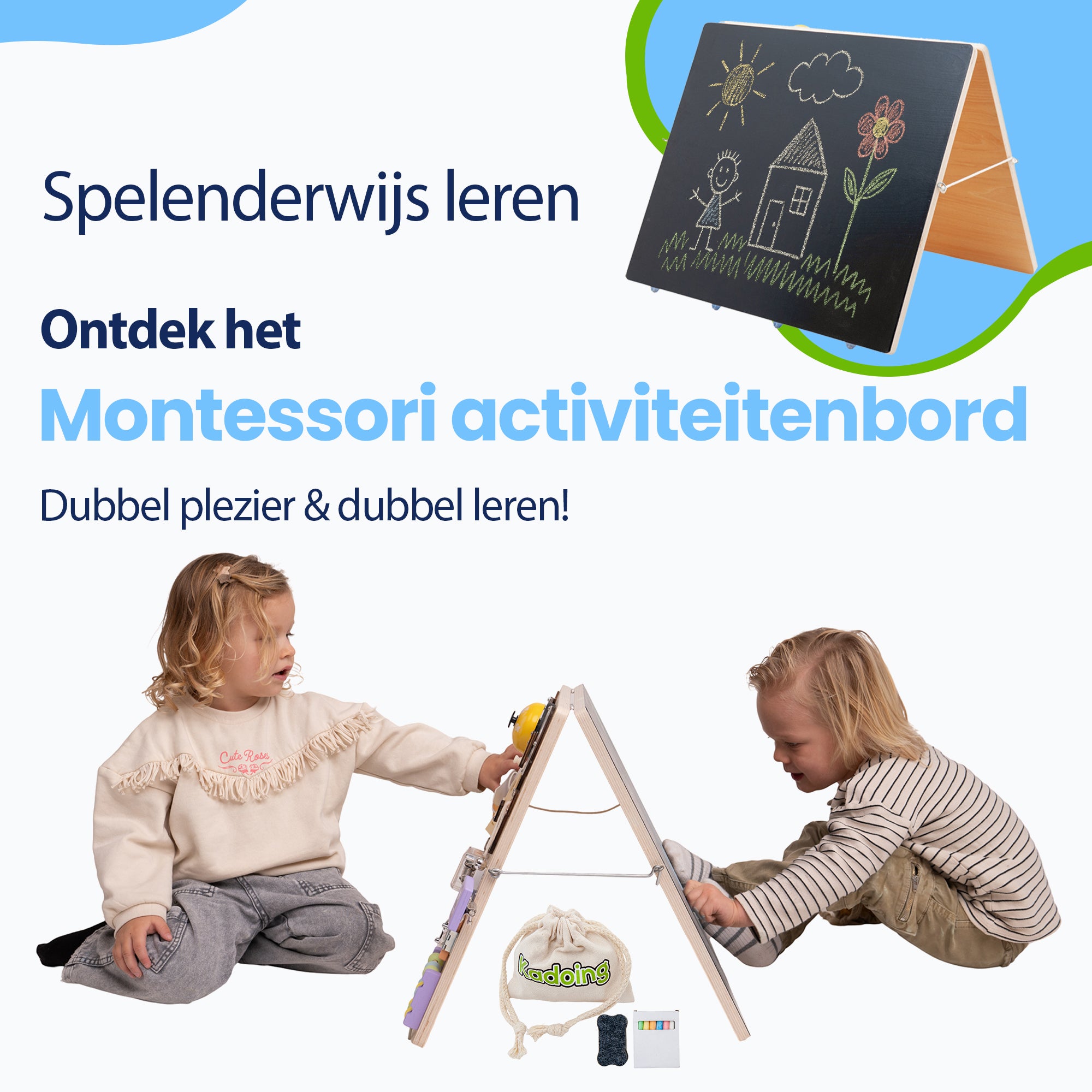
Toddlers want to influence what happens around them. They put things in, pull, push, open, and close. Shape sorters, simple activity boards, stacking blocks, and toys where actions create immediate results are all excellent options. These types of play support motor skills, logical thinking, and self-confidence.
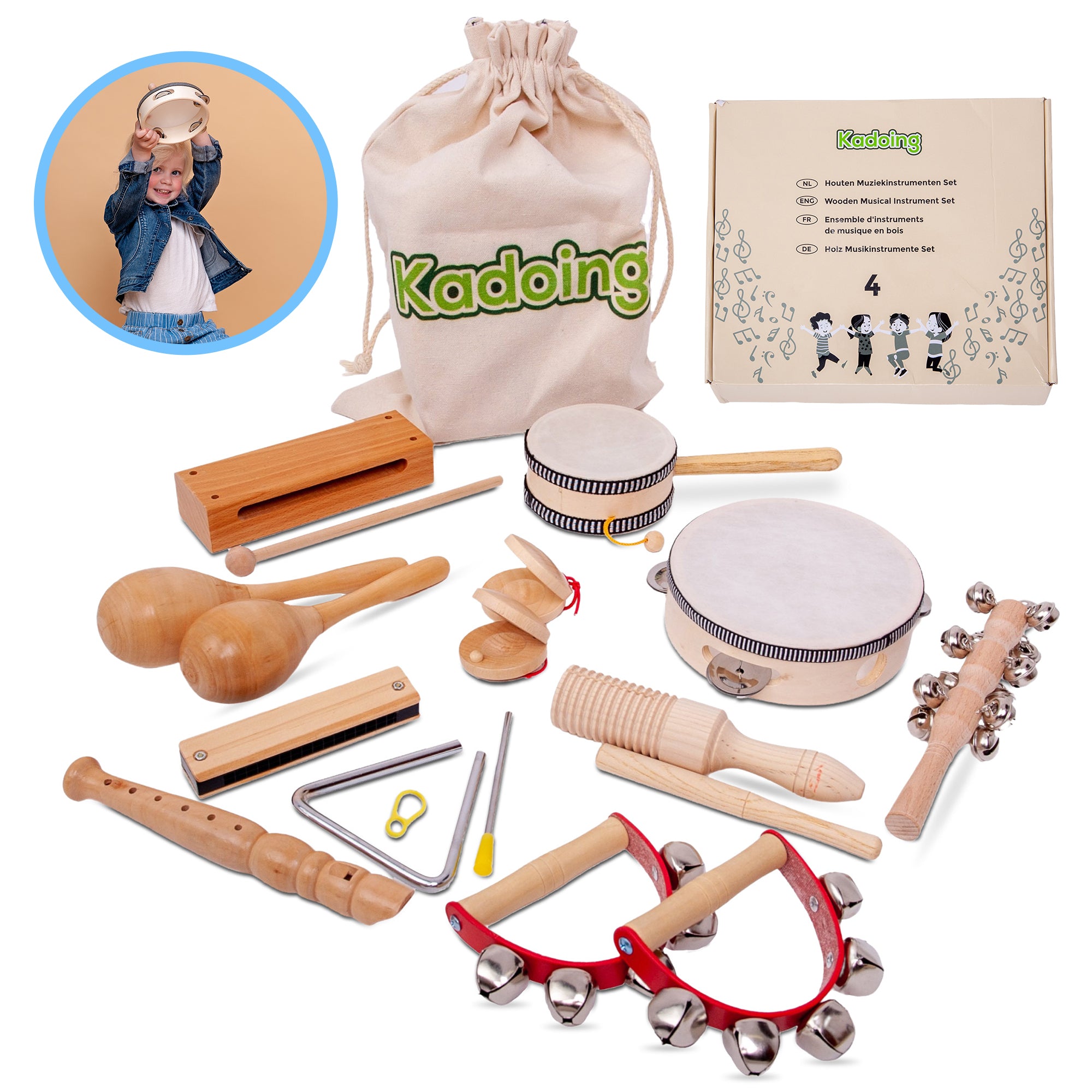
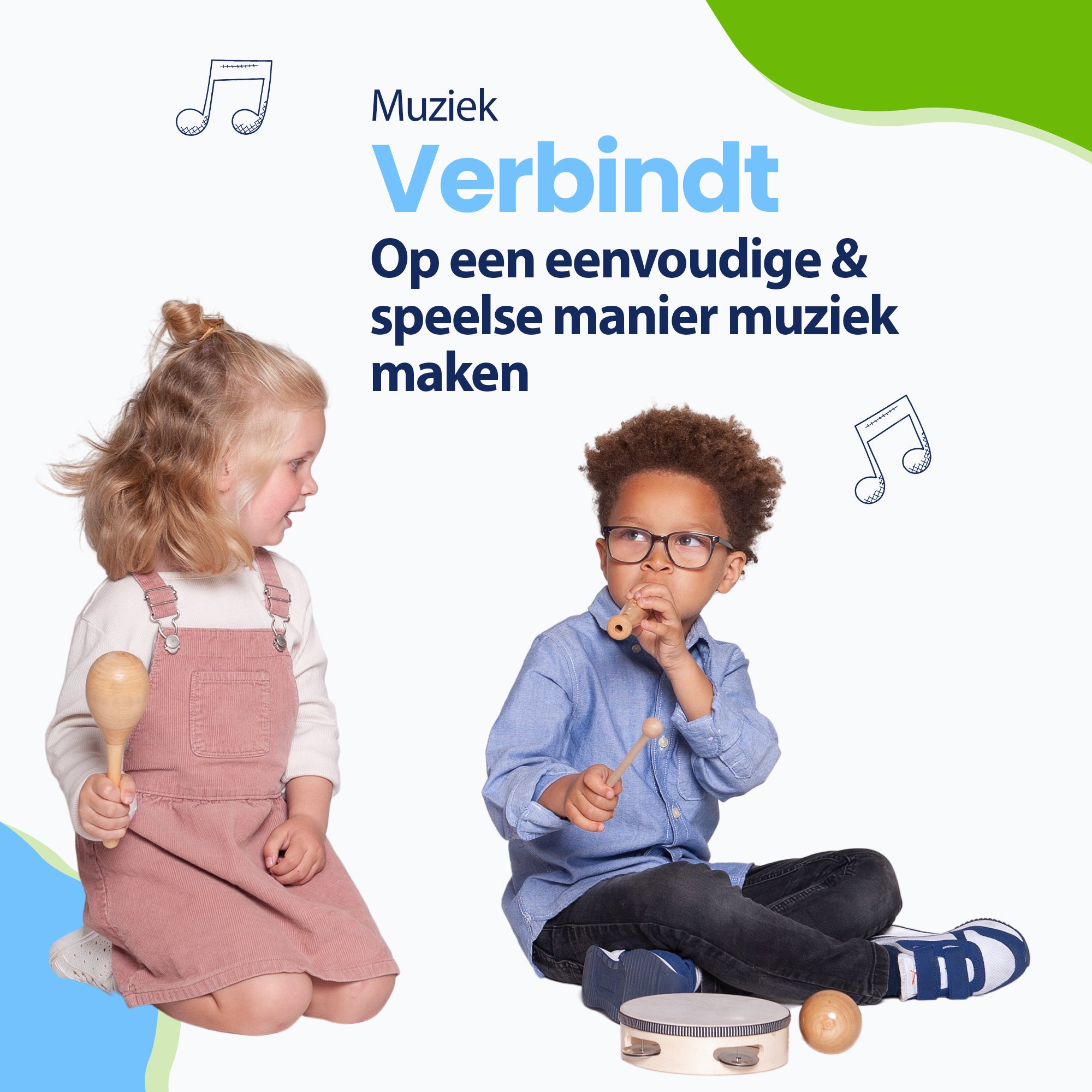
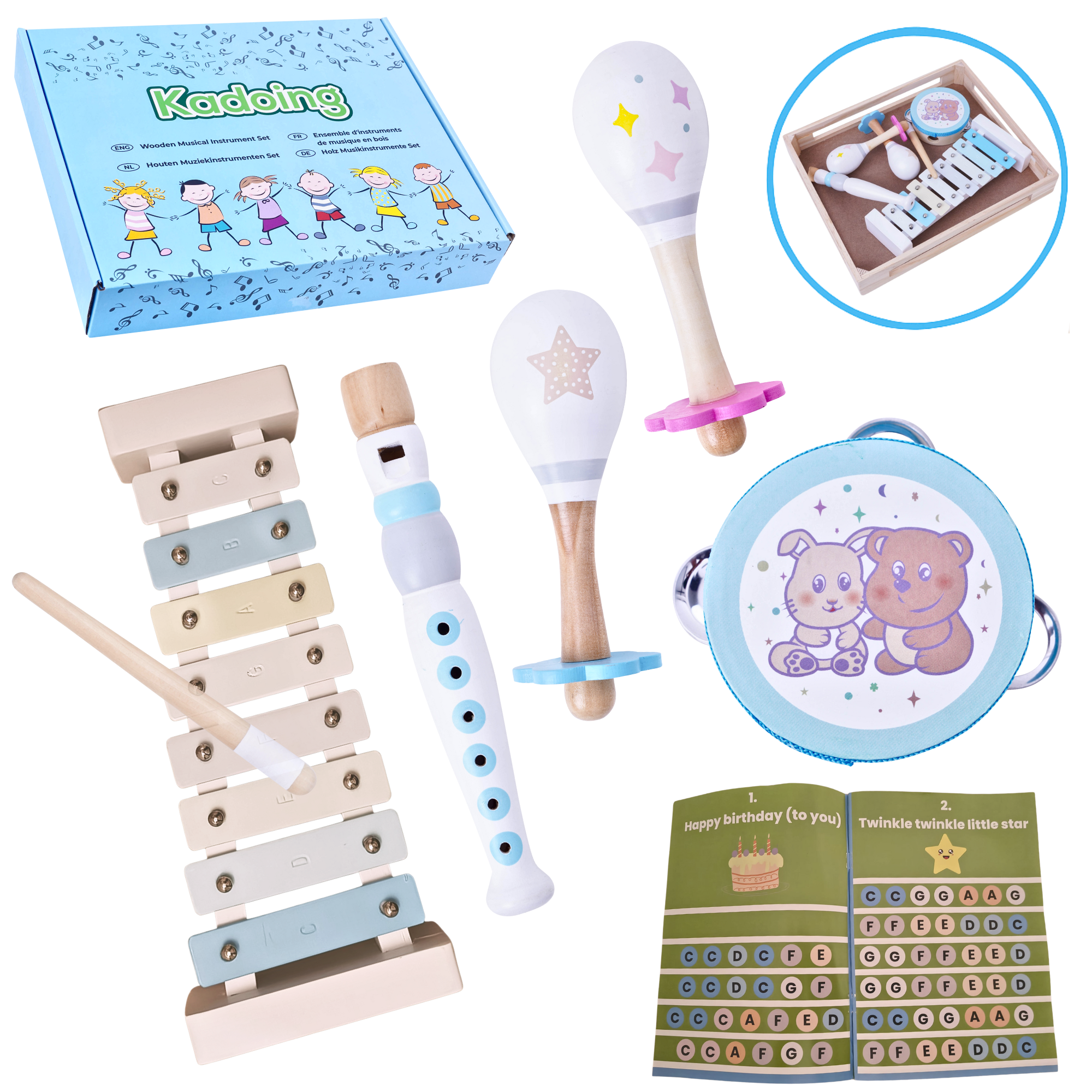
Music and rhythm also become increasingly important at this stage. A wooden xylophone, tambourine, or other simple musical toy encourages repetition. Children discover that their actions create sounds. It may seem simple, but it is an important building block for attention and pattern recognition.
For preschoolers and young children
As children grow, imaginative play becomes increasingly important. They want to copy what they see at home and create their own stories. Open-ended materials become especially valuable: wooden toys, stacking stones, simple puzzles, sorting games, and musical instruments that allow children to direct their own play. Montessori materials that encourage independent discovery also fit very well into this stage.
At this age, educational toys are most effective when they support multiple areas of development at once. One activity may strengthen motor skills, encourage language development, and promote cooperation. Think of a child building a tower, talking about it, rebuilding it, and inviting you to join. That is learning in its most natural form.
What parents should pay attention to in practice
When choosing toys, age recommendations are often the first thing parents look at. That makes sense, but it is not always enough. One child may enjoy repetition and calm activities, while another seeks challenges more quickly. It is therefore helpful to consider your child's play style as well. Does your child enjoy movement, building, music, comfort, or structure?
Materials also matter. Wooden toys often feel calming, last a long time, and work well for open-ended play. Soft cuddly toys and comfort items serve a different purpose. They support emotional security, especially during exciting moments or transitions such as bedtime or independent play. Not everything needs to focus entirely on "learning." Toys that create a sense of comfort and calm can play an important role in development too.
It is also worth considering your home environment. Large toys can be wonderful, but may be less practical in a smaller living space. Toys with many loose parts require more tidying up. Some children are also easily overstimulated by bright colours or loud sounds. In those cases, toys that look calm and are easy to understand can be a better fit.
The role of calm and routine in play
Parents often associate educational toys with table activities, puzzles, or learning games. However, learning also happens during quiet transition moments. A calming activity before bedtime, a regular musical moment in the morning, or a familiar cuddly toy on an exciting day can all have a meaningful impact.
For young children, repetition and predictability are often just as valuable as challenge. A child who spends a few minutes each evening playing with the same calm toy is not only learning from the toy itself. They are also learning that the day follows a rhythm. That sense of predictability creates security.
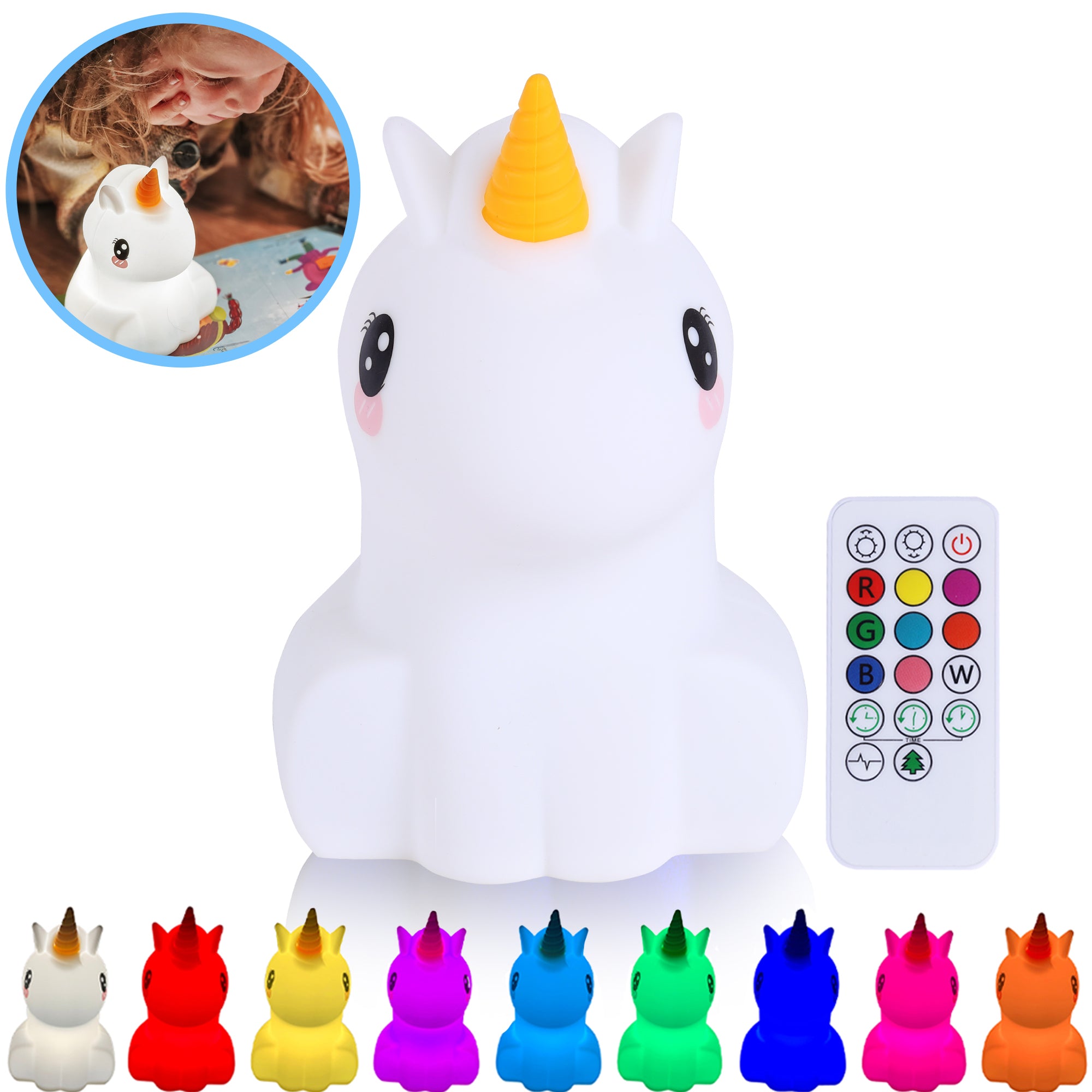
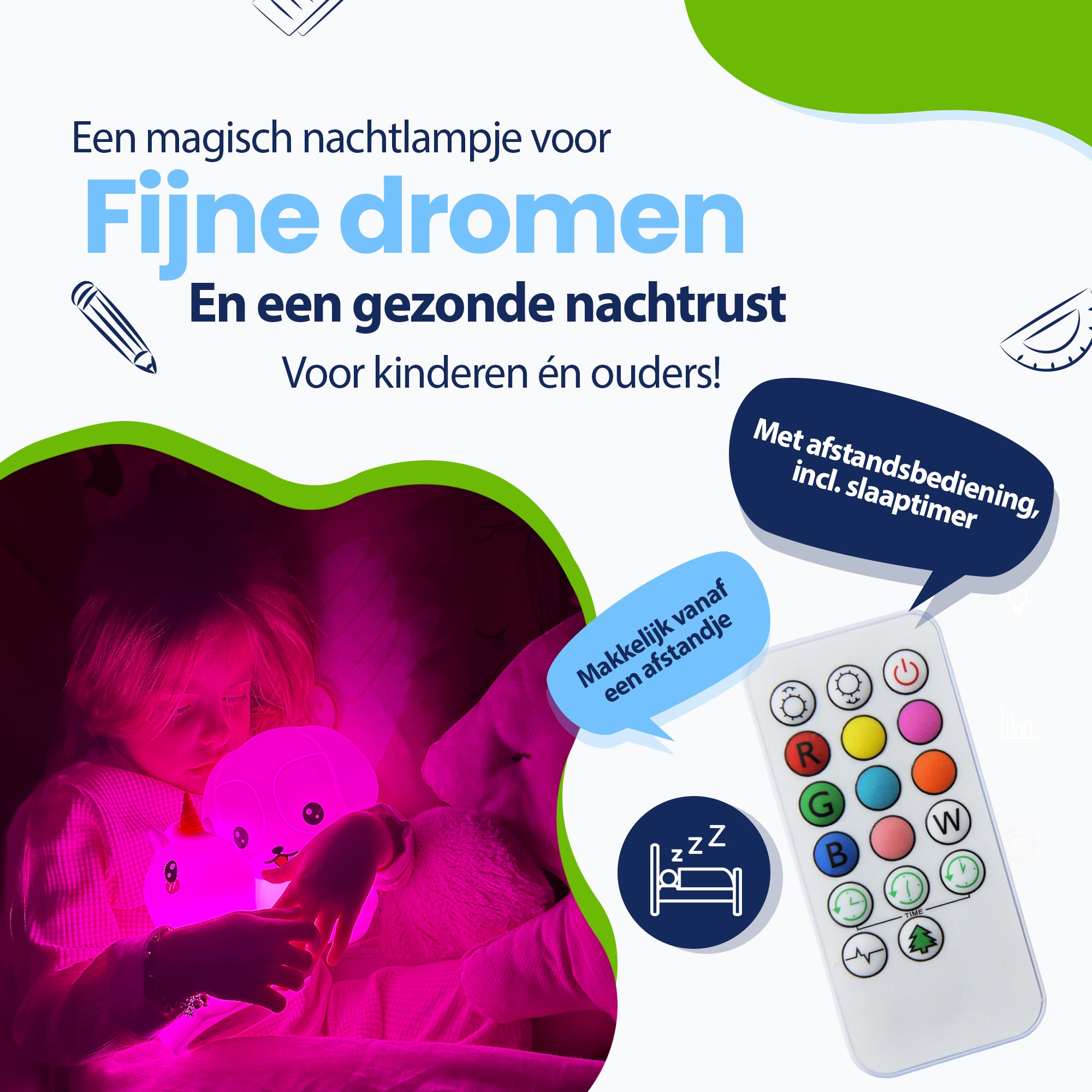
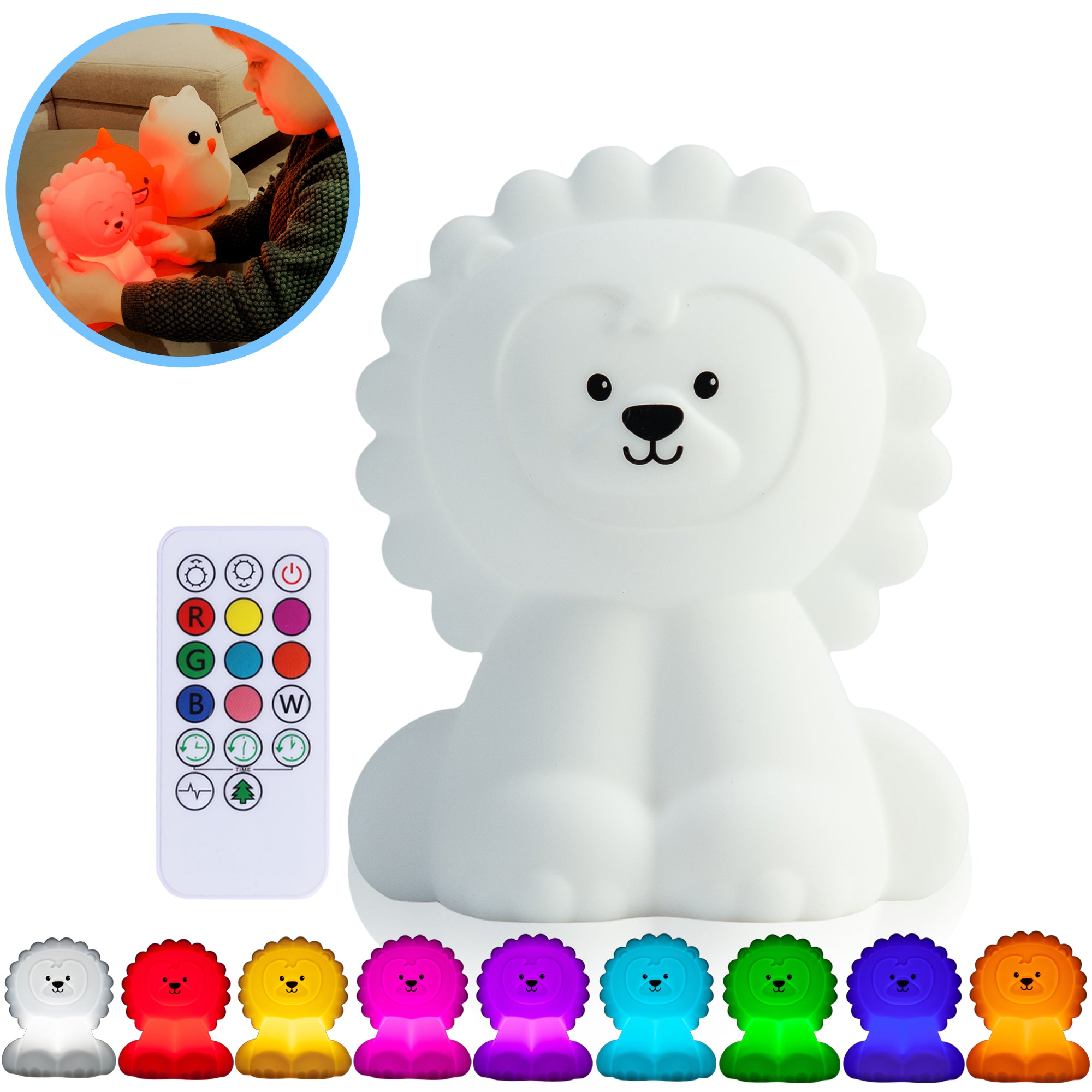
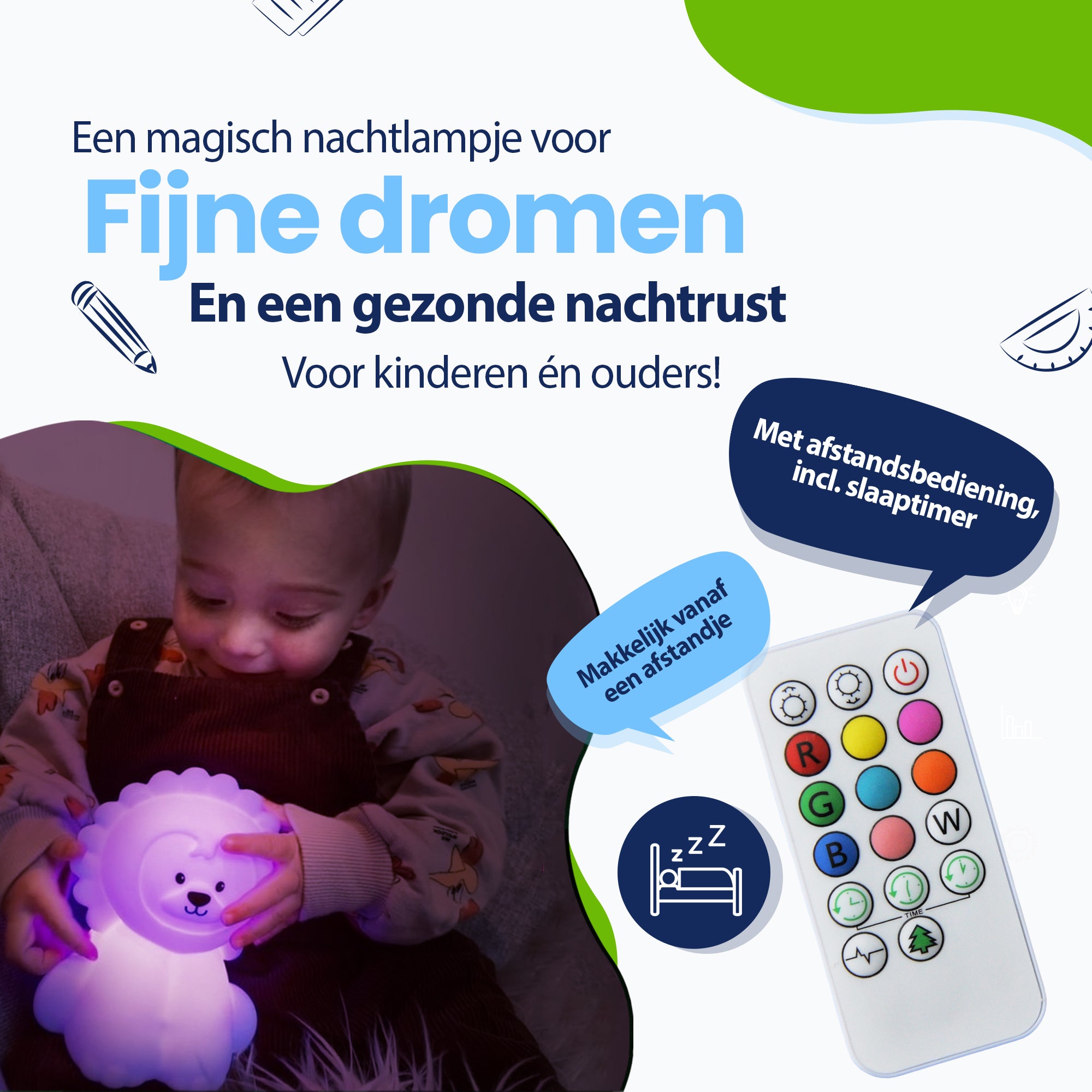
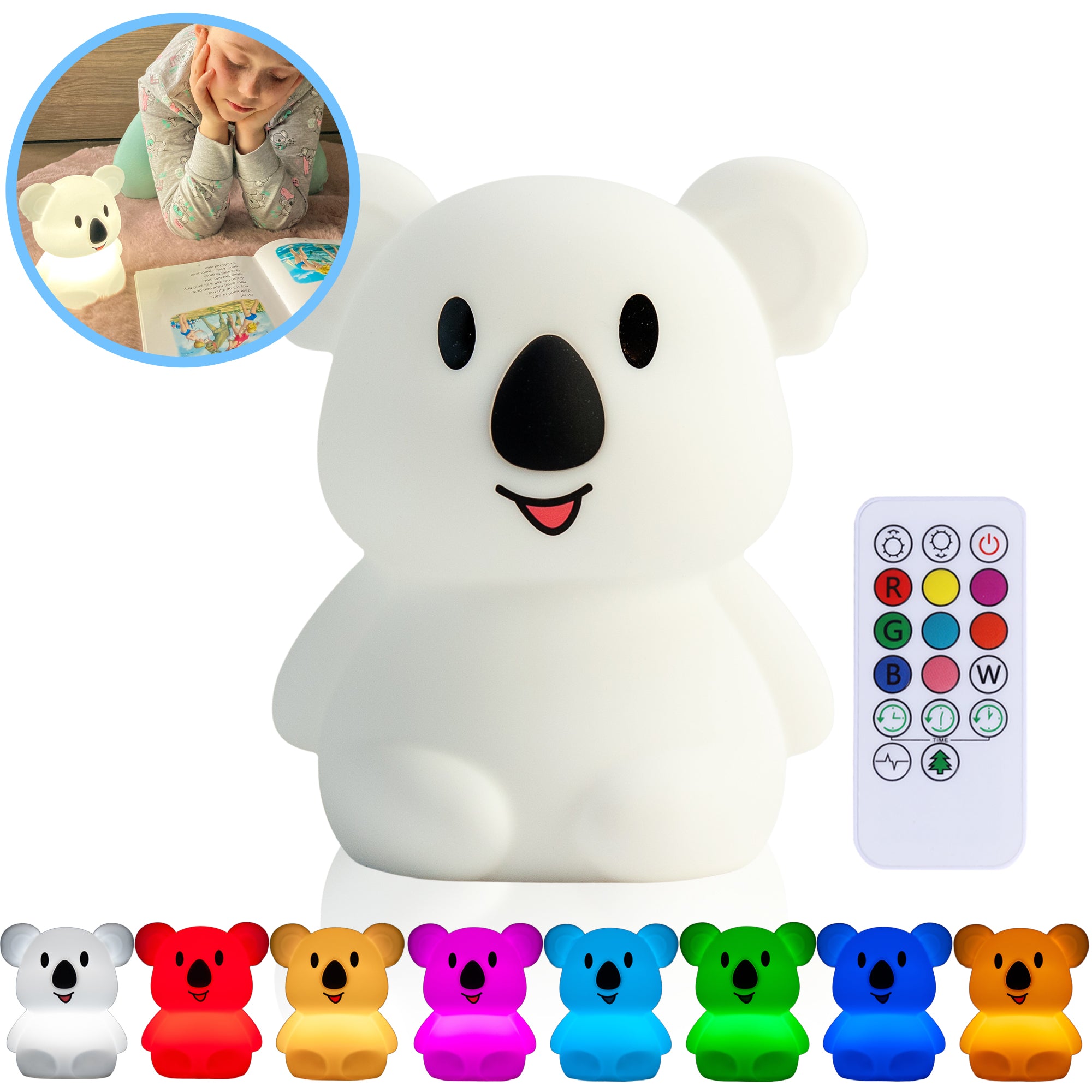
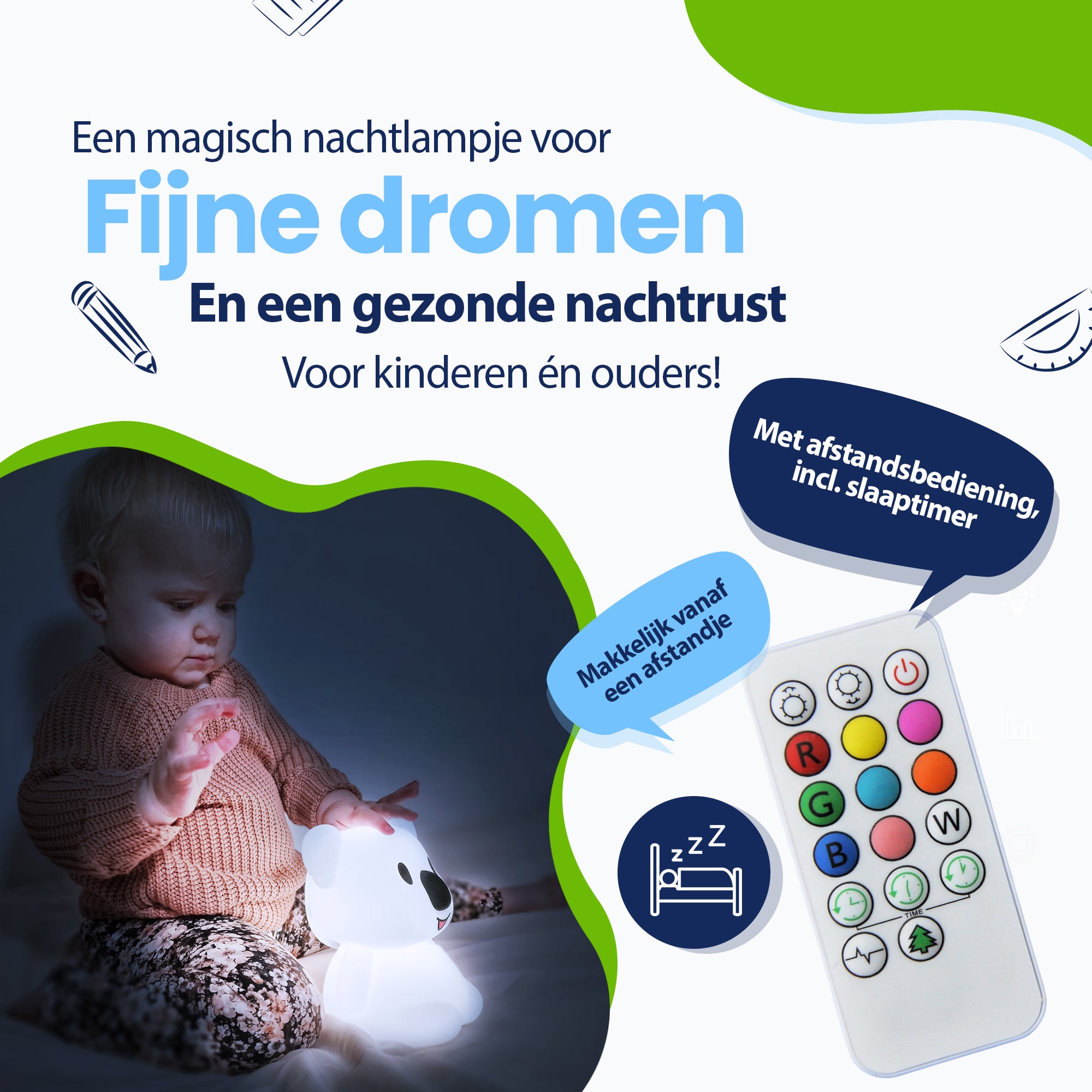
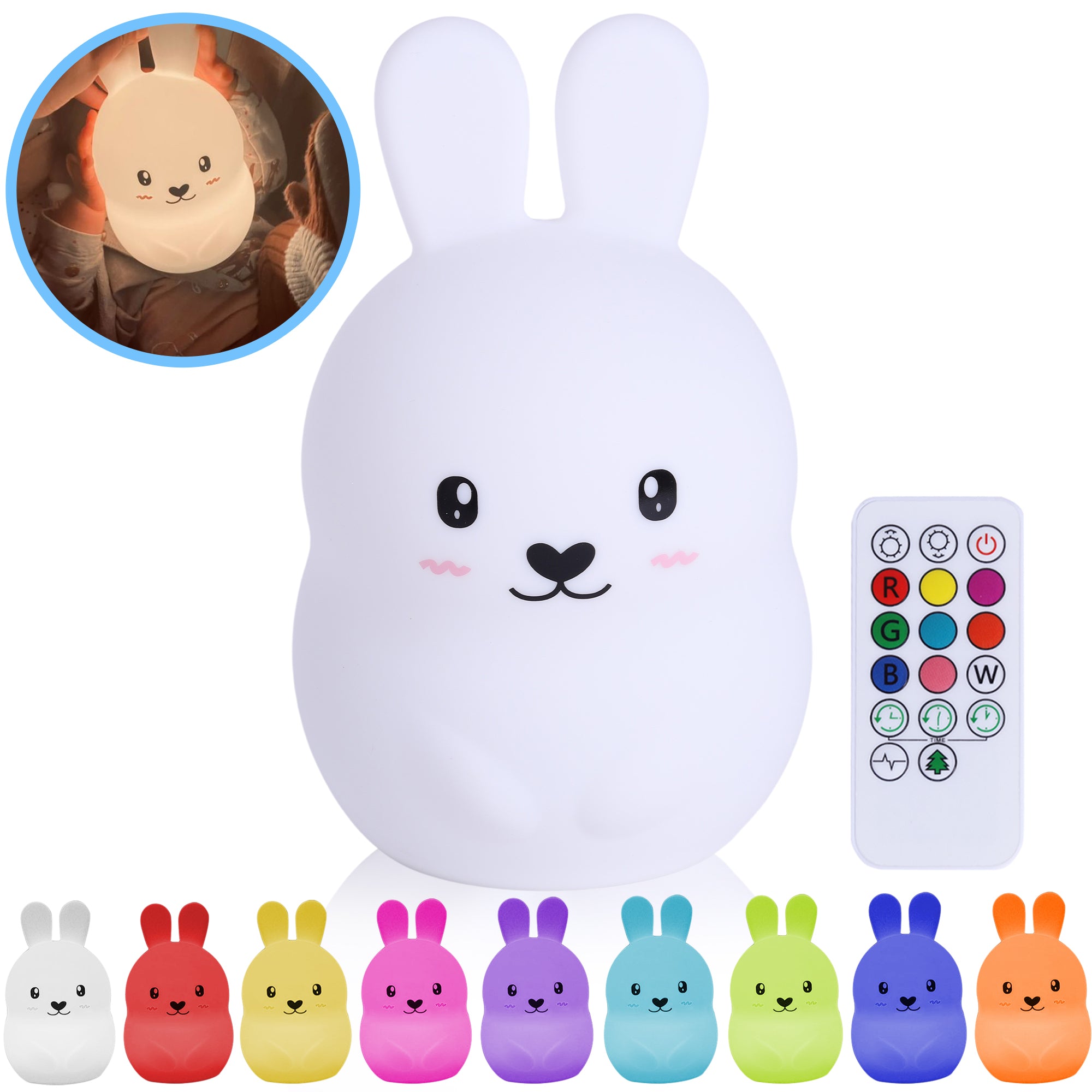
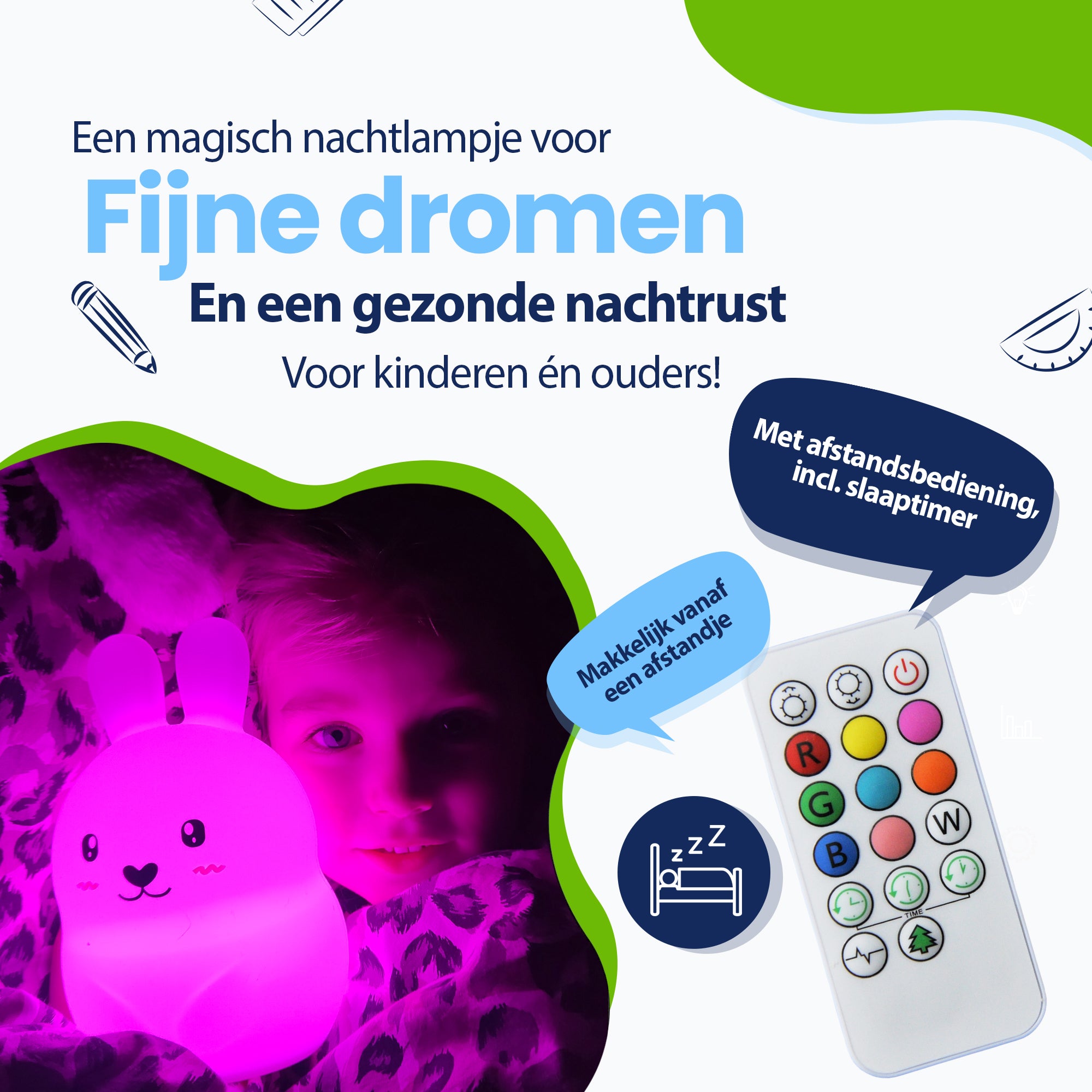
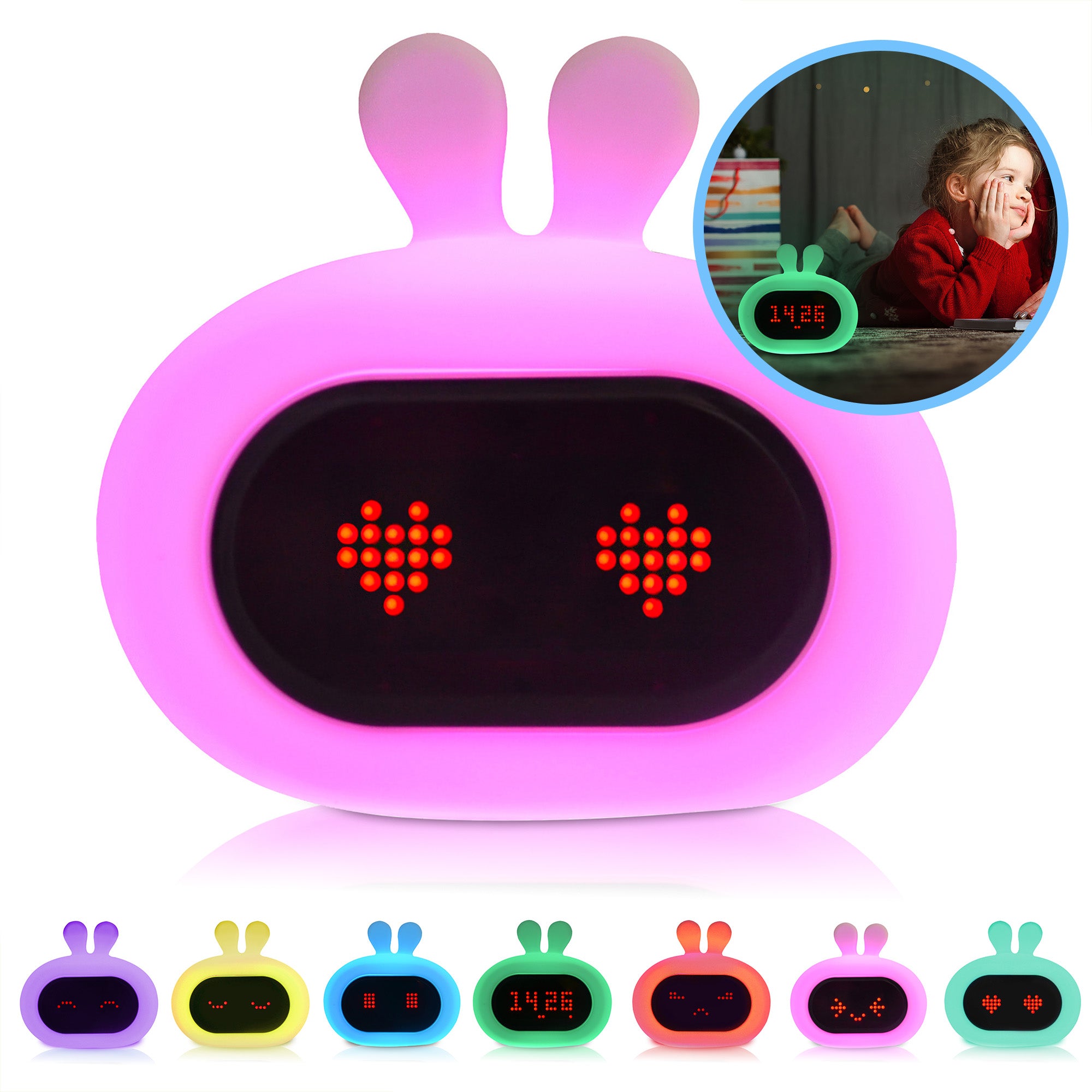
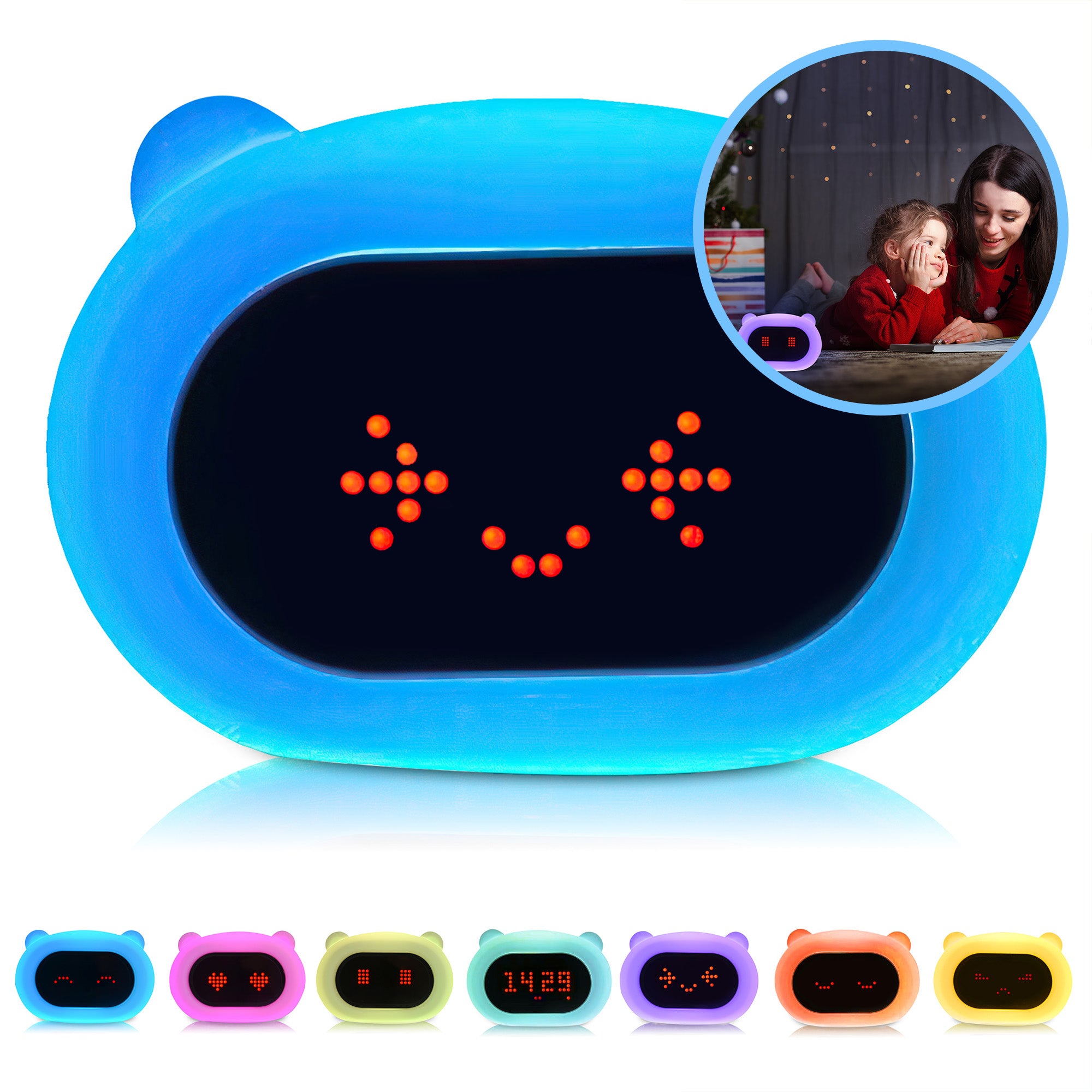
That is why educational toys fit best into real family life when they do more than simply entertain. A night light with a gentle appearance, a simple music box, or an activity board that supports independent play can help bridge the gap between busy moments and relaxation. For parents looking for a calmer pace at home, these are often the products that make the biggest difference.
Choosing sustainably without overcomplicating it
Sustainability does not have to be another item on a checklist. You can often recognise it through a few practical characteristics: durable materials, timeless design, and toys that remain interesting at different ages. This not only makes a purchase more conscious but often more enjoyable to use as well.
Wooden toys are popular for a reason. They feel sturdy, last a long time, and usually look calmer than plastic alternatives filled with visual stimulation. At the same time, wood is not automatically always the best choice. For very young children, a lightweight and soft material may sometimes be more practical. It depends on the child's age, the purpose, and the way they play.
Choosing sustainably also means you do not need to offer everything at once. A small, thoughtful selection often works better than an overcrowded play area. Fewer options can lead to deeper play. Children are more likely to notice what is available and use it creatively.
Common mistakes when buying educational toys
One common mistake is choosing toys that are too advanced for a child's current stage of development. It may seem smart to buy something "for later," but young children often lose interest if they cannot yet understand how it works. Toys should be challenging, but they should also provide opportunities for success.
Another mistake is choosing toys that look educational mainly to adults. Products packed with letters, numbers, and multiple functions may appear highly educational, but are not always engaging for children. Young children often learn more from toys that are simple, hands-on, and playful.
Having too many toys at once can also be counterproductive. Not because children become spoiled, but because too much choice can be overwhelming. A few carefully selected toys that match your child's developmental stage often create more calm and higher-quality play.
How to make better choices at home
Instead of starting with what is popular, begin with a moment in your day that currently feels challenging. Perhaps it is early mornings, independent play while you finish a task, or winding down before bedtime. When you choose toys based on a real situation, they immediately become more relevant.
Then ask yourself what your child needs most in that moment. More movement, more focus, more comfort, or more independence? A musical toy works well for connection and rhythm. An activity board can support concentration and self-reliance. A soft cuddly toy or calming light object may help create a smoother transition.
That is why many parents look for toys that do more than simply entertain. Toys that encourage independent play, create calm, and support a child's development often remain valuable the longest. Parents rarely search for "something fun" alone. They are looking for security, meaningful play, and products that genuinely support their child.
Educational toys for young children do not have to be perfect
Perhaps that is the most comforting thought of all. You do not need to find the one perfect toy that solves everything. Children do not develop in straight lines, and their interests change quickly. Something that receives a lot of attention today may be less interesting next month.
Instead, choose toys that grow with your child and fit your family's lifestyle. Toys that feel good, are safe, encourage repetition, and leave room for creativity. When that happens, learning at home becomes less of a task and more of a natural part of everyday life.
And that is often where the greatest value lies: in toys that do not shout the loudest, but quietly grow alongside your child and your family.