The toothbrush is ready, but your child wants to jump one more time. Or have a drink. Or look for that one cuddly toy that seems to have vanished today. Building a calm evening routine for your child does not start with stricter rules, but with something that is very valuable to young children: predictability. When the evening follows roughly the same pattern each day, your child does not have to wonder as much about what comes next. That brings calm, even if falling asleep does not yet happen naturally straight away.
A good bedtime routine is not a rigid schedule that has to go perfectly every evening. It is a familiar sequence of small moments that helps your child settle after a day full of impressions. By paying attention to pace, connection and realistic expectations, you can make the transition to bed gentler, step by step.
Why evenings often feel particularly difficult
By the end of the day, both children and parents are running out of energy. Young children often have less capacity then to switch activities, wait or cooperate. At the same time, going to bed means saying goodbye to play, togetherness and everything that still seemed possible. Protest therefore does not necessarily mean unwillingness. It may also mean: I still need help moving from active to calm.
That understanding changes the atmosphere. You do not have to grant every request, but you can remain both clear and kind. For example, say: “You want to keep playing, I understand. Now it is time to put on your pyjamas. We can play again tomorrow.” This acknowledges the feeling while keeping the boundary in place.
Too much rushing can also increase conflict. If bedtime is not announced until everyone is already tired, the transition can feel sudden. It is therefore better to start winding down a little earlier. Not because a child must go to sleep early, but because calm takes time.
How to build a calm evening routine
Start by choosing a routine that suits your family. For a toddler, twenty to thirty minutes may be enough. Some preschoolers benefit from a little more time to wind down gently. What matters most is not the exact time on the clock, but the familiar order.
A simple sequence might be: put away toys, wash or use the toilet, put on pyjamas, brush teeth, read a book, cuddle and say goodnight. Keep it to a few regular steps. If new parts are added every evening, bedtime can quickly become a negotiation.
Explain in advance what is going to happen. Instead of “Come on, bed!” you could say: “In five minutes, we are going to tidy up. Then we will put on your pyjamas and choose one book.” This preparation gives your child time to adjust mentally. With young children, a short, specific announcement usually works better than a long explanation.
Make the sequence visible
For children who cannot yet read, a simple routine chart can help. Use drawings or photos of the steps: pyjamas, brushing teeth, a book, bed. Hang it at eye level and point out together what has already been done.
This makes the routine less dependent on repeated reminders. Your child can see: we are at the book, and bed comes next. This can be especially helpful when words no longer seem to register at a tired moment. You can also let your child turn over or point to a card. A small sense of influence often makes cooperation easier.
Offer limited choices, not an open negotiation
Children like to make some decisions for themselves. That is healthy, but at bedtime this independence does not have to mean that everything is up for discussion. Offer two choices that are both fine with you: “Would you like the striped or the green pyjamas?” “Shall we read the animal book or the book about the train?”
Avoid questions to which ‘no’ is a logical answer, such as: “Are you going to brush your teeth now?” It is better to say: “We are going to brush your teeth. Would you like to start yourself, or shall I begin?” The step is fixed, but your child is given a suitable role.
Calm begins before you reach the bedroom
The bedroom does not have to be completely quiet and dark to feel calming, but a clear transition does help. Try not to plan energetic play, loud music or major tidying tasks just before bedtime. Choose something small and peaceful instead: sort building blocks together, colour, sing a quiet song or look at a picture book.
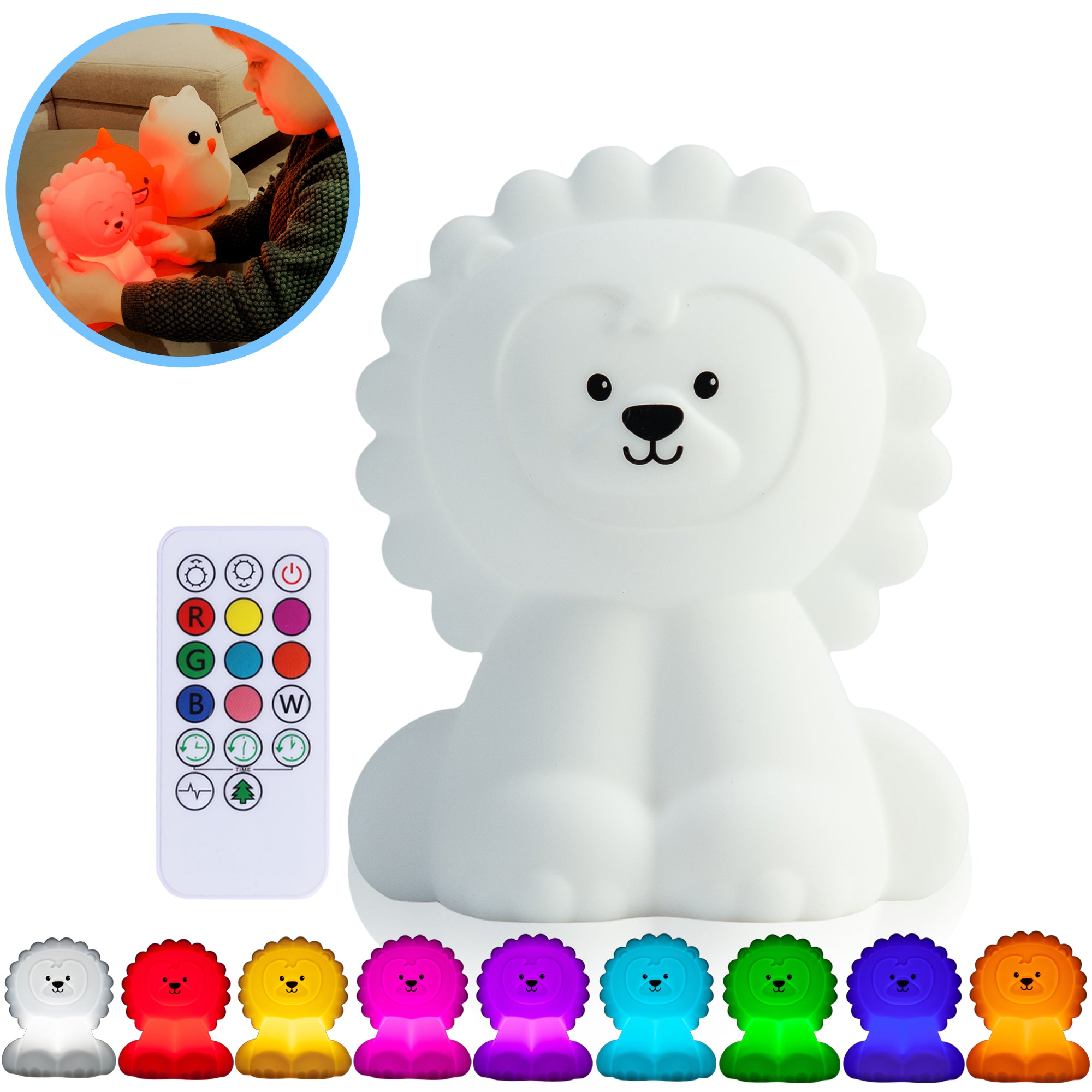
Light also affects the atmosphere. Bright light can make a room feel very active, while a soft night light can become a familiar signal that the day is drawing to a close. For some children, a regular light provides just enough reassurance to stay relaxed in bed. Make sure the light is pleasantly soft and becomes part of the routine, rather than a new distraction.
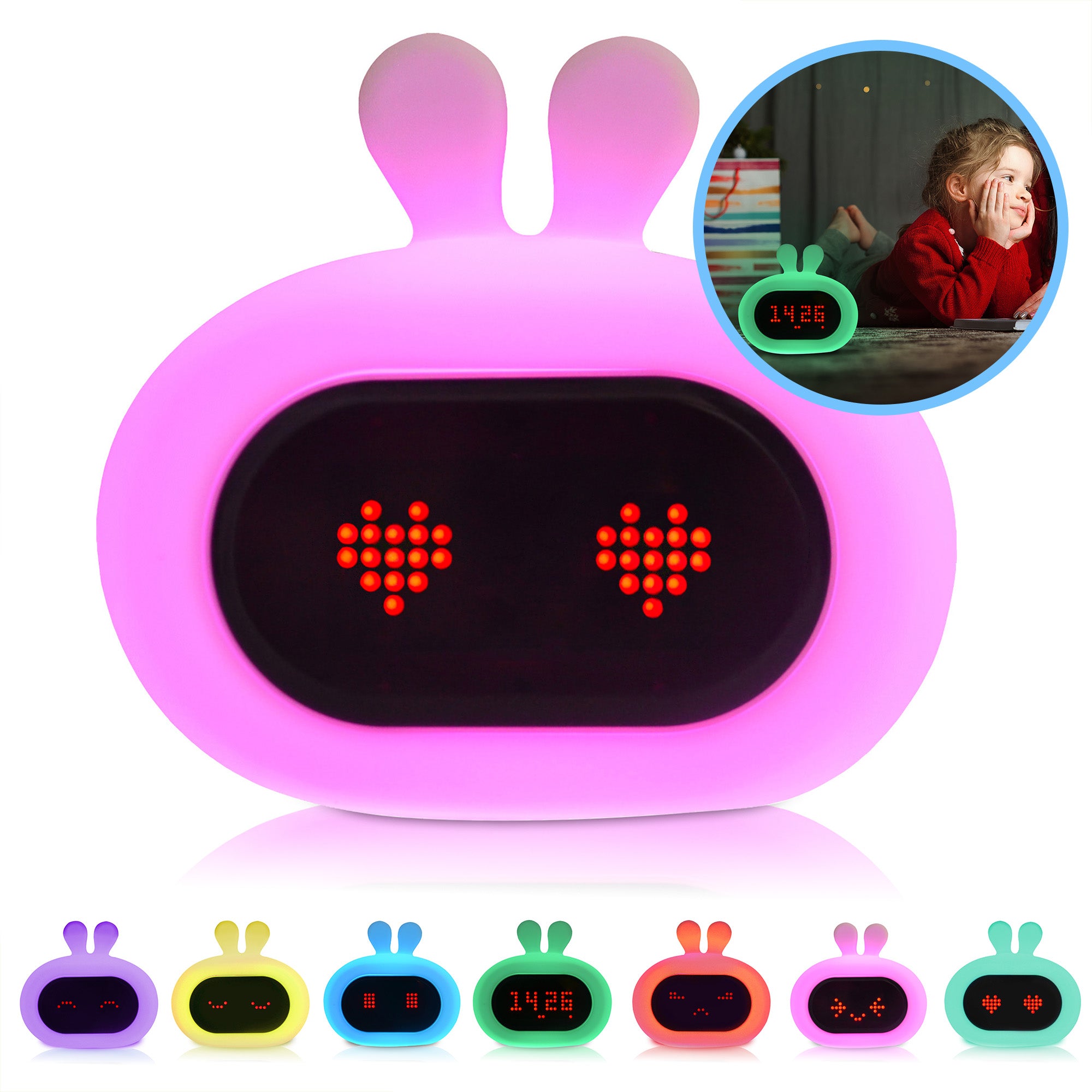
A sleep trainer can also provide toddlers and preschoolers with clear, child-friendly guidance. Not as a means of pressure, but as a visual sign: now it is time to lie quietly in bed, and later the morning begins again. Kadoing develops these kinds of tools with the same idea in mind: structure can feel warm and can connect with what a child already understands.
What to do if your child still protests
Even the nicest routine will not prevent every difficult evening. A child may be overstimulated, may have had an exciting day or may simply need some extra closeness. At times like these, try not to make a new agreement each time. Calm repetition is especially helpful then.
Briefly say what you notice and what will happen now: “You find it hard that the book has finished. The book is over, and I will sit beside you for a little while.” Keep your voice soft and your words simple. Long conversations can accidentally create fresh energy or establish a pattern in which protesting extends bedtime.
If your child gets out of bed after saying goodnight, calmly take them back with as little fuss as possible. Repeat the same sentence: “It is time to sleep; I will help you back to bed.” This may be needed frequently during the first few evenings. Being consistent does not mean being harsh. It means your child can rely on the same kind response.
Look at what lies behind the conflict
Sometimes the difficult step is not going to bed itself, but something earlier. Perhaps brushing teeth becomes a struggle because your child is hungry or tired. Perhaps the pyjamas are the problem because they do not feel comfortable. Or perhaps the evening ritual has become so long that everyone is already exhausted halfway through.
For a few evenings, observe without judgement. When does the tension begin? What happened immediately beforehand? A small adjustment can make more difference than adding yet another rule: start ten minutes earlier, have a softer towel ready or read one book instead of three.
Protect the moment of connection too
A routine is not only about ticking off tasks. A few minutes of undivided attention can mean a great deal. Put your phone away, ask about one nice moment from the day or sing the same short song each evening. For your child, this becomes a safe anchor: the day is over, my parent is close by, and now I can rest.
That does not mean you have to stay beside the bed for a long time if that does not work for your family. Some children fall asleep happily after a short cuddle and a clear goodbye. Others temporarily benefit from a few extra quiet minutes. Choose what feels manageable for your family and make it a familiar agreement.
Expect progress, not perfect evenings
A new routine needs time to become familiar. Do not expect a complete turnaround after two evenings. Try to follow the chosen sequence calmly for at least a week or two, unless you notice that one part truly does not fit. Discuss the routine with other carers too, so that the most important steps remain as consistent as possible.
There will be evenings when everything runs smoothly, and evenings when your child needs much more closeness. That is part of growing up and does not make your efforts any less valuable. If your ritual is clear, warm and repeatable, you give your child the same reassuring message every evening: the day may end, you are safe, and tomorrow a new day will begin.
Would you like to make the evening routine even clearer? Explore our sleep trainers and night lights for a calm and familiar transition to bedtime.