A toddler walking around the room with a wooden animal and saying, “Bear sleep,” is doing far more than simply playing. In a small play moment like this, words, listening, imagination and connection all come together. Toys for your toddler’s language development do not need to be complicated or noisy. Toys that encourage you to look, name and repeat things together can spark all kinds of little conversations.
Language development does not follow exactly the same path for every child. Some toddlers already use short sentences, while others still spend a lot of time observing and using individual words. Talking, listening, singing and playing together provide all kinds of moments throughout the day when a child can hear and use language. Toys can offer a helpful starting point.
Why play and language work so well together
Toddlers hear and use language in all kinds of everyday situations. When a child places a block on a tower, you can put what is happening into words: “Another block. High! Oh no, it fell.” This helps your child connect sounds with actions, objects and feelings. It does not need to feel like a lesson. During play, you can naturally add words to what your child sees and does.
Toys also provide repetition without it becoming boring. A doll goes to bed every day, a train travels along the tracks time and again, and an animal repeatedly hides behind a cushion. Through these familiar games, the same words return naturally: above, below, sleep, fast, stop, gentle and again.
Playing together makes a difference, but you do not need to join in continuously. Watch from time to time, follow your toddler’s lead and pause briefly after a question or comment. That small pause gives a child the chance to point, make a sound or try a word. Even when your toddler gives few answers, you can keep naming what you see and do together.
Which toys support language development in toddlers?
When choosing toys, look mainly at your child’s interests, age and abilities. A toddler who enjoys imitating vehicles may get more from a simple wooden garage than from a game with lots of rules. A child who loves cuddles might invent the loveliest conversations with a doll or cuddly animal.
Pretend-play toys for little stories
Dolls, cuddly toys, wooden animals, a play kitchen and vehicles encourage pretend play. All kinds of everyday words naturally appear during this kind of play. The bear is tired, the soup is hot, the bus is going to Grandma’s. You do not need to take over the story. An open question such as “Where is the dog going?” may already be enough.
Sometimes your toddler answers with one word, and sometimes with a gesture. Simply respond to it: “Yes, outside. The dog is going outside.” This allows you to add language without taking over your child’s play or testing them.
Wooden blocks and shape sorters
Blocks and shape puzzles naturally bring up words about colour, shape, size and position. Name what you see: a long plank, a round shape, a red car or a block beside the tower. This lets you connect concepts such as in, on, under and behind with what your child sees and does at that moment.
A game does not need to be an assignment. Build a house for an animal together or let a car drive through a tunnel. When the tower falls over, it is not a failure but a new conversation: “Boom! Everything is on the floor.”
Musical toys and songs
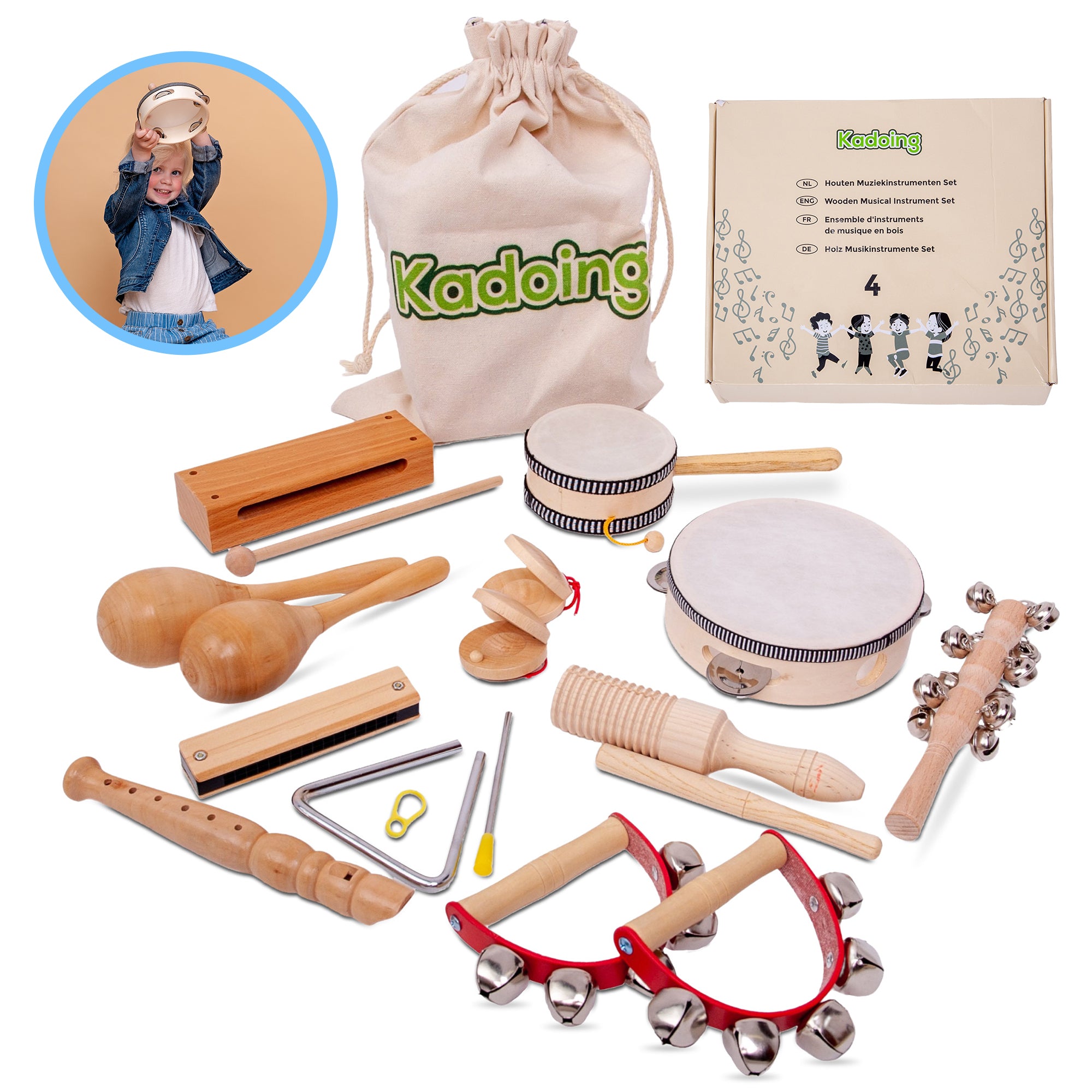
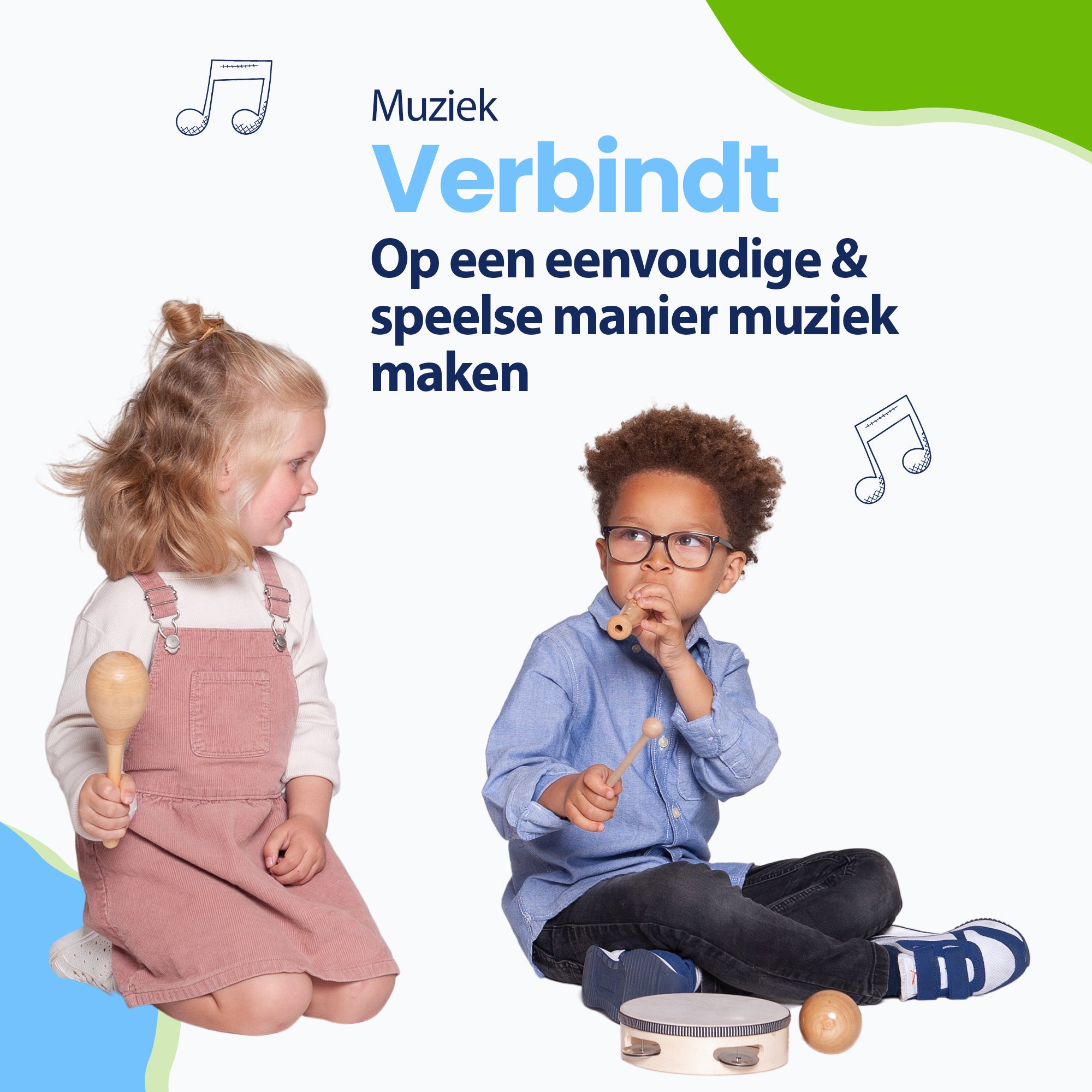
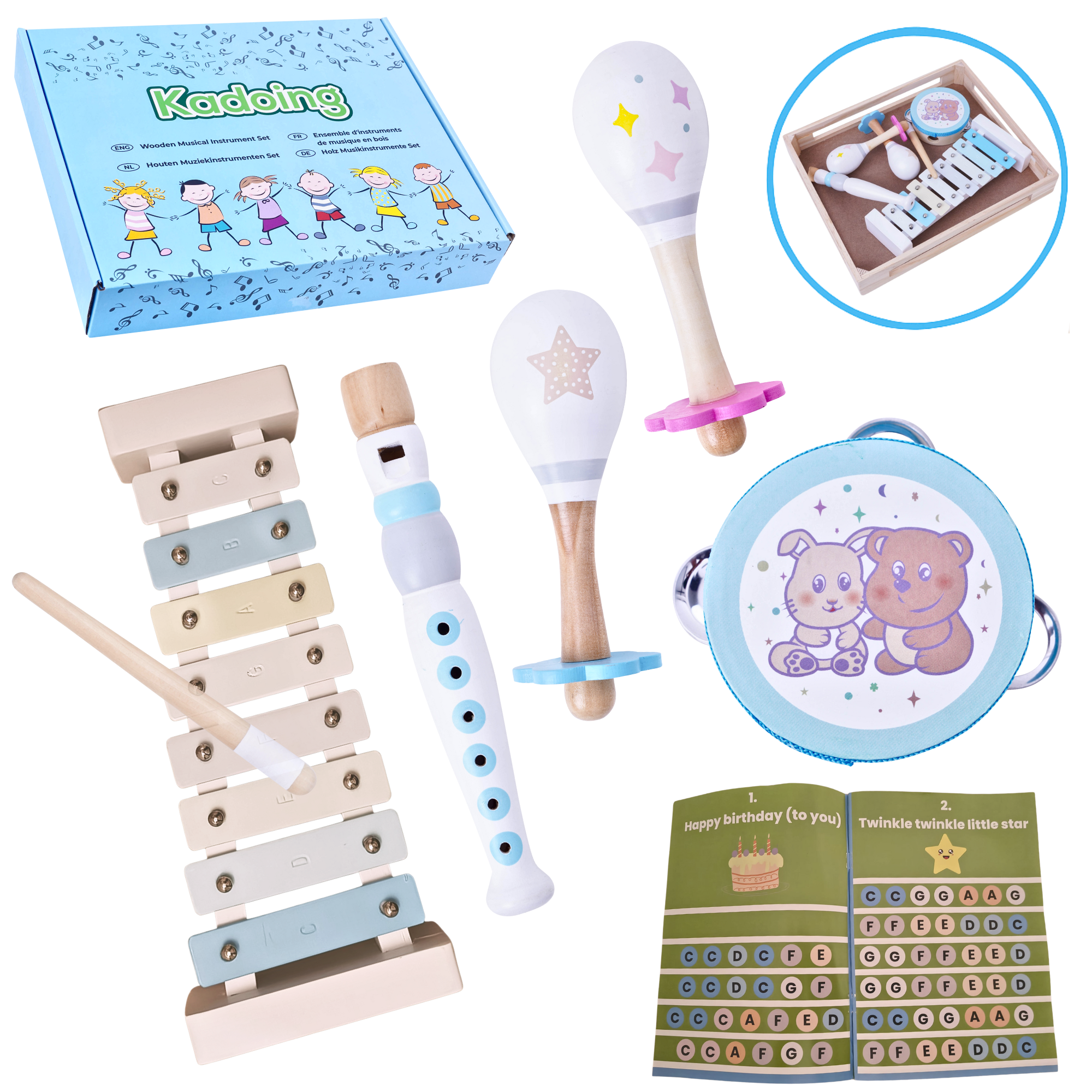
A simple musical instrument, such as a drum, xylophone or wooden rattle, can bring a playful rhythm to language. Short songs with repetition, clapping and movements offer different ways to play with sounds and words together. Sing along gently, leave space for a word at the end of a line and feel free to repeat favourite songs often.
Music does not need to sound beautiful or perfect. It is about listening, copying and having fun together. You can also name and repeat sound words such as “ting”, “boom” and “tap tap” during play. A wooden musical instrument can suit a quiet afternoon just as well as a cheerful dancing moment.
Look-and-find games
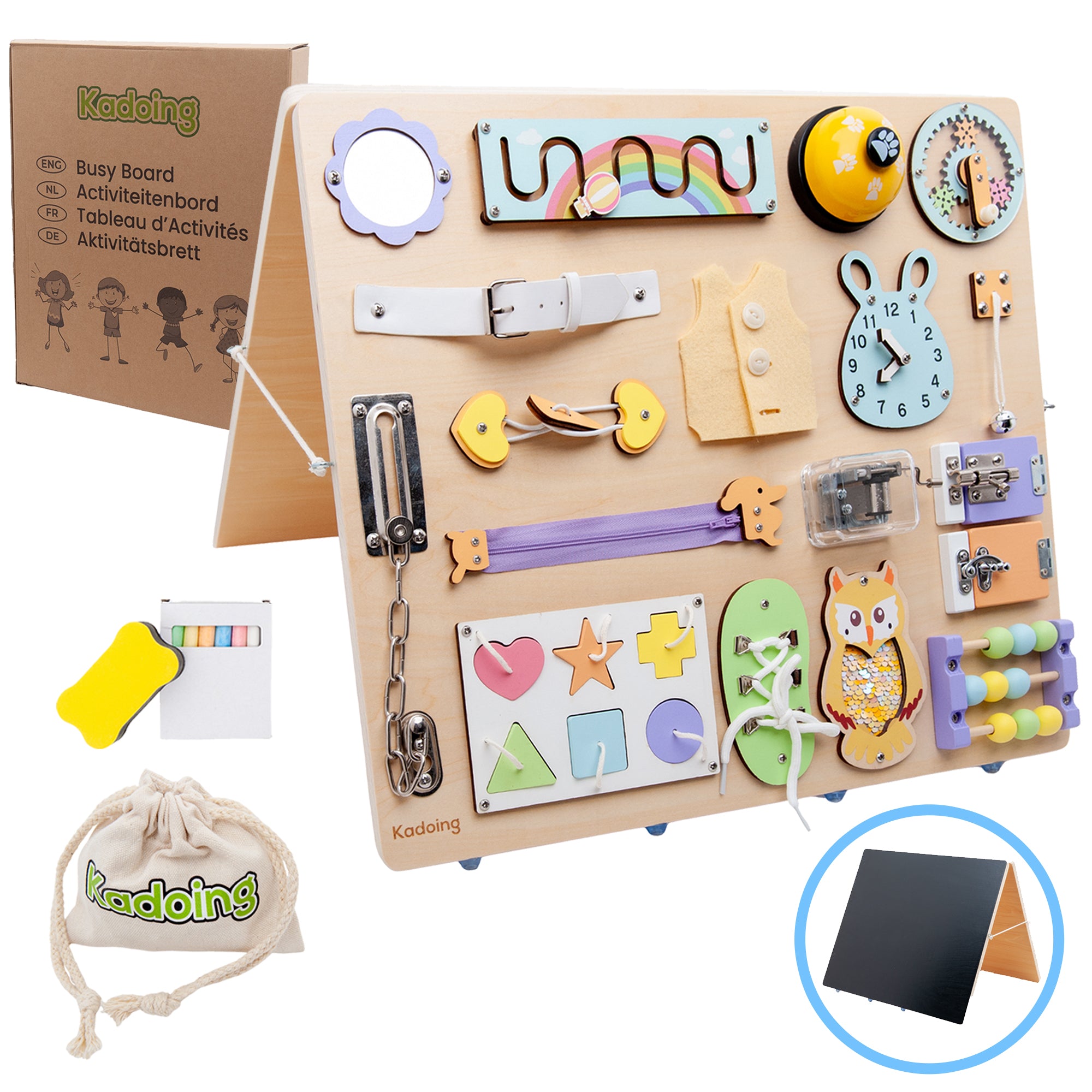
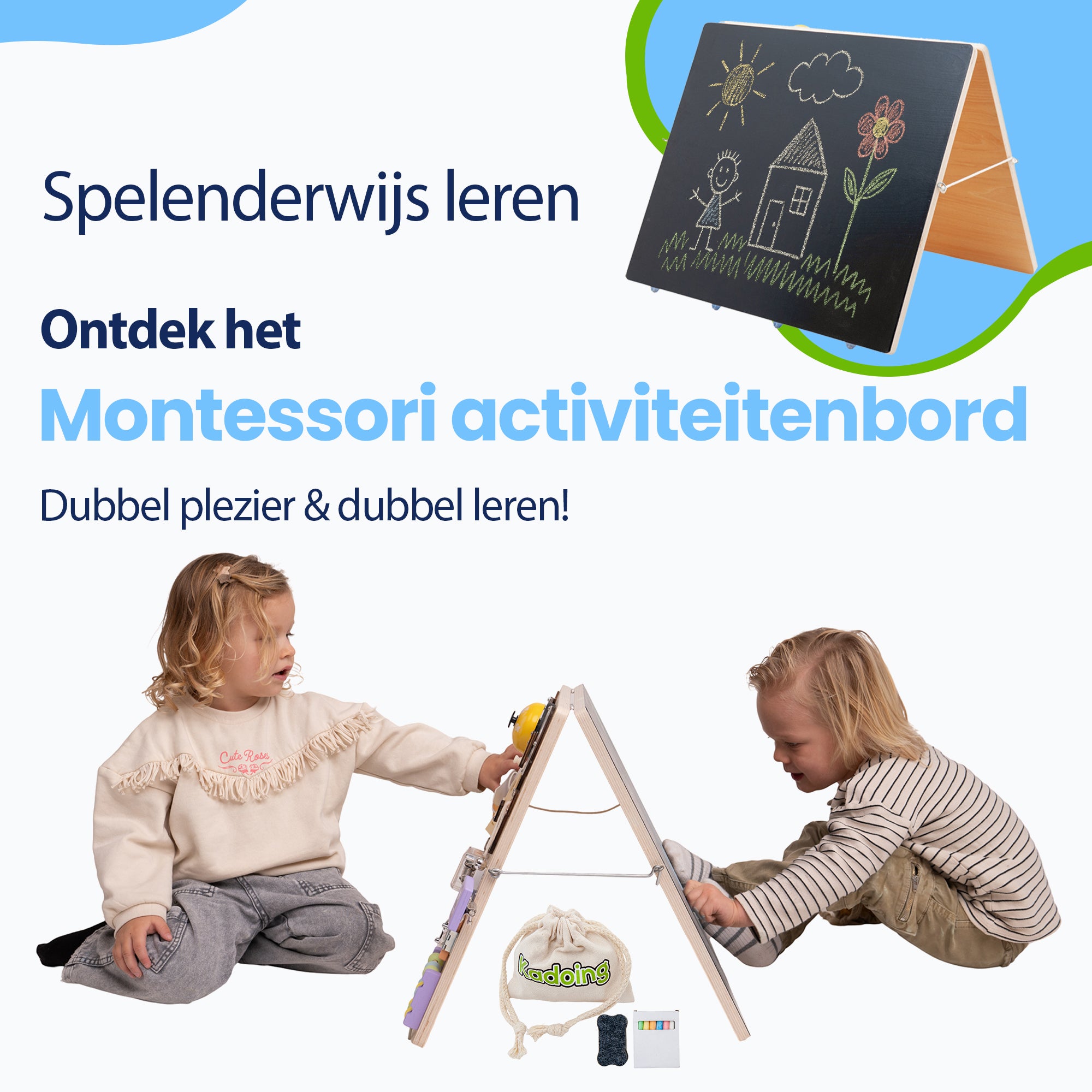
Toys with familiar pictures, large figures or an activity board can encourage you to look, explore and name things together. Keep it small and light-hearted, and see how long your child remains interested.
Choose pictures that are close to everyday life: animals, food, clothes, vehicles and objects around the home. You can use words that your child also encounters in daily situations.
How to turn toys into a language-rich moment
You do not need lots of toys to talk together. Put out a small selection, for example, and follow what your child does with it. Just a few familiar objects can inspire different stories and conversations.
Try describing what your child is doing instead of constantly asking questions. For example: “You are putting the car in the garage.” Then follow the play: if the car suddenly becomes a boat, the story can go in any direction.
Gently expand on words. If your child says “ball gone”, you can reply: “Yes, the yellow ball is rolling away.” Your toddler then hears a slightly longer sentence without their own words being rejected. Repetition is valuable too. Words can return regularly during play.
Use silence as well. For example, wait for a moment after asking: “What is the bear eating?” You may get an answer, a gesture or simply a smile. Whatever happens, you can respond: “The bear is eating a banana. Tasty.” Give your child time to react and then build on the answer, gesture or sound that follows.
A calm play area can help
You can create a regular place for a few favourite toys, such as a basket with wooden animals, blocks, a cuddly toy and an instrument. Change something occasionally, but leave enough familiar items in place.
Routines also provide natural opportunities for language. When tidying up, you can name together what belongs where: “The blocks in the basket, the bear on the shelf.” At bedtime, a cuddly toy can become part of a simple story: pyjamas on, a kiss, lights out. This allows the same words and actions to return at different times of the day.
What should you consider when choosing?
Check the recommended age, any warnings and small or detachable parts. To learn more, read what to look for when recognising safe children’s toys. Also consider the material, finish and the manufacturer’s instructions for use. You can also choose toys that can be used in different ways and suit your family well.
Look at the different ways your child can play with the toy too. A block, cuddly toy or wooden figure can inspire different stories and play situations. Toys with a more clearly defined purpose can also encourage talking and playing together.
Above all, follow your child’s interests. If your toddler loves animals, start there. If trains are currently the most important thing in the world, talk about stations, passengers and travelling fast or slowly. Connecting with what already fascinates your child usually makes playing together feel most natural.
You do not need to turn play into a language lesson. By naming what your child does, repeating words, singing together and leaving room for a response, everyday play creates space for language. Above all, choose toys that suit your child’s interests and respond to what your child shows, sounds out or tells you during play.