A basket with a few carefully chosen materials can invite more play than a room full of toys. That is the quiet strength of Montessori: children are given space to try things themselves, repeat them and feel proud of what they achieve. This practical guide explains what to look for when choosing Montessori toys, without turning your home into a classroom.
What are Montessori toys?
Montessori toys help children learn through their hands, senses and natural curiosity. The material usually has one clear purpose. Think of stacking blocks, sorting shapes, opening a fastening or discovering different sounds. A child sees what they can do, tries it independently and often notices for themselves when something does not quite fit.
This is also known as built-in error control. With a shape puzzle, for example, one shape will be left over if a piece has been placed incorrectly. An adult does not need to correct it straight away. This keeps play relaxed and builds the confidence to try again.
Montessori toys are not necessarily a certification or a strict checklist. It is mainly about how you look at the material: does it offer a calm, understandable challenge that my child can explore independently? A wooden play kitchen can fit perfectly well, as can a simple musical instrument or an activity board, provided it matches what a child wants to learn at that moment.
Why fewer toys often lead to more play
Young children process many new impressions every day. Toys with bright lights, lots of sounds and several play options at once can be fun, but sometimes make it difficult to know where to begin. Simple materials create clarity. They leave room for concentration, repetition and a child’s own ideas.
Repetition is not boring play. When a toddler places a ring on a stack for the tenth time, they are practising coordination, judgement and patience. When a child rings a bell again and again, they are exploring cause and effect. By not offering a new activity too quickly, you give these small learning moments time to develop.
That does not mean all plastic toys need to go or that imaginative play does not belong. Dolls, soft toys, cars and dressing-up clothes are valuable for language and imagination. The balance lies in keeping the selection manageable: a few open-ended materials, several activities with a clear purpose and enough free space to invent their own play.
Which Montessori toys suit each stage of development?
Age is a useful starting point, but pay particular attention to what your child is already trying to do. Do they want to pull everything, move objects, make sounds or fasten their own coat? That tells you more than the number on the packaging.
Babies: touching, grasping and discovering
For babies, play is all about the senses and movement. Lightweight materials that are comfortable to hold, a simple rattle, a soft ball or wooden shapes with different textures can encourage discovery. Choose toys with a calm design and do not offer everything at once. One or two materials within reach are often enough for a baby.
Pay close attention to the age recommendation and toy safety. Parts must be firmly attached and large enough for safe play. Natural wood can be attractive and durable, but a smooth finish and child-friendly paint or varnish are just as important.
Young toddlers: discovering by doing things themselves
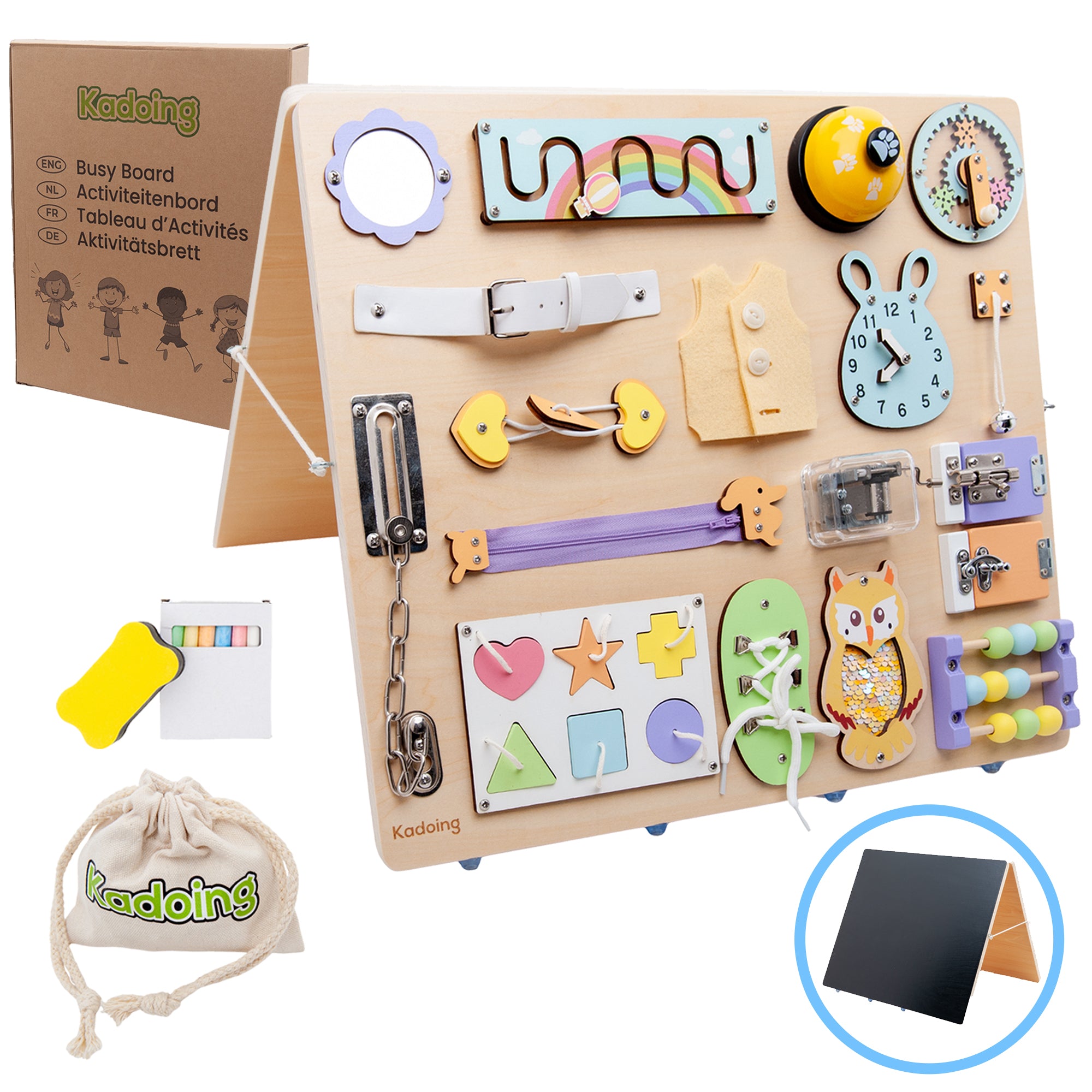
Young toddlers want to take part in everyday life. They want to open a drawer, put something inside something else, pick up a cloth or help tidy up. Play materials that support this need often feel immediately intuitive. Think of simple posting shapes, stacking cups, large threading materials or an activity board with safe fastenings and turning knobs.
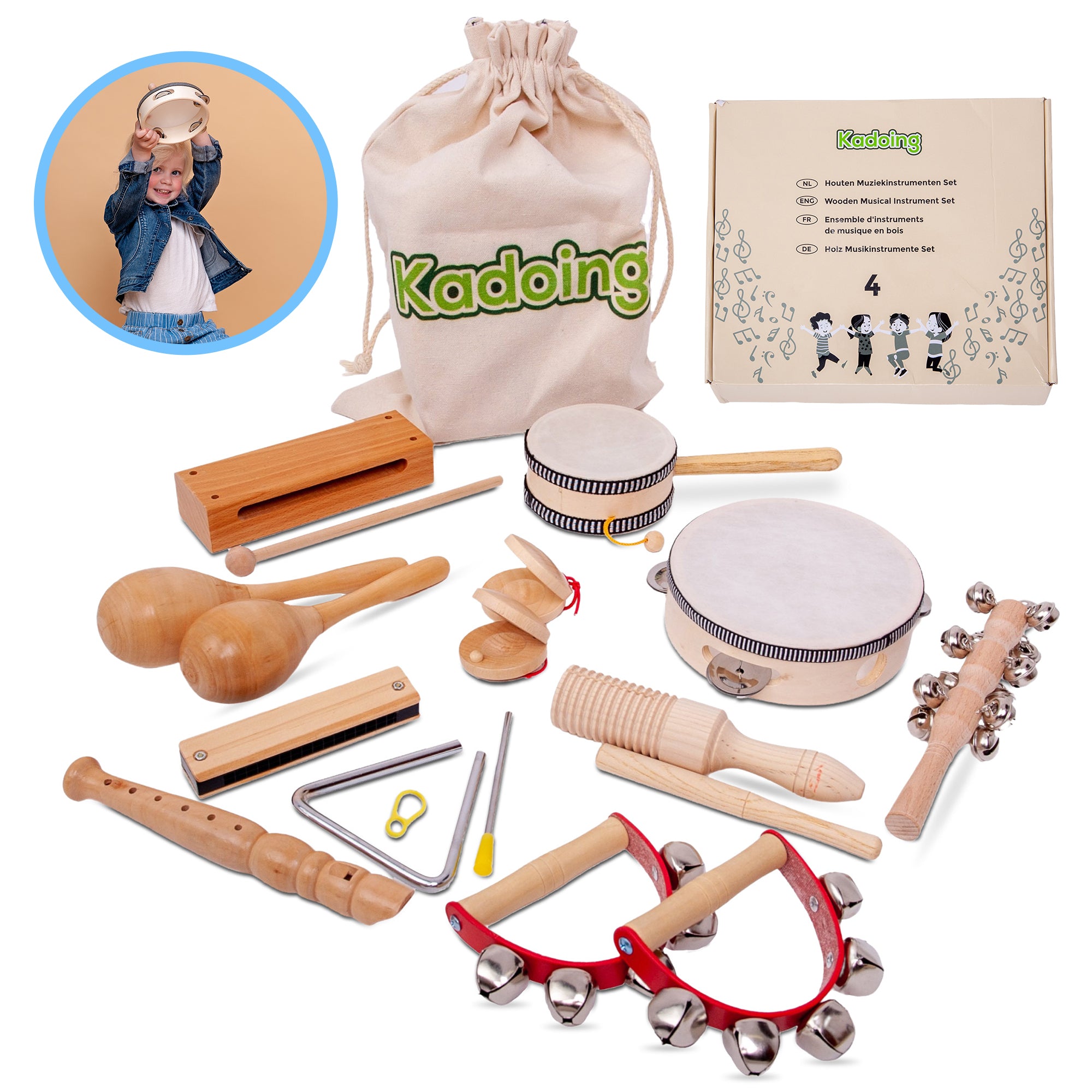
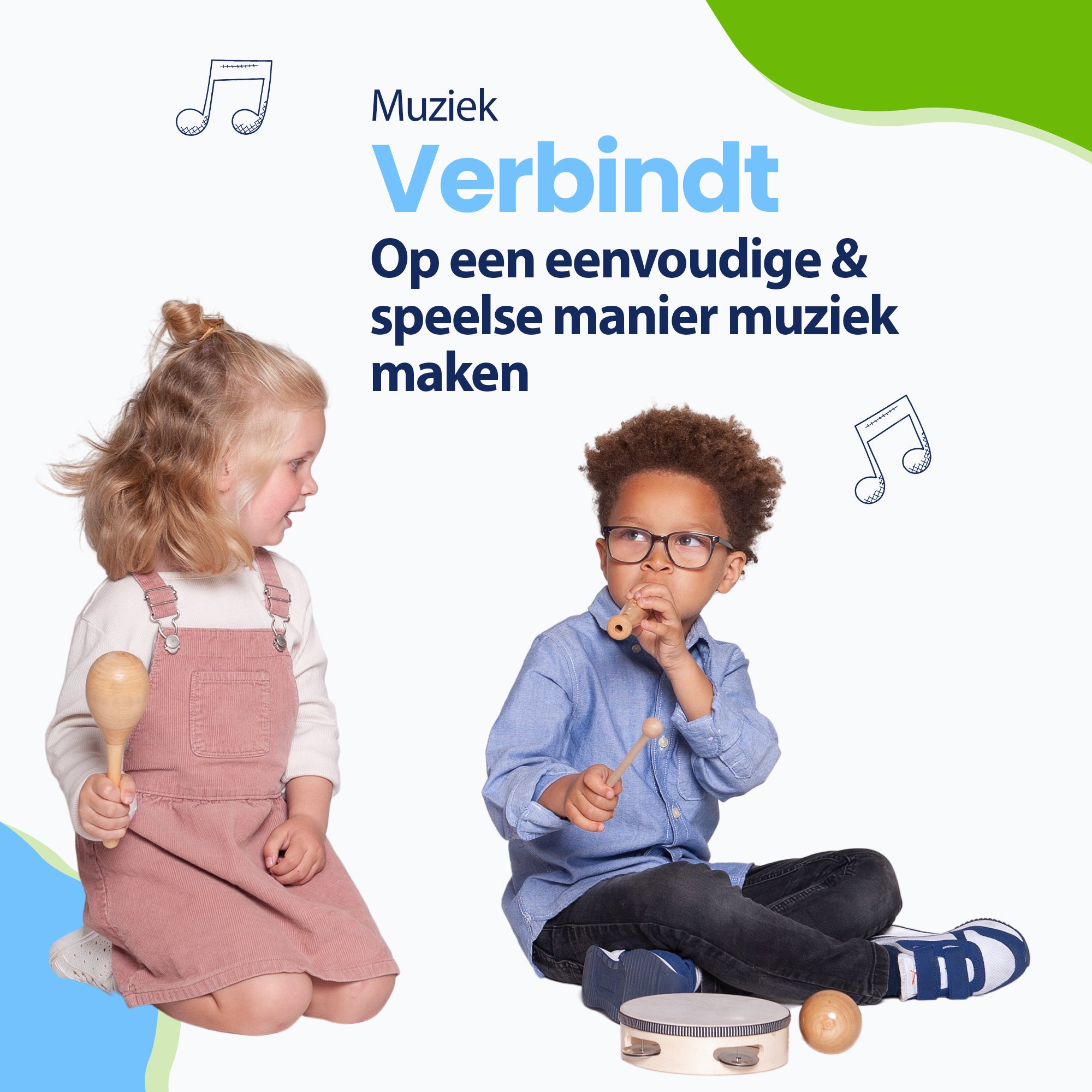
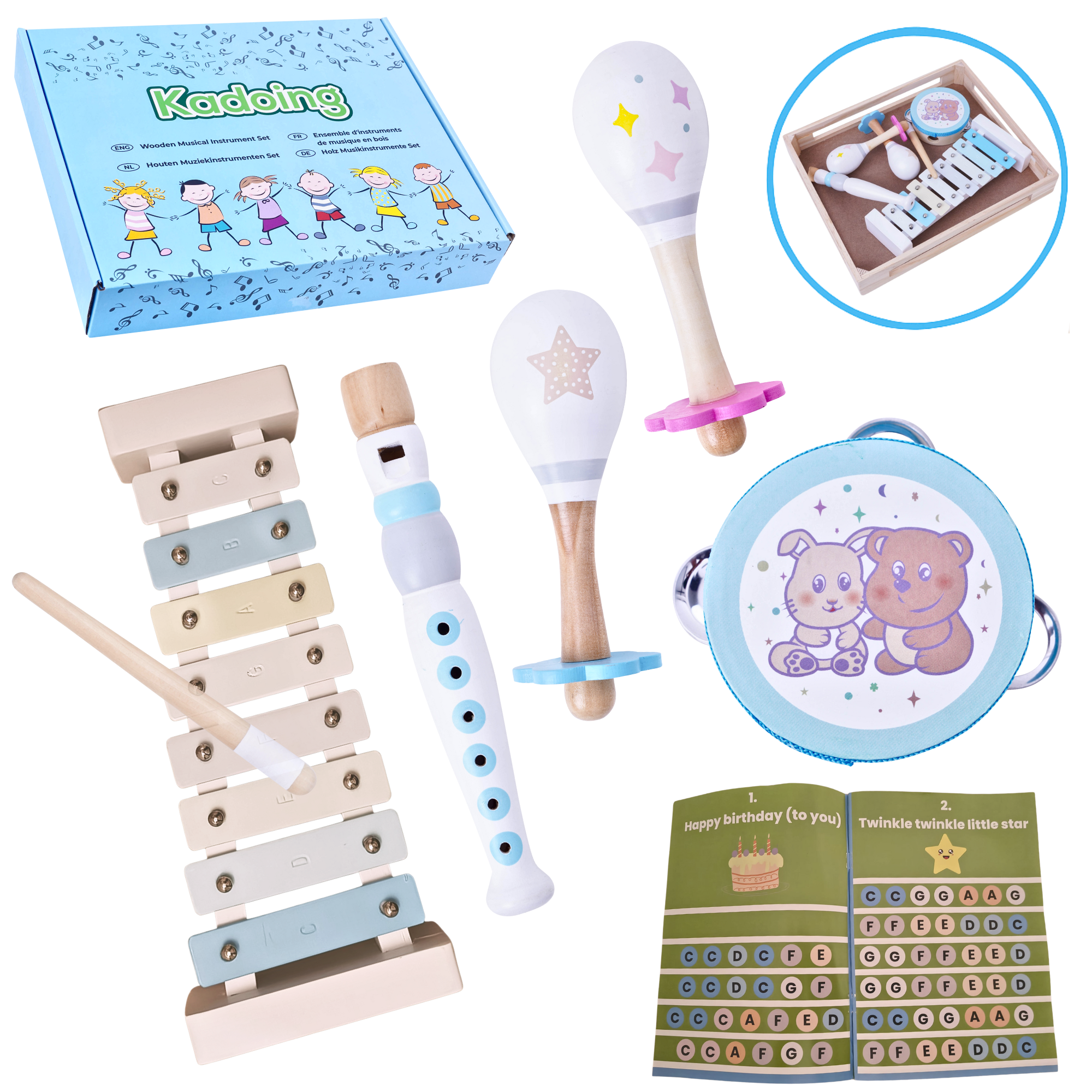
Musical toys also work well at this stage. A wooden drum, bells or a xylophone lets a child hear immediately what their movement does. The aim is not to play a beautiful tune, but to listen, tap and experiment with soft and loud sounds. Copying a simple rhythm together is a lovely moment of focused attention, without performance pressure.
Toddlers and preschoolers: practising independence
Toddlers and preschoolers are often ready for a little more challenge. Sorting trays, shape puzzles, stacking games and simple counting materials help them notice differences and use their hands more precisely. An activity board can remain interesting when it offers several actions, but preferably choose a design that is not too busy.
Practical activities are just as valuable. A small watering can for plants, a cloth for their own table or a basket for putting toys away gives a young child a real role. It does not have to be perfect. Trying, spilling and starting again are all part of the process.
Older preschoolers: combining, creating and exploring further
Older preschoolers can concentrate for longer and are more likely to combine several steps. Building materials, pattern-sorting games, simple instruments and role-play materials are well suited to this. The same principle applies here: offer a challenge that is just within reach. If it is too easy, attention fades. If it is too difficult, frustration can take over.
A child who loves building may get more from a set of wooden blocks than from yet another puzzle. A child who invents lots of stories may prefer a doll, wooden animals or a play kitchen. Looking through a Montessori lens also means following what your child shows you.
How to recognise materials that truly invite play
Do not look only at the recommended age or at how attractive a toy appears in a photograph. Ask yourself a few calm questions. Can my child understand what they can do with this material? Is there enough of a challenge to make them want to return to it? And can they play largely independently while I stay nearby?
Materials with a clear function often work best. A puzzle does not also need to sing, flash and ask questions. A well-chosen activity gives the child space instead. They can set their own pace.
Also choose materials that can withstand daily use. Wood is popular for its warm appearance and long lifespan, but always check the construction, splinters, sharp edges and any loose parts. Choosing sustainably also means allowing toys to last, be passed on or become interesting again for a younger sibling or cousin.
The play area makes a difference
Even wonderful play materials disappear from view when they are kept on a high shelf or in an overflowing toy box. Place a small number of activities at child height, for example in an open cupboard or basket. Give each material its own place. This makes both choosing and tidying up easier to understand.
Rotate toys instead of continually buying more. Store some of the toys temporarily and bring them out again after a few weeks. A familiar puzzle will often feel surprisingly new to a child. It also keeps the play area calm, which is pleasant for children and parents alike.
Do not set up an activity for your child too quickly. First show how something works, using calm movements and few words. Then step back. Sometimes a child asks for help; sometimes they mainly want you to watch. That attention is often more valuable than a perfect result.
Playing together without taking over
Independent play does not mean that your child always plays alone. Your presence provides security. You can describe what you see: “You found the large ring” or “That little door would not open before, and now it does.” Words like these encourage without directing the play.
Try to limit questions that have only one correct answer. Instead of “What colour is this?” you could say, “Which one do you notice first?” The same applies to musical play. Listen to a sound together, clap a rhythm or sing a short nursery rhyme your child already knows. It is about enjoyment and connection, not the right answer.
That is why Kadoing chooses products that not only look beautiful in the home, but also create space for those everyday moments of attention, calm and pride.
A good choice does not have to be a big one. Start with one material that suits what your child currently enjoys practising. Place it within reach, see what happens and allow time for discovery. Relaxed play often begins with a small moment in which a child thinks, ‘I can do this myself.’