A teething ring may seem small, but when your baby holds it every day, puts it in their mouth and takes it everywhere, you want to know exactly what you are bringing into your home. This guide to sustainable baby toys helps you choose with more peace of mind. Not only based on what looks beautiful, but especially on safety, material, durability and how the toy fits your baby’s first developmental steps.
Sustainable baby toys are about more than making a “green” choice. For many parents, they are mainly a practical choice: less likely to break, nicer to use, often calmer in appearance and better suited to a conscious family life. Especially during the baby stage, when toys are not meant to provide lots of stimulation, but to encourage feeling, discovering and shared moments.
Why a guide to sustainable baby toys helps
Anyone looking for toys for a baby quickly notices how wide the range is. There are soft plush toys, wooden rattles, silicone teething toys, music boxes and activity boards in all colours and shapes. The tricky part is that sustainable does not always mean the same thing. Sometimes it refers to the material, sometimes to production, and sometimes to how long a product lasts.
That is why it is smart to look beyond the label alone. A sustainable product is ideally safe for little hands and mouths, made from responsible materials, sturdy enough for daily use and appealing without overstimulation. For parents, that is often the combination that really matters: peace of mind and toys that add something to the rhythm of the day.
What should you look for in sustainable baby toys?
The first thing to consider is material. Wood is popular because it is sturdy, timeless and pleasant to touch. The finish does make a difference. Smoothly sanded wood with child-friendly paint or oil feels safer and usually lasts longer than toys with fragile lacquer layers. Silicone can also be a good choice, for example for teething toys, as long as it is a safe quality suitable for babies.
Textiles require a different perspective. A soft plush toy or comfort cloth often comes close to the face and is used intensively. In that case, washability, strong seams and a calm finish are more important than just a cute design. Loose details are simply not a good idea for baby toys.
Also look at how a product is made. A simple design with fewer vulnerable parts often lasts longer. That may sound less exciting, but simplicity often works best in the first stage of life. A baby does not need a toy that does everything at once. A clear shape, a pleasant texture or a soft sound is usually already enough.
Safety first, without making it complicated
Choosing sustainably also means looking critically at safety. That does not have to be complicated. Pay particular attention to sturdy construction, rounded shapes and materials suitable for babies. If something feels breakable in your hand, it is usually not an ideal choice for daily baby use either.
Also check the size. Toys for babies should be large enough to use safely and easy to hold. Parts that are too small or decorative accessories rarely add anything, but they can make parents feel uneasy. And rightly so.
Another practical point is maintenance. Baby toys do not only live in the playpen or on the play mat, but also on the floor, in a bag and sometimes in the stroller. If you can clean them easily, they not only stay fresher, but you will often use them for longer too. That makes a purchase more sustainable in practice.
Sustainable baby toys by stage
Not every toy suits every moment. In the first months, it is mainly about closeness, touch and calm sensory experiences. Think of a soft plush toy, a subtle music box or a light rattle that is easy to hold. In this stage, sustainable often means: made from safe materials and designed to be used often without wearing out quickly.
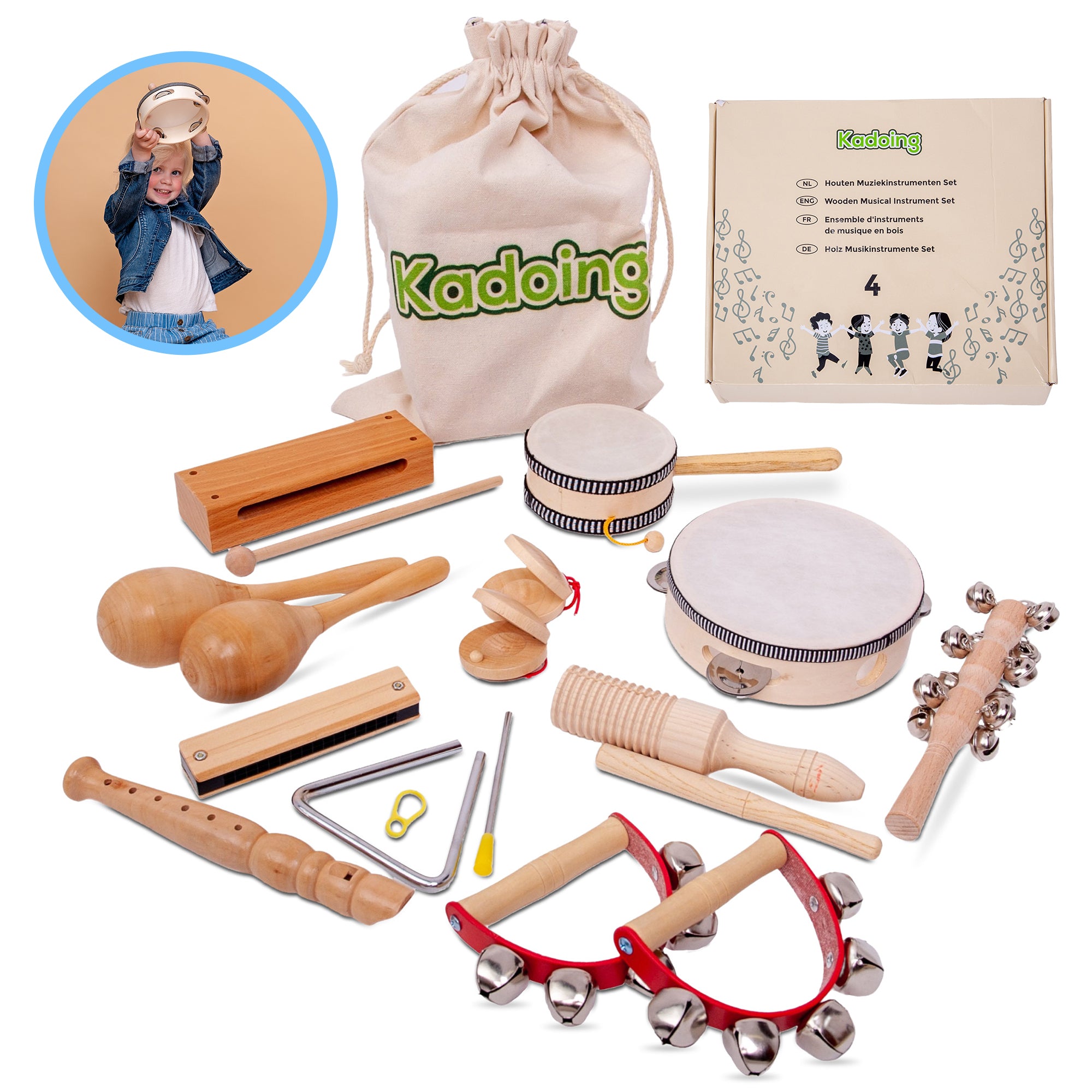
From the moment babies start reaching more deliberately, texture becomes more important. A wooden ring, a teething toy made from safe silicone or a simple toy with different surfaces can offer a lot. It does not need many functions. Toys that do one thing well often remain interesting for longer.
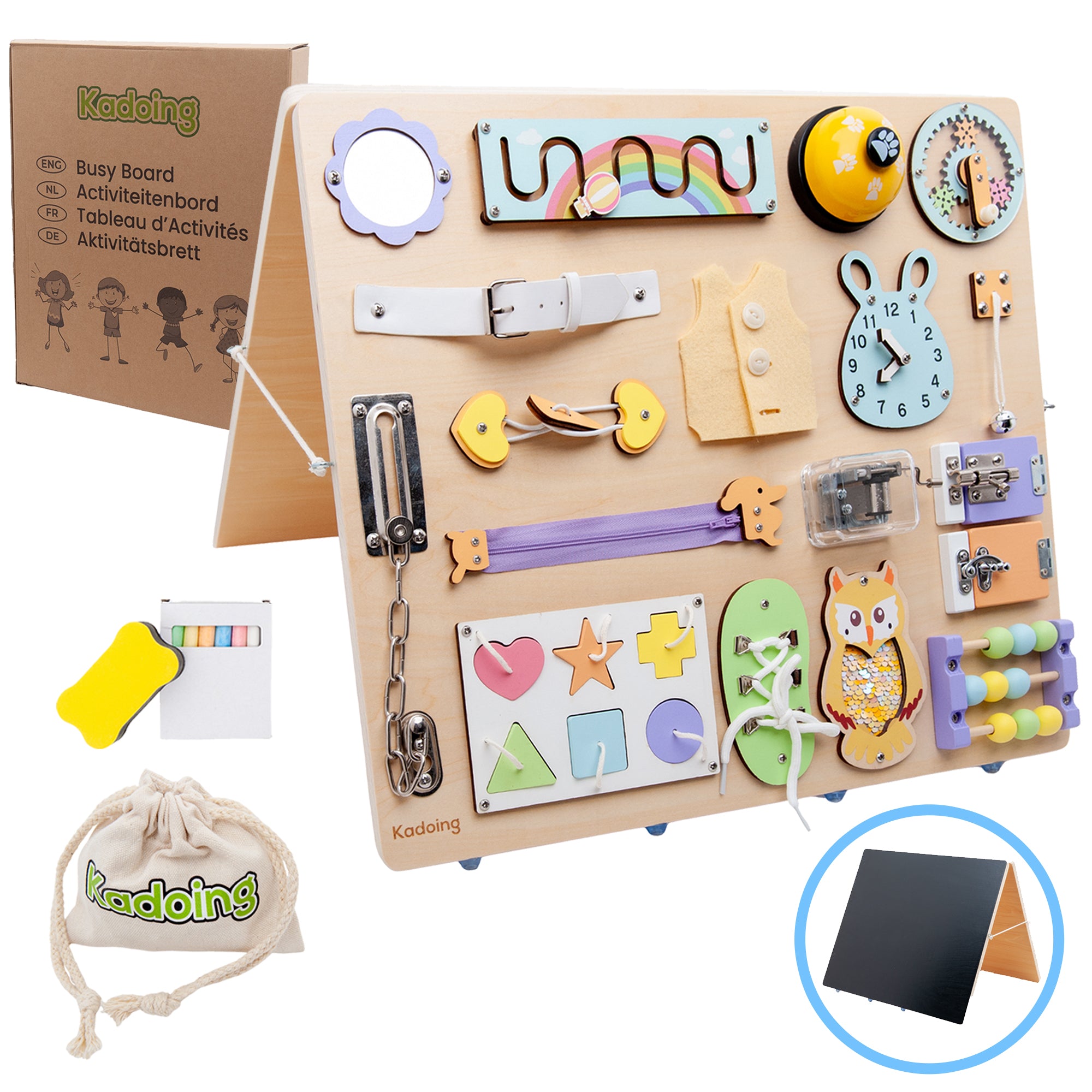
When a baby becomes more active and starts discovering more cause and effect, simple activity toys come into view. A moving element, a soft bell or a wooden part that makes a sound when touched can then be valuable. Do pay attention to balance. Toys that are too busy in colour, sound and movement sometimes seem more attractive to adults than to babies themselves.
Less toys, more attention
A surprising part of this guide to sustainable baby toys is that you do not necessarily need a lot. Too much choice does not automatically make toys more valuable. For babies, a small selection often works better. It brings calm to the play environment and also helps parents look more consciously at what is really being used.
A few good basics often go further than a basket full of impulse buys. Think of a safe rattle, a soft plush toy, a teething toy and one toy that invites discovery. This allows you to rotate toys without everything having to be visible at once. It feels calmer at home and prevents toys from becoming mostly decoration.
This is useful for gift givers too. Anyone looking for a sustainable baby shower gift does not need to choose something big. A beautifully made, safe and timeless item is often the gift that lasts. Not because it is the most eye-catching, but because it comes in handy every day.
Supporting development without overstimulation
Good baby toys do not have to be spectacular to be valuable. Quite the opposite. In the first stage of life, development is about repetition, recognition and safe discovery. A toy with a pleasant shape, a soft sound or a natural texture often supports that need better than toys that constantly offer new stimuli.
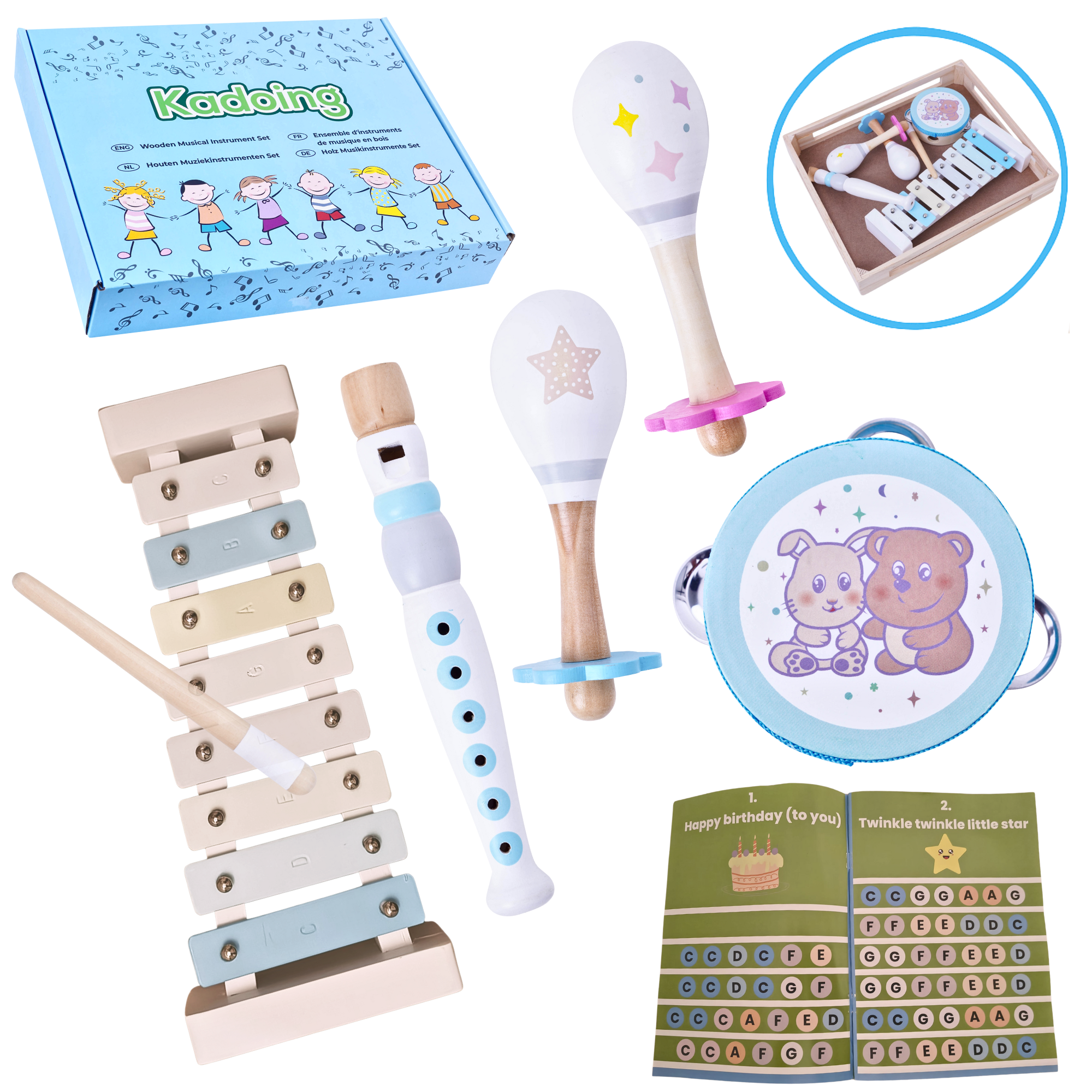
Wooden musical toys, soft plush toys and simple sensory toys often fit well here. They suit play moments in which a baby discovers, listens or feels together with a parent. That makes toys not only more enjoyable, but also more functional in the daily rhythm. For quiet moments on your lap, after changing or as a small fixed part of a play or bedtime routine.
That does not mean every child needs the same thing. Some babies respond strongly to sound, while others respond more to touch or movement. Choosing sustainably therefore also means looking at your child. What invites calm play? What stays interesting without asking too much? That observation is often more valuable than any trend.
Why sustainable baby toys last longer
Sustainability is also found in design. Toys that are visually calm and made from timeless materials often fit into the home for longer and are more easily passed on to a sibling or another family. That is not only practical, but also pleasant if you want to buy consciously without constantly replacing things.
A calm design can also help keep the play environment peaceful. Many parents notice that soft colours, wood tones and friendly shapes feel more pleasant in daily routines. Not because bright toys are wrong by definition, but because a calm foundation often suits moments of closeness, comfort and discovery better.
This is also where the strength lies for brands that connect sustainability with everyday convenience. At Kadoing, toys are not separate from family life, but serve those small moments where play, comfort and development come together.
When is something truly a good purchase?
A good purchase is often recognised not only by the first enthusiasm, but by how it is used after weeks or months. Is the toy still being picked up? Is it still intact? Does it suit your baby’s stage? And does it still feel safe and pleasant? Then you have usually chosen well.
If you are hesitating between two options, it is better to choose the product that is simpler, sturdier and more versatile. A toy that supports comfort, play and sensory discovery often beats something that only looks fun for a moment. Sustainable baby toys do not have to be perfect, but they should feel reliable.
Sometimes it is also wise not to buy something. If you cannot properly assess what material it is made from, if it has too many loose parts or if it mainly seems nice for photos, continuing your search is often the better choice. Buying consciously also means leaving some things behind.
A guide to sustainable baby toys in daily life
Ultimately, the best choices are the ones that fit your family. Maybe you mainly want safe basics that last a long time. Maybe you are looking for a beautiful gift with developmental value. Or maybe you want toys that support a calm moment, such as a soft musical toy or a lovely plush toy for fixed rituals.
When you look at material, safety, maintenance and real usability, choosing often becomes much easier. Not everything needs a hundred labels or functions to be good. For babies, softness, simplicity and reliability are usually the qualities that make the difference.
Those who choose consciously often buy less, but with more confidence. And you notice that at home: toys that feel pleasant, last longer and leave space for what matters most in this stage: discovering together, calmly.