A toddler concentrating on threading a bead onto a lace, trying to grasp a small button or placing a block exactly where it belongs is busy discovering the world. The best toys for fine motor skills do not need to be complicated. Toys that encourage repetition, experimentation and discovery can create enjoyable play moments at the table, on the play mat or together on the sofa.
Fine motor skills involve small, controlled movements of the hands and fingers. Think of grasping, turning, pinching, stacking, threading and opening or closing something. These movements are part of many ordinary everyday tasks. Play offers an accessible way to practise them without it having to feel like practice.
What are fine motor skills toys?
With fine motor skills toys, a child uses their hands and fingers for small, controlled movements. A child might put a shape into an opening, turn a component or pick up a small figure. Coordination between looking and moving may also play a role.
One child may become completely absorbed in sorting by colour, while another prefers turning a lock or making sounds with a wooden instrument. There is therefore no single perfect choice for every child. Age, interests and what your child already enjoys doing are important factors to consider when making your choice.
Also observe how your child plays. Do they enjoy spending a long time on one activity, or do they prefer variety? A calm activity board can suit a child who enjoys investigating. For a child who likes moving and making music, a simple musical toy may be more appealing.
Best toys for fine motor skills by type of play
Stacking, sorting and puzzles
Stacking blocks, shape sorters and simple wooden puzzles are familiar choices, and for good reason. They encourage children to grasp, turn and compare objects. A block that does not quite fit, for example, invites a child to turn it or try it from a different angle.
For young children, pay close attention to the recommended age, the size of the parts and any warnings. As a child gains more experience, additional shapes or a slightly more complex puzzle can provide variety.
Threading, inserting and sliding
Lacing cards, large beads with a lace and toys with sliding parts require precise movements. It often takes a little experimentation before a lace goes through an opening. Give your child time to try independently and only help when frustration genuinely takes over the enjoyment.
For threading toys, check the recommended age carefully and pay attention to warnings and small or detachable parts. Use the toy as intended by the manufacturer. Inserting large shapes can be a pleasant starting point for a younger child, while an older child may enjoy creating patterns or alternating colours.
Turning, clicking and opening
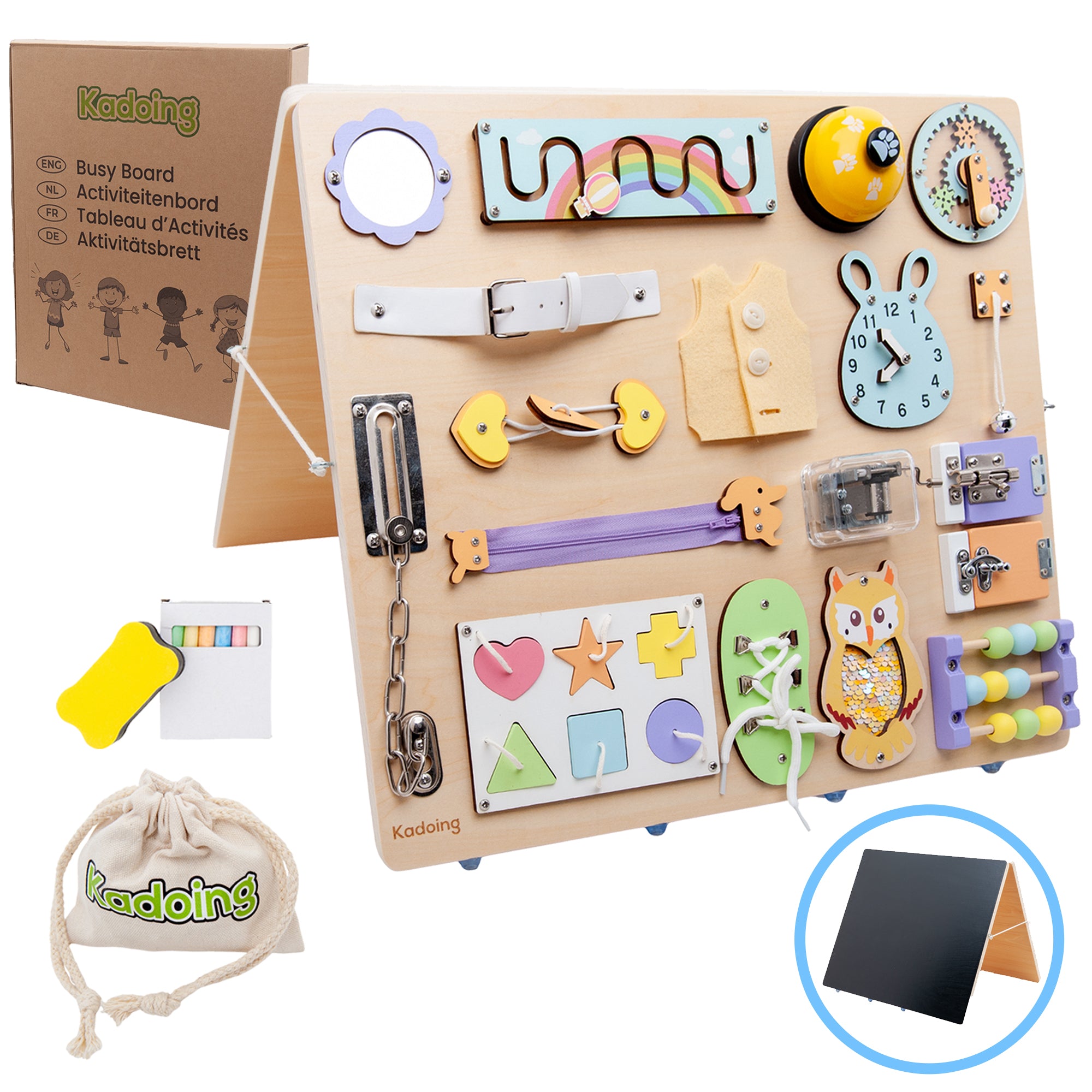
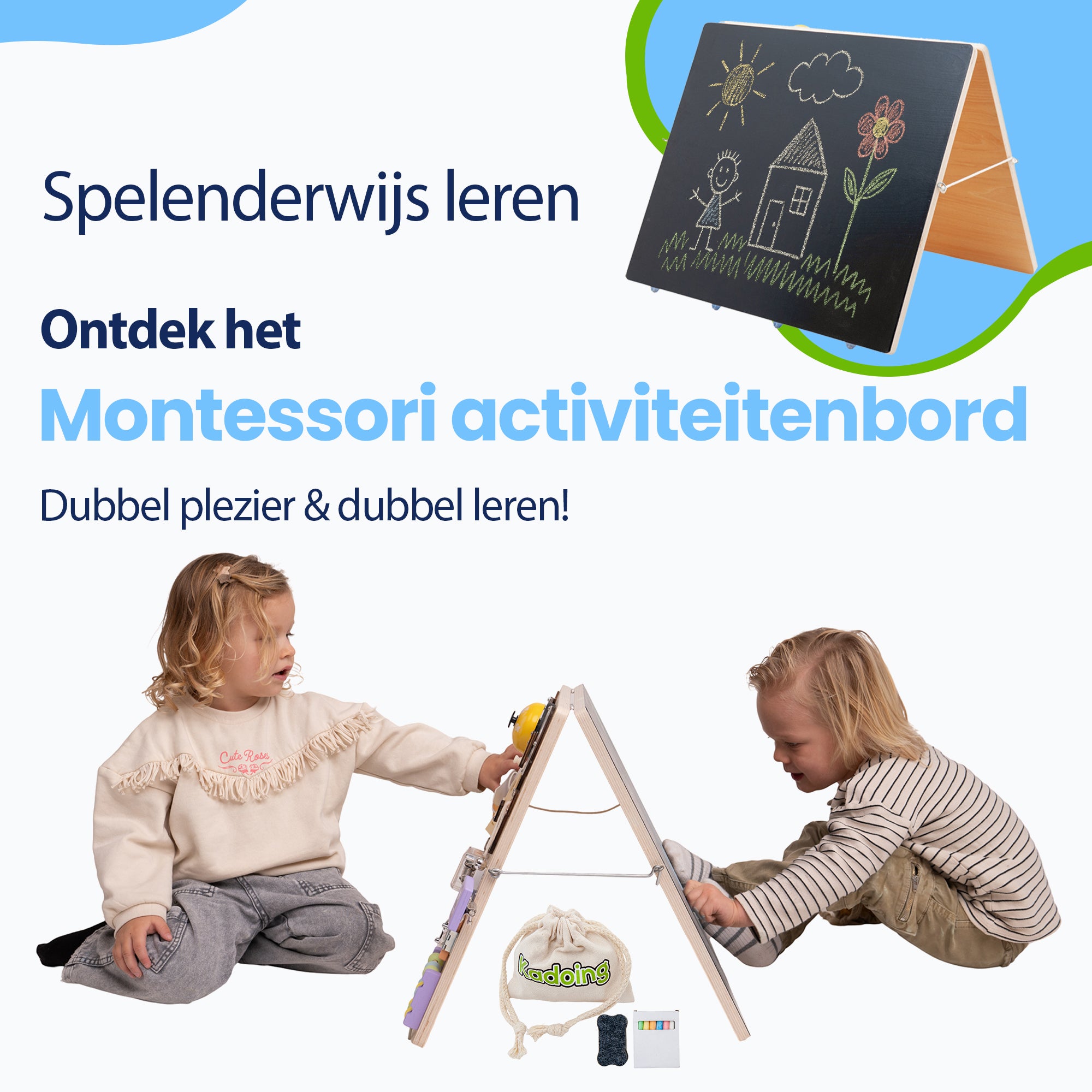
An activity board combines different actions, such as using fastenings, turning knobs, moving sliders, opening zips and working with simple shapes. Children can return to the same component repeatedly and see what happens when they turn, slide or open something.
A wooden activity board is well suited to a calm play moment, for example while you are nearby with a cup of tea or preparing dinner. It does not have to be a long activity. A short play moment in which your child tries something independently can also be enjoyable.
Making music with small hands
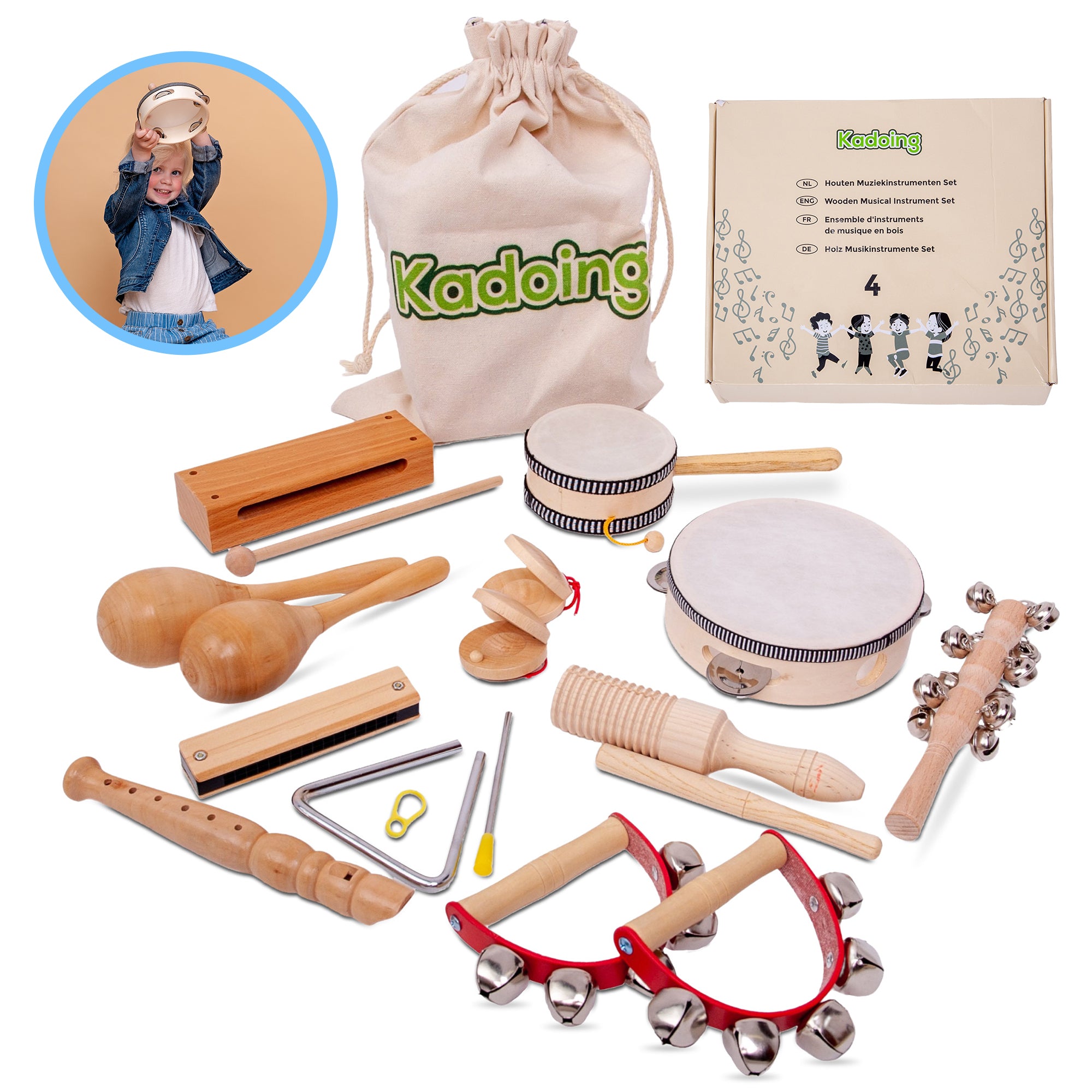
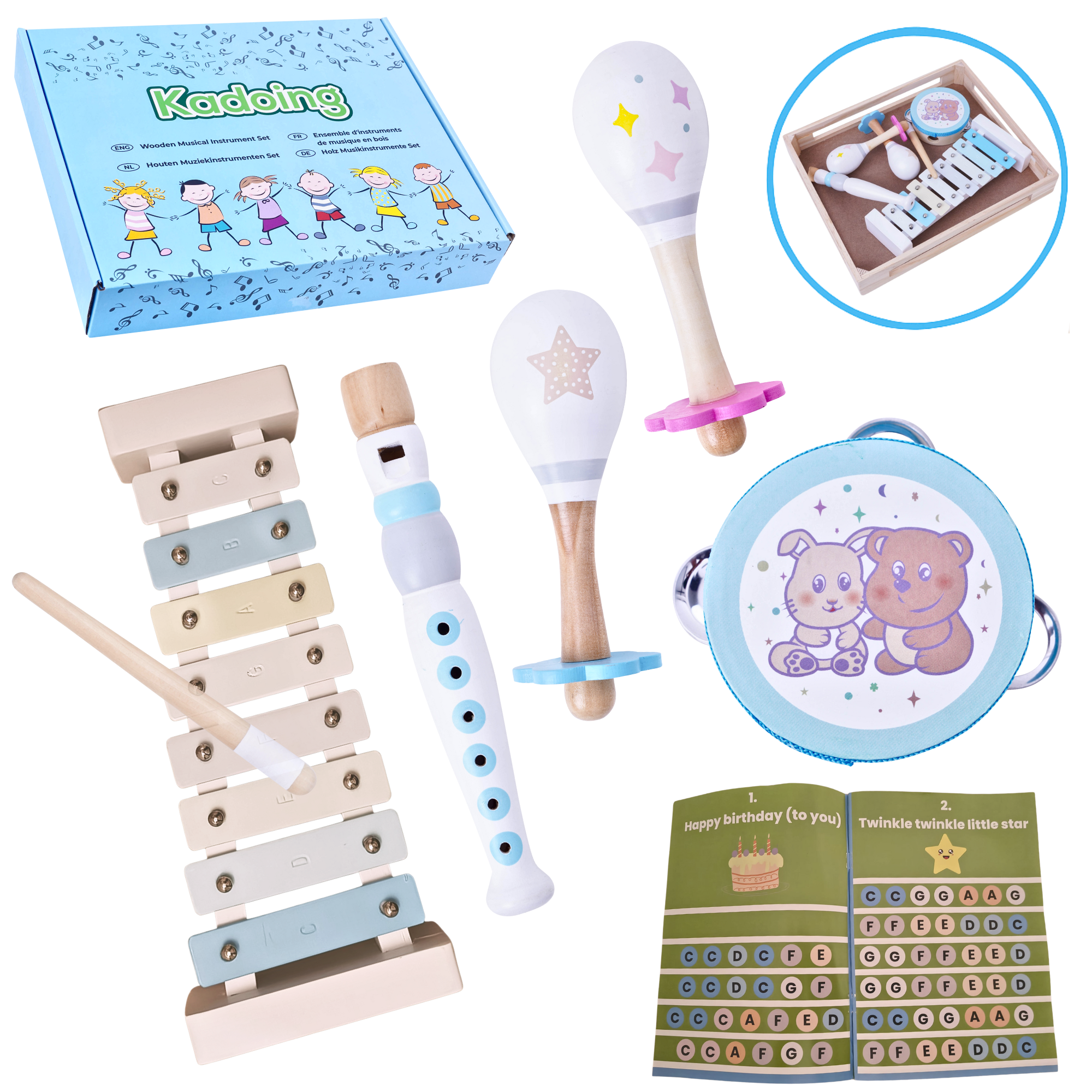
When playing with musical toys, a child also uses different hand and finger movements. Playing a drum with a stick, holding bells, pressing keys or tapping a simple xylophone each requires a different grip and movement. The sound also makes the result immediately audible when your child plays an instrument.
Simple musical toys offer different ways to explore sound and rhythm together. A child does not need to play a song correctly to enjoy the sounds. Tapping a rhythm together, comparing soft and loud sounds or taking turns to play a note creates a warm moment of connection.
Crafting and joining in with everyday tasks
Not every fine motor activity comes from a toy basket. Attaching clothes pegs to an edge, applying stickers, using thick crayons or rolling dough are accessible activities for home. They require little preparation and can be a good fit for a quiet afternoon indoors.
Helping around the house can also feel like play. For example, let your child place a cloth in a basket, put large ingredients into a bowl or sort socks. Choose tasks that are safe and manageable, and keep your expectations modest. The main aim is to do and discover things together, not to achieve a perfect result.
How to choose toys that suit your child
When choosing, do not look only at appearance, but above all at what suits your child’s interests and age. You do not have to offer every toy at the same time. Temporarily storing some and swapping them later is a simple way to create variety.
Consider four practical points when making your choice:
- Choose a challenge that matches what your child can already do and enjoys trying.
- Match the size of the parts to the child’s age and always follow the manufacturer’s instructions.
- Look at safe materials for children’s toys, the finish and the manufacturer’s care instructions.
- Consider where the toy will be used. An activity board on the floor, a threading game at the table and a musical instrument in the living room each require something different.
Making a sustainable choice does not mean that everything must be made of wood or that one material is always better. It can also mean choosing toys that can be used in several ways and suit your family well.
Playing together without taking over
You do not need to demonstrate every step during play. Sometimes you can let your child try independently first. That can be difficult when you can already see how a puzzle piece needs to turn or where a bead should go. Try describing what you see instead of immediately providing the solution: “You’re turning the block over” or “You’re trying again.” This keeps you involved without taking over the play.
Playing together does not have to mean that you continually give instructions. You can sit beside your child and stack a few blocks yourself, clap a rhythm or take turns opening a slider. This allows you to play together without constantly deciding what your child should do.
Do you notice that your child walks away or uses the toy in a different way? That does not necessarily mean it was the wrong choice. Perhaps the timing is not right, your child needs more movement or the toy is still a little too challenging. Put it away without making a fuss and try again another day.
Make room for small repetitions
Throughout the day, you can make room in all sorts of small ways for activities that involve using the hands and fingers. A basket with a few accessible toys in the living room may already help make spontaneous play possible. Put it within reach without filling the entire room.
A regular place for calm toys can also be helpful on a busy day. After playing outside, before dinner or during a rainy morning, some families like to set out a puzzle, activity board or musical game. Other children prefer free play without fixed moments. Both are perfectly fine.
Above all, choose toys that suit your child and your daily rhythm. A threading game, wooden puzzle, activity board or musical instrument can encourage play and discovery in different ways. Not every play moment needs to have a goal. Above all, your child can try, repeat and discover independently at their own pace.