A wooden train that follows a new route every day, a musical instrument that invites a child to make up a song, or an activity toy that keeps little hands busy: good wooden toys are not about providing as many stimuli as possible. Instead, they give a child room to try things independently, repeat them and feel proud of what they can do. For parents, that is a reassuring thought: a toy that suits both a calm moment of play and the stage of development their child is currently going through.
Why wooden toys are so enjoyable to play with
Wood feels warm, often has a calm appearance and can withstand the odd knock. This makes it a popular choice for families who want fewer toys at home, but wish to choose them more thoughtfully. A wooden toy can remain part of play for a long time: at first, a block is touched and stacked; later, it takes on a role in a shop, a train track or an imaginary adventure.
Even so, wood is not automatically the best choice for every child or every occasion. Some children enjoy playing with a simple sorting board, while others come alive with a colourful musical instrument. A lightweight plastic part can sometimes be practical too, for example when a toy needs to be easy to clean. Its value therefore lies not only in the material, but in the combination of safety, enjoyment, age and a design that encourages independent discovery.
Wooden toys often have fewer buttons, sounds and fixed rules. This can help a child set their own pace. A toddler stacking blocks is not only practising hand-eye coordination. They are also discovering that a wide base is more stable, that a tower can fall over and that starting again is simply part of play.
Choosing wooden toys by age
The age guidance on a toy is an important starting point, but also consider what your child enjoys doing at the moment. Development does not follow a rigid timetable. One two-year-old may become completely absorbed in sorting shapes, while another would rather make sounds, move things around or care for dolls.
For babies: touching, grasping and listening
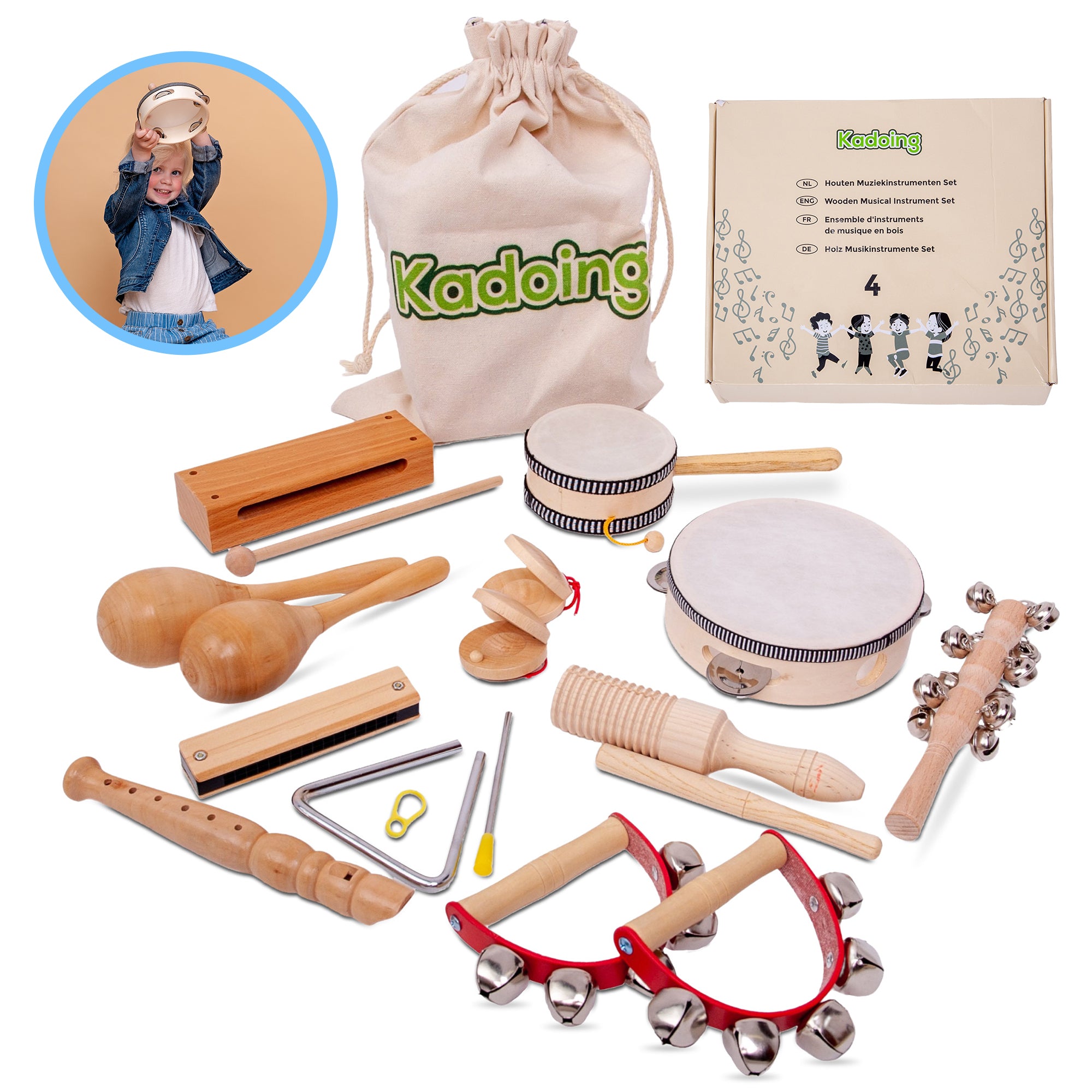
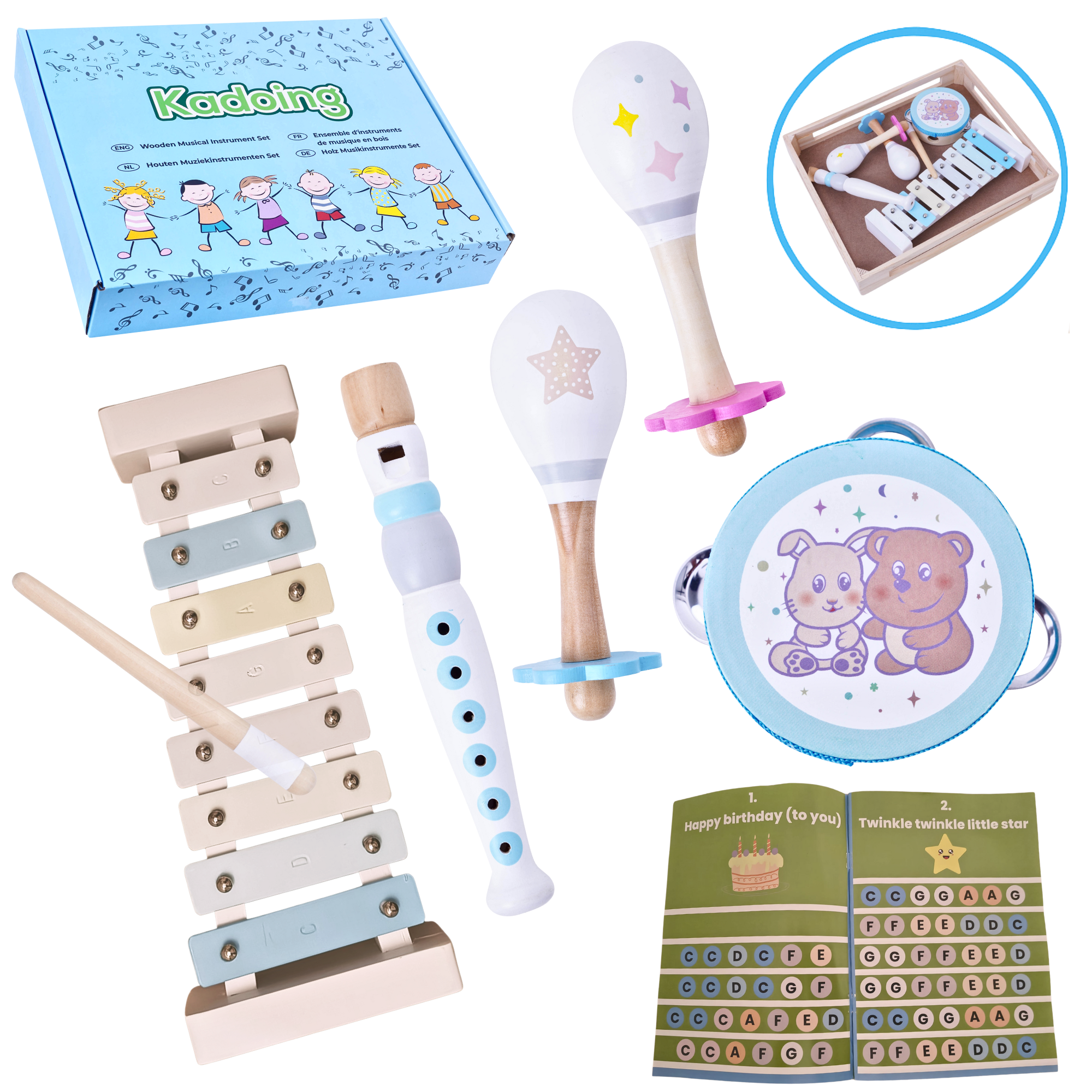
Smoothly finished rattles, simple grasping toys and wooden musical toys can be suitable for the youngest children. Choose generous shapes without small, loose parts. Pay close attention to secure fastenings and a finish without splinters or sharp edges.
A gentle sound can be especially appealing, but more noise does not automatically make a toy more interesting. The soft sound of a bell, drum or another simple instrument encourages listening without making playtime immediately feel too busy. Tapping out a rhythm together also creates a small moment of connection between parent and child.
For toddlers: pretend play and finding solutions
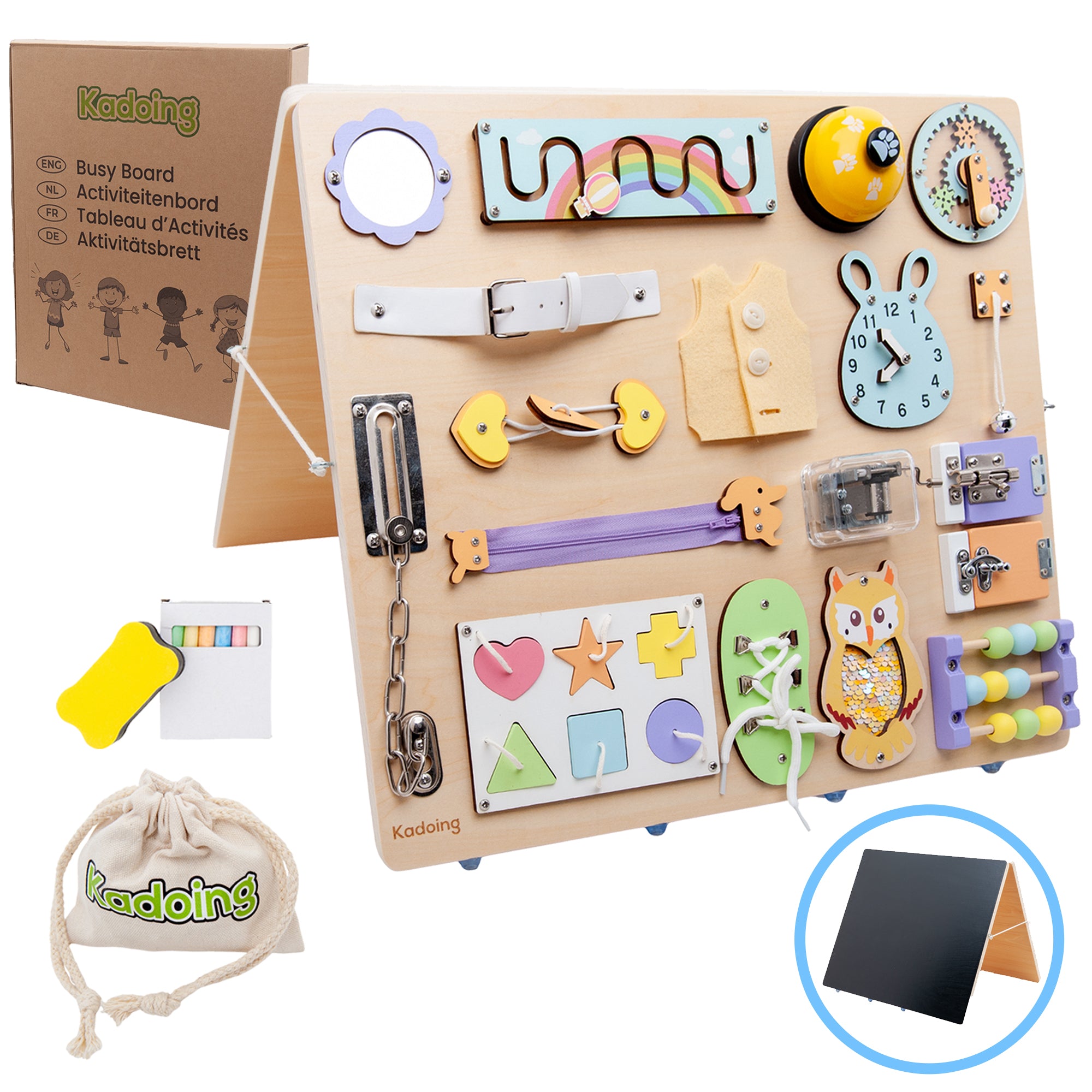
Toddlers mainly want to do things themselves. Stacking games, shape puzzles, pull-along toys, simple building sets and activity toys give them a clear challenge that remains manageable. Toys with a recognisable action often work well: sliding a bead, putting a shape through the correct opening or taking a little animal to its home.
Imaginative play also becomes more meaningful at this age. A wooden play kitchen, vehicles or animal figures do not need lots of features. The open space in the play is precisely what allows a toddler to decide who is travelling, what is being cooked and why the bear needs to go to bed today.
For preschoolers: building, imagining and playing together
For preschoolers, the challenge can grow. Think of construction materials, musical instruments with several sounds, counting and sorting games, or toys that spark a story. The best toys do not have to prescribe a goal each time. A set of blocks can become a bridge, an animal enclosure, a garage or a castle, depending on what takes shape in your child’s imagination that afternoon.
When choosing toys for older children, also look at the possibilities for extending them. Materials that combine with blocks or figures you already have will be picked up again more often than a standalone set with only one way to play.
Safety starts with attention to detail
With wooden toys, a good finish is about more than design. Check that the surface is smooth and that paint or varnish is not flaking. Sturdy parts are essential in toys intended for young children, particularly while they are still exploring many things with their mouths.
Also check the age recommendation, any warnings and the CE marking. This marking belongs on toys that must comply with European rules, but take a moment to inspect the product yourself as well. Are the parts firmly secured? Is there no unnecessarily long cord? Is the size suitable for your child’s age? Those few seconds of checking provide reassurance before play begins.
If you are buying wooden toys online in Belgium, it is best to look beyond the product photograph. A clear description states the material, dimensions, age recommendation and the presence of any small parts. Product photographs that help you judge the scale also make choosing easier. If in doubt, a simple, sturdy design is usually more sensible than a toy with lots of loose extras.
Making a sustainable choice without needing to be perfect
Choosing sustainable toys is not only about wood as a raw material. It is also about how long a product lasts and how long it continues to bring enjoyment. A sturdy wooden toy that is used for years, passed on to a younger sibling or cousin, or given a permanent place in the toy basket is often a worthwhile choice.
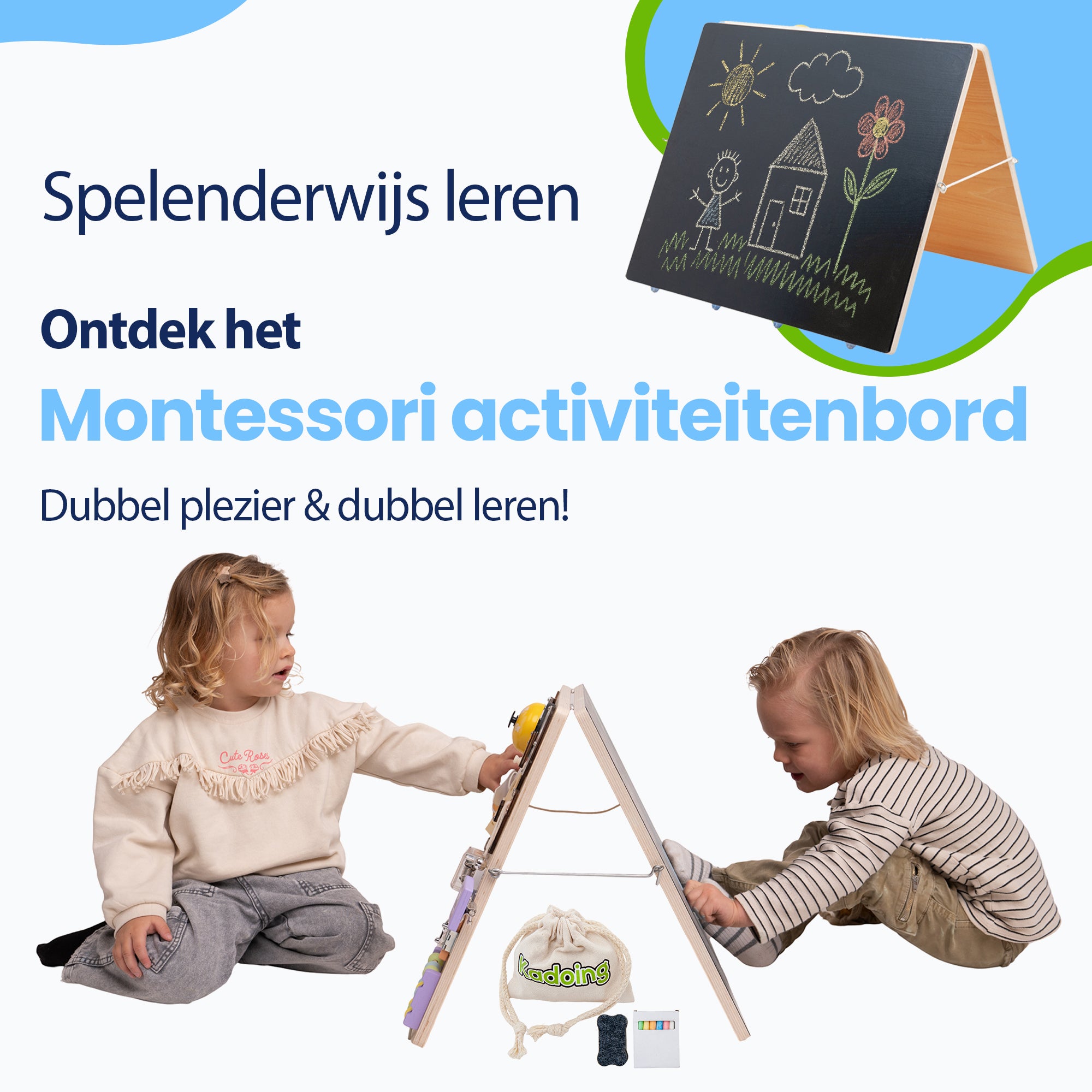
Where possible, look for information about the source of the wood, a safe finish and packaging that is not unnecessarily large. But do not set the bar unrealistically high. A family does not need to replace every toy at once. You could start with one item that genuinely suits your child: a musical toy for a child who loves discovering sounds, or an activity board for a toddler who most enjoys exploring sliders and turning knobs.
Good care also extends a toy’s useful life. Wooden toys can usually be cleaned with a slightly damp cloth and should then be dried immediately. Soaking them in water for a long time is less suitable, as wood can swell or become rough. Store toys somewhere dry and check them occasionally for damage, particularly if they are frequently shared or taken out of the house.
Fewer toys, more ideas for play
A full toy cupboard does not always lead to longer or more enjoyable play. Some children are actually distracted more quickly when everything is available at once. By temporarily putting some toys away and rotating them, a familiar wooden toy can feel interesting again. It may not seem new, but it receives fresh attention.
Parents do not need to take over play all the time. A small invitation is often enough: set out a few blocks with a wooden animal, place a little drum next to a picture book, or create a simple route for a vehicle. Then see what your child does with them. This leaves room for their own initiative and often produces the most enjoyable, unexpected moments of play.
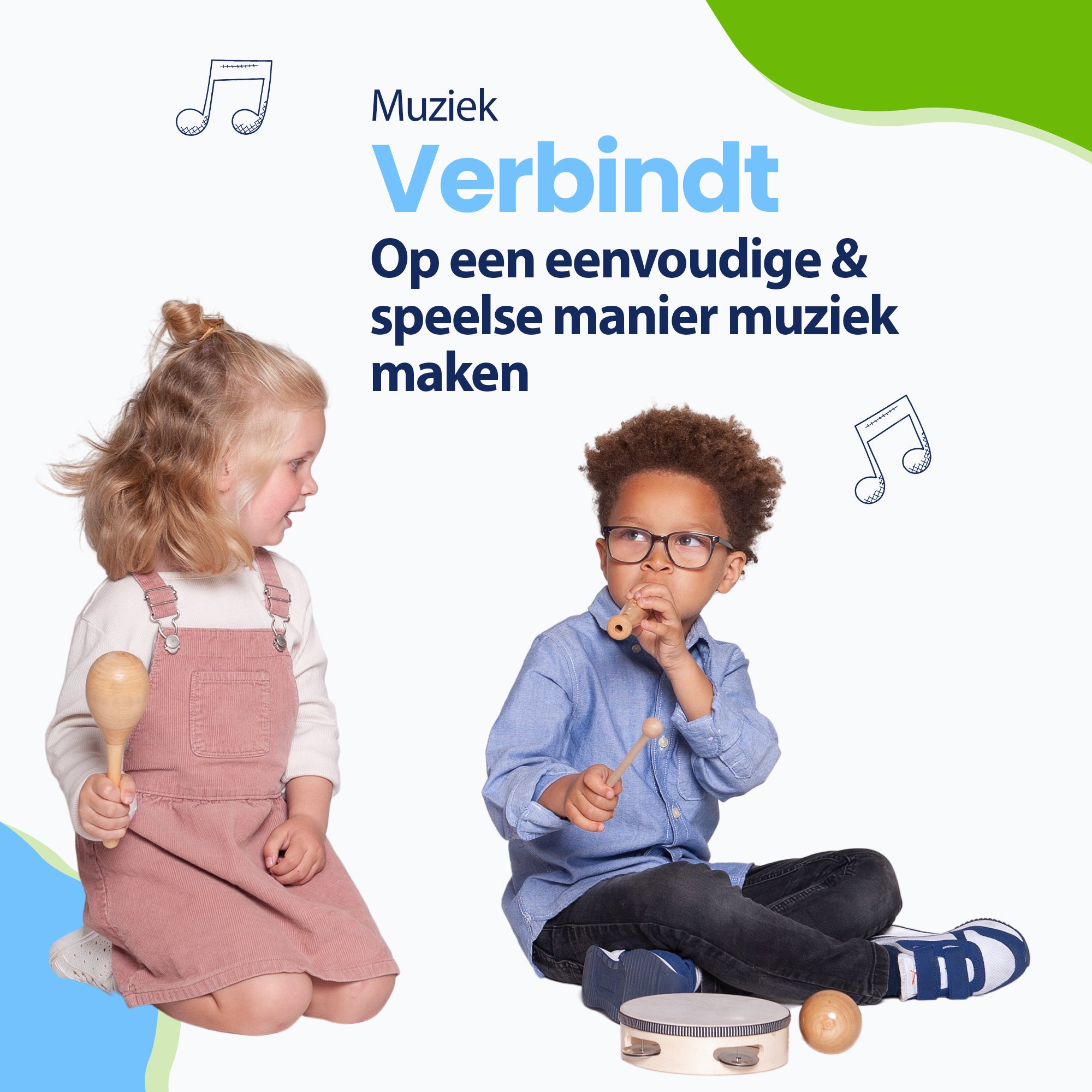
Wooden musical toys are particularly enjoyable for shared moments. Clap a simple rhythm, sing a familiar children’s song or let your child decide when you should play faster or more softly. The aim is not to make beautiful music, but to take turns, listen and have fun. These brief moments of attention often remain in the memory longer than a large, planned schedule of activities.
A gift that can grow with a child
A wooden toy can be a lovely gift for a birthday, a visit to a new baby or a festive occasion, especially when you choose with the child in mind rather than relying only on the age shown on the packaging. Ask yourself: what is this child curious about right now? Movement, music, building, animals or role play? A gift that matches that interest is more likely to become a lasting favourite.
At Kadoing, this kind of play takes centre stage: products that invite children to discover and give parents peace of mind during everyday play. Not every moment needs to feel educational to be valuable. When a child can safely explore, build, sing and imagine, development often happens naturally. Sometimes simply between two blocks, a gentle tune and a proud smile.