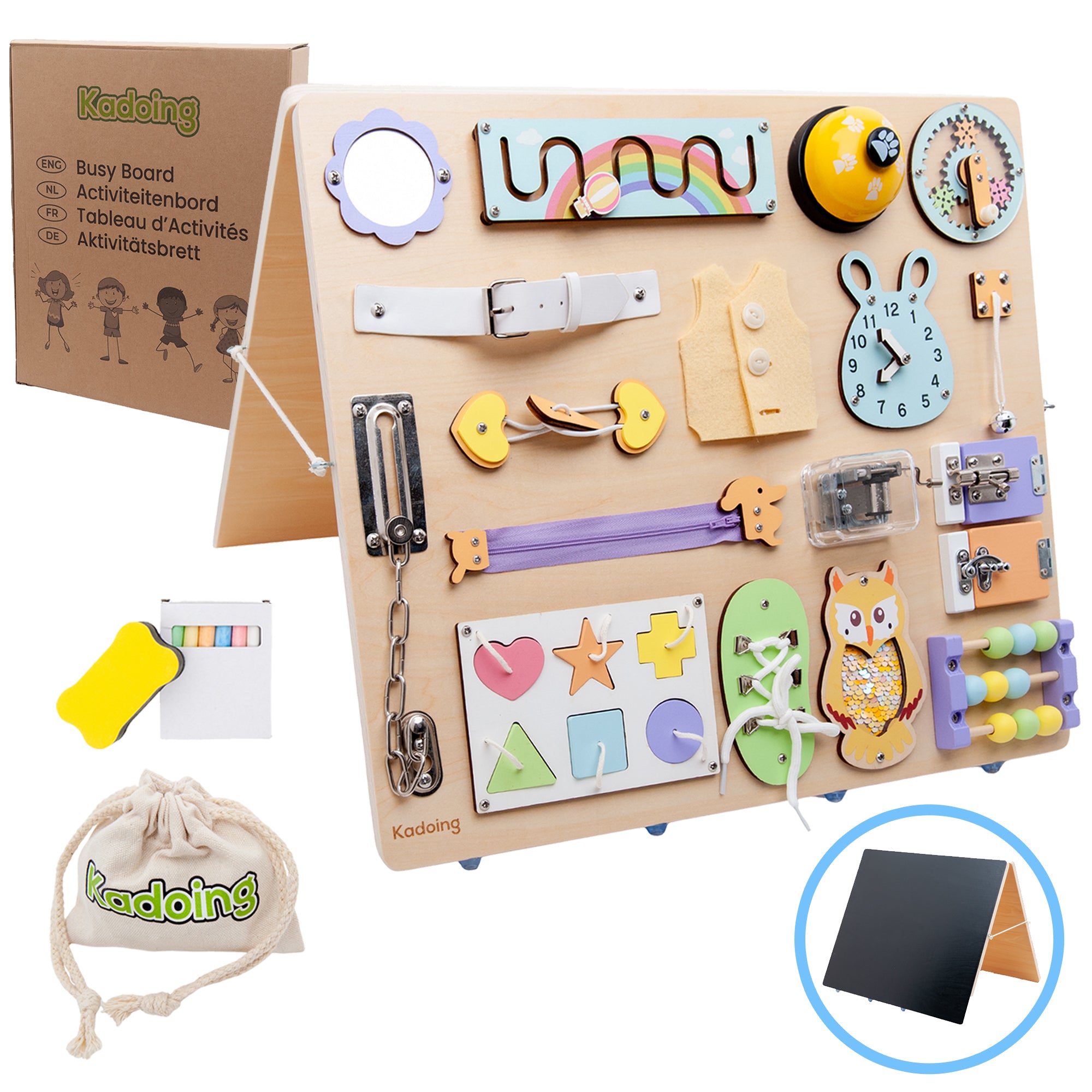
A wooden stacking tower on the floor, a little train passed from hand to hand or a small musical instrument for those first songs: wooden toys often feel reassuringly familiar. But are wooden toys safe for young children? They can usually be a lovely, durable choice, provided the toy suits your child's age, is carefully finished and is checked regularly.
Wood is not automatically safer than plastic, just as plastic is not necessarily less safe. Safety depends on the whole picture: the design, the materials used, the finish, where the toy comes from and how a child plays with it. A few practical points can help you feel more confident about choosing something that suits your everyday playtimes.
When are wooden toys safe?
Toys sold in the Netherlands and the rest of the European Union must comply with European toy regulations. Look for the CE marking on the product, packaging or instructions. With this marking, the manufacturer declares that the toy meets the applicable European safety requirements.
These rules cover areas including mechanical safety and certain substances that may be present in toys. The European standard EN 71 is relevant to wooden toys. It has several parts, covering matters such as flammability and the release of substances from paint or varnish. As a parent, you do not need to know every standard number. Do check that the toy has a CE marking, that age and safety information is clear and that the manufacturer or responsible economic operator is clearly identified. The CE marking is not an independent quality label, but a manufacturer's declaration that the product meets the applicable European requirements.
Also pay attention to age recommendations and safety warnings. A crossed-out 0–3 years symbol means that the toy is not suitable for children under three. This is often related to small parts and choking hazards, but other risks may also be involved. Always follow the manufacturer's age and safety instructions, even if an older child plays with the same toy without any problems.
Safety starts with choosing suitable toys
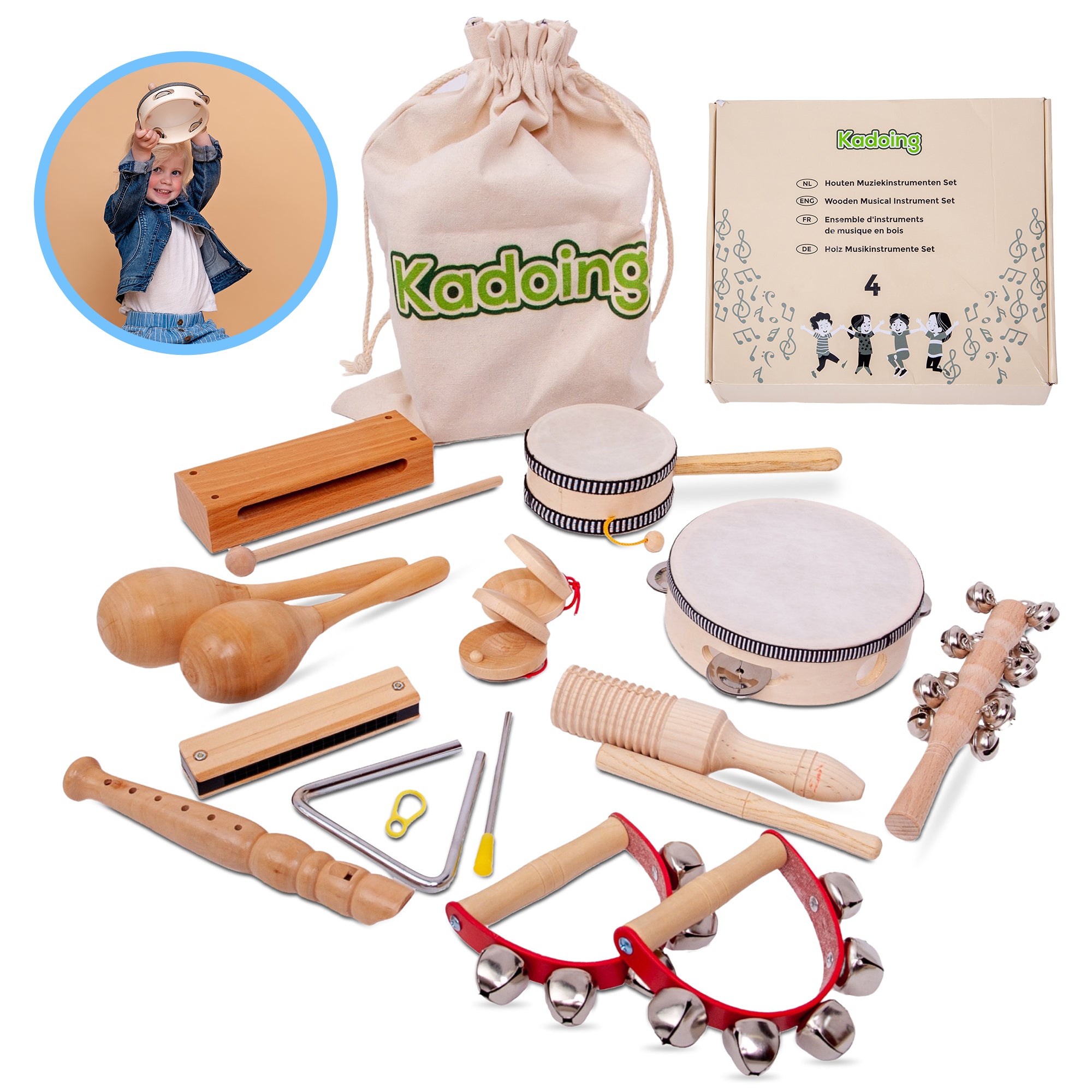
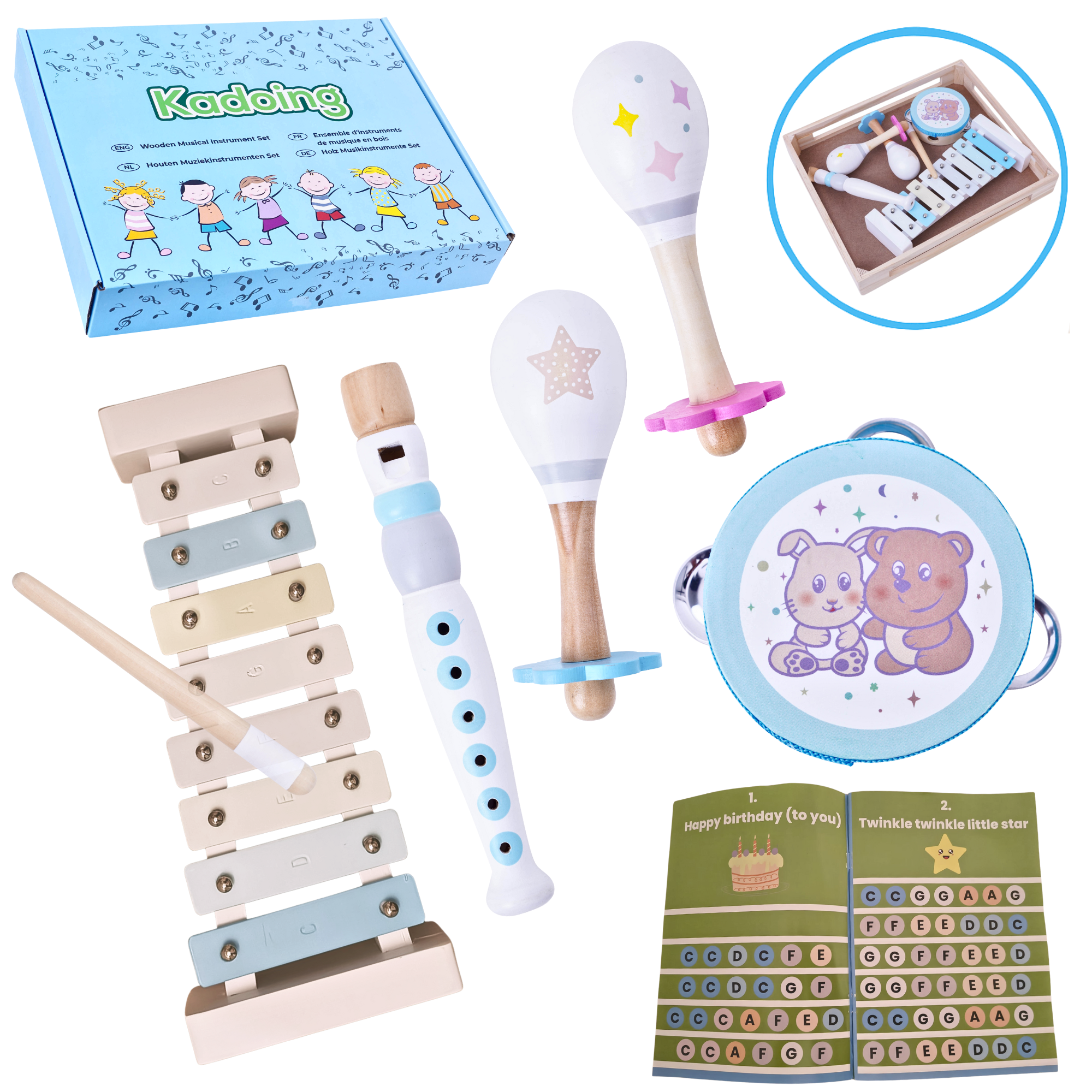
Young children often explore toys with both their hands and their mouths. Always choose toys explicitly suitable for their age and stage of development. For babies, this might be a wooden rattle designed specifically for babies. For older toddlers, large building blocks, sturdy shape sorters or wooden musical instruments may be interesting, provided the age recommendation and safety instructions for the particular product allow it.
For older children, games and construction sets can of course be more challenging. Small parts can contribute to creative play and careful, precise work, as long as they are suitable for the stated age and there is supervision when needed. What is safe therefore also depends on your child's stage of development and how the toy is played with.
Paint, varnish and glue: what should you look for?
The colour of wooden toys often raises questions. Colourful toys do not have to be a problem. Toys produced in accordance with European rules must meet requirements relating to matters including the finish and substances that can be released from layers of paint or varnish.
Check that the finish is even and firmly attached. Paint that flakes, feels sticky or smells strongly of chemicals is a reason not to use the toy until you know more. A slight smell of wood or paint can occur with a new product and often fades after some airing, but a strong or persistent smell should not be ignored.
Toys made from untreated wood also call for a considered choice. Untreated does not automatically mean better or safer. The wood must still be smoothly sanded, suitable for toys and free from cracks or splinters. A protective layer of paint, varnish or oil can actually help make the surface smoother and easier to keep clean.
Check the wood, edges and fixings
Wooden toys are sturdy, but not indestructible. A block tower that often falls, a wooden car enthusiastically pushed across the floor or an activity toy used every day can become damaged over time. A quick check before putting it away or giving it to someone else is usually enough.
Look particularly for splinters, small cracks, parts coming loose and sharp edges. For toys with a cord or pull-along animals, also check that the cord is still securely attached. With musical toys, check that sticks, bells or other parts are not coming loose. Do you see damage that you cannot safely smooth out or repair? Put the toy aside.
This is no reason to handle wooden toys with kid gloves. Because you can easily see and feel the wood, damage is often quickly noticeable. Taking a regular look is simply part of playing with care, just like checking a favourite cuddly toy or a cycle helmet.
How to keep wooden toys clean
Always follow the manufacturer's care instructions when cleaning. Many wooden toys can be cleaned with a slightly damp cloth and then dried immediately. Only use a mild cleaning product if the instructions allow it. Do not leave wooden toys in water for long periods or immerse them unless the manufacturer explicitly says this is possible. Moisture can damage the wood or the finish.
After cleaning, let toys air-dry thoroughly before returning them to the toy basket. Ideally, store them somewhere dry, away from direct proximity to a radiator or a damp area. This helps keep them looking good for longer and reduces the chance of joints or layers of paint wearing more quickly.
For toys that often go into a child's mouth, such as a wooden rattle or teething ring, it is particularly sensible to follow the manufacturer's care instructions. Not every wooden product can be cleaned or treated in the same way.
New, second-hand or homemade?
Second-hand wooden toys can bring plenty of enjoyment and fit well with a thoughtful approach to buying. Do take the time to look them over properly. Older toys in particular may not meet today's safety requirements. Check for flaking paint, make sure all parts are present and see whether you can still establish the intended age range.
Be cautious with old painted toys if you do not know which paint was used. Homemade toys can also be beautiful and personal, but require extra attention to smooth sanding, secure fixings and a finish suitable for children's toys. An attractive design alone says nothing about safety in everyday use.
Frequently asked questions about wooden toy safety
Are wooden toys better than plastic toys?
Not automatically. Wooden toys can last a long time, often feel pleasant to touch and lend themselves well to repair or passing on. Plastic toys, in turn, can be light, washable and very suitable for certain ages or types of play. Above all, choose toys with a safe finish that suit your child's age and what they can actually do with them.
Can a baby chew on wooden toys?
Babies often explore toys with their mouths. Choose only toys explicitly suitable for your baby's age and check them regularly for damage. Do not give toys with small parts, splinters or flaking paint.
What should I do about a splinter or a crack?
Stop using damaged toys immediately. Check whether the manufacturer provides safe repair instructions. If there are splinters, cracks, loose joints or flaking paint, it is sensible not to use the toy again until it is clear that it can be repaired safely. If this is not possible, replace it.
Well-chosen wooden toys can be part of calm, happy moments together for years: building on the floor, making music after breakfast or imagining stories with wooden figures. By choosing clear product information and an appropriate age range, and carrying out a quick regular check, you give your child room to play with peace of mind.