The transition from daylight saving time to standard time, or vice versa, can disrupt a child's sleep routine. With these tips, the adjustment will be much smoother.
Twice a year, the clocks change. For adults, it can take some getting used to, but for babies, toddlers, and young children, the impact can be even greater. An hour may not seem like much, but for a child who is used to fixed times for sleeping, eating, and playing, it can be quite confusing. Fortunately, there are several ways to make the transition to daylight saving time or standard time easier.
Why do children struggle with the transition to daylight saving time or standard time?
Our bodies operate according to a biological clock. This internal clock helps determine when we feel sleepy, awake, hungry, and active. Light plays a crucial role in this process.
For young children, this biological clock is still developing. As a result, changes in time, daylight, and routines can have a greater impact than they do on adults. When the clock suddenly moves forward or backward by an hour, children need to adjust once again to their sleeping times, meal times, and daily activities.
The result? Some children may temporarily wake up earlier, have trouble falling asleep, feel more tired, or become more restless during the day.
How long does it take for a child to adjust?
This varies from child to child. Some children adapt within a few days, while others may need one to two weeks to fully adjust to the new schedule.
Age, sensitivity to change, and the child's existing sleep routine all play a role. Fortunately, most temporary sleep issues related to the clock change resolve on their own.
Signs that your child is adjusting to the new time
You may notice that your child is still adapting if they:
- wake up earlier or later than usual;
- have more difficulty falling asleep;
- become tired or irritable more quickly;
- feel hungry at different times;
- need extra rest or cuddles.
These reactions are normal and usually temporary.
Tips to adjust more easily to daylight saving time or standard time
With a little preparation, you can make the transition much easier for both yourself and your child.
1. Stick to familiar routines as much as possible
Children feel secure when life is predictable. Try to keep the usual order of the day the same, including regular times for meals, playtime, bath time, and bedtime.
The clock may change, but the routine remains familiar.
2. Make use of daylight
Daylight helps the body adapt to a new rhythm. Try to spend plenty of time outdoors during the day, especially in the morning. Natural light supports the biological clock and helps children adjust more quickly to the new schedule.
3. Pay attention to signs of tiredness
If your child clearly seems tired, take those signals seriously. During the first few days after the clock change, a slightly earlier bedtime or a short rest period can sometimes help.
At the same time, try to gradually move toward the new schedule.
4. Create a calm sleep environment
A familiar bedroom helps children settle more easily. A consistent bedtime routine with reading, cuddling, and soft lighting can support relaxation.
Many parents choose a night light for children to create a safe and calming atmosphere at bedtime.
Two methods for adjusting to the new time
There are generally two approaches parents use when transitioning to daylight saving time or standard time.
Method 1: Gradual adjustment
With this approach, you begin shifting your child's daily schedule gradually a few days before the clock change. Bedtime, meals, and wake-up times are adjusted by 10 to 15 minutes each day.
Advantages:
- A smaller change all at once.
- Suitable for children who are sensitive to changes.
- Often causes less disruption to sleep routines.
Disadvantages:
- Requires a bit more planning.
- Not always practical for busy families.
Method 2: Switch immediately ("cold turkey")
With this method, you switch directly to the new time as soon as the clocks change and immediately follow the new schedule.
Advantages:
- Easy to implement.
- No preparation required.
- Many children adjust naturally.
Disadvantages:
- Some children may temporarily experience increased tiredness or restlessness.
Use tools to create more structure
For young children, the concept of time can be difficult to understand. Helpful tools can provide extra clarity around bedtime and wake-up time.
A children's alarm clock or sleep trainer visually shows when it's time to sleep and when it's time to start the day. This can be especially helpful during the transition to daylight saving time or standard time.
Calm and activity during the day matter too
A healthy daily routine involves more than just sleep. Plenty of physical activity, outdoor play, and relaxation help children fall asleep more easily at night.
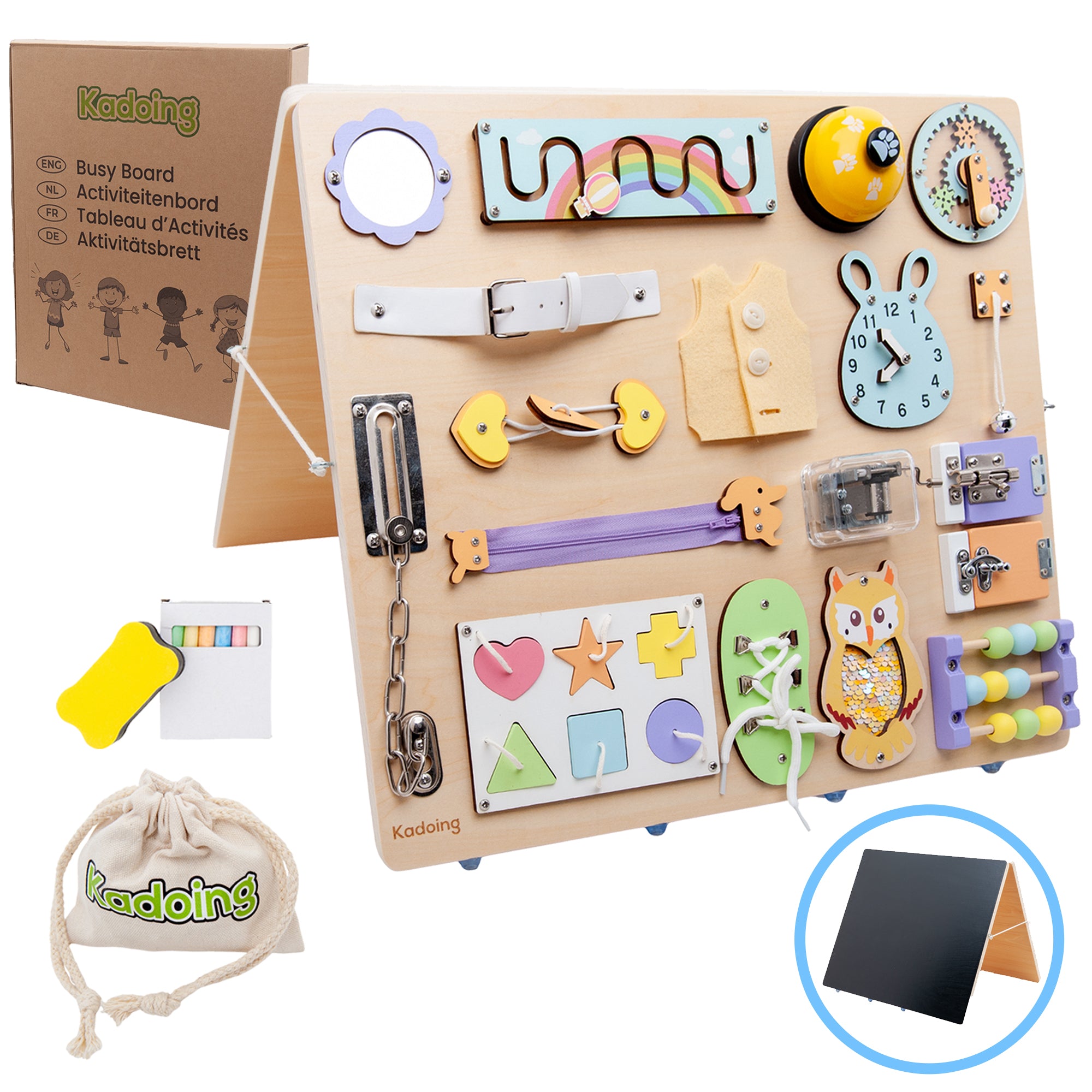
Creative play, building, and exploring also contribute to a healthy balance between activity and rest. With durable wooden toys, children can learn through play while using up their energy during the day.
Every transition is temporary
Whether you choose a gradual approach or switch immediately, most children naturally find their rhythm again. The most important thing is to stay calm, provide predictability, and trust your child's ability to adapt.
Give their body time to adjust and remember that a few days of disrupted sleep are completely normal around the clock change.
Which method do you use when switching between daylight saving time and standard time: gradual adjustment or an immediate change?